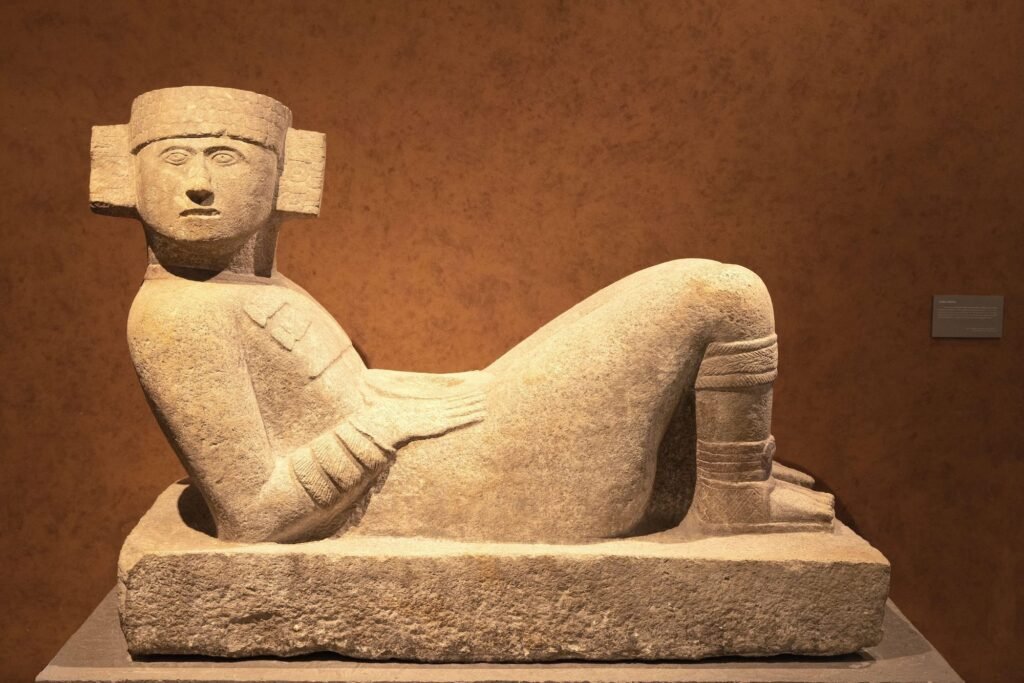
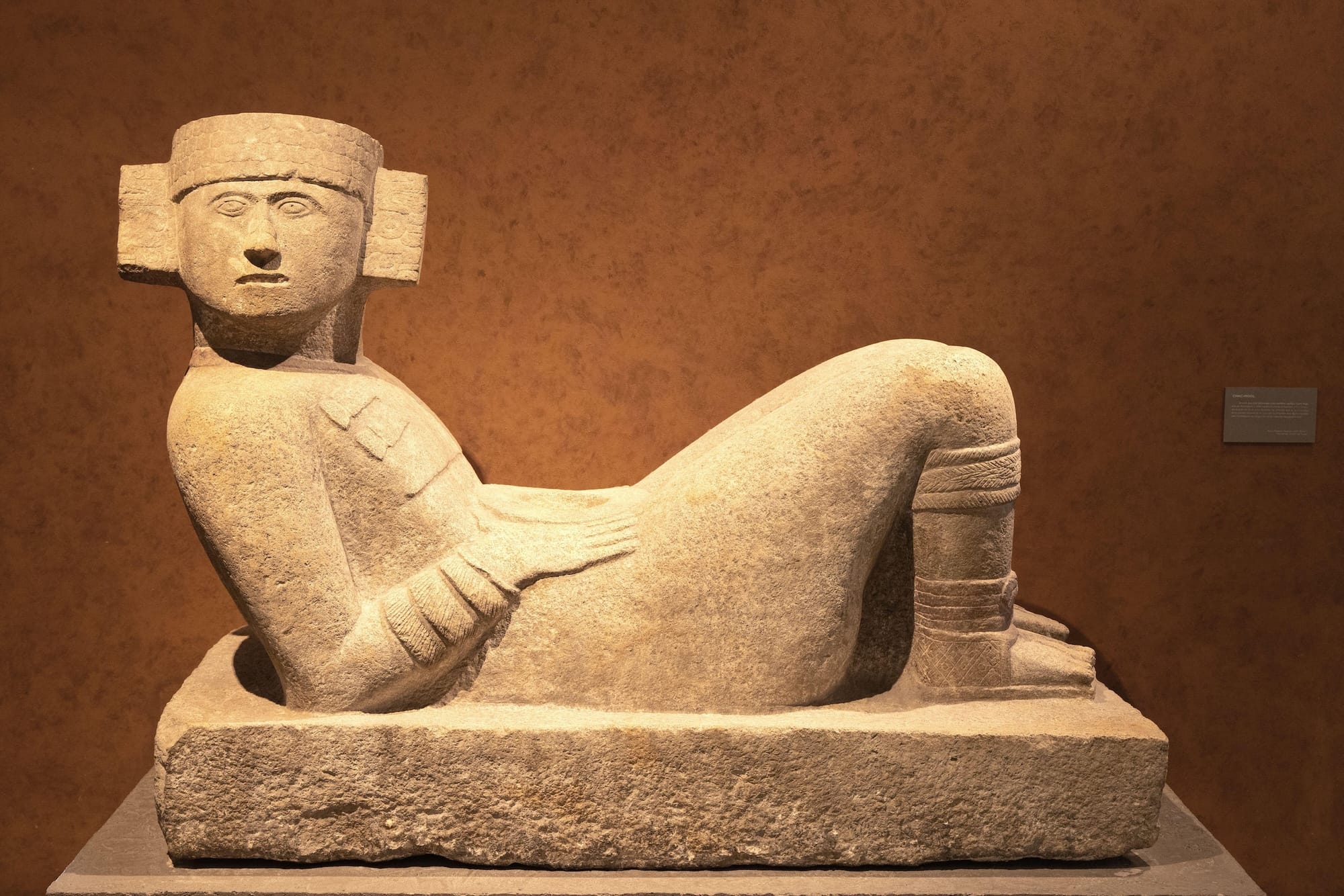
In a 1940 photograph by Man Ray, Academy Award-winning actor Teresa Wright poses misty-eyed alongside an ancient Chacmool sculpture. The reclining figure, with its head contorted toward viewers, offered a refreshed vision of modernity to both Hollywood stars and a growing clientele of collectors and museums interested in pre-colonial art from ancient Mesoamerica. In 1947, for instance, the Minneapolis Institute of Art purchased a “King Chak Mool” for $10,000. That sculpture toured Europe as part of an exhibition from 1958 to 1960 and quickly became a cornerstone of the museum’s collection. Just a decade later, one specialist made a dreaded discovery: The sculpture was a forgery.
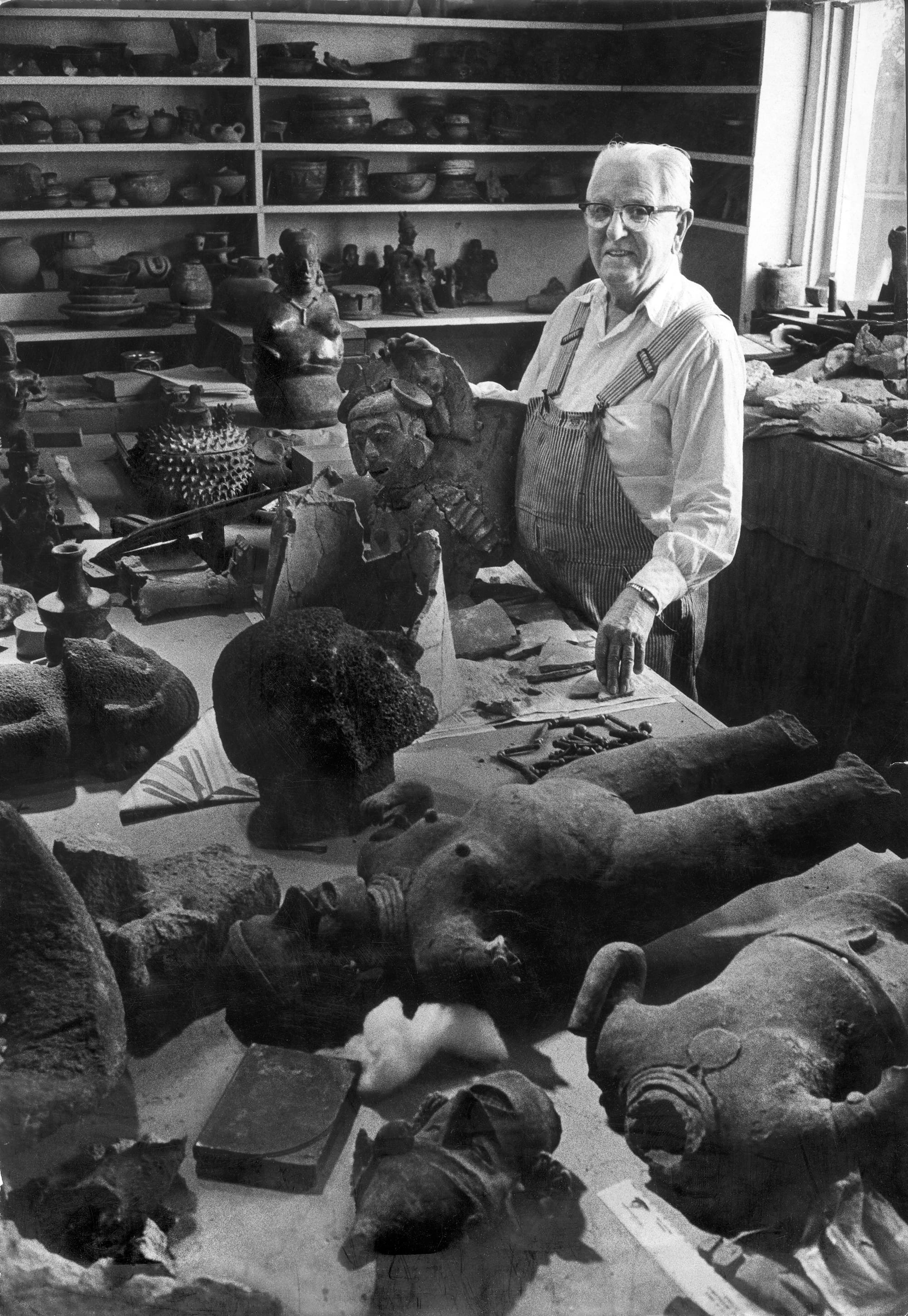
This story, and that of the gallerist at its center, is chronicled in Artifacts to Art: Collecting Ancient America in Midcentury L.A. (2026) by Andrew D. Turner, Mary E. Miller, and Khristaan D. Villela. The book elaborates on the various conditions that shifted the classification of “pre-Hispanic” artifacts from anthropological items of study to art objects that could be collected by museums and patrons alike. It also helped answer a question I’ve always had about Los Angeles museums as a curator myself: Why is so much cultural heritage of ancient Central and South America preserved in our city’s collections?
As Artifacts to Art discusses, the Stendahl Art Galleries were a key driver in the illegal looting, smuggling, and sale of these objects to its Los Angeles clientele. The Galleries’ archive is now housed at the Getty Research Institute (which published this book), allowing for a deep investigation into the shady dealings of an art dealer who had little regard for the cultural histories he exploited. Turner, Miller, and Villela present five years of groundbreaking research into that archive here. Over its non-chronological chapters, the book describes the various forces that collided to create a market for these objects, including revered international museums, Hollywood actors, and looters across Mexico.