Years ago, when I was the director of a strategic design MBA program, I would invite business leaders to join our graduate students over dinner and conversation. Inevitably, there was a moment in the recounting of their origin story when these successful leaders would reference a significant crossroads that required some major decision making. But they didn’t reference rationale and logic. Instead, they mused that “something told me not to do the deal” or “something told me to work with Lucy instead of Jim, even though Lucy didn’t have as impressive a pedigree.”
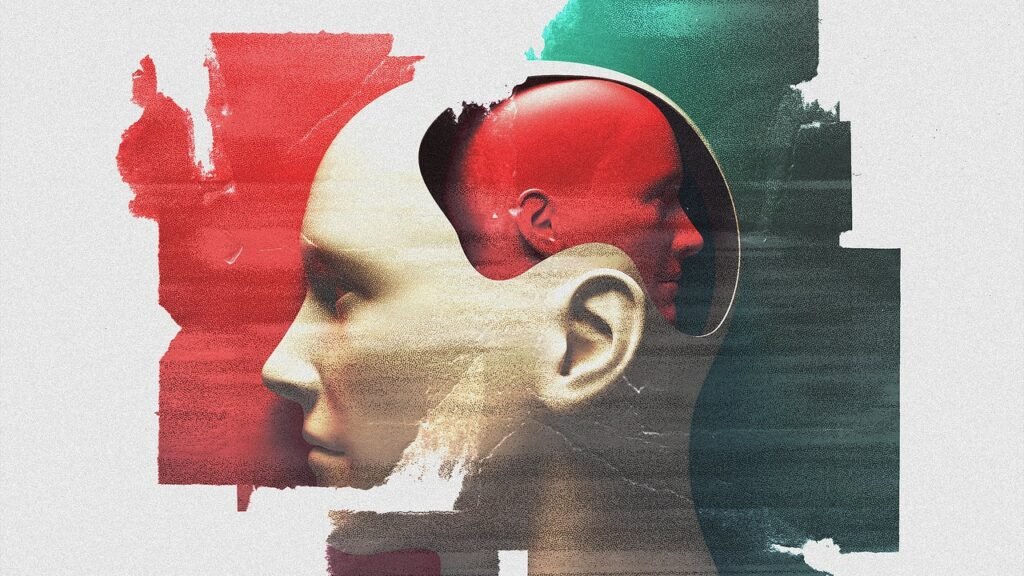
We tend to call that something instinct. I like to encapsulate those critical intuitive moments as the times when our sentient intelligence rises to the fore. We are all equipped with sentient intelligence. It’s our superpower. I think of sentient intelligence as a collection of sensory and emotional navigational tools that we humans use to make sense of the world around us. It helps us to extract meaning from signals in our environments by way of our physical senses (e.g., sight, sound and touch) and through our emotional console. We are equipped with bodily sensations, emotional cues and the brain’s default mode network to sit in awe, discern meaning, pause, and ask bold follow up questions. The thing is, sentient intelligence increasingly matters in our world. While AI can synthesize and augment the ideas we feed it, AI cannot detect or discern the problems that our sensemaking signals pick up. Machines may be able to execute, but subtle and tacit discernment is best left to humans.
A toolkit
Interestingly these successful leaders didn’t learn about the importance of tapping into that sentient intelligence in business school, law school or medical school. Yet, it’s a toolkit to which we can all avail for ourselves. If you listen closely to the decision making process of successful leaders — whether they are start-up leaders or embedded in the ranks of corporate organizations — sentient intelligence is a consistent theme.
This realization came into clear view for me during a recent conversation with Vikram Taneja, the Head of AT&T’s corporate ventures. Vikram is responsible for making big bets on AT&T’s investments in the next best tech entrepreneurship partnerships. What’s interesting is that in many ways, his due diligence is as much about discerning a founder’s ability to sit with ambiguity as it is about the founder’s technological savvy.
Most people think that AI adoption is mainly an infrastructure challenge, a problem that can be solved by shuffling around work processes. But the truth is that our agentic future hinges on our human capacity to activate our sentient intelligence before and after our use of AI tools. I call this the human-AI-human sandwich.
When I asked Vikram what makes great founders stand out he emphasized that they need to have “strong willed vision while also holding imprecise information … extremely well”. That’s a capability that elevates the rigor of ambiguity. Ambiguity and uncertainty aren’t going anywhere. So the more comfortable we can get with liminal spaces the better. It appears that successful start up leaders in today’s AI environments have not only developed that visceral ability; they can also translate it into designing guardrails around what an agent is authorized to do on a human’s behalf.
For example, Vikram told me, “that moment when I ordered a pizza, but I got a brownie” is about “orchestration.” By orchestration, Vikram is referring to the workflow management, control planes, policy and identity management between AI agents and the physical world. His comment fundamentally points out the distinctive ability of a technologist to design in elements of trust, identity and judgement calls that machines alone cannot make.
The rigor of ambiguity
So let’s widen the lens a bit. Maybe you’re not an inventor-founder partnering with a corporate tech giant to get your startup off the ground. Maybe you’re a manager, an assistant, a director, or someone who doesn’t know an AI agent from a ticket agent. How does this point about the rigor of ambiguity relate to you? Here are three ways that developing our sentient intelligence bridges the gap between what’s obvious and what’s outstanding:
- The business critical fork in the road: Sentient intelligence is a critical strategy skill that helps you to stand out because it helps you to deploy AI with authority — beyond simply adopting it.
- Discernment guardrails: Sentient intelligence builds trust beyond the spreadsheet data points. Without it, AI driven products and services fall flat and don’t resonate with customers. Being able to read the room is a hardcore soft skill.
- Wisdom trumps efficiency: While efficiency gets us short term gains, if we trust automation too much, then we miss subtleties. Wisdom comes with pausing and deciding what to hand off and what to hold on to. In the long term, building wisdom through sentient intelligence gives us the best gains.
Sentient intelligence is a “yes-and” modality: it can happen quickly and slow down time; it is based on visible cues and dormant ones, and it is sparked internally as well as among a collective. Increasingly, the quality of our human judgement interfaced with AI partnership will deliver the strongest business case.
You will do yourself and your team a world of good by pausing and listening to that “something told me” — and share about it!