The Metropolitan Museum of Art will present the first major exhibition on Felix Gonzalez-Torres in New York in over 30 years. Opening next June, The Spaces Between is organized in conjunction with the Art Institute of Chicago, which will simultaneously host a different exhibition on the Cuban-born American artist who died from AIDS-related complications in 1996.
Titled after a line from an Elizabeth Bishop essay that Gonzalez-Torres had faxed to gallerist Andrea Rosen in 1994, The Spaces Between will bring together more than 40 works spanning installation, sculpture, photography, painting, and video. Dispersed throughout 14 of The Met’s permanent collection galleries, rather than in the modern and contemporary wing, the show will place the late artist’s work “in conversation with 5,000 years of human creativity,” museum director and CEO Max Hollein said in a press statement.
Highlights include three notable works from the late 1980s and early ’90s that epitomize Gonzalez-Torres’s politically charged conceptual practice, which often revolved around the transformation of desire, love, and loss amid the widespread tragedies and early deaths brought on by the AIDS epidemic.
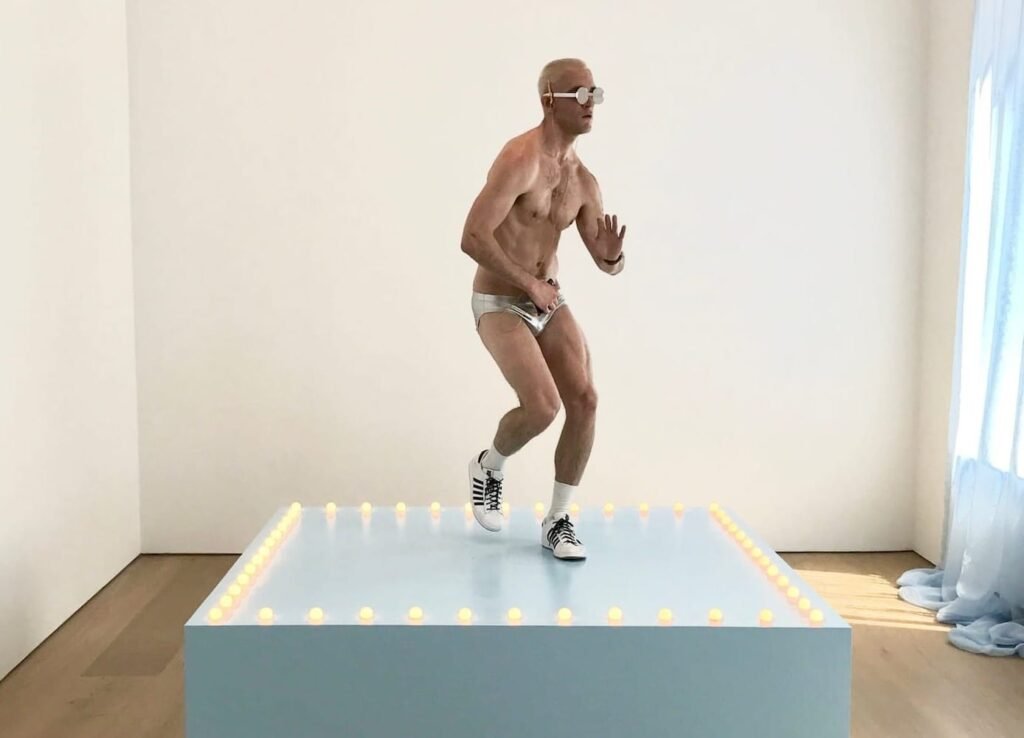
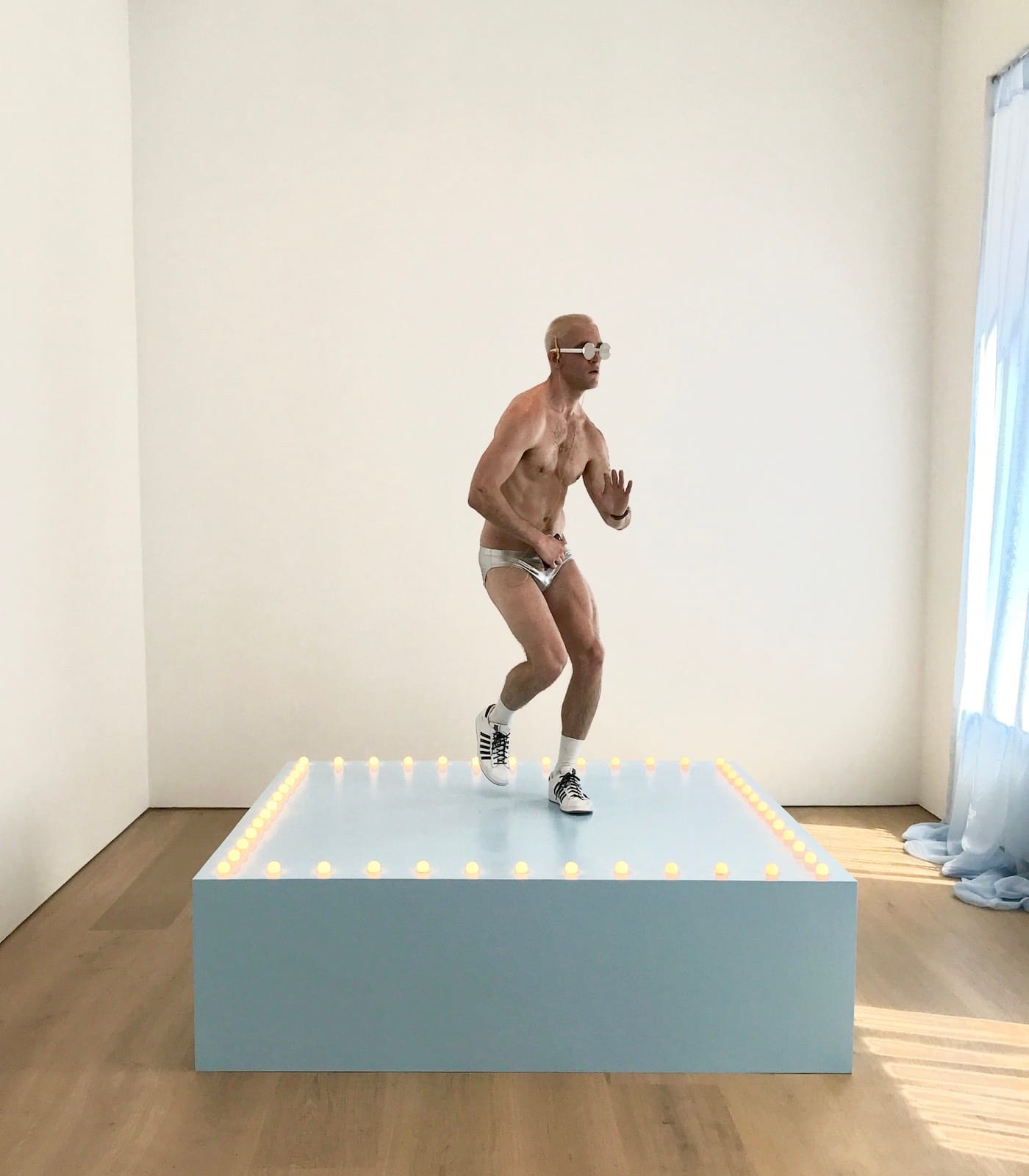
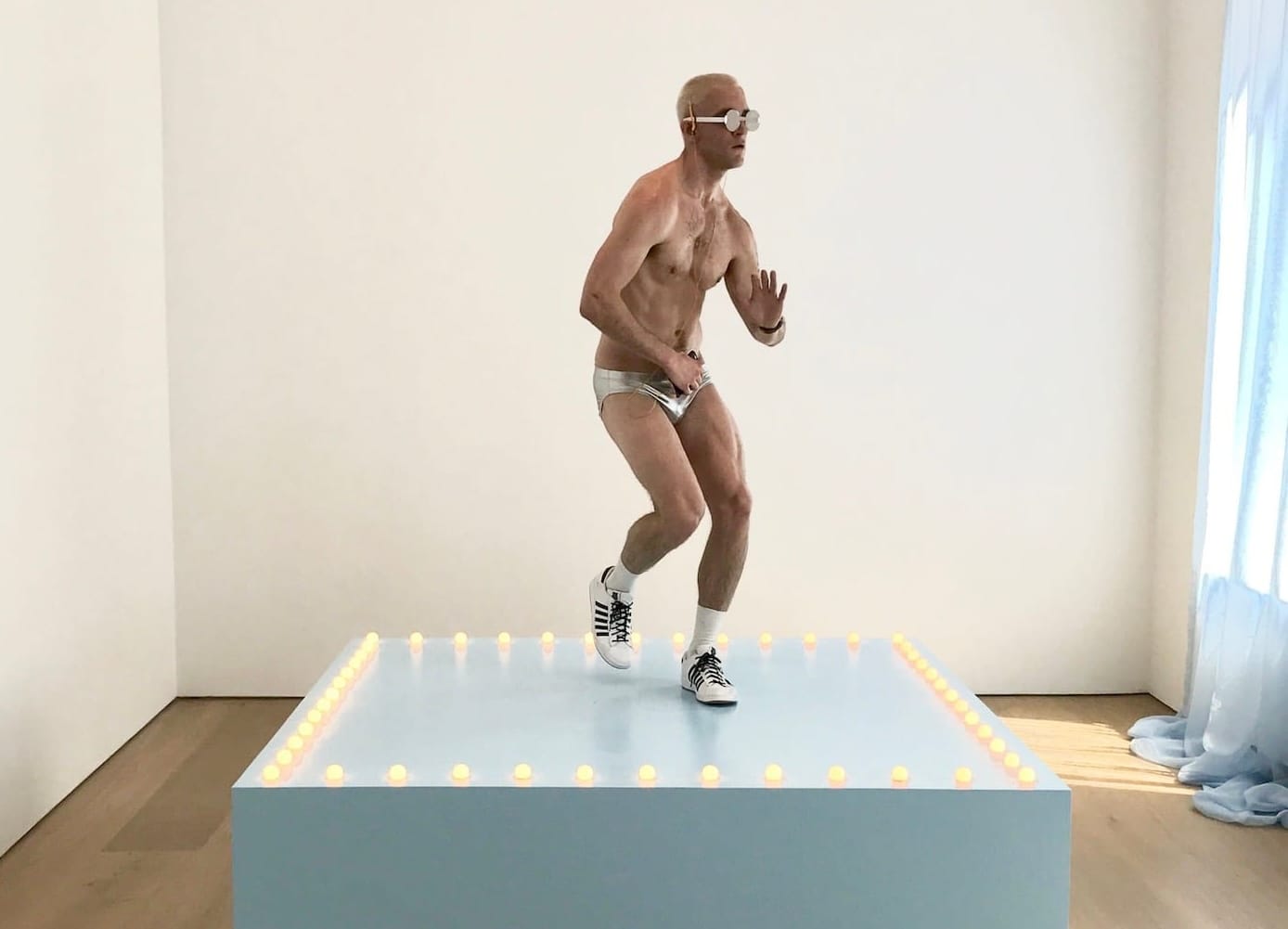
“Untitled (Go-Go Dancing Platform)” (1991), in which a light blue platform bounded by 48 lightbulbs is activated once a day by a dancer wearing only silver lamé briefs, tube socks, and sneakers, hovers somewhere between an elegy for the communities of gay men wiped out in the early years of AIDS and a spectacle that seduces its viewers. Other works bellow an inescapable grief, including “Untitled (Perfect Lovers)” (1997–90), a pair of clocks destined for desynchronization, and the candy pile “Untitled (Revenge)” (1991), similar to his 175-pound candy sculptural portrait of Torres’s lover, who died from an AIDS-related illness in 1991.
“Felix Gonzalez-Torres made a history-changing body of work that never chose between the personal and the political, the piercingly direct and the generously enigmatic,” said David Breslin, The Met’s modern and contemporary art curator in charge.
“The AIDS crisis was the crucible that forged his resolute conceptual clarity, and his brilliance was creating an open-ended body of work where new meanings can be embedded into historical ones,” he said.
While the openness of Gonzalez-Torres’s work has often been a source of longevity, it has also been subjected to curatorial interpretations that have elicited public pushback. This was the case in 2022, when the Art Institute of Chicago reinstalled “Untitled (Portrait of Ross in L.A.)” (1991) with a new label that omitted any mention of AIDS or the artist’s deceased lover, Ross Laycock, and focused only on the work’s aesthetic merit. In 2020, at the height of the COVID-19 pandemic and rising anti-Asian violence, some questioned David Zwirner and Andrea Rosen’s buzzy, social-media-friendly restaging of Gonzalez-Torres’s 1990 “‘Untitled’ (Fortune Cookie Corner)”.
Gonzalez-Torres’s formal and aesthetic contributions to conceptual art have been the subject of major solo exhibitions, most recently at the Museo Reina Sofía in Madrid. However, as with the work of artists including Barbara Kruger, Louis Lawler, Carrie Mae Weems, and Hans Haacke, whom he worked with in the Group Material collective in the late 1980s and early ’90s, aesthetics were inseparable from politics for Gonzalez-Torres, who told fellow artist Ross Bleckner in a 1993 interview that “there is never such a thing as an apolitical or inert artwork.”
That aversion to fixity appears to be at the center of The Spaces Between, where Gonzalez-Torres’s work will be situated both as a historical document and as an offering that continually opens itself to new resonances.
“Presenting it at The Met, spanning the Museum and departments, Gonzalez-Torres’s work gives us the opportunity to witness what binds humanity across time and what fixes each of us in our present,” said Breslin.