The Hyundai Ioniq 5 N is, perhaps, one of the most exciting all-electric vehicles money can buy. With up to 641 horsepower and a 0-60 mph time of 3.25 seconds, it is certainly nothing to scoff at. But everything can be improved, a point that Khyzyl Saleem — the British vehicle designer behind the C8-X Concept — has proven with his Group B-inspired digital concept.
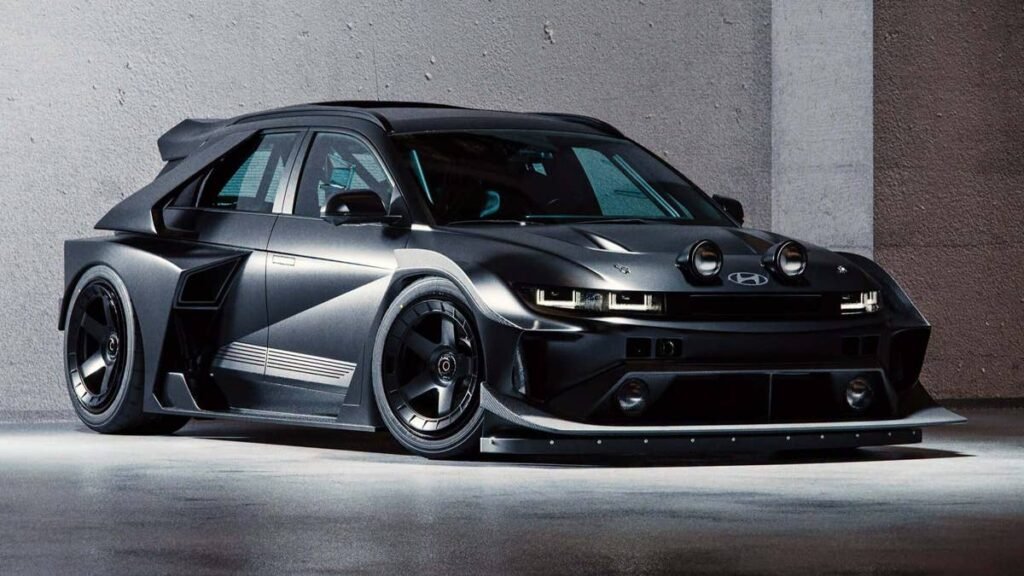
Saleem (better known as The Kyza) showcased the concept via his Facebook page, with the rendering showcasing an aggressive and dramatic widebody kit reminiscent of Group B rally monsters such as the MG Metro 6R4. The Ioniq 5 N’s already angular, pixel-heavy design language has been pushed towards the Group B homologation-special look, with the biggest change being the stance.
Khyzyl Saleem/Facebook
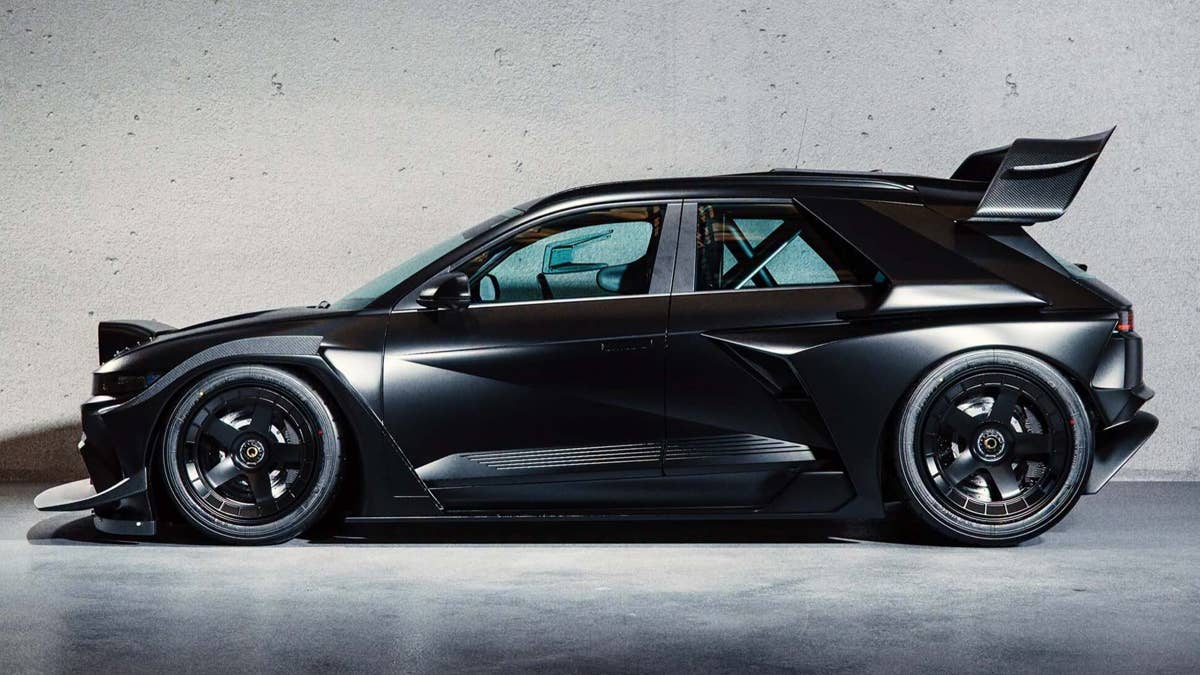
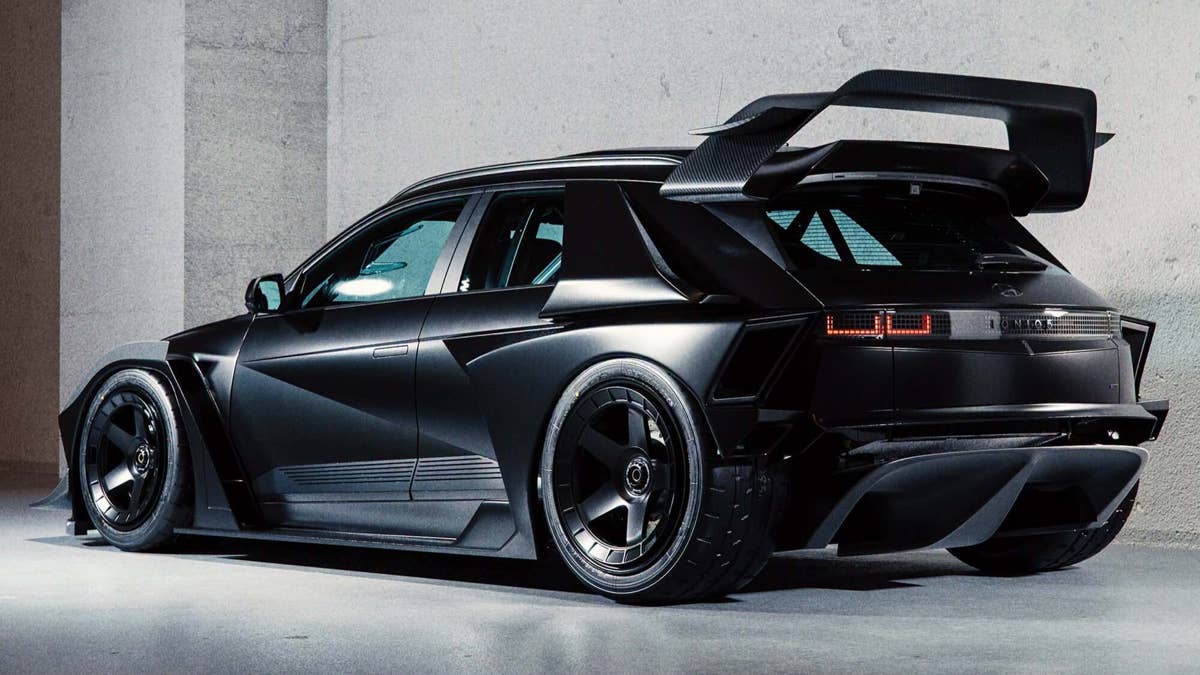
The body has been stretched dramatically outward with squared-off wheel arches, filled with wide tyres and a wider track too. Rather than using smooth, flowing fenders, the extensions are sharply faceted and almost architectural, which works well with the Hyundai’s geometrical aesthetic. Viewed from the side, the car sits exceptionally low, with a deep front splitter, extended side skirts, and pronounced aerodynamic channels which make the car look almost glued to the ground.
Gone is the Ioniq 5 N’s relatively minimalist front fascia, replaced with something far more motorsport-focused. The protruding splitter commands attention, almost pulling focus away from auxiliary lamps perched atop the hood. This is a particularly important homage to the Group B racers of the past, whose front ends were often littered with additional lighting to illuminate the path for drivers hurtling through dark forests at speed.
Khyzyl Saleem/Facebook
The profile is the most dramatic angle. While it’s still identifiable as an Ioniq 5 N, the exaggerated aero almost gives it a two-door appearance, with the rear quarter panels flaring outward and over the rear doors. Large ducts ahead of the rear wheels put one in mind of a mid-engined race car, although there is, of course, no mid-mounted engine to cool in the production EV. Visible through the glass is a roll cage, another detail that pushes the concept closer to the competition machinery that inspired it.
Saleem did note that his rendering would, ideally, be powered by a “screaming turbocharged inline-four” but also mentioned that he’d like to “throw a rotary in there.” Elsewhere, the black five-spoke wheels are relatively simple compared to the rest of the car, a necessary move that allows the eye to focus on the design rather than a set of fussy wheels.
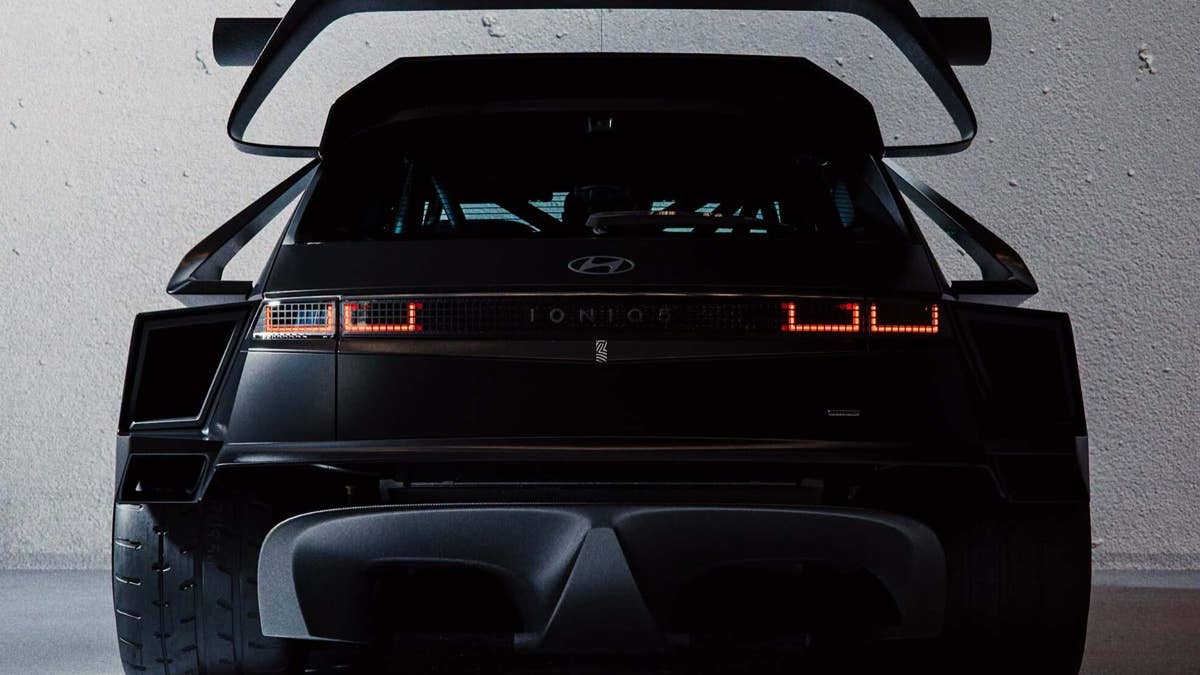
Round back, the original pixel-style lighting, a calling card of the Ioniq 5, has been retained. Everything around it, however, has become much more extreme. An enormous motorsport-style rear wing sits about the tailgate, while an equally large diffuser dominates the lower bumper. Viewed from directly behind, the combination of the wide tyres, squared-off shoulders and huge aero package lends the sprightly crossover an almost prototype-racer stance.
And while Saleem’s creation may be digital-only, a rally-bred Hyundai isn’t exactly a ridiculous idea. The Korean marque has been a serious presence in the World Rally Championship for more than a decade, while its RN24 rolling laboratory already combines Ioniq 5 N hardware with a smaller, WRC-inspired chassis and rally-derived technology. A Group B-flavoured Ioniq 5 N may be a fantasy, but it isn’t entirely removed from what Hyundai is already experimenting with. For now, though, it’s staying firmly in the digital world.