CONS ›› Firm ride, tech overload, model tested was not quick
Avatr is likely a brand you’ve never heard of. And yet, it’s the kind of car company that is likely to shake you out of your slumber when you realize just how quickly China is developing its top-flight tech powerhouses. The Avatr 07 is another feather in the company’s cap. And while the 11 that we tested last year had its drawbacks, the 07 — which should be the 11’s smaller brother — outclasses it in many respects. It does so, seemingly by virtue of just, well, being newer.
But that’s the kind of progress a brand needs to display in what is a ruthless Chinese home market. Model cycles are short, and designers and engineers are constantly pushing to out-niche the competition with weird and wonderful features that can differentiate their products in what has to be the most crowded market for cars.
Review: The Avatr 11 Blends European Style And Chinese Tech But Still Comes With A Catch
That said, the Avatr 07 doesn’t attempt to win you over with gimmicks, although it does have a few. As a refresher, Avatr is a joint venture between state-owned automaker Changan, tech giant Huawei, and China’s largest battery manufacturer, CATL. Unlike the many copycats, who invariably deploy some kind of take on a Defender or Bronco in their lineup, Avatr has decided to take design seriously.
QUICK FACTS
SWIPE
A Closer Look At That Exterior
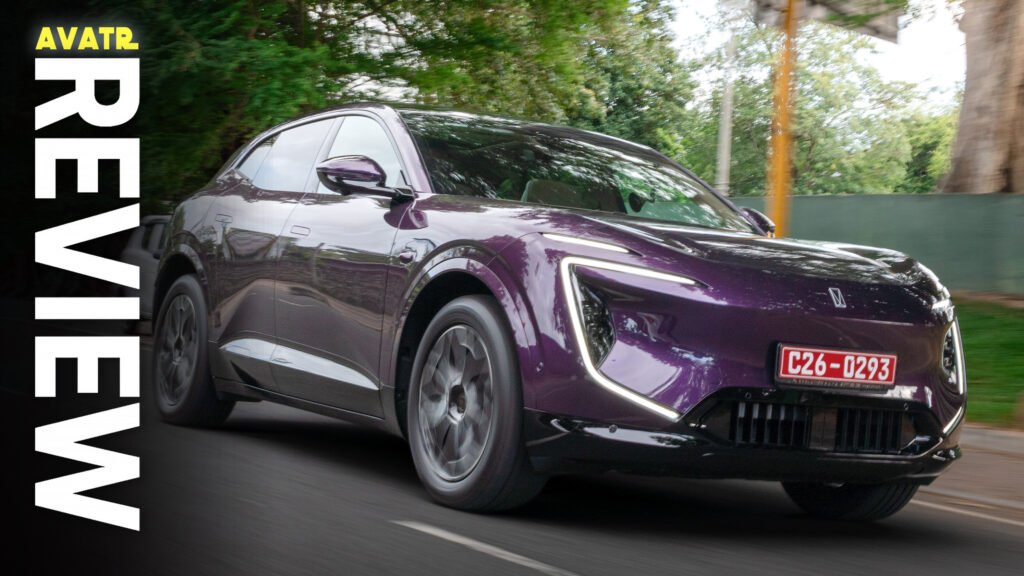
Avatr has invested in a design studio in Munich and has reportedly attracted top talent to their stable. Their chief designer is Nader Faghihzadeh. He’s the guy who penned the BMW i8. And the fact that the 07 genuinely isn’t a mish-mash of existing rival styling cues earns the 07 some brownie points in my book.
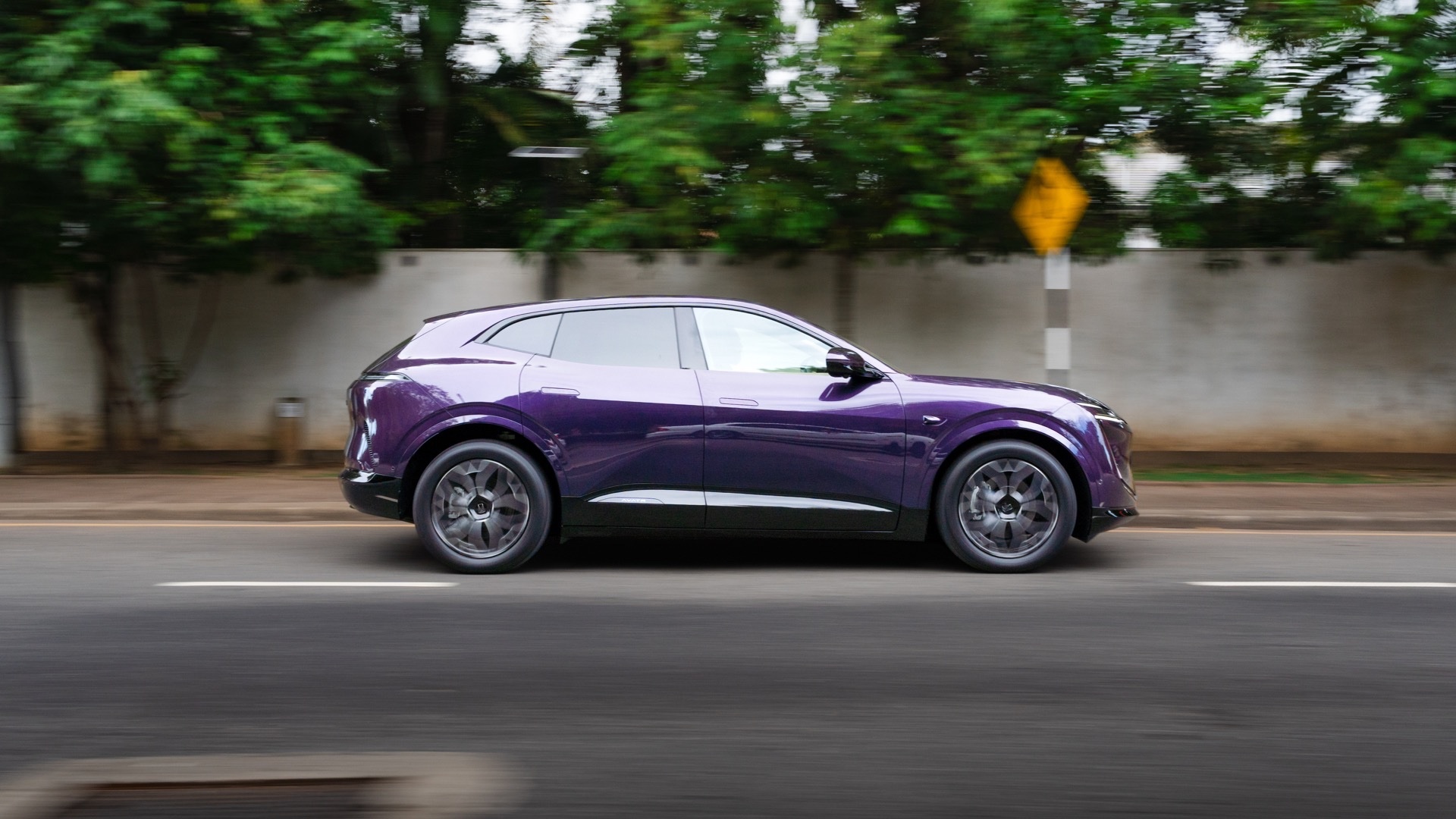
However, it’s not quite as imposing in person as the larger 11 was, even if it is just a smidgen smaller (4,825 mm / 190 inches vs 4,880 mm / 192.1 inches long). The styling is very much a continuation of the precedent set by the 11, but with a lower waistline, and an overall more rounded hatchback rear, vaguely reminiscent of the U.S. Honda HR-V in outline alone. Or, to put it another way, it’s the 11’s CliffsNotes, toned down for a broader audience. Kill Bill without so much of the Kill, if you will.
But that’s okay, because the 07 is meant to attract a larger audience to the brand, while staying somewhat stylish. The overall design, with its large arches and differently surfaced panels down the side, do make the car look a bit underwheeled in the spec we tested, with the predominantly black 20-inch wheels not standing out against the purple bodywork.
It All Comes Together Inside
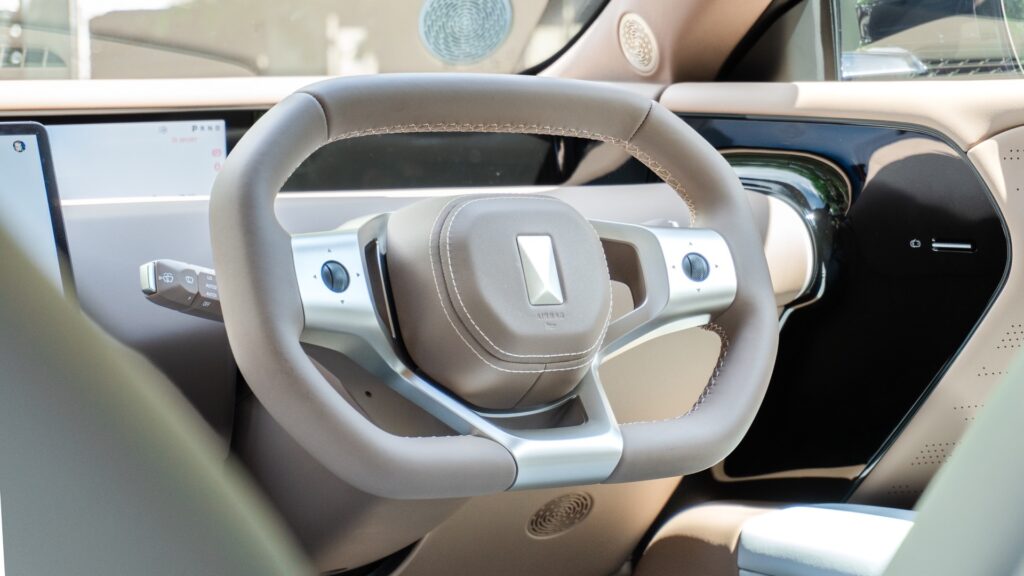
Step into the Avatr 07 and its hard not to be impressed by the sheer quality of it all. We’re talking Nappa leather seats, real Dinamica microfiber suede on the roof, and an overall air of quality that will genuinely have the German big three scratching their heads. There are no shiny or creaky plastics (we can’t say the same about some Mercedes of late), and there’s an attention to detail that showcases that thought has been put into the design − even the lower B-pillar trim panel is wrapped in leather.
Ahead of the driver, at the base of the windscreen, is a cabin-wide thin strip of screen. This 35.4-inch display incorporates the use of widgets to add an extra layer of seriously useful customisation to the experience. Here you can select a number of things to display, including tire pressure, temperatures, power, and multimedia. In a world of pointlessly expanding screen real estate, it was more than refreshing to be able to glance at some of those excessive pixels and have it tell you something relevant to your drive.
The driver and passenger seats both feature heating, ventilation, and massage functionality, and a zero gravity mode (fancy word for saying the seat goes into a theatre-style recline mode) can come in handy when recharging the 07 at a public charger. The relaxation features are coupled with several scenario modes, which you can select through the display. Want to experience a pretty poor recreation of a roaring fireplace? Select the mode, and the screen will flicker a warm light, the heating will turn on, and you’ll hear the faint crackle of a wood fire piped through the audio. Of more use, though, is the Tesla-esque pet mode, which allows you to keep the cabin at a constant temperature, with a prominent message letting passersby know your furry friend is comfortable.
Spend a little more time inside though, and some issues start to creep to the surface. The AC vents, for instance, are designed to be invisible. It’s a nice concept that grabs the minimalism-to-the-max concept by the horns, but in practice it’s impractical. Want to change the direction of the airflow, and instead of quickly making a minor adjustment to a vent, you have to delve into a menu via the touchscreen and drag to where you want the airflow blowing.
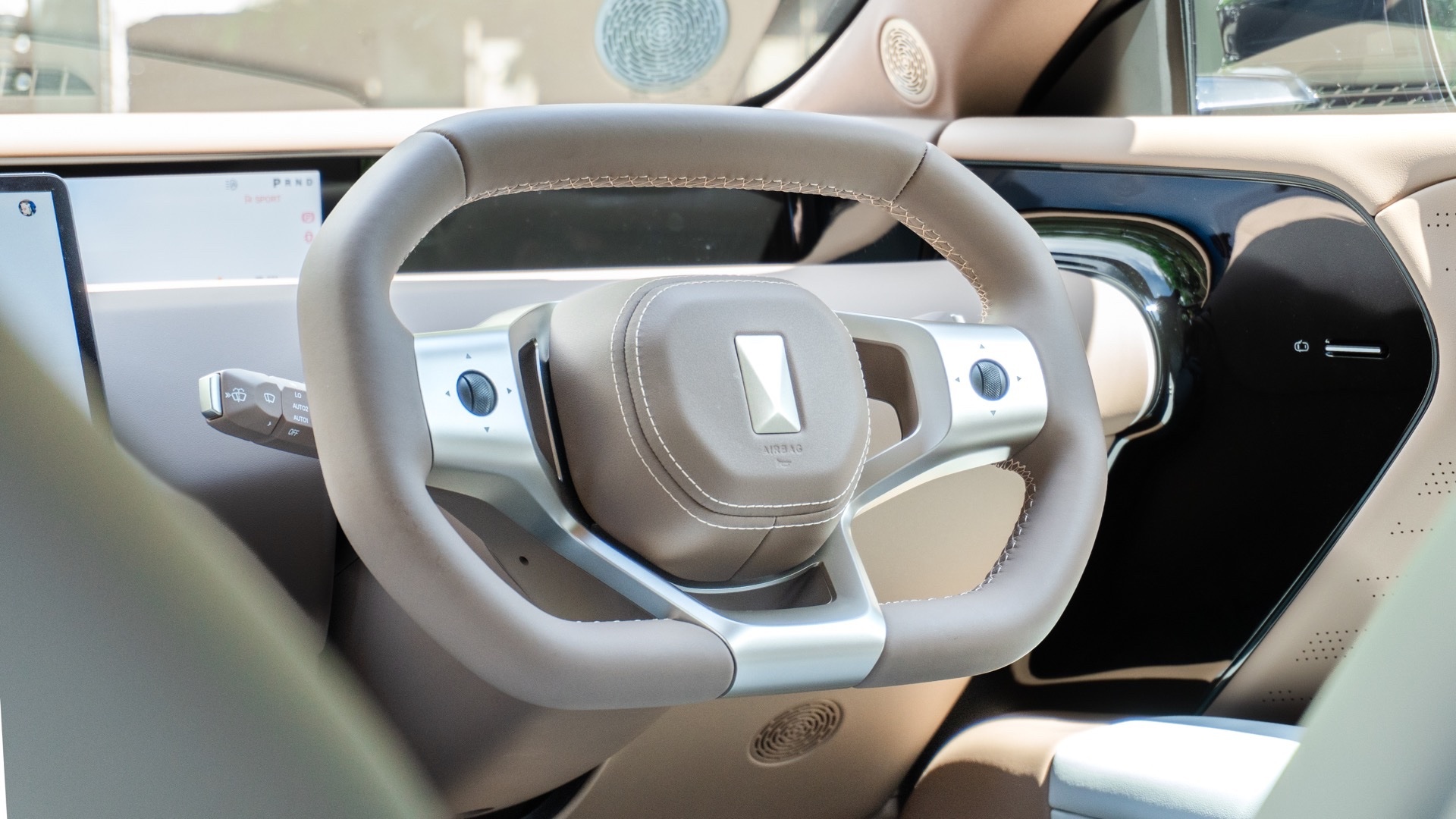
There’s the steering wheel, too. Arguably inspired by Tesla, the yoke is just not a great experience. F1 cars have them because your steering inputs are limited to a small range of motion. But in real road cars, as soon as you need to park (more on that later) and you have to do several lock-to-lock maneuvers, it just becomes a chore. Shuffling the wheel is impossible, and instead you have to half-palm it.
Another frustration is that the steering wheel and mirror adjustments need to be accessed through the screen too. We understand that this isn’t the first car, and it won’t be the last, to hide everything behind a screen, but for those of us who like to make minor corrections to our seating position, having an extra step to navigate is just an annoyance. And if we’re nitpicking, replacing the interior door pulls with push buttons seems like an exercise in frivolity.
Of course, none of that will be of concern if you opt to spend your time in the back. Now, for the Chinese market, rear space is a serious consideration, so much so that there are many long-wheelbase versions of various cars over there. There’s even a 07L, confined to China. But even in the standard 07, the legroom is seriously impressive. If the front-seat occupants are six-footers, there’s more than enough space to stretch out in the rear. If you require further legroom, then flip down the armrest, and you’ll find a set of touch-sensitive controls which allow you to move the front passenger seat forward. You can also electrically recline each outboard rear seat back, control the seat heating (but no ventilation), and open or close the moonroof sunshade, which spans the entire length of the passenger compartment.
The rear row can be folded to expand the 735-liter trunk space to 1,645 liters. There’s also a 90-liter frunk up front, providing another useful way of storing things.
Behind The Yoke
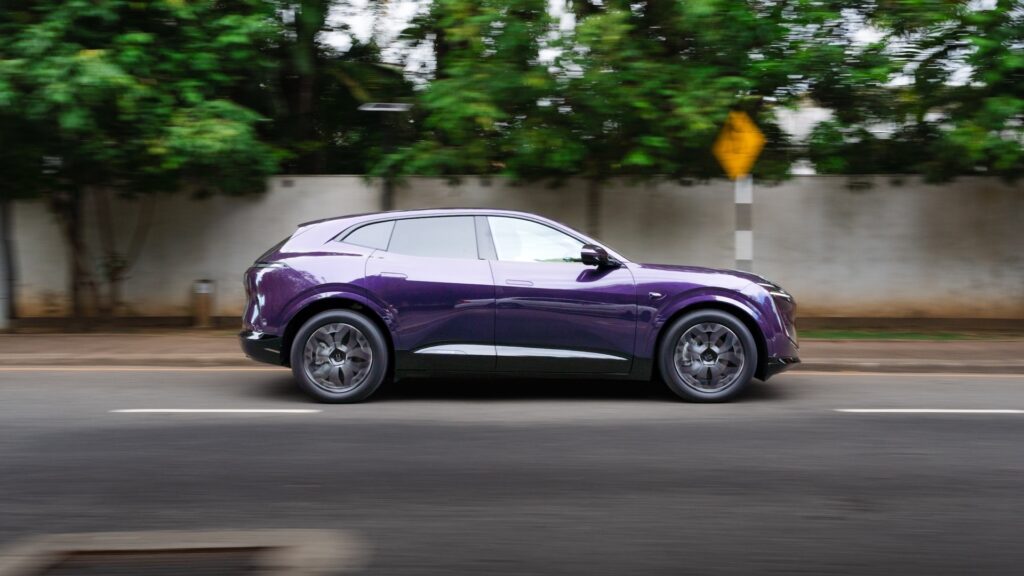
Our tested car was supplied in Sri Lanka, which receives a much smaller motor variant. This is due to punitive taxes on cars, similar to Singapore. So, what you get is a rear-mounted 99kW motor, which works out to 130 hp in old money. Despite the smaller motor, the cost of the car is still an astronomical $107,000 (LKR 35,500,000) in Sri Lanka. For perspective, in its home market of China, the 305 kW RWD version of the 07 retails for a much more palatable $34,300 (¥229,900), which makes it Toyota RAV4 money.
There’s also a tri-motor all-wheel-drive version with an insane 712 kW and 996 Nm of torque that’ll do the 0-62 mph (0-100 km/h) sprint in just 3.7 seconds. The price for that? It works out to around $41,755 (¥279,900 in China). No wonder the industry is sounding the alarm over their cars.
But back to our test unit. That limited motor output and the rather pudgy curb weight of 2,360 kg means that our Avatr 07 is not fast. Correction: It’s downright slow. It gets to 62 mph (100 km/h) in 13 seconds. That’s slower than the Mitsubishi Mirage, which, up until it was retired, held the unenviable title of the slowest-accelerating car on sale in the US, at 12.8 seconds.
The weird thing is though, that behind the wheel of the 07. It doesn’t feel as slow as it is. Whereas that 1.2-liter Mirage had access to just 74 lb-ft (100 Nm) of torque, the Avatr 07 still boasts an impressive 270 lb-ft (365 Nm). In practice, it means this heavy EV doesn’t run out of grunt and even manages to feel unstressed. And of course, being an EV, having access to all of that torque at once helps with the sensation of progress too, even if it’s just that: a sensation.
One sensation you’ll find hard to shake, though, is the ride. With an interior as luxuriously appointed as this, you’d expect the Avatr’s ride to be as cushioned as possible. Not so. The Avatr 07 handles well, thanks to its double wishbone suspension, but the lack of body roll quickly translates into an unsettling approach to potholes and smaller road imperfections.
Again, in other markets, the 07 is offered with the option of air suspension and continuous damping control. Not so here, and perhaps the engineers spent significantly less time on the coil-sprung version of the car. And while I wouldn’t call the 07 uncomfortable per se, the firm experience is less in line with the high expectations that the rest of the car’s build and tech have set.
The Party Trick
The real party piece with the Avatr 07, though, is its suite of connected systems. Unlike Tesla, Avatr chooses not to rely solely on cameras for its semi-autonomous tech and employs millimeter-wave radar as well. Combined with Huawei’s advanced processors and related tech, the 07 manages to impress on multiple safety fronts.
What the 07 can’t do in this region is self-drive like FSD can. It can, however, self-park. Now auto-parking in itself isn’t a massive boon. But the car’s walk-away parking is. Here, you’re given the option of parking the car centered within a space, or to the left or right side — ideal if you’re parking next to a wall for example and you could do with the extra room to squeeze out the door. You also get walk-away parking, which allows you to exit the car and let it park itself completely unsupervised. Similarly, you can summon it from said parking space, via the connected app.
See Also: China Wants To Build Cars In America. Should We Let Them In?
More than the concepts themselves, there’s a marked improvement in these operations from the now 4-year-old 11. When tested around pedestrians and busy traffic, the 07 was able to handle itself without freaking out at all, not needing the same kind of wide berth that its larger sibling did.
The Verdict
While it’s not perfect, the Avatr 07 stands as proof of just how quickly the tides are changing. The 11 we drove last year, already a car that was midway through its lifecycle at the time, was an impressive statement. The 07, even if it isn’t as flashy, manages to present itself as an almopst generational shift. There are no departures in design, materials, or even the basics behind the technology.
However, the experience of everything else — the design of the interior, the hushed ride, and the focus on premium materials — they all come together to paint the picture of a product that is very mature. It’s no longer experimental, like the 11, with its waterfall-inspired center speaker, electric doors, and gimmicky passenger screen, was. The 07 is a genuinely compelling car because it’s an excellent package.
I suspect not everyone will be happy about that. But the truth is, China’s home market is the most cutthroat we’ve seen. Manufacturers have to move the needle if they’re to survive. The benefit is we get to see that real-time shift. And yet something tells me, the best is still yet to come.