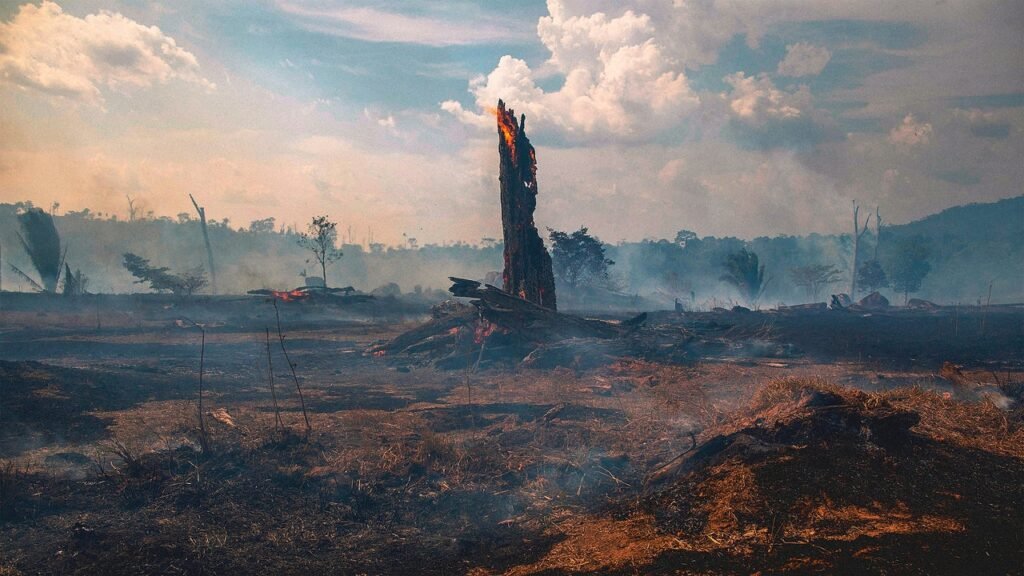
The Amazon rainforest has long been called the “lungs of our planet,” because of how it takes in and stores billions of tons of carbon dioxide.
But the Amazon has been losing that ability. Years of deforestation, drought, and fires have hindered just how much CO2 the rainforest can absorb.
Now, the Amazon rainforest often releases more carbon than it takes in, a new study finds. It’s only in the “wettest years” that the rainforest is nearly carbon neutral.
The study, published in the journal Nature, was led by Brazil’s National Institute for Space Research and included an international team of researchers. They used 15 years of atmospheric carbon measurements, which had been collected by research planes.
Those years were then grouped by different characteristics, like the level of human activities—which includes deforestation, logging, or using fires to clear land—and the amount of climate stress—like drought or heat waves.
What the research found
Some years were wet with low human activity, some had low climatic stress but high human activity, and others had “intense global climate events, such as El Niño” along with intense amounts of human activity.
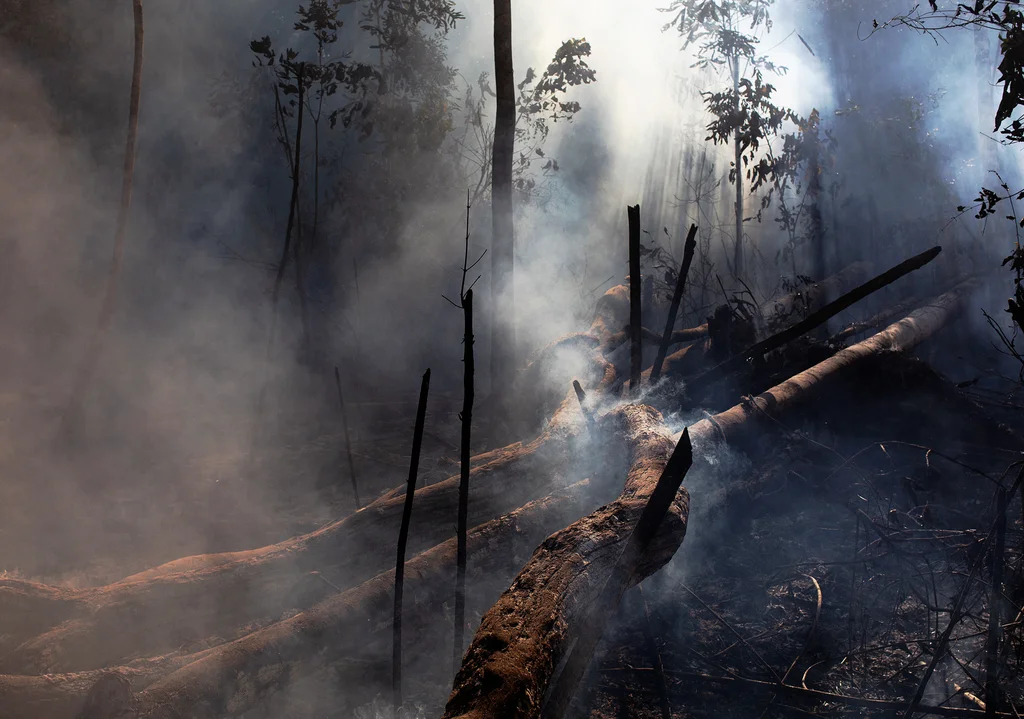
In the years where the rainforest stayed relatively wet, and where there was relatively low deforestation and few wildfires, the Amazon was nearly carbon neutral. The forest was still a slight source of carbon into the atmosphere, but it “did not significantly contribute to the global carbon balance” in those years, the researchers write.
When drought or heat were mild but deforestation and wildfires occurred more, the net carbon emissions from the Amazon “jumped dramatically,” according to a statement.
The years with lots of climate stress coupled with lots of damaging human activity were the worst. But they were still close to the net emissions from the second group, which led researchers to say that most of the carbon emitted by the Amazon comes from human activities, predominantly land-use change.
“Global climate and climate-mediated stressors are important modulating factors, but people’s choices about how to use and live on the land surface in this region are key to understanding the movement of carbon between the land and the atmosphere,” says coauthor Jen Johnson, assistant professor of ecology and evolutionary biology at the University of Kansas, in a statement.
This isn’t the first paper to point out that the Amazon is not the grand carbon sink it once was. A 2021 study looked at how, as huge areas of the forest are cut down or burned, its ability to capture carbon was shrinking.
In 2023, a year of extreme drought and high temperatures, researchers showed how the Amazon became a source of carbon emissions, releasing between 10 and 170 million tons of carbon instead of absorbing it.
Slow burn
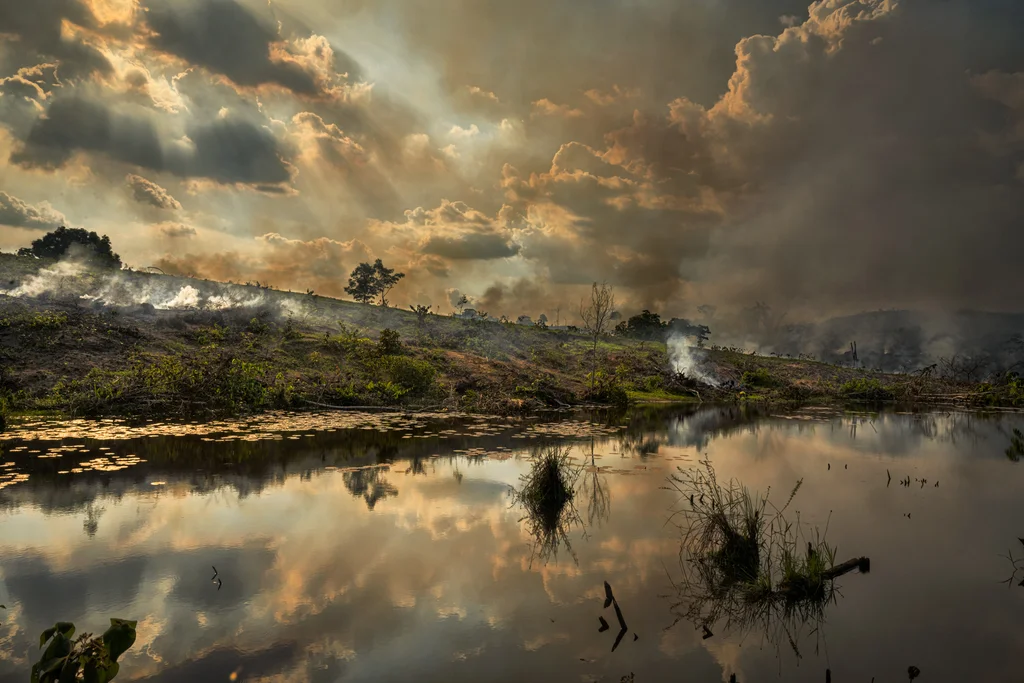
We’ve also long known that human activity is threatening the Amazon’s survival. In 2019, there were more than 74,000 fires burning in Brazil, mostly in the Amazon—80% more than the year before.
And though we often think of these as “wildfires,” they’re primarily set by ranchers who are clearing land for cattle to meet the demand for beef.
The more deforestation, we know, the drier the Amazon becomes, which makes it even more difficult for the remaining parts of the forest to recover.
“For many decades, there has been concern about the idea of a tipping point, where gradual drying and gradual loss of the forest could feed back on itself in a self-reinforcing way,” Johnson said.
“That could create a transition from an ecosystem type that has stored huge amounts of carbon in living vegetation to drier forests or other ecosystem types that do not store nearly as much carbon,” she continued. “The more carbon from the Amazon that moves into the atmosphere and stays there, the more trouble our climate system is in.”
Though the outlook is dire if these activities continue, the researchers say that policy changes can help.
“There’s a clear, policy-relevant prescription that comes from this analysis,” Johnson said. “Measures to bring deforestation down to zero are required to manage net carbon emissions from the Amazon . . . It’s not something that’s out of our control because it’s being driven by global climatic factors—it’s something very much under the control of governments and individuals.”