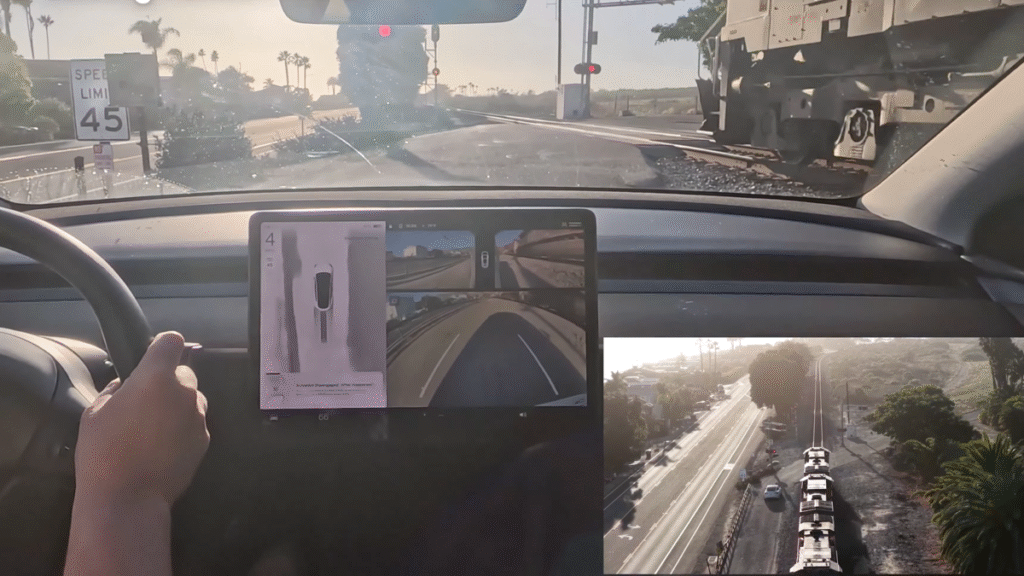
Texas resident Joshua Brown was behind the wheel of his Tesla with FSD engaged when he pulled up to a level crossing. The gates were already down when, without warning, his Tesla reportedly accelerated forward on its own. It happened fast. The lowered crossing gate slammed into his driver’s side window, and Brown had a split second to react. He told Storyful, along with onboard video from his Tesla, ”Years of racing have drilled the old adage into me: when in doubt, throttle out.” So instead of braking, he floored it, bursting through to the other side of the tracks, mere seconds away from collision with the train. Moments later, after he had come to a stop, a notification pops up on the screen informing him that FSD had disengaged. The incident, once again, highlights why Tesla’s FSD is being investigated by the NHTSA and why drivers must not mistake the technology as being fully autonomous at this point in time.
Storyful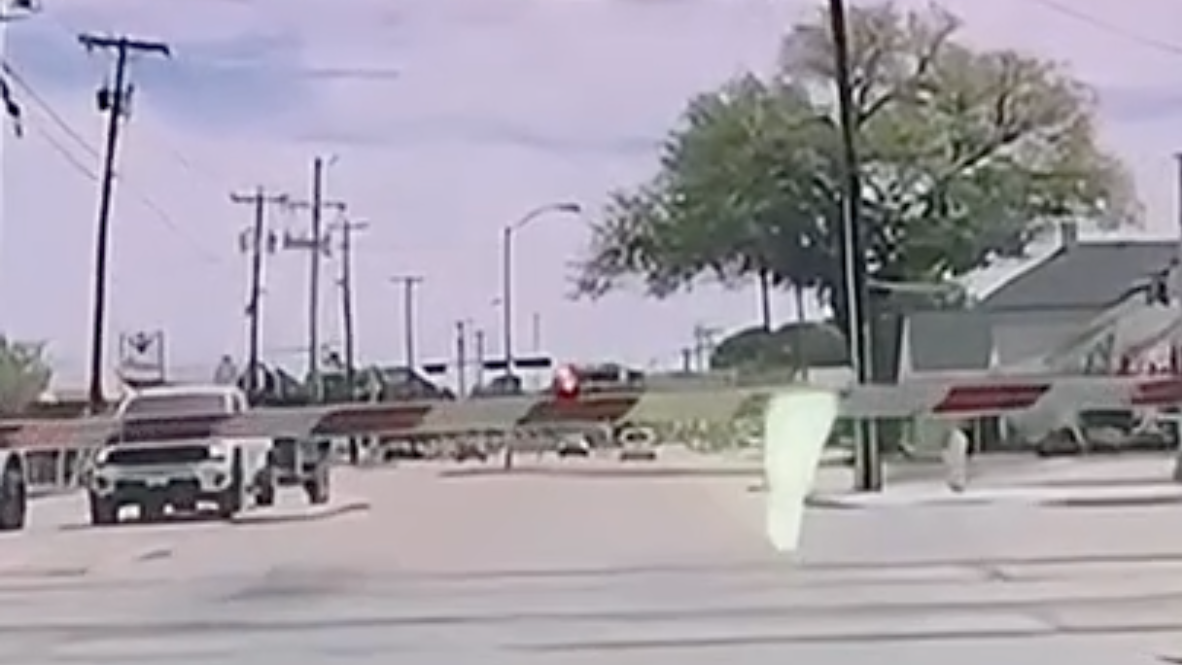
Latest In A Growing Pattern of Close Calls
This is not the first time Tesla’s FSD has found itself in trouble near railroad infrastructure. There have been multiple documented incidents across the United States where the system has struggled with level crossings, unexpected acceleration, and failures to respond correctly to physical barriers. Regulators and safety advocates have long pointed to these near-misses as evidence that the technology is being rolled out faster than it can be validated. The National Highway Traffic Safety Administration has opened several investigations into Tesla’s driver assistance systems in recent years, and the broader conversation around autonomous driving has grown increasingly cautious. Brown himself had logged over 40,000 miles using FSD without a serious incident before this day, which makes the failure all the more striking.
Tesla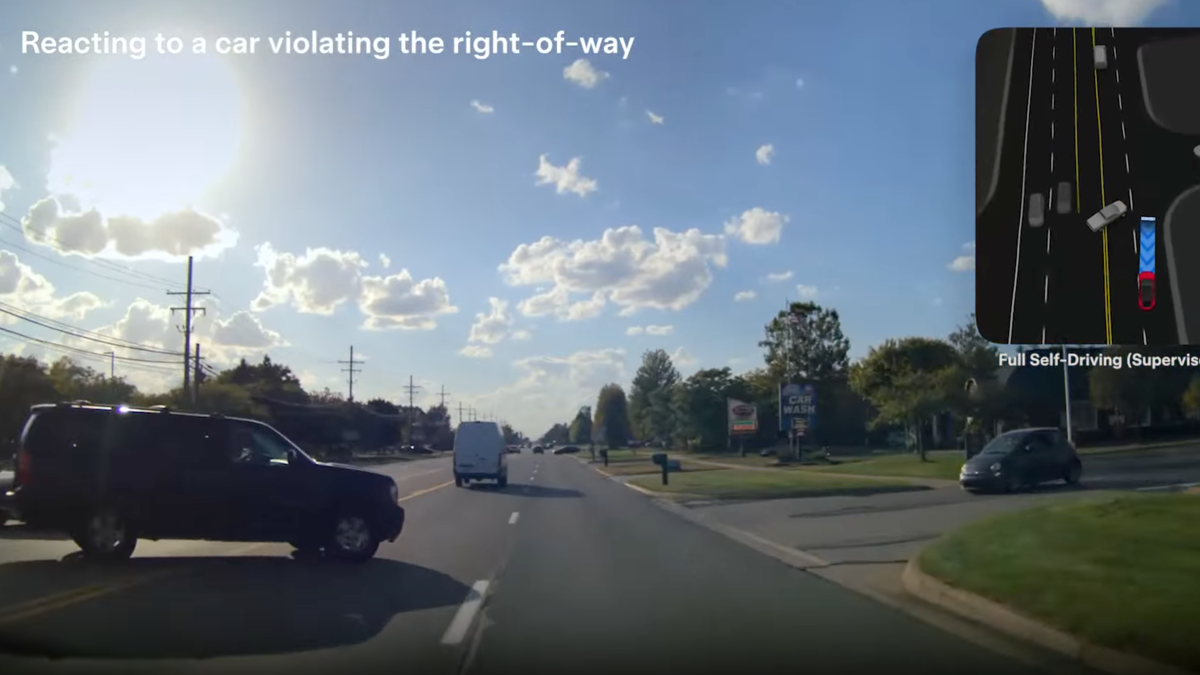
The Update That Came the Day After
One day after Brown’s incident, Tesla released a new version of FSD Supervised. It promises 20 percent faster reaction times and a range of other safety improvements. Whether that update was directly connected to the Texas incident is unknown. The timing, though, is hard to ignore. Tesla has consistently maintained that FSD Supervised is far safer than human driving, citing internal data showing one major crash every 5.3 million miles compared to one per 660,000 miles for average drivers.
Tesla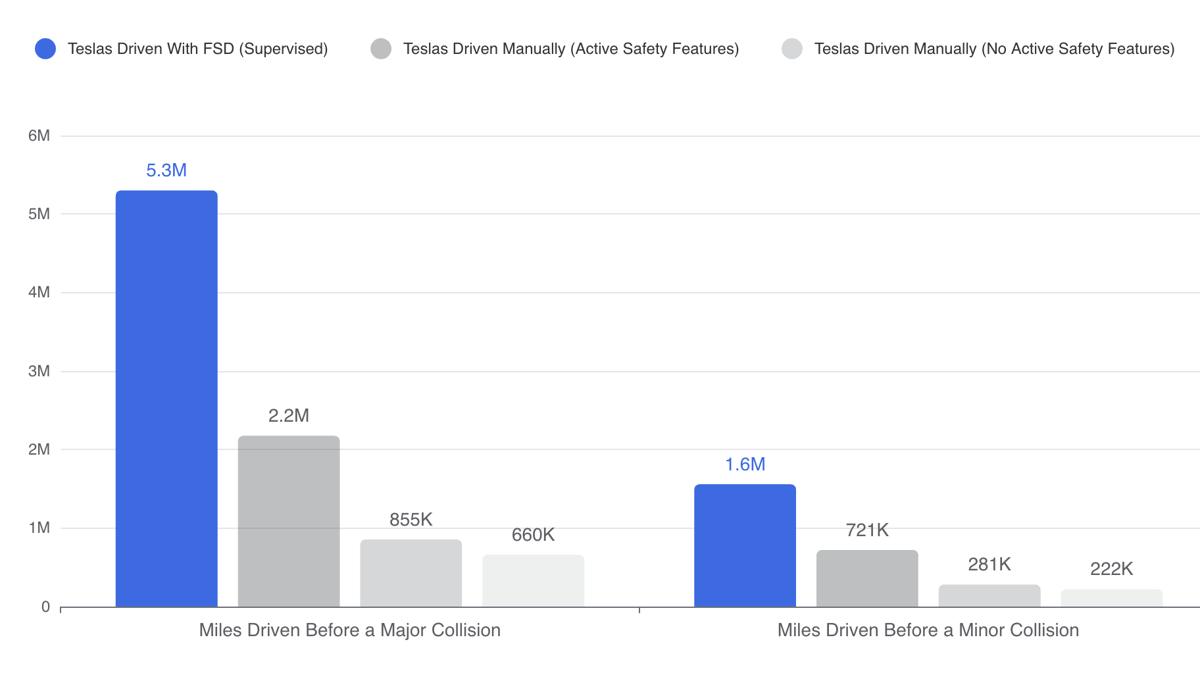
But Elon Musk himself acknowledged in January that truly reliable full autonomy is still several years away. Despite its name, Full Self-Driving does not mean fully autonomous. Tesla instructs drivers to remain alert and keep their hands on the wheel, and it’s a good thing this driver’s instincts took over where FSD failed.