America is in the thick of a loneliness epidemic. More than a fifth of the population reports feeling isolated. In a 2024 Harvard survey, 73% of people say that technology is part of the problem. Could technology also be the cure?
Andy Dunn hopes so. Dunn, best known as the founder of the menswear label Bonobos, which sold to Walmart for $310 million in 2017, has turned his attention to a trickier problem: friendship. Over the past five years, he’s been building an app that helps people to make real-life friends. In 2024, that idea crystallized into Pie, which helps users find local events and uses an algorithm to identify people they are most likely to click with. Dunn landed $11.5 million in Series A funding led by Forerunner Ventures, an early Bonobos investor.
Dunn has been testing the app in Chicago and Austin, but now he believes it’s ready to go nationwide. The app is slowly rolling out in cities across the country, and he’s just hired Nadya Okamoto, founder of the period care brand August, as his co-founder and CMO. The app currently has 300,000 active users.
“We’ve been building Pie with a lot of momentum for two years,” Dunn says. “Now, we need to start a movement and bring in an army of people who believe that getting people together is important.”
A DTC Pioneer
Launching an app is new territory for Dunn. He was a pioneer of the direct-to-consumer movement, launching Bonobos with his Stanford Business School roommate Brian Spaly in 2007. The company, known for its flattering men’s trousers, raised $127 million in funding, fueling rapid growth through its website and stores. After the Walmart acquisition, Dunn came on to help run the company’s growing stable of digital brands.
Building a disruptive clothing business was thrilling to Dunn in the 2010s, but he believes there are bigger problems to tackle today. While many DTC brands were focused on improving consumers’ quality of life with consumer products, he believes that today’s consumers are preoccupied with social issues like the growing wealth gap, the looming threat of AI to their careers, and loneliness.
Many other players in the DTC movement have also moved away from consumer brands to wrestle with other issues: The founders of Everlane and Allbirds have each launched supplements companies. Forerunner Ventures, which backed Glossier, Away, and Dollar Shave Club, is now investing in healthcare, mental health and wealth-building startups.
Tech for Friendship
Dunn recently learned firsthand how hard it is to make friends as an adult. He moved from New York to Chicago in 2021 to be closer to his parents, and in the months that followed, he realized that he had no one to call up for dinner.
Part of it comes down to the mechanics of making friends. When he read Dr. Marisa Franco’s book Platonic, he discovered the insight that friendships only happen when people run into one another repeatedly. Over the course of between five to ten interactions, people tend to open up to one another. That’s a hard thing to engineer in a modern world with fewer institutions bringing people together, but Dunn believes that technology can help with this.
“I got really excited about how to create a product that would foster social collision,” he says. “How do you create a product that lets you to run into someone in a group setting?”
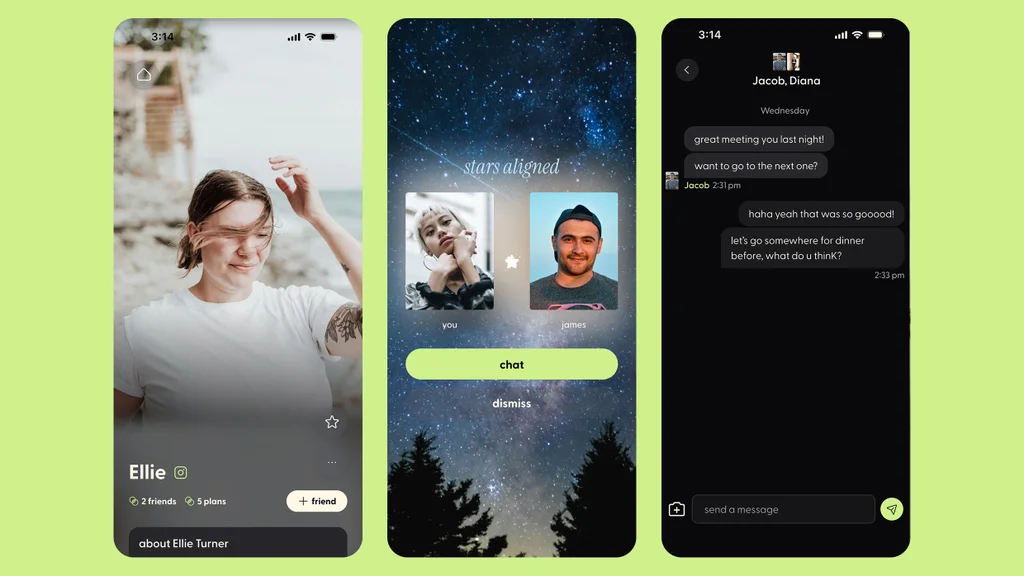
Pie is far from the first app to tackle the problem of making friends. One recent example is Bumble BFF, the dating app’s effort at friend-making, which launched in 2023 and has since been folded into a new app. Okamoto herself has tried many platforms over the years, including Geneva, Discord, and Mighty Networks. “I’m not blind to the fact that there have been so many community tools,” she says.
For Dunn, the problem with these apps is that they’re focused on making one-to-one introductions, much like with a dating app. But friendships don’t work the way dating does. “A friendship match becomes a standoff, where neither person wants to make the first move,” he says. “A one-on-one friend date is kind of intense.”
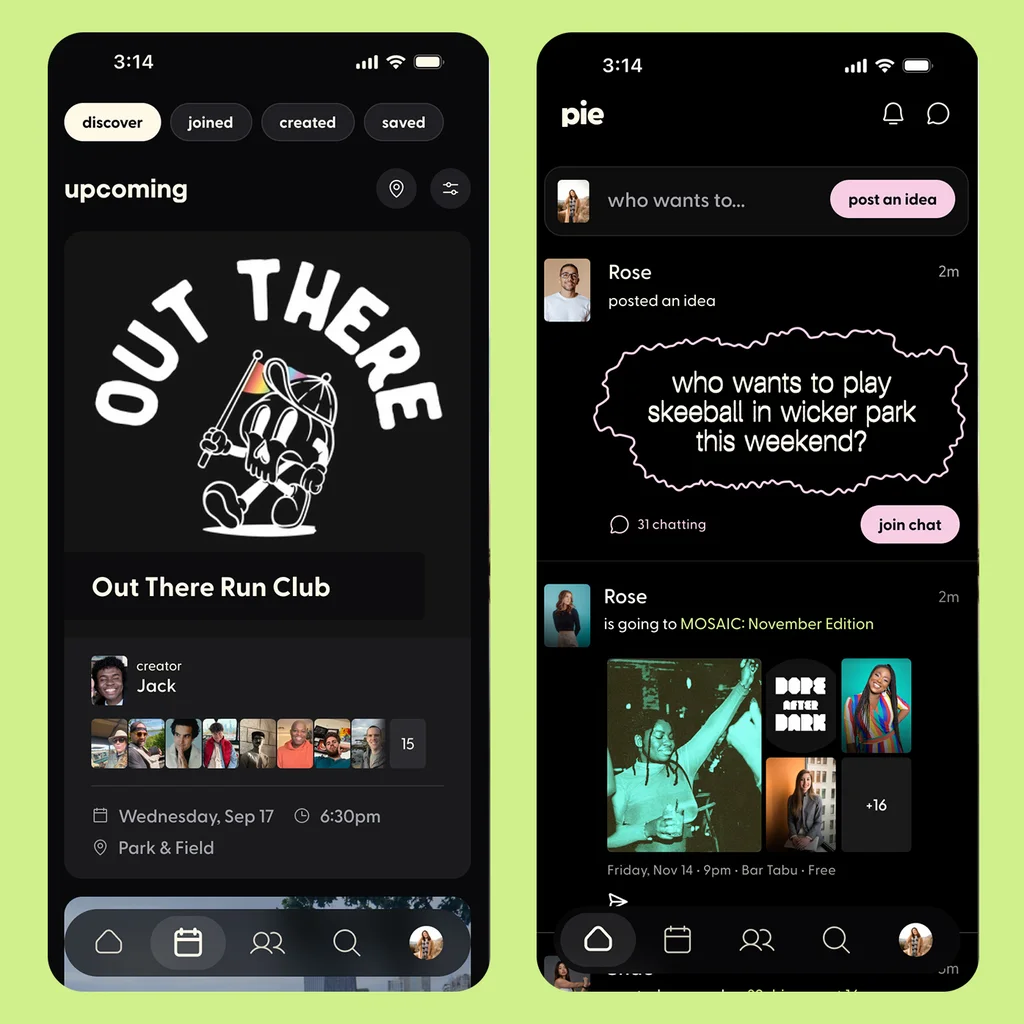
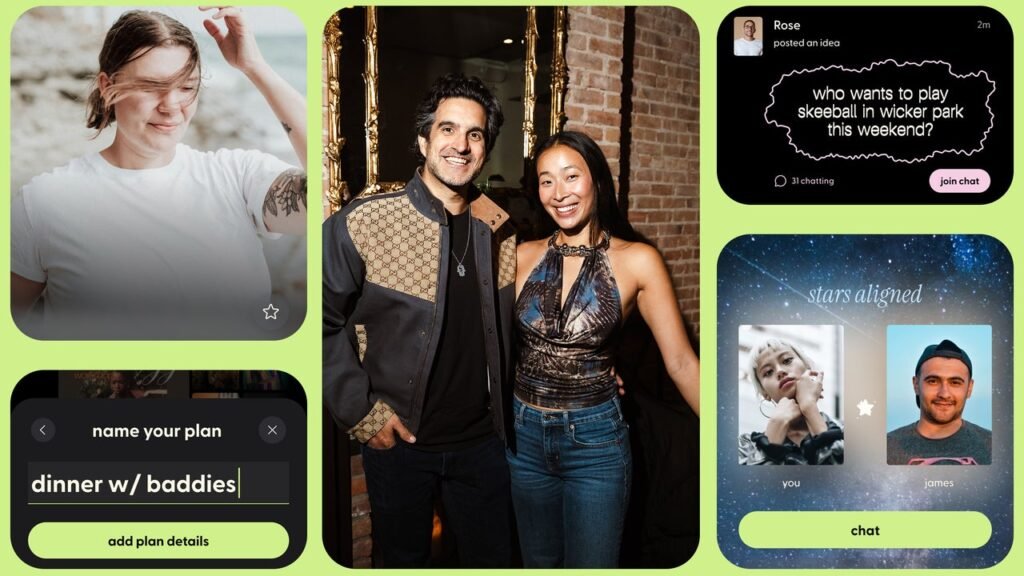
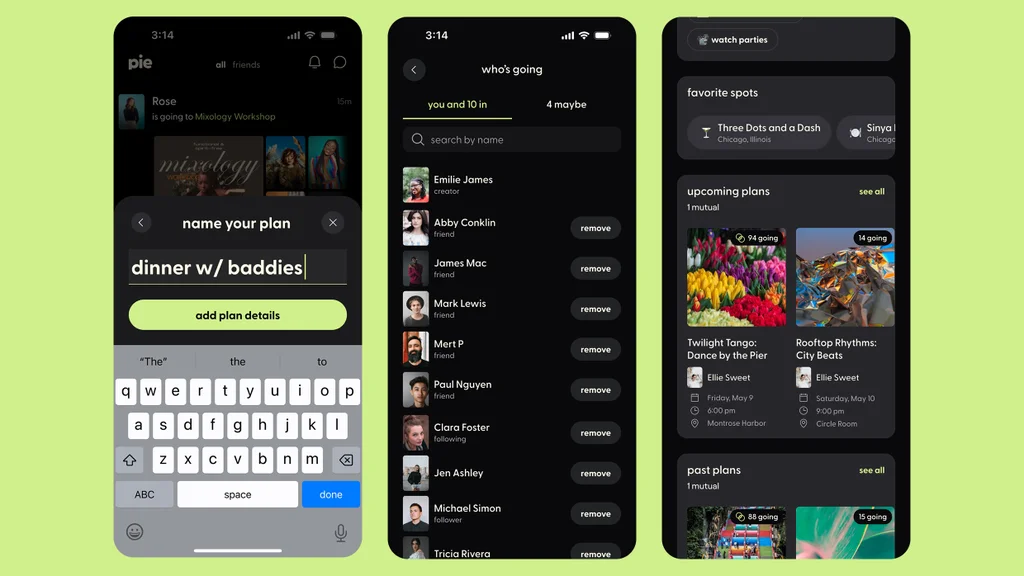
In 2024, he pivoted to a new format: a feed of local events, like running groups and mahjong clubs, that appeal to a wide range of interests. But what separates this from another events platform like Meetup or Eventbrite is that it allows participants to take a psychology-based quiz to be matched with other people who will be attending the event. Then the app puts six compatible people together in a group chat. This simple tool allows people to begin to build bonds with people close to them, and over time, this can lead to sustained friendships.
“What we learned is that we actually need a social life operating system that takes you from the initial connection to the downstream interactions that turn into a real friendship,” he says.
Fixing What Social Media Broke
In some ways, Pie is meant to make good on the promise of social media. When Facebook first emerged in 2005, it was full of tools designed to help people maintain friendships, from sharing events to wishing friends happy birthday to sending messages. But over time, the platform became choked with ads, and shifted from chronological timelines to algorithmic feeds full of posts designed to hold your attention. This was partly a product of its business model, which was premised on keeping people spending time on the app so they would be exposed to more ads.
“It leads to wanting to addict users, rage-baiting, and rewarding polarizing content over wholesome content,” says Dunn.
For Okamoto, what sets Pie apart from Facebook, Instagram, and TikTok is that it is built to encourage active participation—attending events, creating them, messaging other people. “The goal is not passively consuming content, which is what Meta has become,” she says. “We’re trying to create new habits around going to these events, so that people become active users; you find a cool event, you keep coming back, you build connections within Pie.”
That said, Pie currently doesn’t generate revenue and has no clear plan to. “There isn’t a monetization structure at the moment,” says Okamoto. “The beauty of where the app is right now is that we’re purely focused on growing our user base.”
Dunn is strongly against bringing advertisers onto the platform. Instead, he believes that with enough users, Pie can move towards a model where users can join the platform for free but pay to use certain features. But for the model to work, he believes Pie needs upwards of a million daily users, with 100,000 of them paying. “Our belief is that the next wave in consumer social media is freemium—like Spotify and Duolingo,” he says. “We’re not worried about that yet. We’re focused on building something big, and when the time comes, we’ll focus on monetization.”
Ultimately, Dunn believes that this app will appeal to a wide range of people, because there are many inflection points in life where you want a richer social life: When your friends start getting married or having kids, for instance, or when they move away.
“I think of Pie as an IRL social network,” says Dunn. “Pie is equipped with the functionality that Facebook had back in 2005, when it was actually where things happened.”