
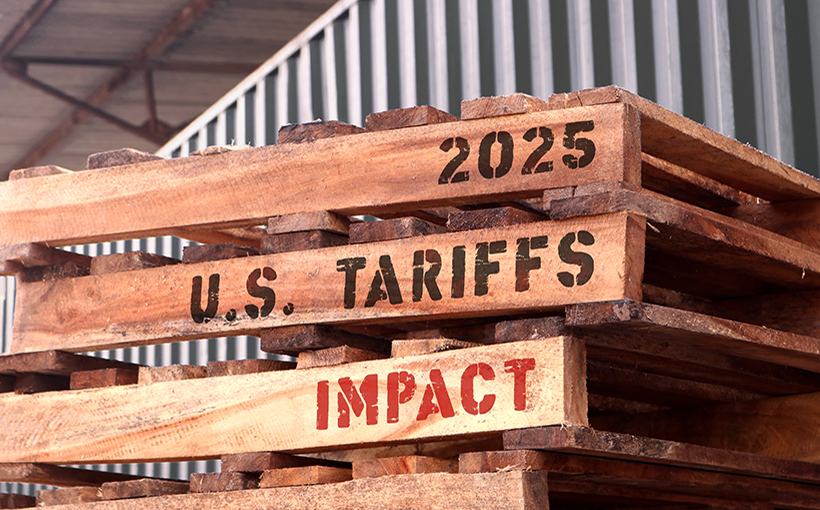

Continually changing tariff strategies and announcements are among some of the factors leading to the current economic uncertainty. According to a recently released report from Parkview Financial, “The Implication on CRE Lending,” uncertainty continues. “The commercial real estate sector usually reacts more slowly to macroeconomic changes, but the current trajectory of trade relations suggests inevitable adjustments in real estate fundamentals,” the report noted.
Dhaval Parikh, managing director and head of Capital Raising and Investor Relations with Parkview, told Connect CRE that perhaps unsurprisingly, tariff uncertainty will have a direct impact on construction costs, delivery timelines and underwriting.
Is Stagflation Lurking in the Wings?
The report noted that the Federal Reserve could “consider cutting interest rates if the ongoing trade war continues to erode U.S. economic confidence and consumer confidence and leads to deeper job losses. “
Lower interest rates look good in theory—unless other issues like inflationary pressures come into play. Higher inflation, combined with growing unemployment and a continued slowdown in economic growth, could mean stagflation. The report commented that higher inflation and unemployment mean “the Federal Reserve may be caught in a bind.”

Additionally, Parikh, one of the report’s co-authors, said that stagflation would be a problem for commercial real estate.
“Slower economic growth could mean less demand for real estate, while interest rates would remain elevated to combat inflation,” he said. Furthermore, as interest rates are correlated with cap rates, “we would also expect depressed valuations,” Parikh commented.
Stagflation could also be a problem when refinancing. “Property owners would need to contribute additional equity to ‘de-lever’ the capital stack in line that reflects slower rent growth, higher financing costs and lower valuations,” Parikh said.
Are there Possible Solutions?
Possibly. Parikh suggested that developers might want to adjust their underwriting expectations to account for higher prices and longer construction timelines. “This can provide a more realistic framework for project planning,” he said.
On the investment side, Parikh suggested that some geographic markets offer a more favorable balance with supply and demand.
“With supply expected to be constrained due to the rising costs of construction materials, we believe that demand in these markets will outstrip supply, which may make them more resilient to economic stagnation and temporary inflation from tariffs,” he explained.
Then there are the asset types. Parikh noted that single-family and multifamily properties are necessities and could prove themselves more resilient to economic swings. Stabilized properties or those undergoing modest renovations could also be insulated from rising costs, he said.
“Extending this to the opportunity for lenders, we currently favor bridge financing on multifamily assets with a clear path to stabilization,” Parikh commented. “These properties should be in markets with balanced supply-demand dynamics and a strong long-term outlook.”
The post Tariffs and CRE Lending: The Challenges appeared first on Connect CRE.