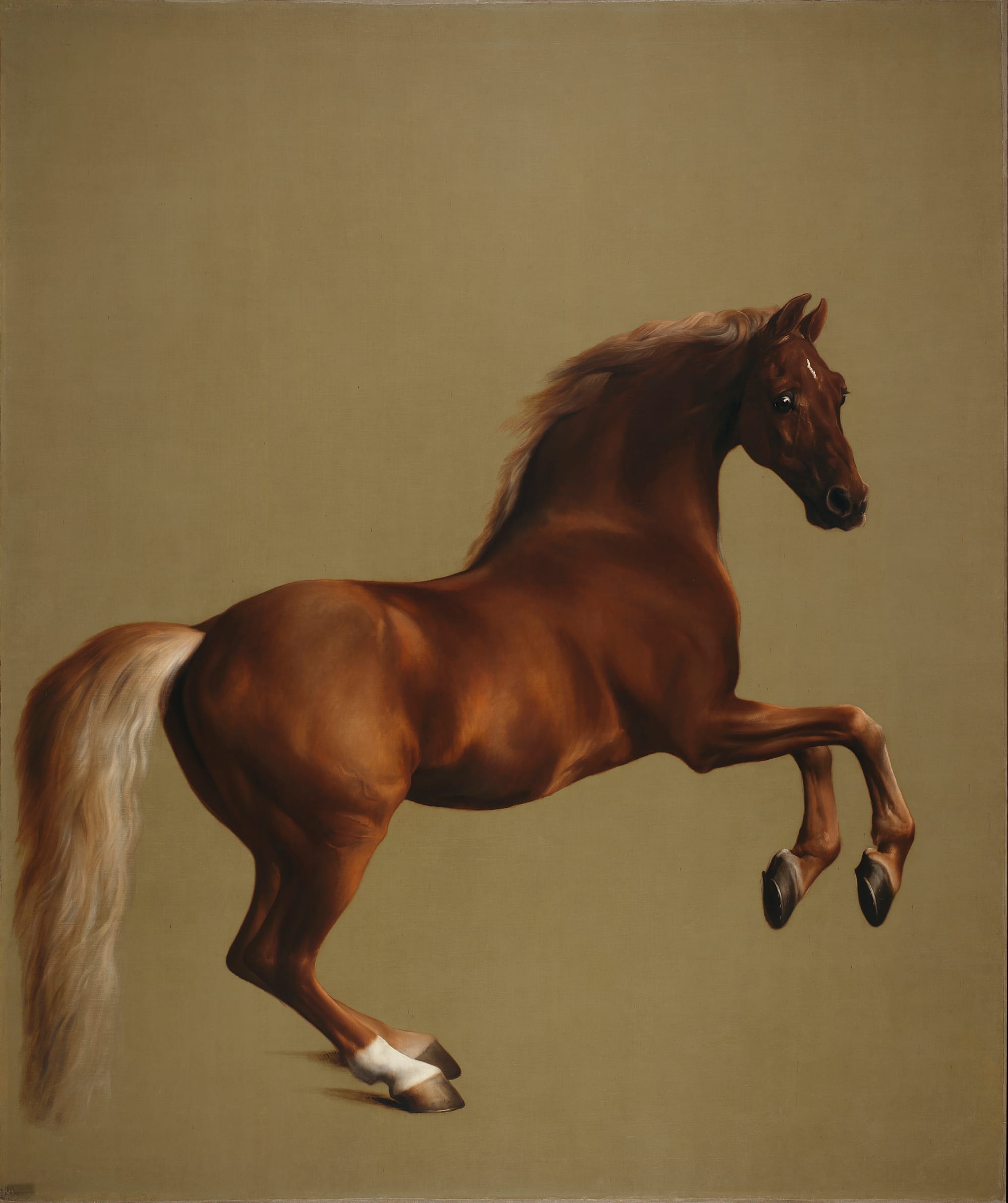
LONDON — What’s in a name? “Whistlejacket” is a magnificent, rampant beast. Where to find him, though? Start at the Western (Sainsbury Wing) end of the long corridor that takes you through and past much of the long history of the great paintings in the possession of London’s National Gallery.
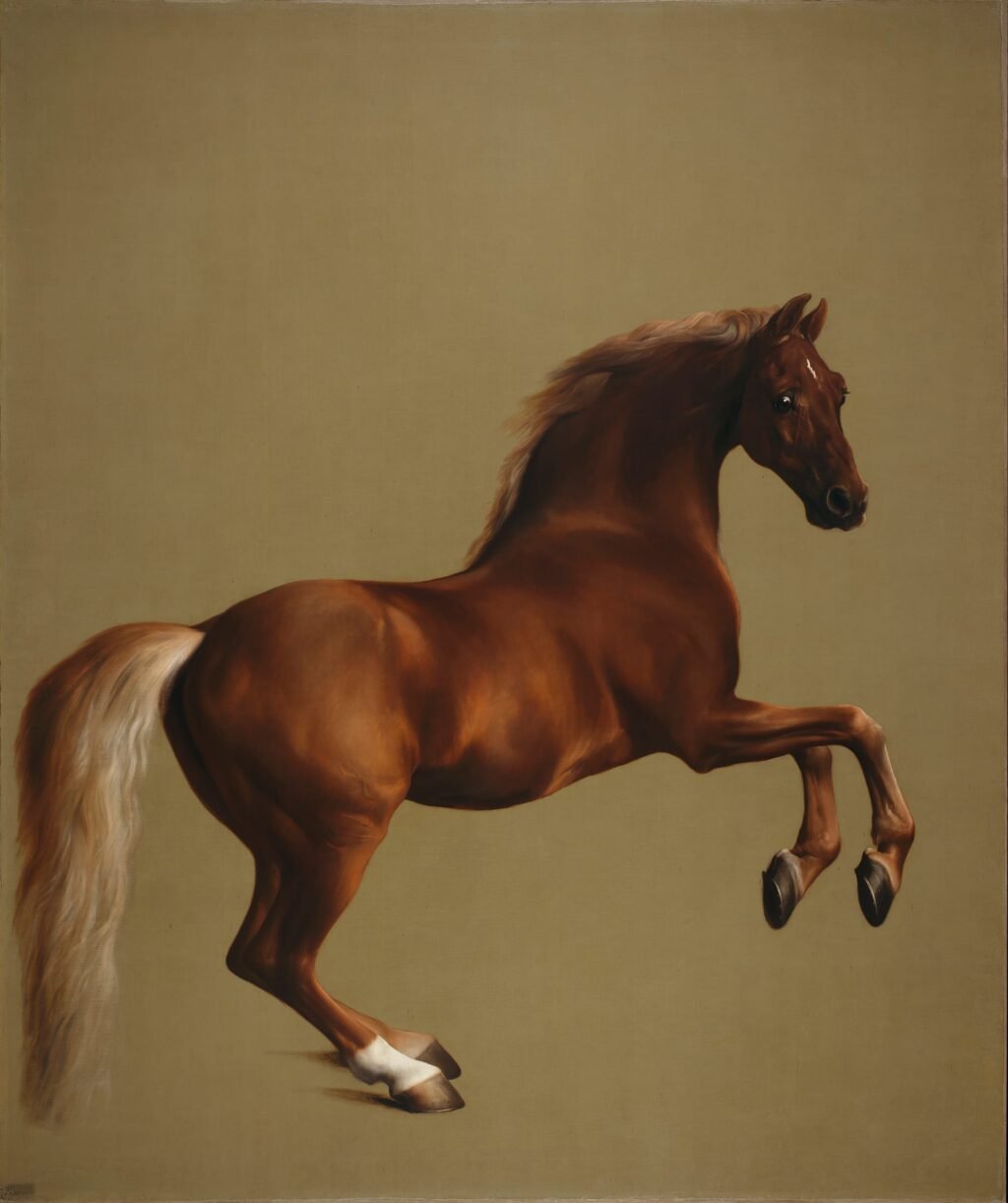
The sightline is arrow-direct, through magnificent doors, framed in marble the color of a rich, mottled madder. Look directly ahead of you, through room after room after room. And there, at last, you will find him, facing you — in fact, his pose is side-on, though his head is twisted to catch the bright white of his eye, on the wall of Gallery 34, reared up in all his fiercesome equine magnificence, “Whistlejacket,” that masterpiece of a painting by a man named George Stubbs, the son of a currier, born in Liverpool.
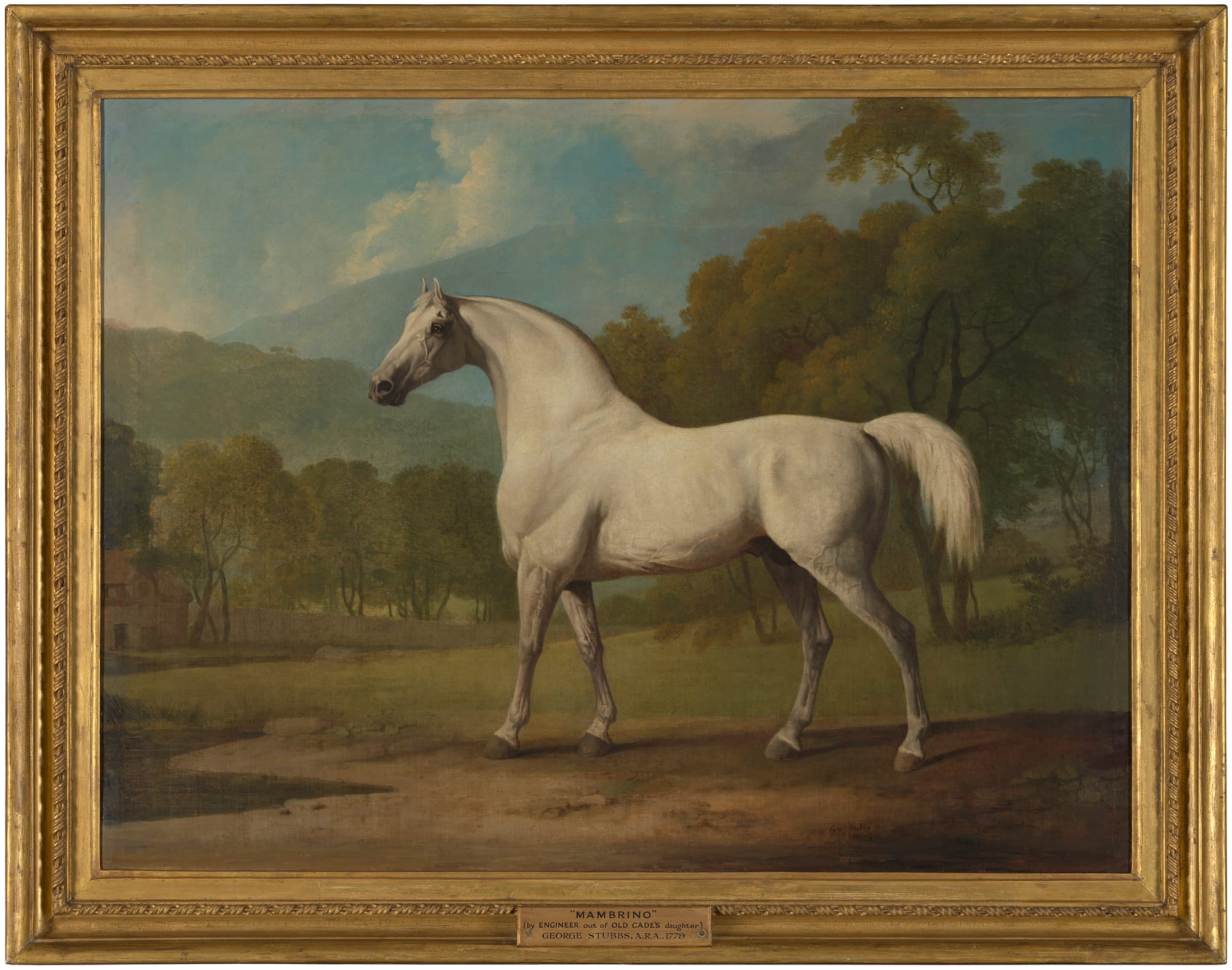
Stubbs: Portrait of a Horse consists of studies and working drawings, three paintings, and a copy of The Anatomy of the Horse, a treatise of 50,000 words, together with descriptive anatomical illustrations reduced to 18 tables. Stubbs published this work in 1762. He knew his horses from the inside out. He dissected them. He saw – as we can see for ourselves – deep into their innards: veins, arteries, ligaments, musculature. His drawings have a ghostly, translucent quality about them. He combines a profound anatomical knowledge with a certain imaginative bravura. When Stubbs paints a horse, it comes alive. It both gleams and pulses.
Stubbs made “Whistlejacket” in 1762. The painting depicts a steed fit for any fat king to depress. Except that none did. “Whistlejacket” is riderless. And out on his own. He has no context, no turf to thunder over, no grass to crop. He is set against a plain ground, in a neutral colour.
In this part of London, in Trafalgar Square, and then down through Whitehall and into Parliament Street, there are many, many statues of horses. No, let me correct myself: There are many statues of men on horses; men who are raised up by their horses to heights much greater than they often deserve — warmongers, politicians, aristocrats. Unlike “Whistlejacket,” these horses were the nameless and unacknowledged servants of those who tamed and ruled over them.
“Whistlejacket” was destined for a rider, too. His rider was to have been the newly crowned Hanoverian king of England, George III, a man who spoke German and was best known for his madness in his later days. Yes, it didn’t happen. “Whistlejacket” was spared to live on in all his magnificent riderlessness.
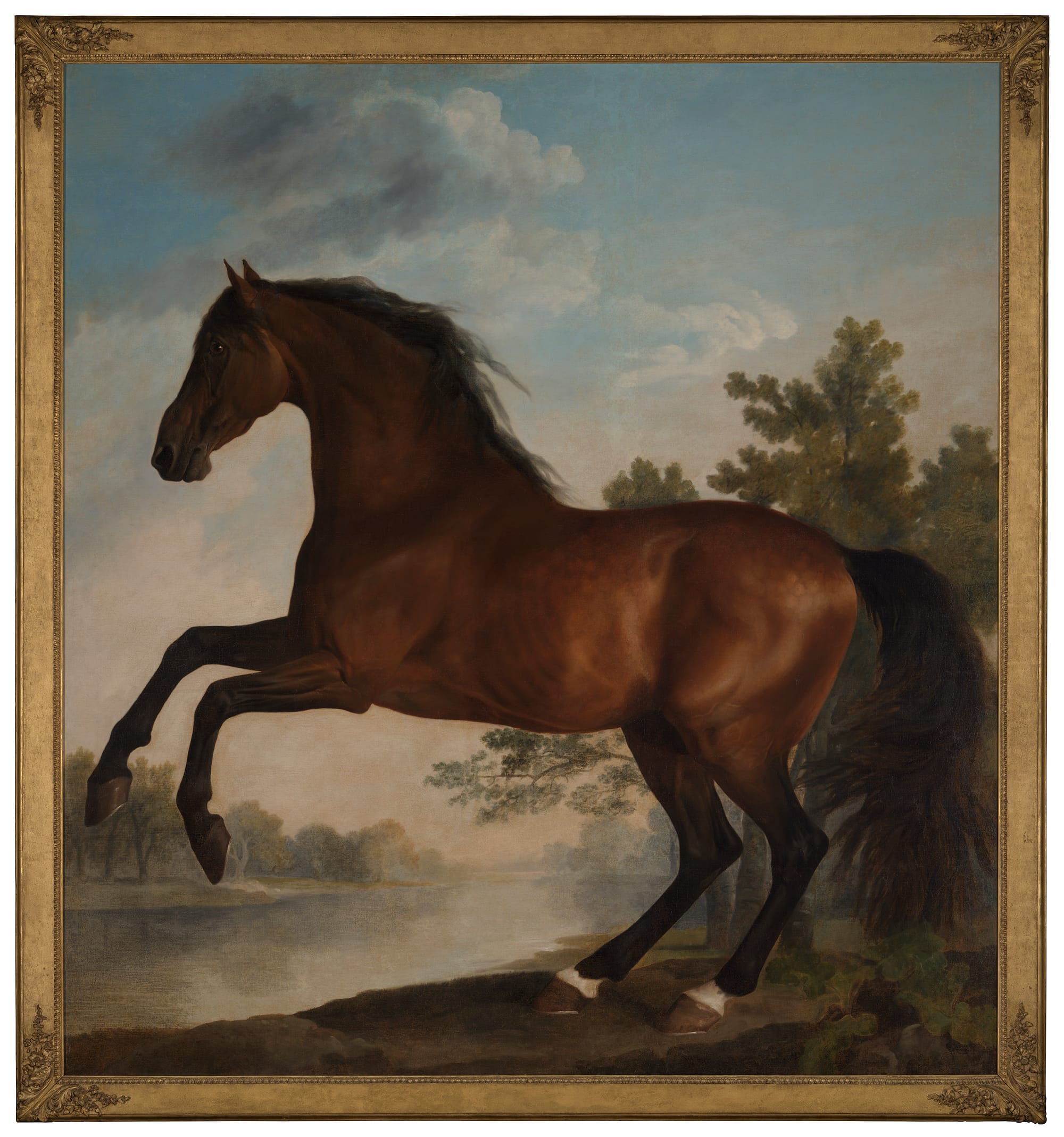
This little story is told in another gallery, where an entire exhibition is currently being staged devoted to Stubbs, his horse paintings, and his profound knowledge of horse anatomy. The only other painting of a riderless horse on the scale of “Whistlejacket” by Stubbs generally lives out of sight in a private collection, but this morning it faces us as we walk into the exhibition in Gallery One. Its name is “Scrub.”
“Scrub” is set in an imagined landscape. He rears up beside a river, nervily, as if water is a challenge, something to be wary of. Beware of mankind a little more, perhaps.
Stubbs: Portrait of a Horse continues at the National Gallery (Trafalgar Square,
London) through May 31.