Research & Developments is a blog for brief updates that provide context for the flurry of news that impacts science and scientists today.
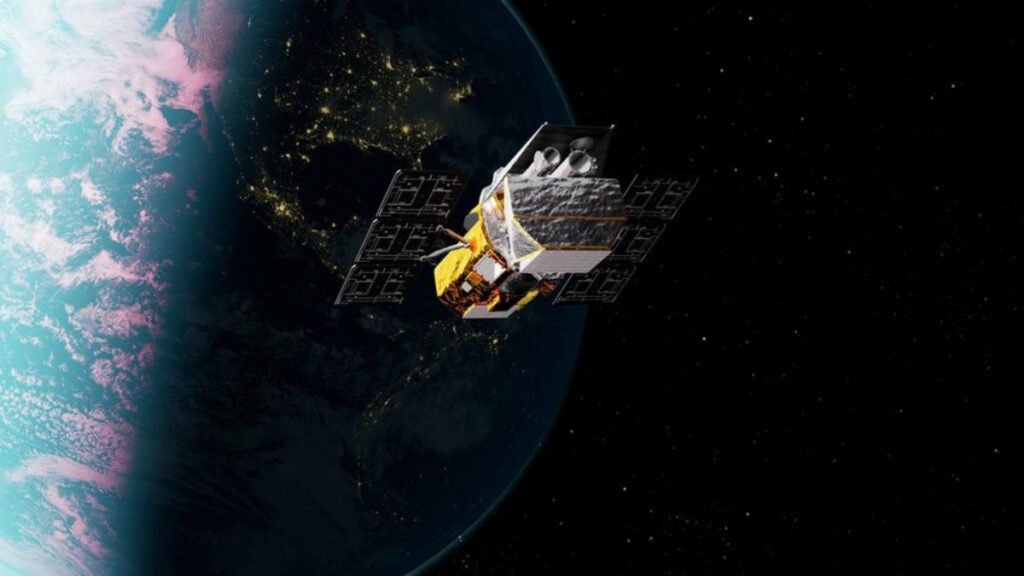
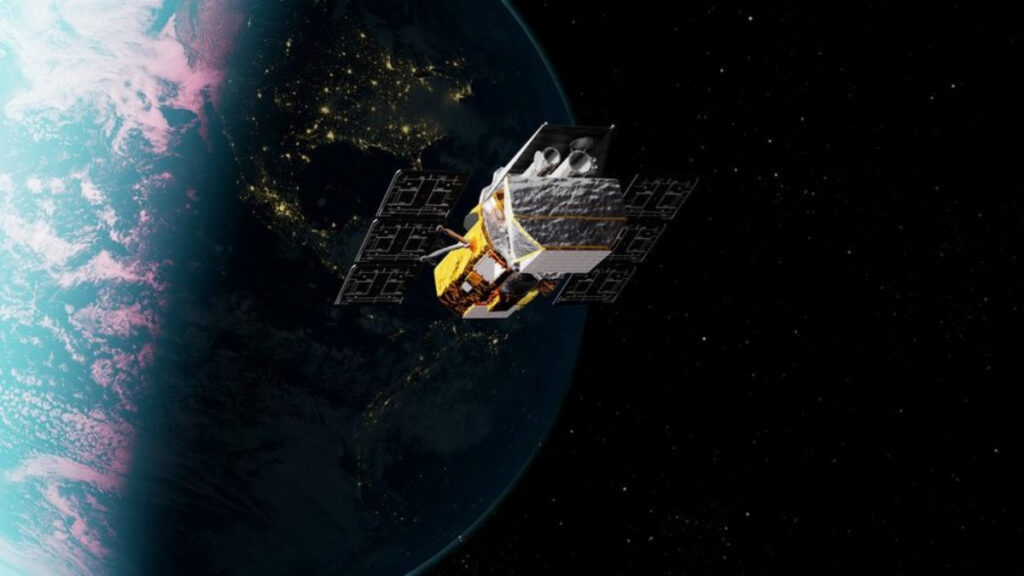
Earlier this year, NASA announced that one of its powerhouse telescopes, the Neil Gehrels Swift Observatory, was falling from orbit much faster than anticipated. Although Swift’s low-Earth orbit had remained relatively steady for more than 2 decades, unusually strong solar activity in 2024 destabilized it. The agency predicted that the telescope would burn up in Earth’s atmosphere by the end of 2026.
NASA soon after announced a commercial effort by U.S. company Katalyst Space Technologies to rescue the telescope by using another spacecraft to boost Swift’s orbit. The mission launched successfully on 3 July. However, after a month of technological issues with the rescuing craft’s maneuvering thrusters, NASA and Katalyst have pulled the plug on the mission, leaving Swift to its fiery fate.
“This is not the outcome we were working toward, but it does not change why this mission was worth attempting,” NASA administrator Jared Isaacman said in a 19 August statement. “The team moved with extraordinary speed to give Swift a chance to carry out more science while advancing capabilities America will need for satellite servicing in the future.”
Swift launched in 2004 with the goal of monitoring unpredictable high-energy astrophysical phenomena called gamma-ray bursts. The mid-sized mission operates out of a small building near Pennsylvania State University in State College with the picturesque Allegheny Mountains as a backdrop.
The telescope was designed with the ability of spotting these short-lasting explosions and quickly pivoting to monitor the events and their aftermaths in multiple wavelengths. But during its 21 years of science operations, Swift became a workhorse of multiwavelength astronomy observations, studying everything from the active centers of distant galaxies to supernovae near and far, as well as ravenous black holes, brown dwarfs, and interstellar objects. Take a look back at some of its most notable discoveries.
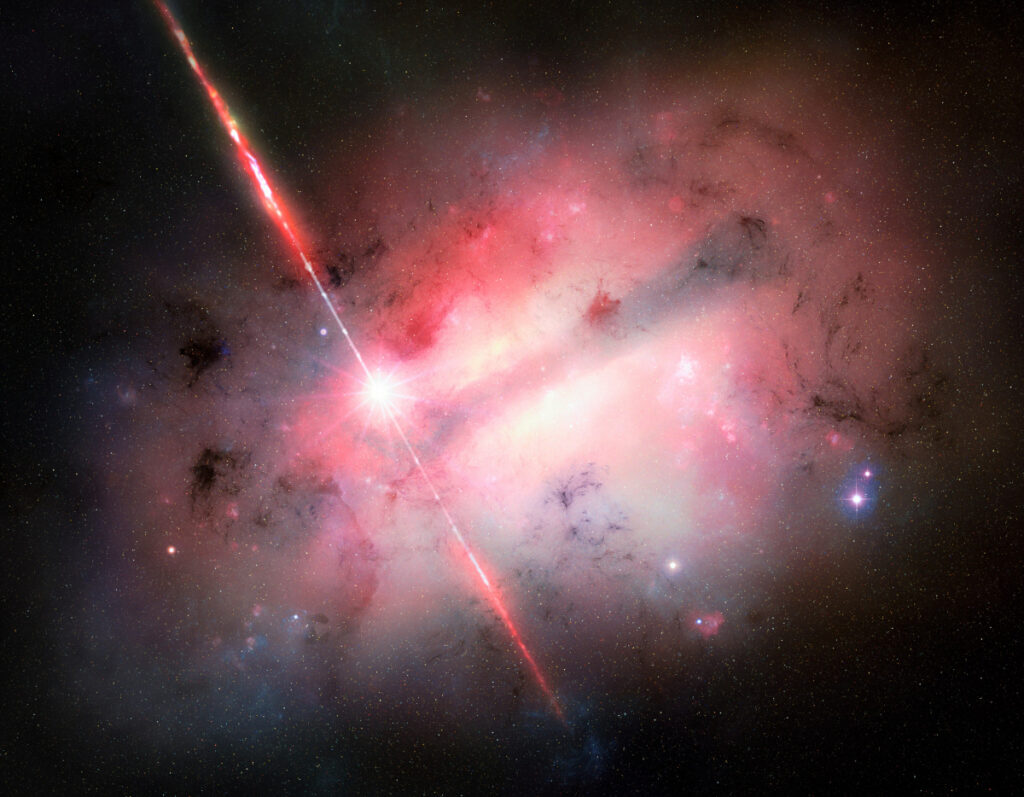
The BOAT: Over and over since its science operations began, Swift announced the detection of powerful gamma-ray bursts that shattered previous records, including the brightest of all time (BOAT). Since launching in 2004, it has made 829,336 observations and spotted more than 1,800 gamma-ray bursts.
Left: Swift has detected nearly 2,000 gamma-ray bursts since its launch in 2004. Credit: NOIRLab/NSF/AURA/M. Garlick, CC BY 4.0
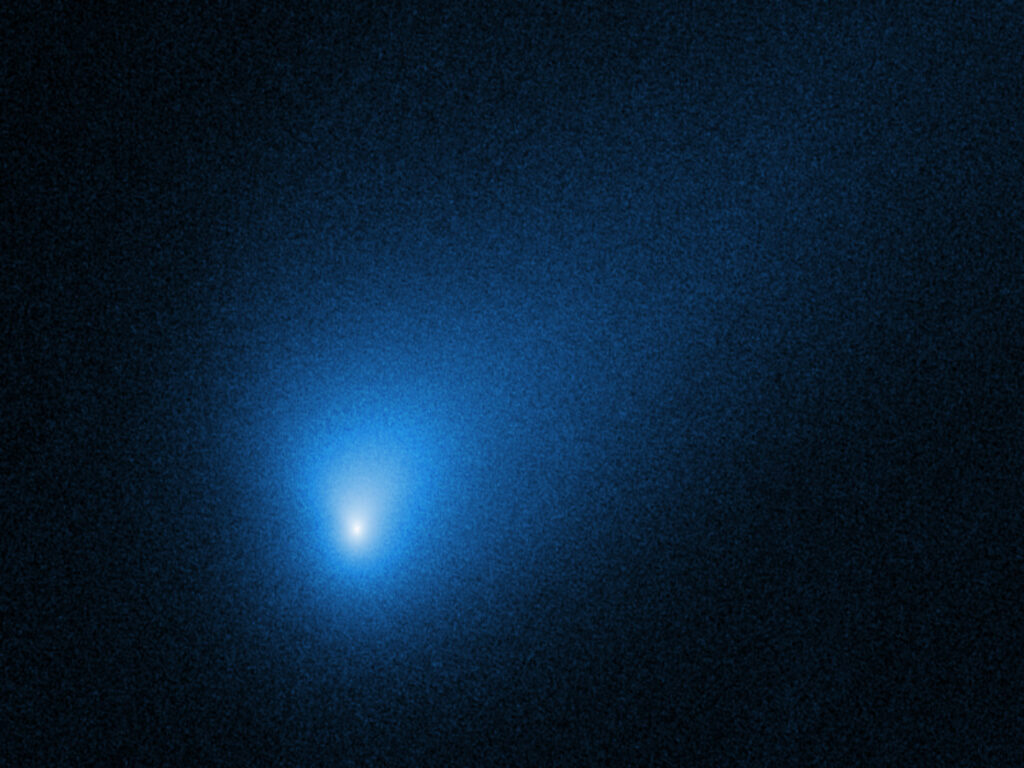
Interstellar Object Chemistry: Swift also observed objects much closer to home, though these objects had distant and exotic origins, too. In 2019, Swift’s ultraviolet instrument detected water coming off of the interstellar object 2I/Borisov. In 2025, it performed similar observations of the interstellar comet 3I/ATLAS.
Right: Swift detected the presence of outgassed water coming from interstellar comet 2I/Borisov. Credit: NASA, ESA, and D. Jewitt (UCLA)
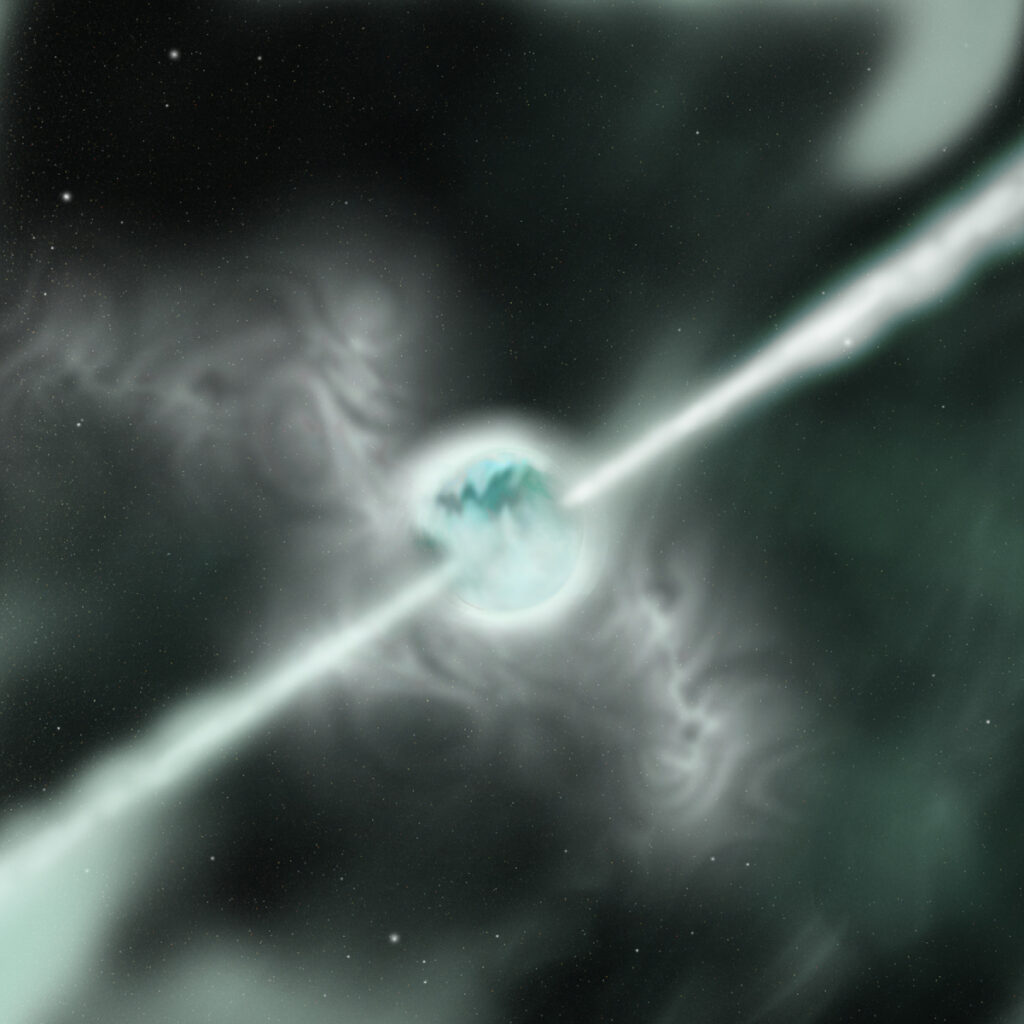
“Rosetta Stone” Supernova: In 2008, Swift spotted an X-ray burst in galaxy NGC 2770. It turned out to be the precursor to a supernova, spotted in an earlier stage than ever before. Because of Swift’s rapid response, astronomers around the world could observe the supernova throughout its evolution in multiple wavelengths. With so many types of observations of a single event, SN 2008D has been called the “Rosetta stone of supernova studies.”
Left: Some supernovae detected by Swift resulted in magnetars. Credit: NASA E/PO, Sonoma State University, Aurore Simonnet
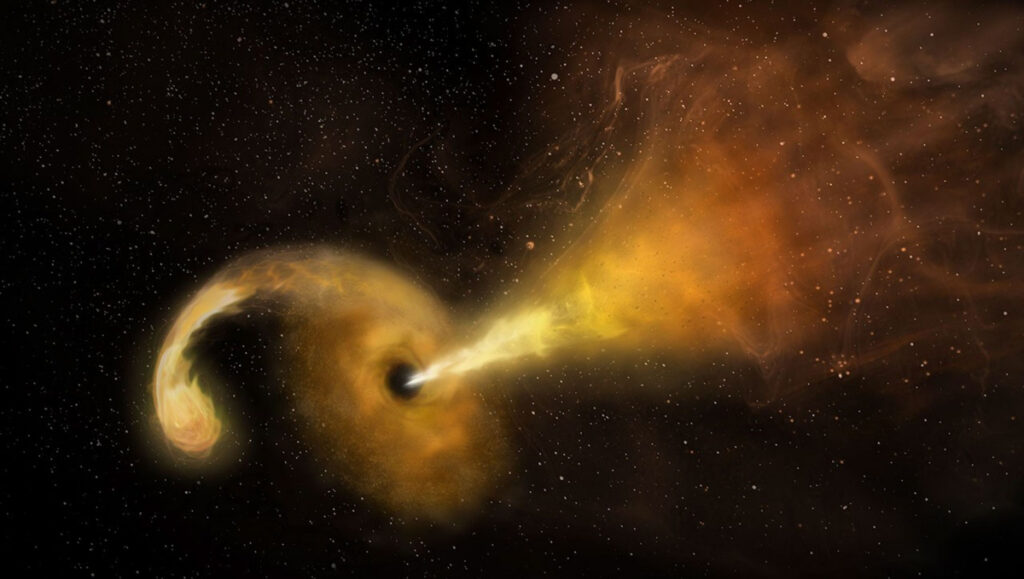
Black Holes Snacking on Stars: When a star gets too close to a black hole, the black hole’s gravity can break the star apart into a stream of gas. The black hole can gobble up the gas and burp out some intense radiation. In 2023, Swift observed one black hole repeatedly taking bites out of an unlucky star that ventured too close. Every few weeks the black hole—with the mass of a whopping 200,000 Suns—swallows three Earth-masses of material from the star and belched out x-rays.
Right: Swift observed bursts of energy as a black hole snacked on a star. Credit: NRAO/AUI/NSF/NASA
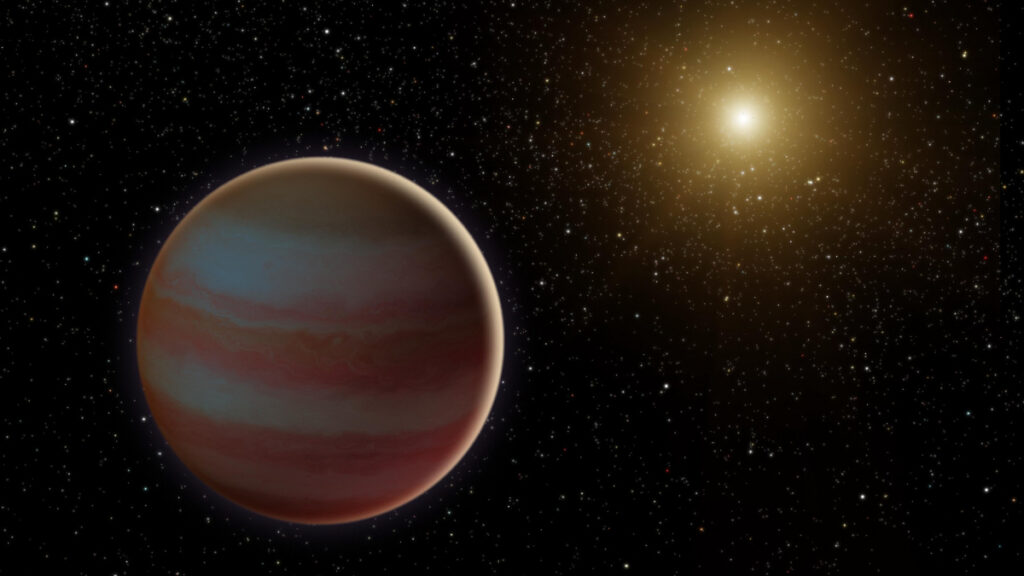
Brown Dwarf Wandering By: Swift joined forces with NASA’s Spitzer Space Telescope in 2016 to observe a microlensing event, which occurs when a close-by passing object distorts the light coming from a more distant one. With this technique, Swift helped discover a brown dwarf 80 times the mass of Jupiter that orbits close to a Sun-like star. Swift and Spitzer’s discovery, OGLE-2015-BLG-1319, is one of the few brown dwarfs found to orbit their host stars within a few Earth-Sun distances.
Left: Swift aided in the discovery of a rare brown dwarf using gravitational microlensing. Credit: NASA/JPL-Caltech
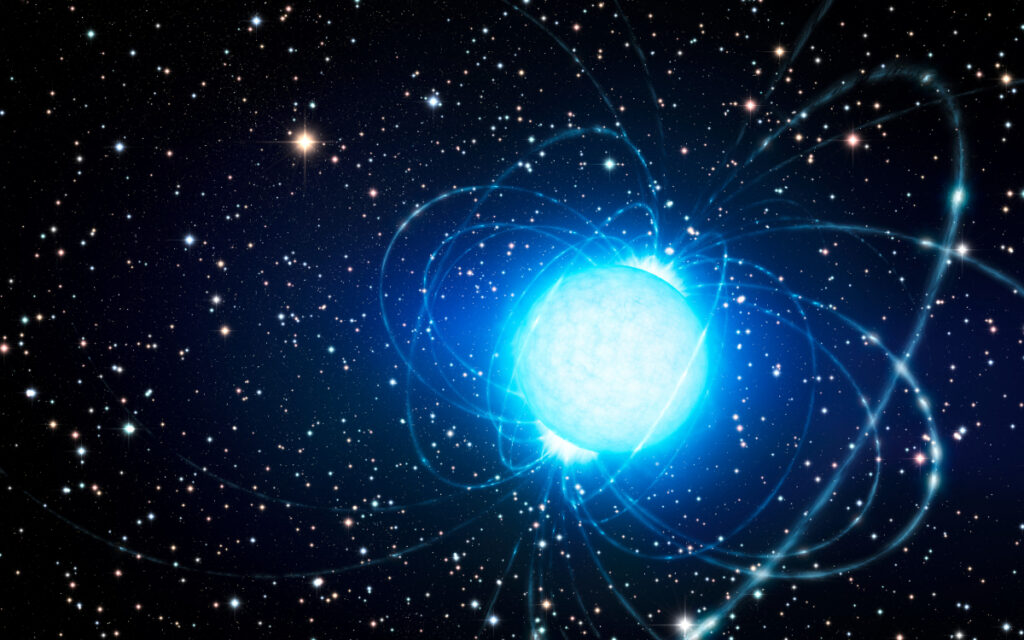
Milky Way Magnetars: When some stars die they become small, dense balls of neutrons with extremely intense magnetic fields. These magnetars can release short, strong bursts of energy as they interact with surrounding material. Swift has studied many of these magnetars, including one that hid in the center of the Milky Way and masqueraded as our galaxy’s supermassive black hole, and another one surrounded by a “wind nebula.”
Right: Magnetars can release intense bursts of radiation, which have been picked up by Swift. Credit: ESO/L. Calçada, CC BY 4.0
Science After Swift
Swift launched with a nominal mission lifetime of 2 years. It has lasted nearly 22 years, and yet its demise will leave a gaping hole in NASA’s ability to study the high-energy universe. Although NASA said that it would “continue to prioritize finding new options to react readily to cosmic events,” no telescope in NASA’s current or upcoming portfolio will look at the universe at the same wavelengths as Swift or with the same ability to monitor unexpected transient events.
“We knew this was a high-risk, high-reward [rescue] mission—a first-of-its kind attempt, developed on an unprecedented timeline driven by the Sun’s activity,” Shawn Domagal-Goldman, director of NASA’s Astrophysics Division, said in a statement. “We were all hoping for more science from Swift. But we knew the takeaways from this mission would be worthwhile either way.”
—Kimberly M. S. Cartier (@astrokimcartier.bsky.social), Staff Writer
These updates are made possible through information from the scientific community. Do you have a story about science or scientists? Send us a tip at eos@agu.org.

Text © 2026. AGU. CC BY-NC-ND 3.0
Except where otherwise noted, images are subject to copyright. Any reuse without express permission from the copyright owner is prohibited.