If you thought the Purosangue was a giant leap for Ferrari, think again
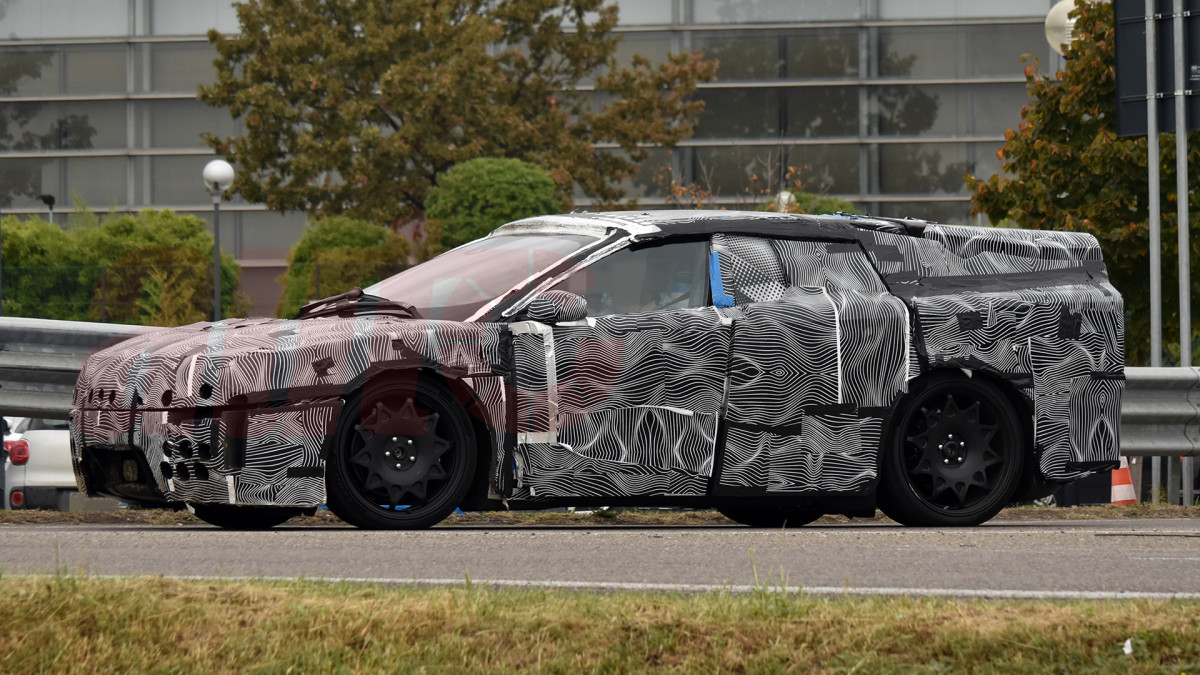
The first sighting of Ferrari’s first fully electric vehicle has taken place, but it’s nothing anyone was expecting. This heavily camouflaged test mule looks like at least two entirely different cars pieced together in someone’s garage—the front could be from any sedan but the back looks like a van. It’s pretty obvious that the Italian marque has gone to great lengths to disguise its EV’s true design, although we do expect it to blur the lines between sports car and SUV, much in the way the gas-powered Purosangue has done.
Maranello Sighting Doesn’t Tell Us Much
Andrea Canuri for Stephen Hancock/Autoblog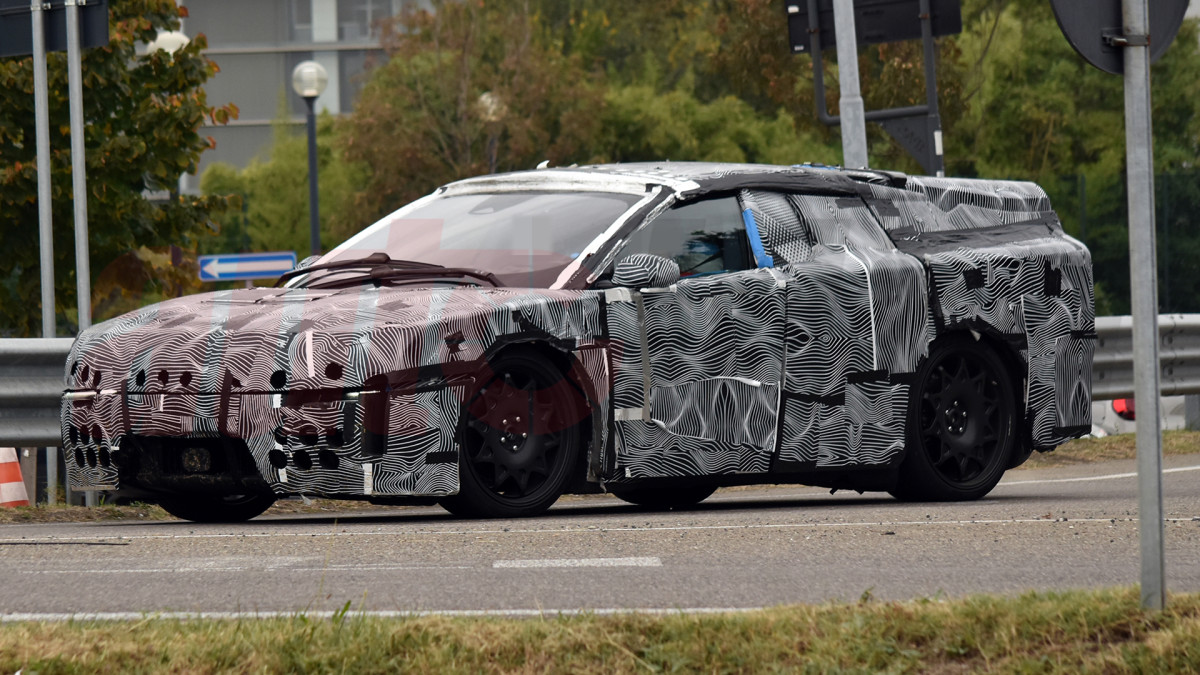
The most we can glean from this test mule is that it’ll be a five-door model, so expect a level of versatility not seen in most Ferrari products. Beyond that, the fake body panels do a great job of hiding any details that appear production-ready; it’s even stranger than previous pictures of a Ferrari EV hiding in a Maserati Levante body. In its current state, it’s got weirdly long overhangs, but it’s the tall, square rear section that looks more fake than anything else. Even the enormous front windshield wipers don’t look like they’ll make it onto the final product.
More importantly, the fact that the EV is out testing is an achievement on its own, given how many automakers are scaling back their EV plans, and that goes for both mass-market and luxury brands—take Acura, for instance, which ended production of its ZDX electric crossover just a year after launching it.
Lamborghini also has an EV in the pipeline, but it will arrive after Ferrari’s challenger, and by the time it launches, it may not be an EV at all.
What About Ferrari’s Second EV?
In June, a Reuters report suggested that Ferrari’s second EV—initially meant to arrive late next year—was pushed back to 2028. But Benedetto Vigna, Ferrari’s CEO, disputed this rumor in August, saying a second EV doesn’t even exist.
“We never talked about a second or third electric car,” said Vigna in a Q2 earnings call, according to Motor 1. On the same call, Vigna said he was “very confident” that the brand’s first EV would succeed; apparently, he had the chance to drive a prototype on a track. Whether it was the same zany-looking test mule pictured here isn’t clear.
Why Ferrari’s First EV Matters
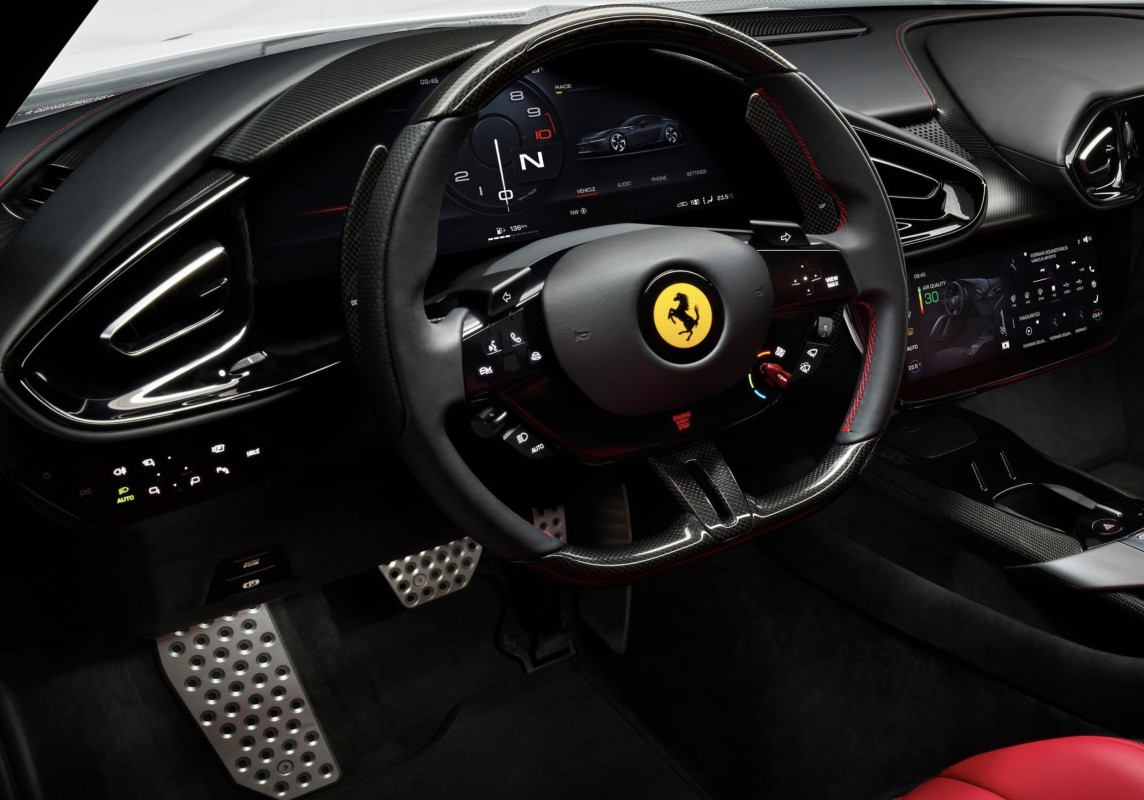
Chiefly, the first EV will prove whether Ferrari’s DNA can successfully be applied to an electric model, specifically for a company that relies so heavily on charismatic, large-capacity V8 and V12 engines. Transitioning to hybrid power was simpler, as in the case of the SF90 Stradale, as Ferrari used electrification to augment an already impressive gas engine. Incidentally, the SF90’s replacement will look radically different.
Unlike cheaper EVs, where pricing is still a point of contention, Ferrari’s battle with its first EV is less about cost and more about how it can engineer it to be a driver’s car worthy of the badge. Reports suggest it will cost over $500,000, and it’ll be a low-volume car, which is perfect to test the waters in the exotic EV segment.
We hope to get a closer—and more accurate—look at Ferrari’s first EV soon.