Source: Journal of Geophysical Research: Solid Earth
Better understanding how earthquakes occur and what happens during a rupture is important for building assessments of seismic risk. Small earthquakes, which are more frequent than large ones, are a tempting dataset, but they’re hard to study, in large part because their energy is quickly sapped as it travels through Earth.
A relatively new method using fiber-optic cables in deep boreholes may offer a more precise and sensitive means of gathering data on small earthquakes. The technique uses small variations in how light is reflected back along the cables to measure vibrations caused by seismic waves. Chang et al. assess the real-world performance of borehole distributed acoustic sensing (DAS) arrays, reporting both advantages of and important considerations for using the method.
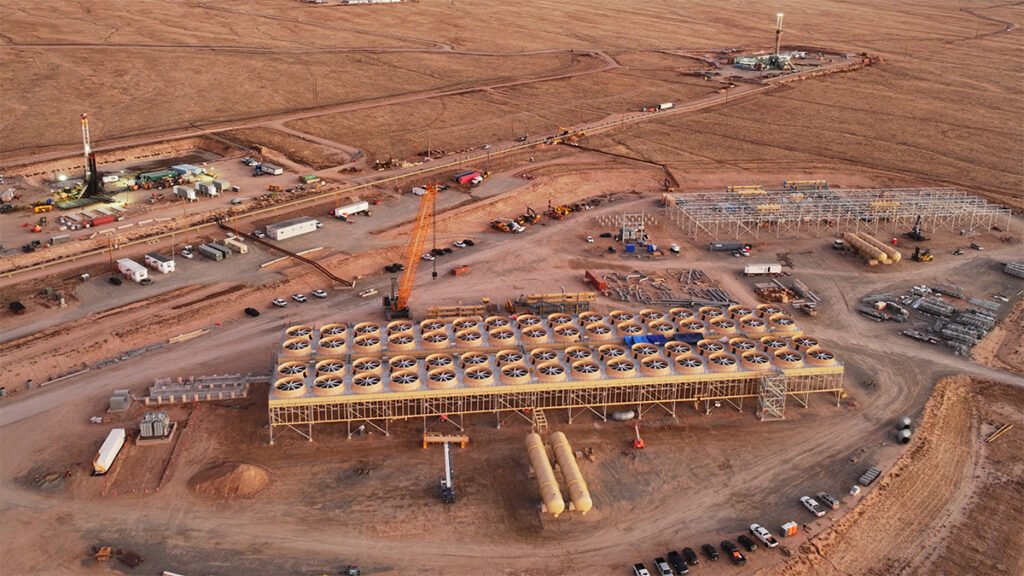
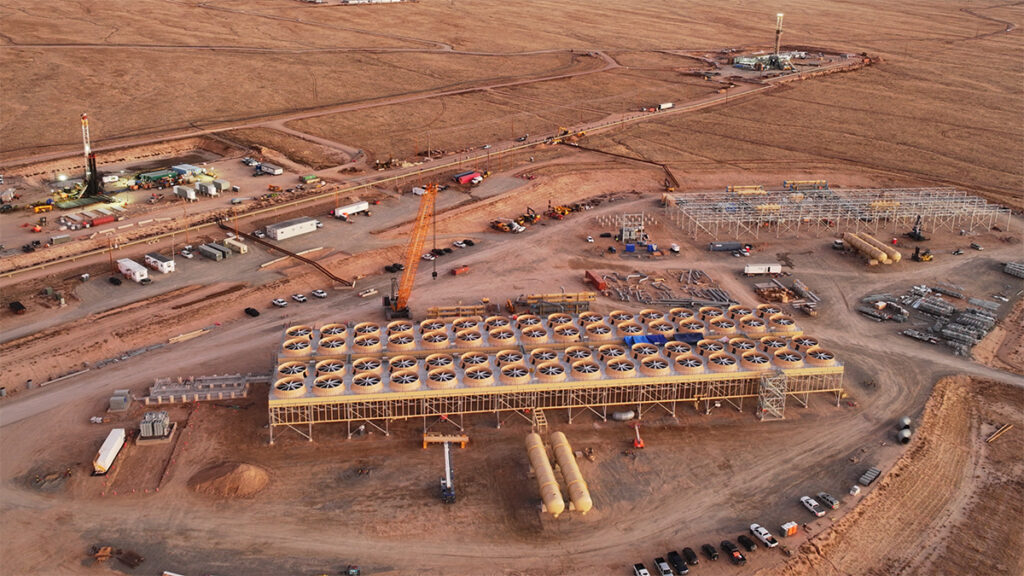
The data come from a single DAS deployment at the Cape Modern geothermal site in Utah. That site contains, in a borehole extending down to 3,000 meters, a DAS array of 1,600 stations (also called “channels”) placed about 2 meters apart along a fiber-optic cable. The array was exposed to seismic waves from thousands of microearthquakes within a few kilometers of the borehole.
By analyzing the strain along the cable, the authors found high attenuation near the surface, which generally decreased with depth and varied somewhat because of differences in rock type. Spectral stress drop, a measure of the shear stress released during an earthquake, did not depend on magnitude, the authors found, and may have varied because of differences in faults or rupture type, if it wasn’t due to observational error. The results could help scientists learn more about whether small earthquakes release less stress than large ones, which is important for understanding earthquake source physics and hazard assessment.
Future studies using this technique should be careful to account for cable directivity, the authors say, because a cable is more sensitive to seismic phases whose particle motions are aligned with the cable. They add that future studies should also account for gauge length, which is the length over which the measurement is averaged along the cable. A larger gauge length increases the signal to noise ratio but suppresses more high-frequency amplitudes. Decisions about cable directivity and gauge length might introduce biases to magnitudes and corner frequency measurements. One way to account for biases is to compare source parameter data with data derived using other methods, such as the empirical Green’s function approach. (Journal of Geophysical Research: Solid Earth, https://doi.org/10.1029/2026JB034276, 2026)
—Nathaniel Scharping (@nathanielscharp), Science Writer

Citation: Scharping, N. (2026), Shooting light pulses down a 3-kilometer borehole could illuminate seismic hazards, Eos, 107, https://doi.org/10.1029/2026EO260319. Published on 6 October 2026.
Text © 2026. AGU. CC BY-NC-ND 3.0
Except where otherwise noted, images are subject to copyright. Any reuse without express permission from the copyright owner is prohibited.