The Los Angeles Times‘s Image Editor-in-Chief Elisa Wouk Almino writes about the curious process of corresponding with Sophie Calle, a famously enigmatic artist:
Calle, who is now 72, is known for peeking into the intimate lives of others. She has worked as a hotel chambermaid and photographed guests’ possessions in the bedrooms. She has invited people to sleep in her bed, interviewed them about their sleeping habits and photographed them once they’ve fallen asleep. She has followed a man from Paris to the floating streets of Venice and documented his every move. Most of her projects take the form of books and pair photographs with words. I gravitated toward Calle as a writer first, loving her writing the way writers do — wanting to bounce off it, be a part of it. My call with her was my naïve attempt at just this.
Immediately, Calle set off on our fake but real exchange. In other words, we would not have an actual back and forth. Instead, she would send me some paragraphs she’d already written — unpublished and published — and I would respond to them in my own time. If necessary, she would respond to questions if I had them down the line.
In El País, Barbara Celis interviews Ai Weiwei about his new exhibition in Italy, censorship in Europe, and the Venice Biennale:
How does Ai view Europe’s current reactionary wave against immigrants, especially considering that he himself was received in Germany in 2015? “The refugee situation is more or less like the ocean, where you have tides,” he says. “Sometimes there is high tide, sometimes there is low tide. It depends on the movement of the Earth and the Moon, right? It’s a natural effect. But we have to ask ourselves where the refugees come from. Who creates these refugees? Instead of saying ‘we won’t let you in,’ we have to assume that we are all refugees because we all come from some generation of refugees. It’s not fair to hold them back and not address the reason why they become refugees.”
Jacci Gresham has watched tattooing evolve since 1976, when she became the first professional Black tattoo artist in the United States. Journalist Kim Kelly interviews her for Lux:
“People from the Klan came to me to get tattoos,” she said. She asked why they’d let her, a Black woman, tattoo them. “And the reason [they] said is, ‘Because you really do good work.’ I had biker clubs come in — those guys didn’t have a whole lot of respect for women at all, but they gave me respect ’cause I was putting on a decent product.” Her training in design came in handy while doing linework and blending colors. But it was her innovation of using brown paper when drawing up designs for Black and Brown customers that made tattooing more accessible for an entire underserved population of body art enthusiasts. “People in the South had tattoos, but they were hand-stuck tattoos,” she explained. “They were not done by a machine.” Jacci Gresham broke down that barrier. “The mistakes that people made on me, I didn’t make on other people.”
When she was 29, Gresham began a tattoo collection of her own and flew to San Francisco to get ink — a phoenix — from iconic artist Ed Hardy, whose colorful, individualistic approach helped revolutionize American tattoo culture during the 1970s and 1980s, well before his name became synonymous with flashy graphic T-shirts. In a tale that will be familiar to tattoo lovers from any era, Gresham’s mother was horrified. “I can remember when I got my second tattoo, and my mother followed me into the bathroom, ’cause I’m trying to hide it,” she recalled. She was making more money tattooing than she ever had at GM, but her mother still disapproved of her unorthodox career choice, which she felt was “beneath” her college-educated daughter. Now her parents are both immortalized in a large portrait on her shoulder — her favorite tattoo.
Gaza-based photojournalist Saher Alghorra, who captured an image for the New York Times that sparked backlash last year after the publication amended the story, won the Pulitzer Prize for breaking news photography. Arab News reports:
One front-page photograph published in July 2025 showed an emaciated boy in his mother’s arms and became one of the most widely discussed images of Gaza’s hunger crisis.
The New York Times later updated part of the story following reports that the child had a medical condition affecting his growth but did not retract the article’s broader reporting on starvation in Gaza.
Alghorra’s work has already won international recognition, including first prize for war photography at the Prix Bayeux Calvados-Normandie awards in France.
Amid the war on Iran and the regime’s murder of civilian protesters, writer and translator poupeh missaghi has struggled to bring herself to speak English at some points, Persian at others. For the Los Angeles Review of Books, she writes:
English is now the language of the aggressors, as well as the false messages of liberation they leave for Iranians. It is the language of the man who said he might bomb the island of Kharg, one of the most important oil resources of the country, “just for fun.” It is the language other Western governments use to demand Iran stop retaliating, governments that have otherwise remained generally silent about the war on Iran, the genocide in Palestine, and the invasion of Lebanon. It is the language of many self-appointed “human rights advocates” peddling empty gestures of empathy, care, and solidarity.
And yet, Persian, too, has begun to feel unsafe. It is the language used to promote this war over loudspeakers and in the news media throughout a severely polarized diaspora. The language in which some in Iran speak of the war as salvation, arguing that the regime forces are worse. The language in which the son of the shah invites the Iranian public to protest, calling their dead “war casualties,” only to remain silent now about the civilian casualties. It is the language in which the regime threatens the Iranian people—the language in which I have been attacked, even by friends and family, for standing firmly against war.
Wired‘s Ej Dickson writes about an Epstein Files reading room — yes, you read that right — opening in New York City tomorrow, May 8:
The library—essentially, the Epstein files in analog—is intended to represent the staggering scale of Epstein’s crimes, as well as the impunity with which he carried them out. More than 17,000 pounds of evidence is on display at the library, says David Garrett, the main organizer of the exhibit at the Institute for Primary Facts, a nonprofit intended to promote transparency and accountability in the US government.
“The evidence in this room is evidence of one of the most horrific crimes in American history,” Garrett says. “When people come through this room, I hope they realize that in America, we have the rule of law, and if they stand up they can take action and demand accountability for the crimes that were committed.”
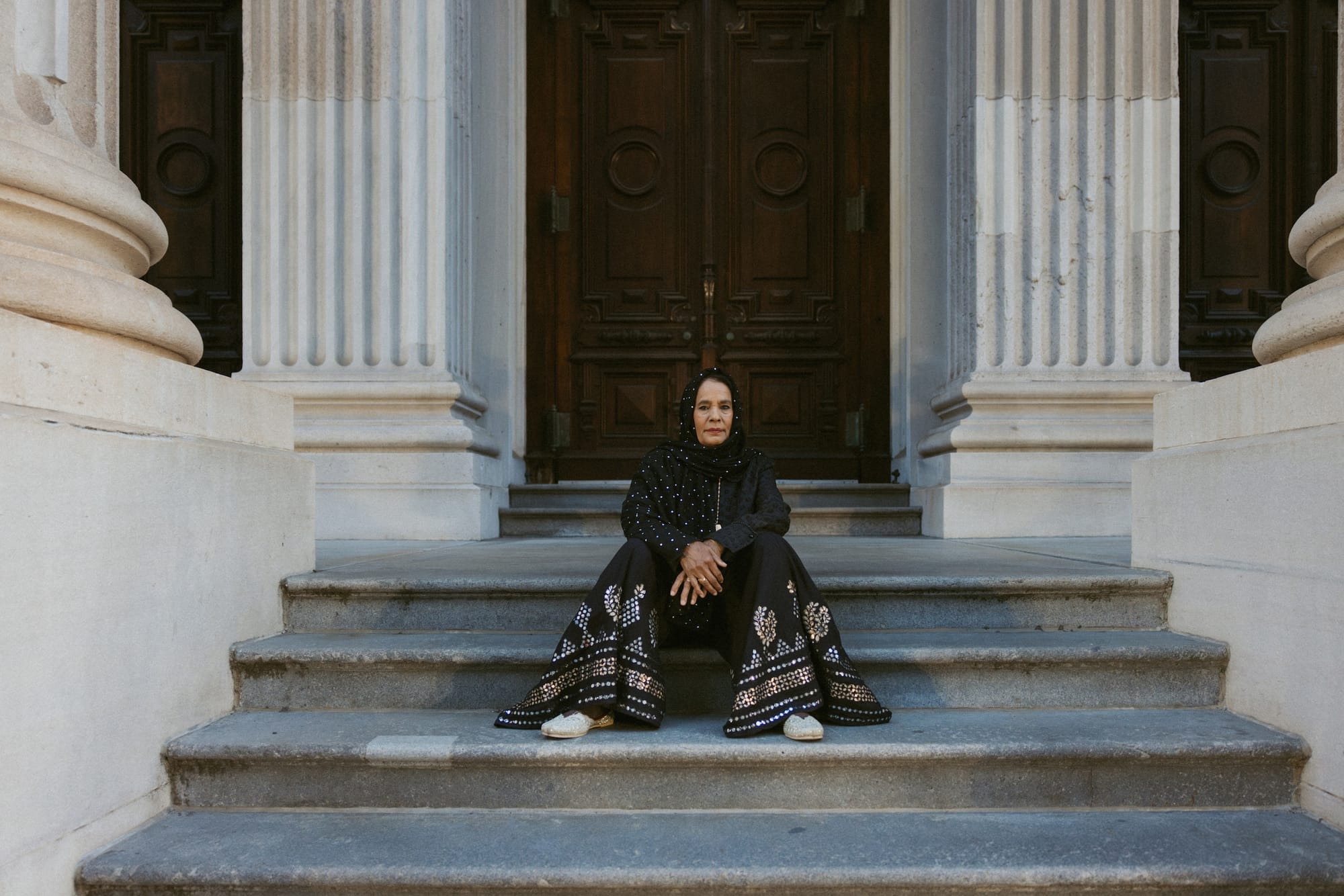
Riz Ahmed — the pride and joy of the South Asian diaspora — talks with Mehdi Hasan of Zeteo about his latest projects highlighting Brown, Muslim stories and the trappings of “representation” in film:
Now that we no longer have Spirit Airlines (RIP), Sanya Dosani of the phenomenal labor publication A More Perfect Union discusses the growing movement to nationalize the industry:
Now THAT is how you do a museum gift shop:
Gauguin hater till I die:
@meganluisaa GAUGUIN HATERS UNITE 🗣️ #nationalgallery #arthistory #paulgauguin #hater ♬ ABBY USED MY SOUND – livinonthedancefloor💋
Required Reading is published every Thursday afternoon and comprises a short list of art-related links to long-form articles, videos, blog posts, or photo essays worth a second look.