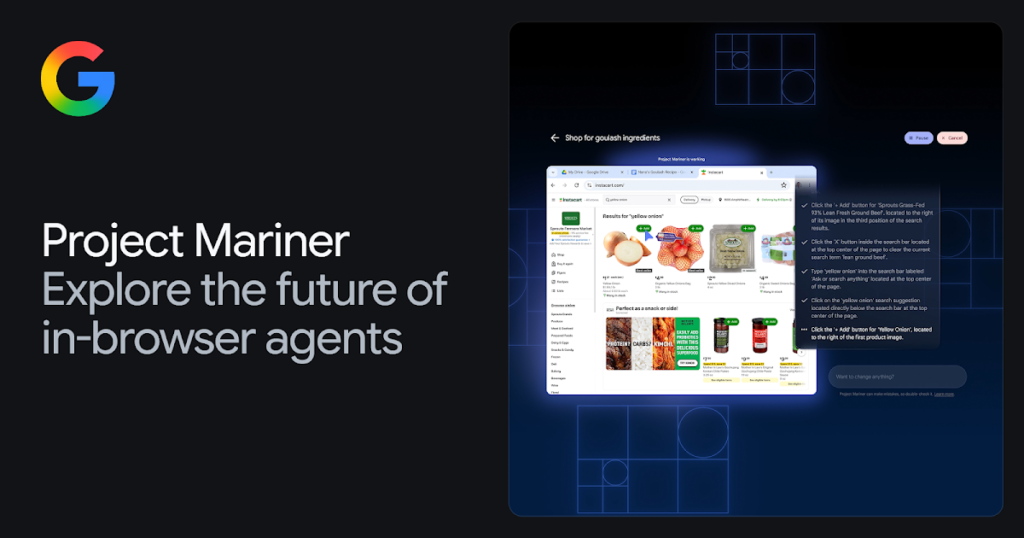

Google has officially closed the book on Project Mariner, the experimental AI agent designed to navigate the web just like a human. After a relatively short 17-month journey, the project’s landing page now carries a farewell message confirming the tool shutdown.
What was Google’s Project Mariner?
If you didn’t get a chance to test it, Project Mariner was an ambitious part of Google Labs. Unlike a standard AI chatbot that simply gives you text, Mariner could actually interact with websites. It used computer vision to “see” your browser, allowing it to fill out forms, search for job listings, and even book flights on sites like Expedia.
At its peak, Google upgraded the tool to handle up to 10 tasks simultaneously. However, accessing that level of power wasn’t cheap. Only subscribers to the $249.99 monthly Google AI Ultra subscription could use it. While the tech was impressive, it was also resource-heavy.
This sometimes depends on slow performance or small errors while navigating complex pages. However, we can consider this as something normal in a still-developing project.
The shift to Gemini and what’s next
The shutdown doesn’t mean Google is giving up on autonomous agents. Instead, the company is transferring ideas and technologies implemented during the development of Project Mariner to its main products. More specifically, Gemini Agent and the “auto-browse” features in Chrome are absorbing most of its capabilities.
The timing of this move is interesting. Google I/O 2026 is just around the corner, starting on May 19th. According to reports, Google has already moved the Project Mariner staff to a new team focused on building a more advanced agent. This alleged future product could compete directly against newer tools like OpenClaw.
If you were a fan of Mariner’s ability to automate your browsing, you’ll now find those same “muscles” powered by the Gemini API and Gemini Agent. It’s the end of the experiment, but the technology is just getting started.
The post Project Mariner is Over: Google Folds its AI Web Agent into Gemini & Chrome appeared first on Android Headlines.