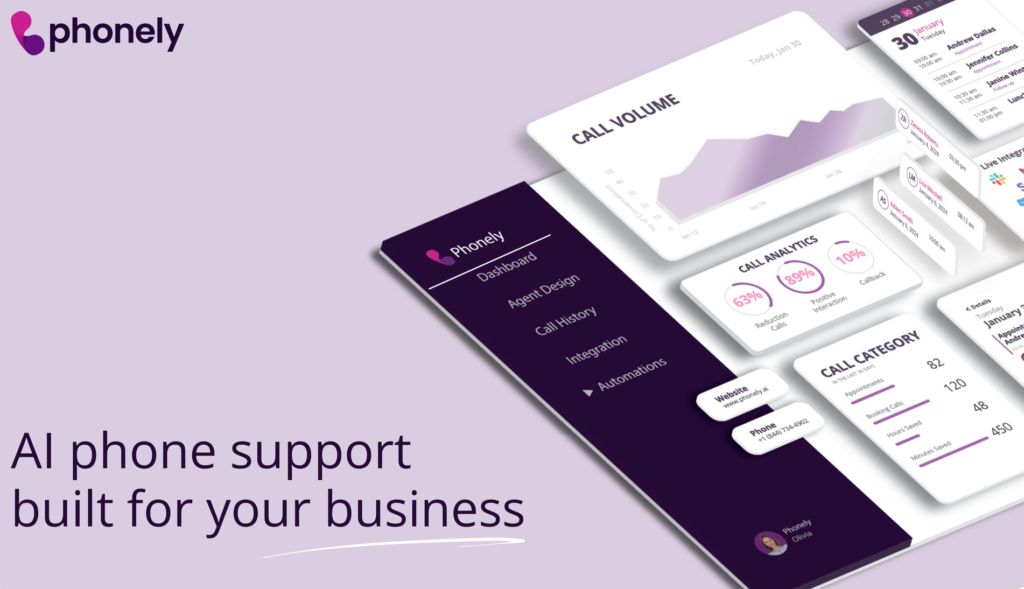

Voice AI startup Phonely is taking on the industry giants with a new language model built strictly for phone calls. Called Alma, the system steps away from traditional text-focused LLMs to focus entirely on automated phone interactions, promising faster responses and much lower operating costs than traditional setups.
According to Phonely, most voice agents today still run on general-purpose text models that struggle with real-world conversations. While frontier labs have poured resources into coding and reasoning tools, phone agents still get tripped up by everyday call habits—like someone talking over the assistant, changing their mind mid-sentence, or dealing with background noise.
Ditching text models for real phone calls
To fix those awkward pauses, Phonely trained Phonely Alma voice LLM OpenAI competitor on a dataset of over 10 million real phone conversations rather than clean text articles. CEO and co-founder Will Bodewes explained that because existing market models were built for other tasks, the team decided to build a custom model trained directly on real call traffic.
The performance stats highlight a clear focus on speed and cost. Traditional text models usually take around 600 milliseconds to output their first token, creating an unnatural delay. Alma cuts that initial response time down to between 50 and 150 milliseconds. This helps to keep the back-and-forth flow natural. Phonely also claims the model is 61% faster and over 80% cheaper than OpenAI’s latest offerings. The firm notes that one client saw sales conversions rise 3% after switching, driving an extra $300,000 in monthly revenue.
Self-improving agents for high-stakes calls
Beyond raw speed, the platform is designed to learn from live interactions. Phonely runs the model across millions of active conversations. So, the system identifies where calls break down and feeds those lessons back into the pipeline. That allows agents to self-improve on live traffic without waiting for a frontier lab to ship its next base model.
The feature set arrives at a crucial time for industries relying on phone transactions. This includes legal intake, insurance, appointment bookings, and sales. With roughly $2.7 billion transacted over the phone daily across those sectors, reducing missed rebuttals and lag is a huge financial priority.
To keep performance steady during heavy usage, Alma includes built-in failovers, multi-region routing and priority inference. It works alongside any existing transcriber or text-to-speech software, removing the need for heavy prompt engineering. While Alma already powers 100% of Phonely’s internal traffic, enterprise teams can now get custom deployments with dedicated rate limits for their own setups.
The post Phonely’s Alma: A Voice AI Model That Can Handle Messy Phone Calls appeared first on Android Headlines.