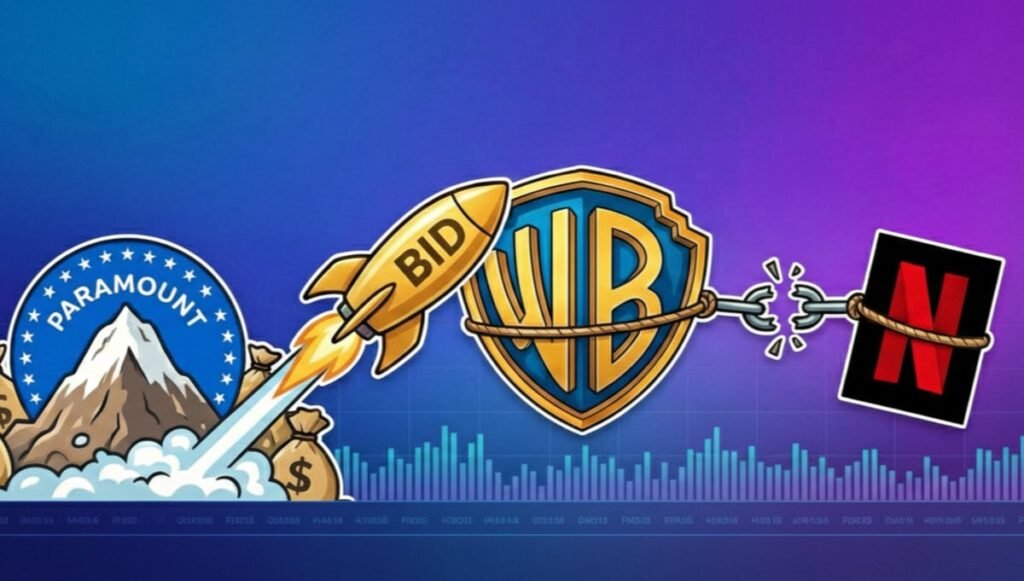

The biggest media consolidation battle of the decade has finally reached its finish line. Paramount officially cleared its last major legal barriers to acquire Warner Bros Discovery after settling an antitrust lawsuit brought by 12 U.S. states and resolving a parallel legal challenge from the Writers Guild of America (WGA).
Led by California Attorney General Rob Bonta, the coalition of state attorneys general had fought the $110 billion mega-merger over concerns about diminished competition, potential job losses, and industry consolidation. Rather than going to trial, Paramount agreed to strict operating conditions to push the buyout across the line before a costly $7 million-a-day “ticking fee” kicked in.
Minimum film quotas and California production guarantees
To satisfy regulators worried about a shrinking theatrical market, Paramount committed to maintaining robust movie production slates. The company agreed to release at least 30 feature films annually in the first two years following the merger. This will step up to 32 films in each of the subsequent three years, with at least four independent films and 20% blockbusters per year.
Furthermore, the settlement requires Paramount to spend a minimum of $300 million additional dollars per year on domestic production. There are also explicit safeguards preventing the studio from fulfilling quotas using AI-generated content. If Paramount fails to meet its production targets, it risks financial penalties or a forced divestiture of its 49% stake in Miramax.
The agreement also freezes rate increases for three years, giving theater owners a little extra protection. Paramount doesn’t need to divest core cable networks such as CNN, CBS, MTV or Nickelodeon in return.
Editorial oversight boards and WGA protections
Journalistic integrity proved to be another critical sticking point during negotiations. Under the terms of the settlement, Paramount must establish an independent news editorial board within 180 days to oversee reporting standards at both CBS News and CNN. The five-member board will consist of experienced journalists charged with resolving internal claims of reporting bias.
Meanwhile, the Writers Guild of America settled its separate lawsuit after recognizing the difficulty of litigating without state backing. As part of the settlement, Paramount agreed to pay $17.5 million into the WGA health fund, pay legal fees and enforce a five-year ban on writer layoffs at CBS News Broadcast.
With U.S. federal regulators and European Union authorities having previously granted clearance, the settlement paves the way for the transaction to close in early October, bringing iconic intellectual properties like Harry Potter, DC, and legacy film vaults under a single corporate umbrella.
The post Paramount Settles State Lawsuits to Complete $110 Billion Warner Bros Acquisition appeared first on Android Headlines.