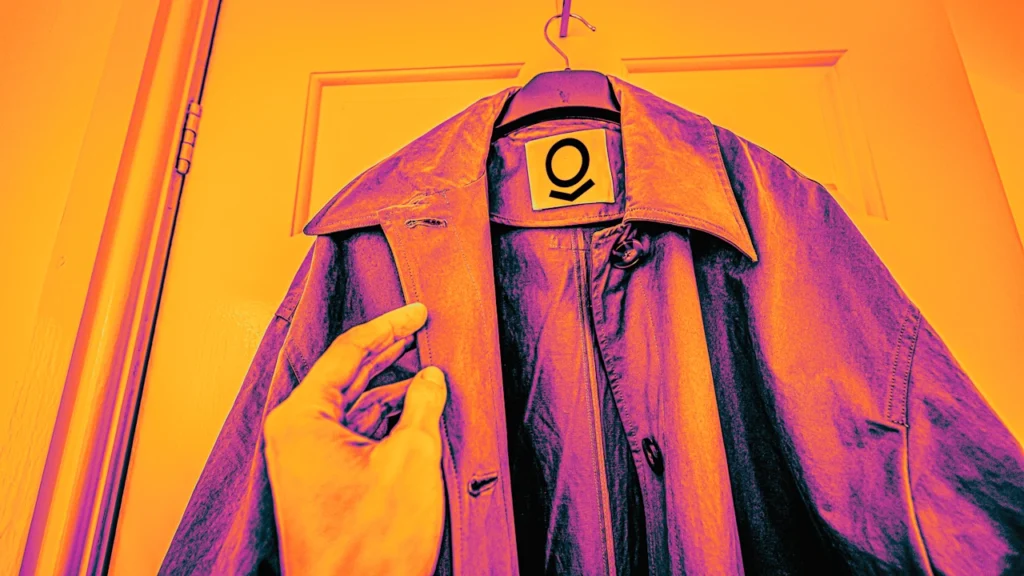
The software company Palantir has waded into online fashion discourse after its head of strategic engagement, Eliano A. Younes, posted pictures of a “lightweight Palantir chore coat” to X.
In his post, Younes detailed the make of the coat (100% cotton, designed and made in America, “relaxed fit”), adding that it goes on sale April 30.
The perplexing framing has caught people’s attention: Is this internal merch for a controversial tech company, or a drop from a streetwear brand? Increasingly, those worlds are getting uncomfortably closer together.
The backlash
The chore coats received criticism online ranging from comments about their design to Palantir’s move to venture deeper into fashion.
“IMO, a company claiming to champion the US should’ve done an US chore coat. Historically, US chore coats were made from denim or duck canvas, and had four pockets instead of three (e.g., Sears, Lee, Carhartt). Yours takes after brands like Vetra and Le Labourer, which are French,” one user said in an X post.
Another user shared a similar critique, posting to X, “The thing that seems so crazy-making to me about this is that Palantir is so America-rah-rah but they chose to make their jacket after traditional French chore coat instead of an American one?? I imagine they just don’t even know what they’re referencing?”
Younes responded that Palantir is a champion of the U.S., but also of its French “allies.” He explained that he chose the chore coat because he wanted to make something stylish, comfortable, and with subtle branding for his Palantir colleagues to wear to and from customer sites.
“Three sewn on patch pockets get the job done and keep costs lower. don’t need to add a bunch of zippers and flaps and clutter up the piece. it’s pure,” Younes said in a reply on X.
Why is Palantir designing chore coats?
Palantir is no stranger to criticism. The company has been a perpetual source of controversy for the work it does for clients including Immigration and Customs Enforcement (ICE) and the U.S. military. It recently came under fire for posting a 22-point manifesto on X that summarized the arguments from Nicholas W. Zamiska and Palantir CEO Alex Karp’s book, The Technological Republic: Hard Power, Soft Belief, and the Future of the West.
The culture clash between Palantir’s work and the public persona it’s attempting to cultivate through a fashion drop has been the crux of the negative feedback around the chore coat.
“Built in surveillance trackers?” one user on X posted about the coats, poking at Palantir’s involvement in surveillance.
Many reshared and referenced an X post from December 2025 by Chloe Iris Kennedy, a fashion contributor at Forbes.
In response to the news of Lockheed Martin’s rise in streetwear, she had posted, “in the early 2000s camo print was strategically placed in the fashion zeitgeist as a means of aligning the western world with the war on terror. nowadays war machines can simply release merchandise, label it gorpcore, and the public will willingly fund their acts of terror. this is the consequence of decades of denying the politics of fashion. this is the consequence of years of dwindling media literacy. this is art that thinks you’re stupid.”
The future of Palantir’s fashion
Palantir is one of many companies that uses merch as a means of visual public support from fans. Lockheed Martin and Boeing belong to the ranks of companies that also sell branded clothing.
Younes has continually called Palantir, “THE lifestyle brand.” In a recent interview with GQ, he explains how their merchandise signals alignment with the company’s mission and his plans for more product lines, explaining that Palantir’s merch designs derive from CEO Alex Karp’s gravitation towards the tradition of “clean, structured aesthetics and strong craftsmanship.”
“That’s how we think about our software too, bringing clarity to complexity. We want the merchandise we make to reflect those same principles,” Younes said.