Source: Space Weather
Solar storms can have major effects on terrestrial technology, dating back to the earliest days of railroads and telegraph communications—most infamously the Carrington Event of September 1859. For that reason, space weather researchers use recorded disturbances from the past to characterize the strength of these storms and fill in the history of the solar cycle.
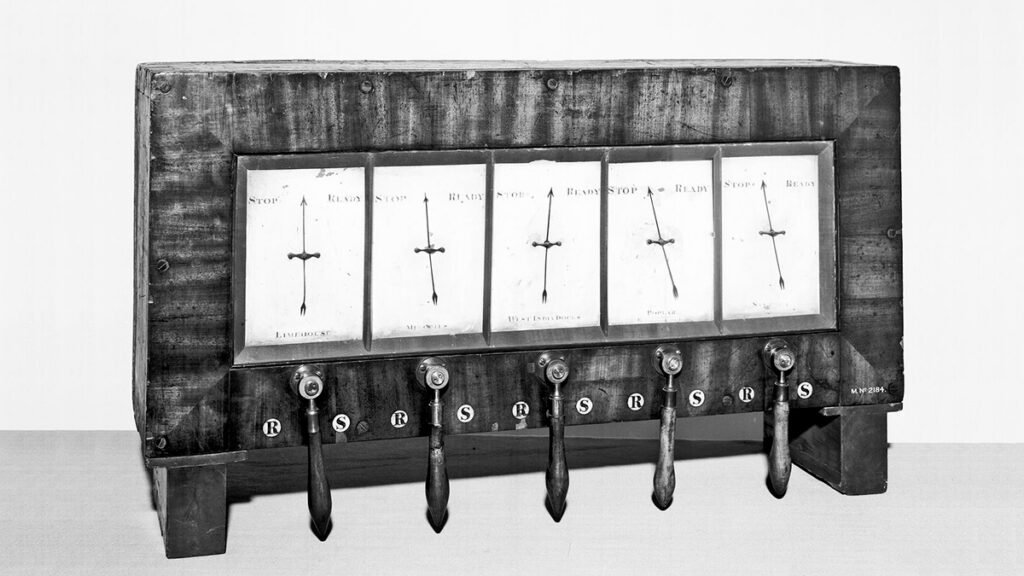
Determining the dates of the first disruptive solar storm turned out to be complicated by an error in a 19th century article, Wild et al. explain. An 1871 Nature article claimed the first communications disruption from a solar storm occurred on 18 October 1841, when magnetic interference in railway signaling telegraph lines led to a delay in the 10:05 p.m. passenger train departure out of Exeter, England.
The problem, as these scientific detectives discovered? That railway line wasn’t yet running in 1841.
The 1871 Nature article indicated that the train was delayed by a few minutes on the evening of 18 October 1841 because the telegraph lines that allowed operators to check whether the tracks were clear had been disrupted by the solar storm. However, England’s South Devon Railway Company began operating passenger trains between Exeter and Newton Abbot only in 1846. The researchers dug into records of aurorae and railway timetables, cross-referencing these events to pin down what actually happened.
Railway schedules reveal the 10:05 p.m. train out of Exeter was only time-tabled for a period of just over a year, starting in 1848. Contemporary observers recorded strong sunspot and aurora activity around 18 October 1848, precisely 7 years after the date mentioned in the Nature article.
In other words, the 1871 Nature story got the date right but the year wrong. This mistake means the Exeter delay was not the first known solar storm to affect human technology. Instead, accounts of geomagnetic disturbances affecting the telegraph system of the Midland Railway near Derby, England, on 19 March 1847 stand as the earliest credible report on record.
Knowing the correct date fills in an important detail of the recorded history of geomagnetic weather and helps researchers understand the links between solar cycles and communications disruptions. (Space Weather, https://doi.org/10.1029/2026SW005239, 2026)
—Matthew R. Francis (@BowlerHatScience.org), Science Writer

Citation: Francis, M. R. (2026), Of cosmic rains and delayed trains, Eos, 107, https://doi.org/10.1029/2026EO260287. Published on 21 September 2026.
Text © 2026. AGU. CC BY-NC-ND 3.0
Except where otherwise noted, images are subject to copyright. Any reuse without express permission from the copyright owner is prohibited.