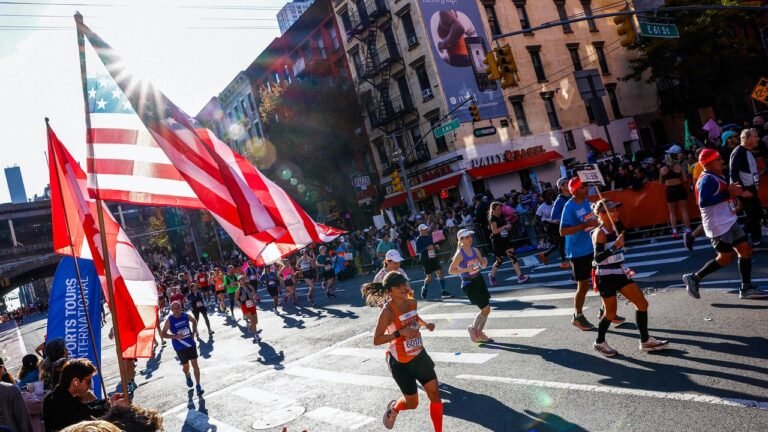
New York City is gearing up for another big weekend. This year, there are just eight hours between the end of the Halloween parade and the start of the marathon. Organizers of the former expect 80,000 participants in costume and 2 million spectators, while the latter will host 60,000 runners and 2.5 million fans on the sidelines cheering them on. The two routes don’t intersect, but the streets will be unusually busy. And preparing them for the crowds and their aftermath will involve an army of hundreds of sanitation trucks and workers.
“I think the great thing about New York City is that there’s something going on every single day of the year,” Gregory Anderson, the Department of Sanitation commissioner, tells Fast Company. “And so while it’s unusual for us to have Halloween on Saturday followed right by marathon Sunday—and particularly with the streak of good weather we’ve had, we expect to have huge crowds at both events—we’re used to doing multiple things at the same time.”
This summer, for example, the July Fourth holiday weekend overlapped with World Cup watch parties, Knicks’ NBA Finals games, and Taylor Swift and Travis Kelce’s wedding, Anderson adds. “So we’re used to it, we’re ready for it, and we’re just excited to be there alongside New Yorkers as they’re celebrating whatever it is they’re celebrating,” he says.
This weekend, the work entails two roles: public safety and cleanup. In fact, the process has already begun. For the past week Sanitation has been working with the city Department of Transportation to sweep the marathon route, which begins in Staten Island, then crosses into Brooklyn, Queens, Manhattan, the Bronx, and back into Manhattan. This process will continue through Saturday night. Right before each event, workers will park salt spreaders filled with sand to make them heavier as well as collection trucks along the routes to serve as blockades—40 for key intersections around the Halloween parade and 158 along the 26.2-mile marathon. “Our trucks, they’re big, they’re heavy, they don’t move,” Anderson says.
But after the events is when the agency shifts into high gear. Anderson says “every event has its own unique circumstances”—confetti from ticker-tape parades to the food and beverage litter around the Halloween parade and the water cups, banana peels, and gel packs from the marathon.
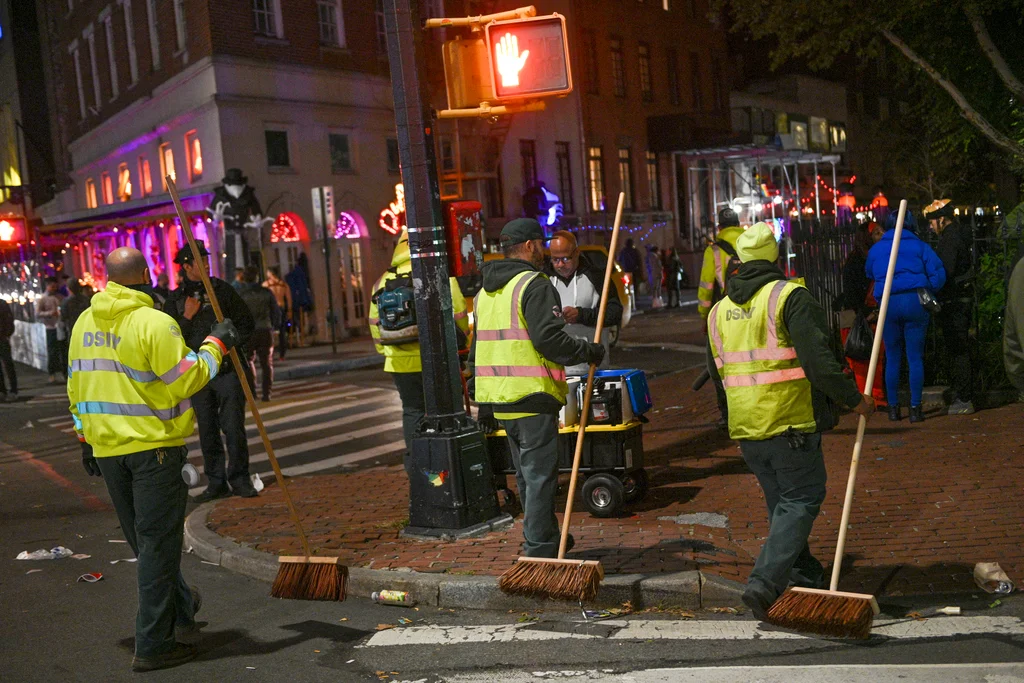
For Halloween, once the Police Department clears the streets of costumed (and probably drunk) revelers, 189 sanitation workers, plus 17 supervisors, will swoop in for cleanup. This year, Sanitation expects to begin the work later than usual.
“When we have the parade on a Monday or a Tuesday, sometimes we are able to get in there earlier, sometimes even before midnight to start cleaning up,” says Anderson, the commissioner. “But this year we’re expecting we may not be able to start cleaning until after midnight, maybe even 1:00, 2:00 in the morning because we do want to wait until NYPD has safely moved folks off the parade route so that we can get in there with our equipment. We don’t want people hanging around and having a good time while our heavy equipment is in there.”
Some will be armed with brooms, and others with what are essentially very big leaf blowers. “And then we have our most effective tool, which is our mechanical brooms,” Anderson says, using the technical term for street sweepers. “And they come through, they sweep up all that litter and debris that’s been pushed out into the middle of the street and leave the street looking cleaner than it was before the event started. We have whatever tools we need to clean that all up and we’re prepared for whatever New Yorkers bring us.”
For the marathon, 480 sanitation workers will be on cleaning duty, plus another 370 staffing the blockades. Anderson says the starting line is where a lot of manpower goes to scooping abandoned garments and detritus that accumulates from runners queuing up for hours to begin.
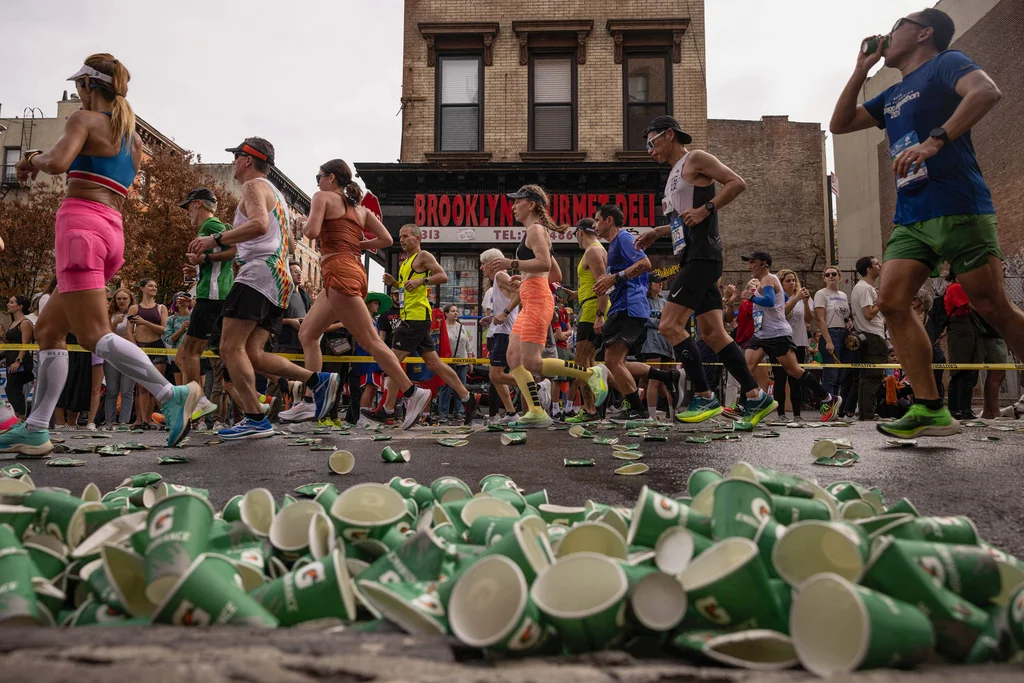
“They want to stay bundled up, but then they discard a lot of that clothing as they start the race,” Anderson says. “So we go through, we try to clean that up, and to the extent we can, we work with our donation partners to make sure what can be reused is.” The other challenging areas are the 25 water stations, which generate the most waste. Sanitation tries to complete its work in those sectors within two to three hours after the last runner passes through.
While this weekend will be a big one for the Department of Sanitation, Anderson says that the team is eager to contribute its part to two events that are a source of so much joy for the city.
“The thing that makes it most successful is our people, and they are just so dedicated to the work and so dedicated to serving their fellow New Yorkers,” Anderson says. “It’s not like people see cleaning up after a parade as a chore or a drudgery. It’s really something that sanitation workers look forward to. They look forward to being a part of that event, even if they’re coming through after the fact. And that goes for every single event that we work, whether it’s a small neighborhood block party or something as big as the New York City Marathon.”