Ever since offices have existed, they’ve projected a certain image of the companies who build them. And in the tech space, this has usually meant a forward-looking aesthetic—Apple’s spaceship, Amazon’s geodesic domes, and Bell Labs’ mirrored complex. It’s a fitting, and often repeated, conceit for businesses that are designing the future. (Or want to be perceived as such.)
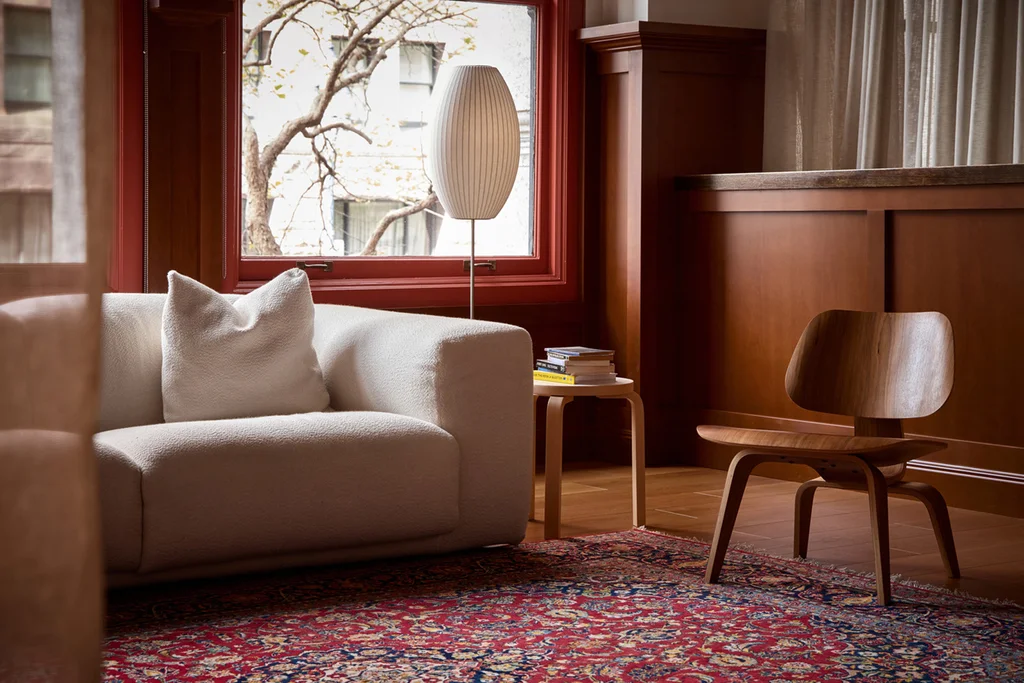
This pattern is part of the reason why the new San Francisco headquarters of Notion, a productivity software company that pivoted to AI a few years ago, feels unexpected. Designed by IA Interior Architects, the 100,000-square-foot space located in a circa 1907 building expresses a more historic sensibility. To wit: Its lobby is furnished with a book-matched burl reception desk, antique Persian carpets, gauzy white curtains, and an authentic Gerrit Rietveld chair. Noticeably absent? Logos and screens.
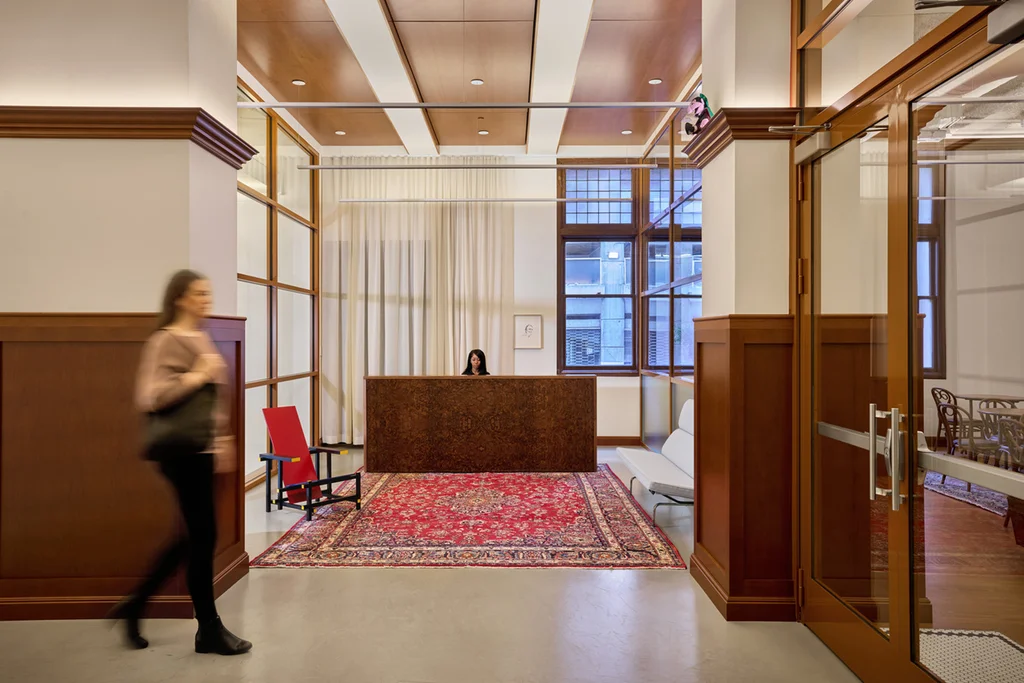
According to Michael McGinley, Notion’s global head of real estate, the brand and identity are reflected in the atmosphere, which is quite soothing, thanks to walls painted in Benjamin Moore Cream Froth and lighting set to 2700K—a color temperature designers typically use for hotels and homes. “It wants to celebrate the person who’s here,” says Kristoffer Tendall, design director of IA’s San Francisco studio.
Notion’s relocation comes at an interesting time for San Francisco and the tech industry based there. In the past, companies flocked to areas like South Beach and Mission Bay, where new development is concentrated and available floor space is large enough to accommodate growth. But overall, the AI industry has preferred to move into older buildings in historic neighborhoods, such as Jackson Square.
It’s a bit anachronistic: While companies like Notion, Anthropic, and Jony Ive’s Io are shaping how we interact with the world through AI and agents, they’re doing so from architecture that reads more like the pre-digital past.
Working with history
For Notion, a headquarters in the downtown Monadnock Building made sense logistically and culturally. Market Street hollowed out during the COVID-19 pandemic, allowing the real estate market to accommodate larger leases. Its proximity to public transportation—along with a nice parking garage next door—cuts down commute times by 20 minutes on average. (The company was previously based in the Mission District.) Such a landmark building also aligns with the founders’ values: CEO Ivan Zhao, who was closely involved with the vision for the HQ, is a history buff.
“This isn’t a tech office; this is a Notion office,” McGinley says. “That’s always been Ivan’s philosophy and vision. He wants us to be a place that is dedicated to literature, to poetry, to architecture. That can still exist in an AI company, but it’s the story we tell about ourselves to ourselves, and what inspires us and what we want to think about day-to-day. And I think that is very unique to this space.”
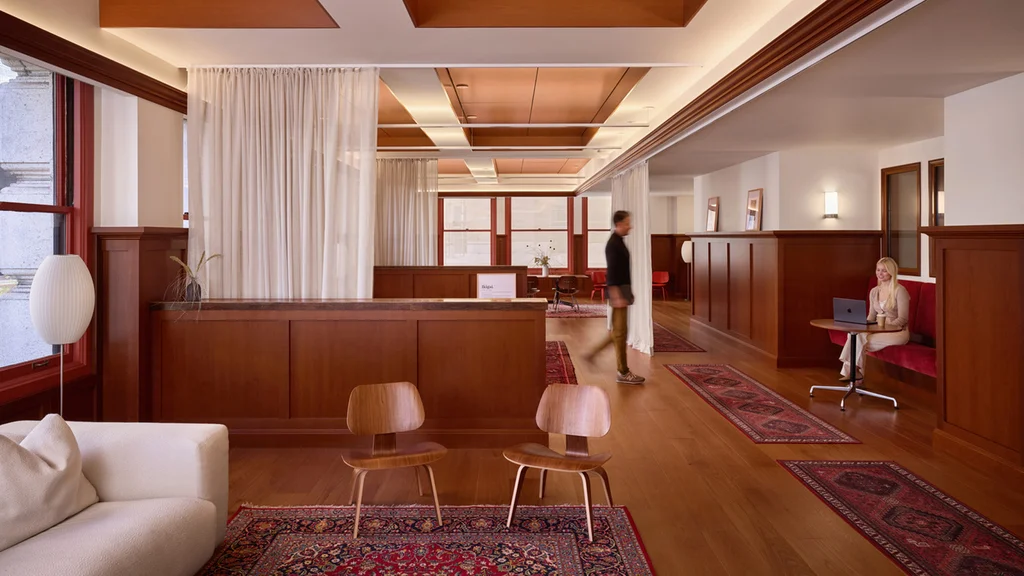
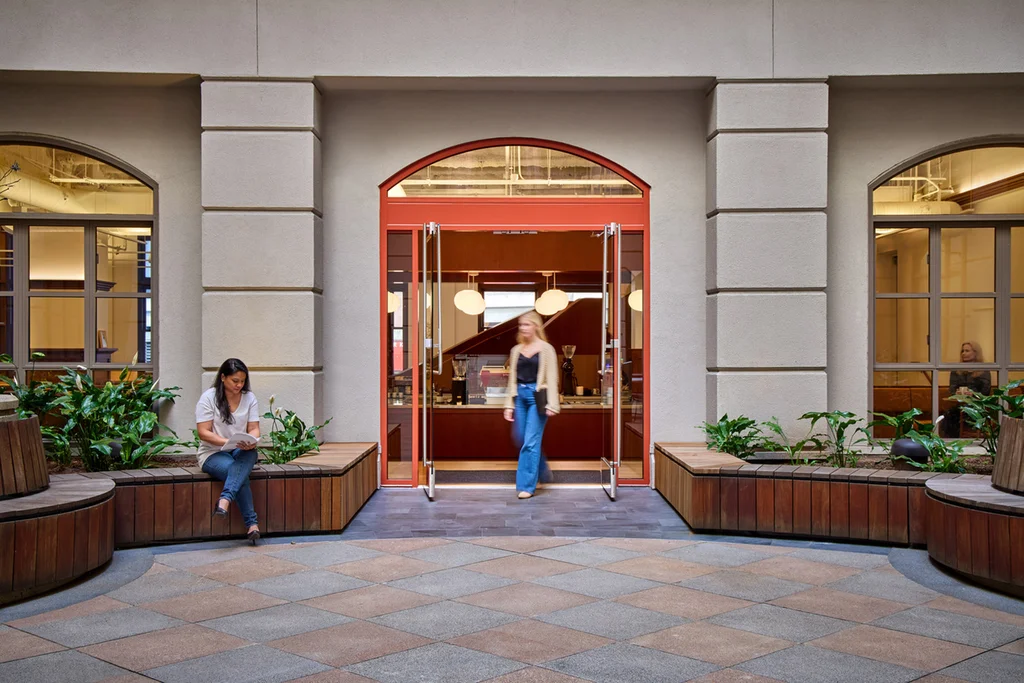
IA and Notion highlighted as many of the building’s original features as they could, including painting the historic window frames a shade of orange that matches the Golden Gate Bridge, creating sight lines to ornamental wrought-iron railings in the emergency stairwells, and retaining building materials. McGinley even tracked down blueprints from the Bancroft Library at UC Berkeley.
“It became this treasure map of how much of this building could we actually bring back to life if it’s already here?” he says.
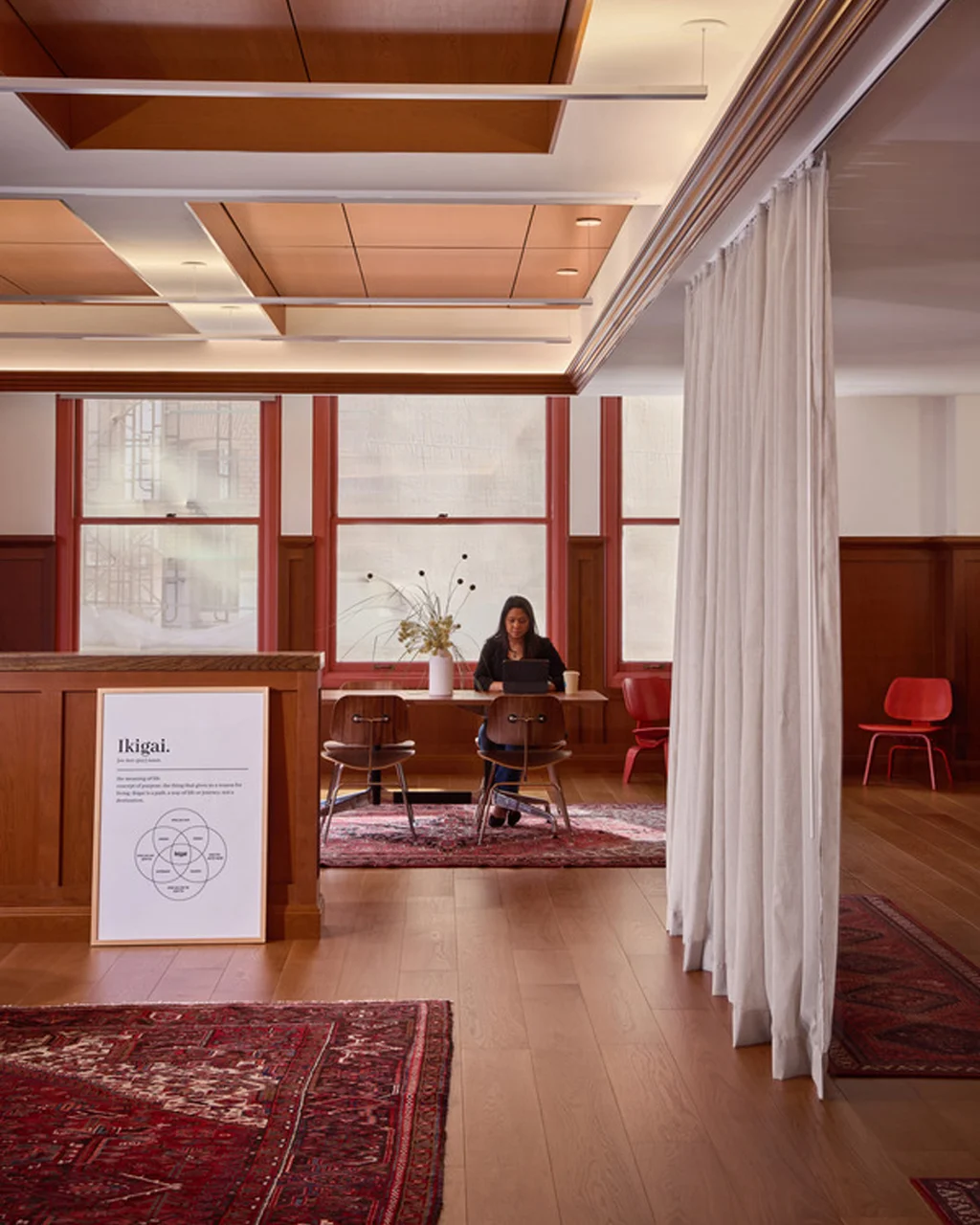
When construction workers uncovered dark-gray veined marble floors during demolition, Tendall adjusted the design to keep them, even though they had been carved up a little. “A contractor sent us a message like, ‘Hey, you might want to take a look. Do you want us to do wood over this?’” he recalls. “You can’t even get it anymore. And I’m, like, ‘Yeah, we’ll keep that.’ A way to honor the history of the building is to show the bumps and things that aren’t perfect.”
Hospitality first
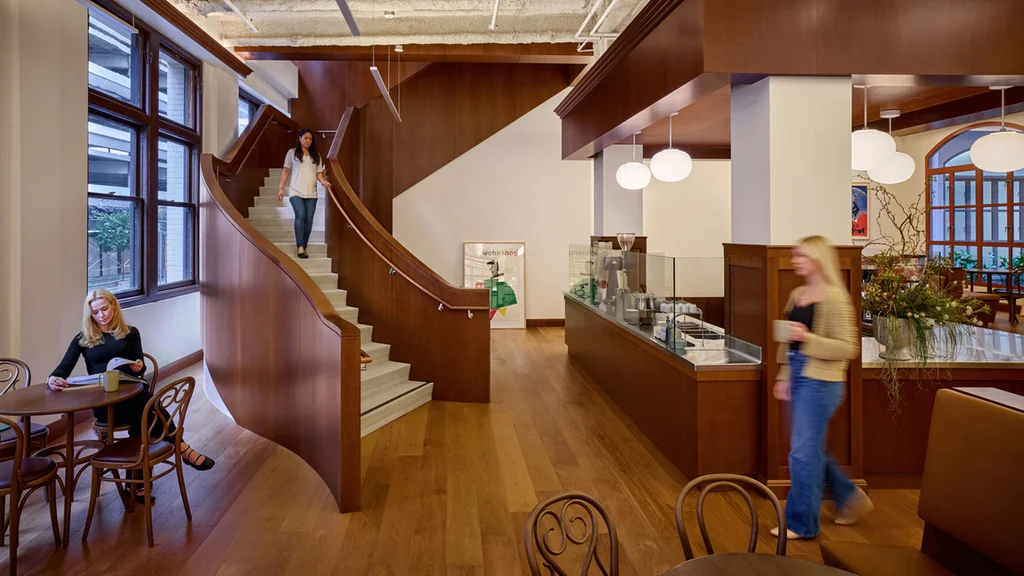
From the lobby, employees enter a communal area that resembles a Viennese café, complete with bistro tables and bentwood Thonet chairs, more hand-knotted antique rugs, and upholstered banquettes. Copies of vintage Fortune magazines are scattered around, as are plushies of Sesame Street characters like Elmo and the Cookie Monster for a dose of levity.
“It was very clear from the beginning that the goals were timeless and classic, but not generic and antiseptic,” Tendall says of the office’s aesthetic. “So Fallingwater, not Severance.” He describes the well of inspiration the team pulled from as a “combo pizza” of periods ranging from the Craftsman era to mid-century modernism. “We wanted to honor history—but in a true way, not in an inauthentic way,” he adds.
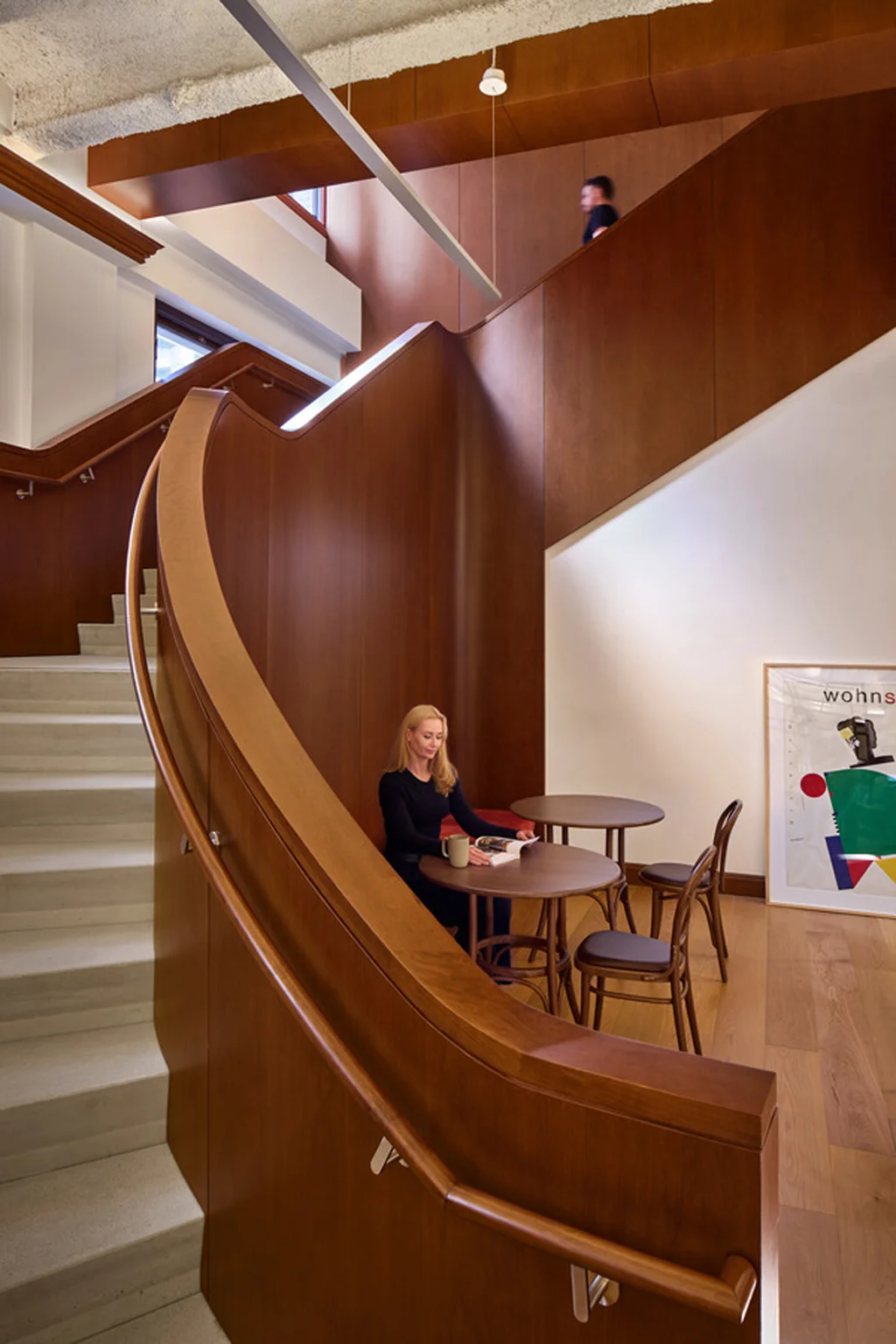
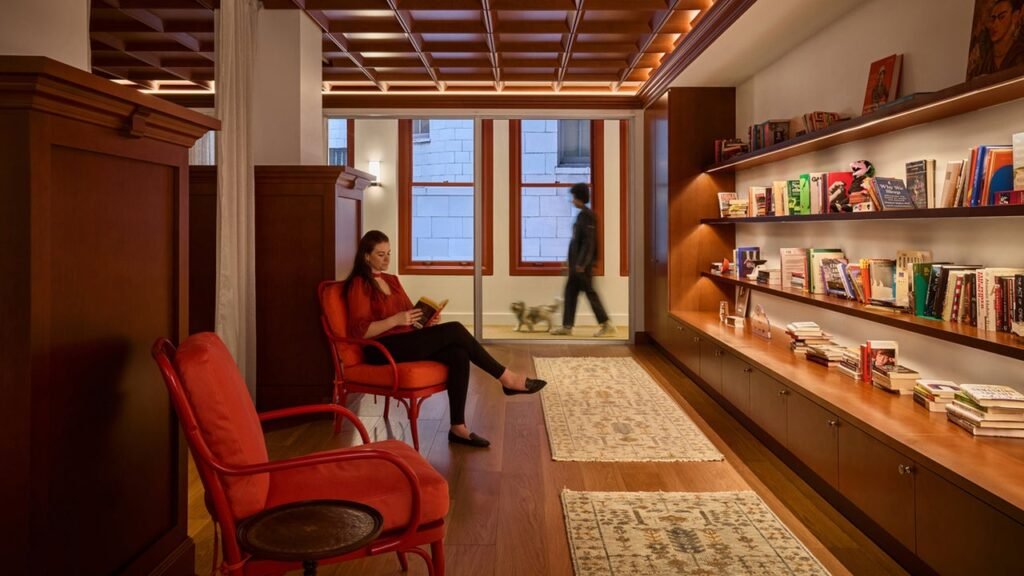
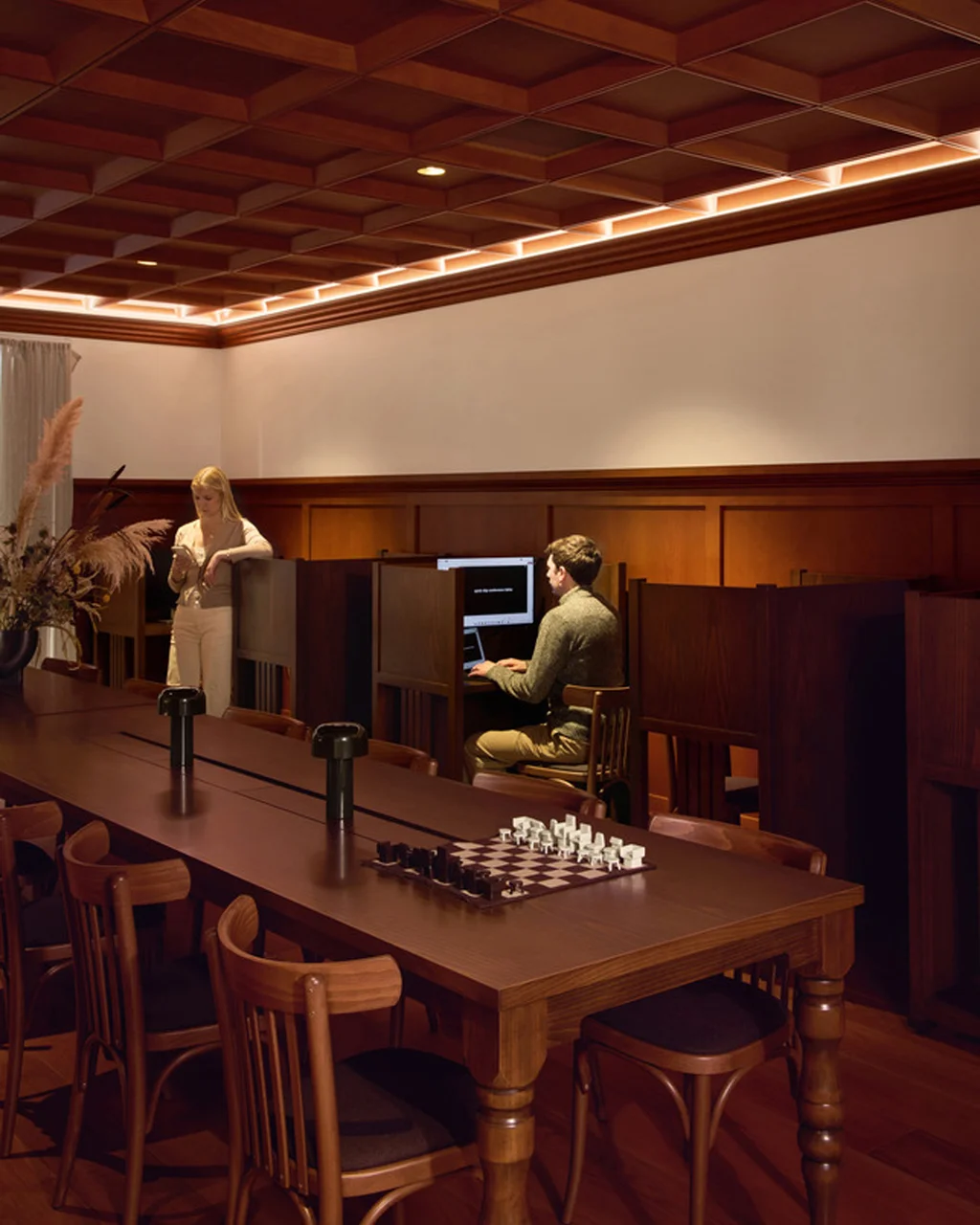
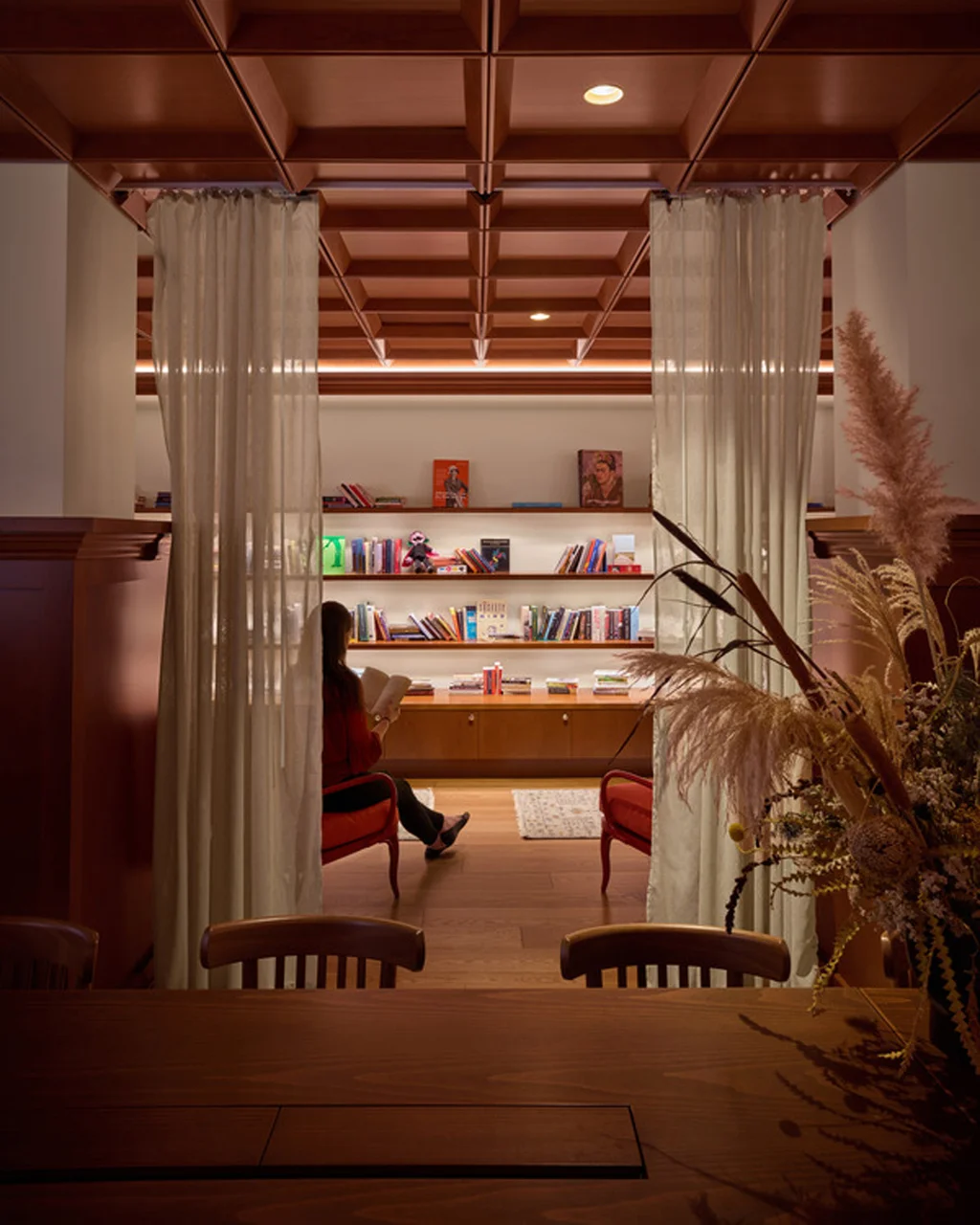
A spiral staircase—inspired by one at the Claremont, a Berkeley, California, hotel built in 1915—connects the first level to an amenities floor. Books and ephemera on a ledge about halfway up give a nod to the Notion’s design heroes and the influences that helped shape its HQ: a Frank Lloyd Wright monograph, a framed pamphlet from an exhibition on Terence Conran, and a miniature Frank Gehry Easy Edges chair. There’s a full-size version in a hallway just around the corner from a library outfitted with study carrels and a collection of books selected from a list of the employees’ favorite titles.
Long-term thinking
Including objects and design elements that have become part of the canon relays a message about longevity. Conference rooms on the workspace floors are named after objects like the AGA stove and Harley-Davidson motorcycle. “It’s to inspire and to look to the past as we go towards the future,” McGinley says, adding that the authentic artwork and antiques “help influence our employees every day to build a timeless tool that is Notion. We want them thinking long term. What is going to stand the test of time?”
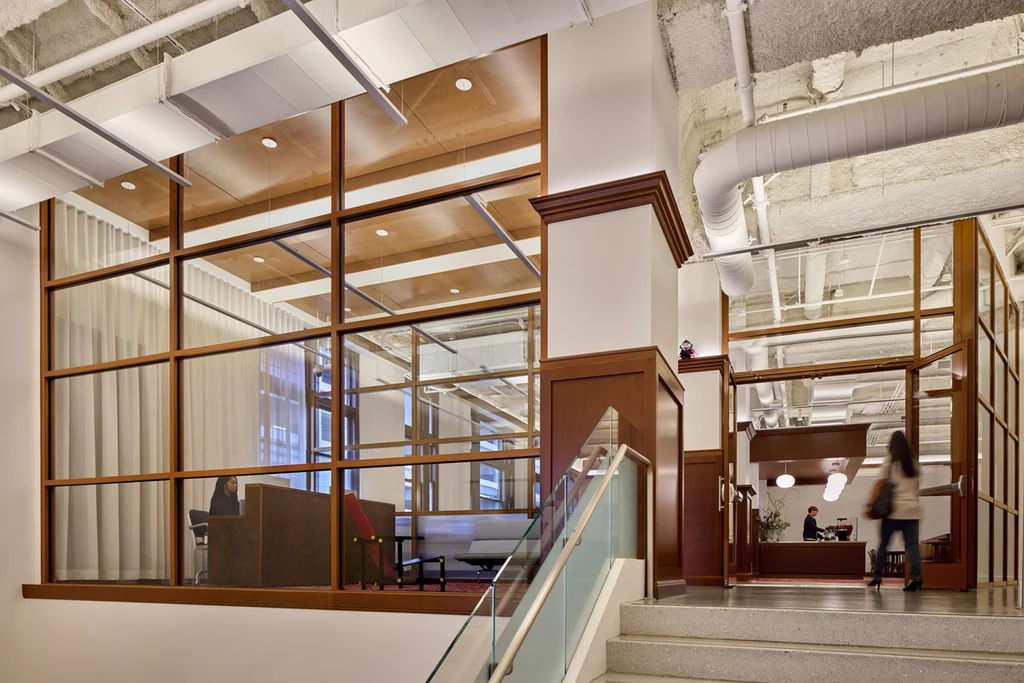
But Notion didn’t want to create a museum. Everything is meant to be used and is in service of helping employees feel more productive. The conference rooms are all wired for virtual meetings and soundproofed so as not to disturb people at the workstations nearby. If someone prefers to do heads-down work in a lively space, they can head to the communal areas. If they want dead silence, there’s the library.
“It should feel comfortable like you’re home, but also offer things you can’t get at home,” McGinley says. “These larger-scale spaces for meetings with your entire team, you probably can’t do at your house. And we want employees to come together to collaborate, to do their best work.” Additionally, amenities like a craft room and makerspace emphasize hands-on thinking and creativity. Notion recently held calligraphy and card-printing classes for employees. “We talk a lot about tools in craft,” McGinley says. “We also want employees to have that chance to literally be toolmakers.”
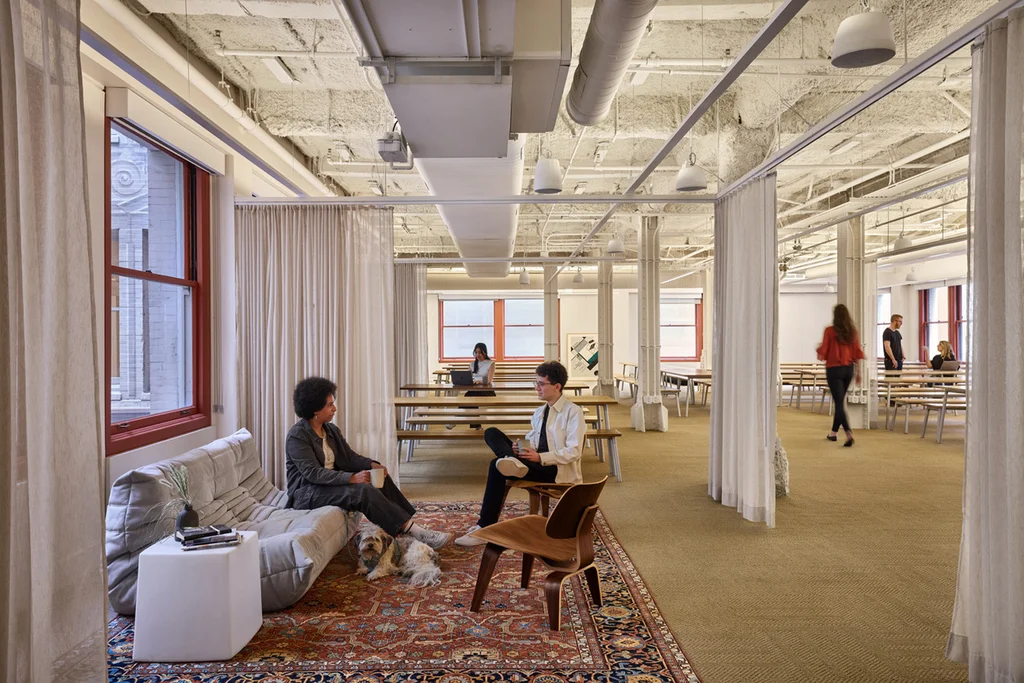
Many of the key principles that informed Notion’s office also reflect best practices across workspace design today, like offering an array of sensory experiences, giving employees a choice on where to work, and expressing culture. But its expression looks like no other. “It was all done with attention and purpose to Notion’s employees,” Tendall says. “I’m seeing a trend of people less interested in what everyone else is doing and more about what’s right for them. It’s not trying to be in the context of others.”