You’ve followed our on-the-ground reporting from the consequential 2026 Venice Biennale, running through November 22. You’ve read, I hope, our reviews of Koyo Kouoh’s posthumous main exhibition In Minor Keys, Alma Allen’s unmemorable United States pavilion, and Gabrielle Goliath’s Elegy — displayed at a church after being cancelled by the South African pavilion. You’ve engaged with our coverage of Dayanita Singh’s project at the State Archives of Venice; Arthur Jafa and Richard Prince’s hit-and-miss collaboration; an interview with Khaled Sabsabi, whose Australian pavilion was censored under pressure from pro-Israel groups and later reinstated; and much more from the international exhibition and its collateral events.
But we never got to tell you what we really thought of the national pavilions, and which ones you should visit or avoid. As the punishing heat waves of this summer taper off, this might be the perfect time to visit the biennale, if you haven’t already. Below is the first part of a conversation between Editor-at-Large Hrag Vartanian and critic Aruna D’Souza on which pavilions they liked, disliked, or remain torn about. They begin with a provocative argument in favor of national pavilions. Did they suddenly become nation-state stans? No, hold on, hear them out.
—Hakim Bishara, editor-in-chief
Prologue: In Defense of National Pavilions
Hrag Vartanian: I know it’s a popular trend to decry the national pavilion concept, and past biennials have jettisoned the idea altogether, such as the São Paulo Biennial. But I think what makes Venice important and central is the tension between the main exhibition and the national pavilions. You can decry them all you want, and we should, since the nation-state has a great deal of issues, but our national identities and passports determine everything from funding to media attention.
Removing them may make a bunch of academics and curators feel better for appearing above the fray, but all it would do is mask their privilege and fail to grapple with the fact that national borders still dictate so much. Look no further than the Venice Biennale’s own overrepresentation of Nordic countries, fossil fuel-funded monarchies and autocratic states, and other wealthy nations that funnel money to the arts, whether through government or private means.
National pavilions also allot an opportunity for smaller nations to center their own artistic conversation. Discarding them would likely result in countries like Timor-Leste, Cape Verde, Nauru, and other nations practically disappearing in the larger exhibition, which happens at other biennials. The idea of removing national pavilions is usually most popular in the most privileged circles, often among those with the strongest passports, which tells you all you need to know. This year’s boycotts underlined the pressure points, and while I think some of the intervention was uneven — for instance, I’m not sure why ANGA didn’t highlight Turkey’s role in aiding Israel’s genocide in Gaza, despite the fact that the government has been central to access to gas and other resources, while underscoring the role of every other country with a pavilion in the Arsenale and Giardini — it was still valuable.
Aruna D’Souza: I agree with this sentiment in general, especially given how many countries were able to show for the first time. Thirteen pavilions from countries in Africa! Panama had a pavilion at a time when Trump is threatening their sovereignty! And there are many more examples besides.
The only downside of the way national pavilions are conceived, to my mind, comes when you look at the introductions to these displays. For so many of them, the commissioner or sponsor is listed, then the curator, then the exhibitor, aka the artist. This is how the Biennale itself wants things listed, if their catalog of national participation is any indication. I hate this demotion of the artist to a mere bureaucrat in service of a country so very much.
Ecuador
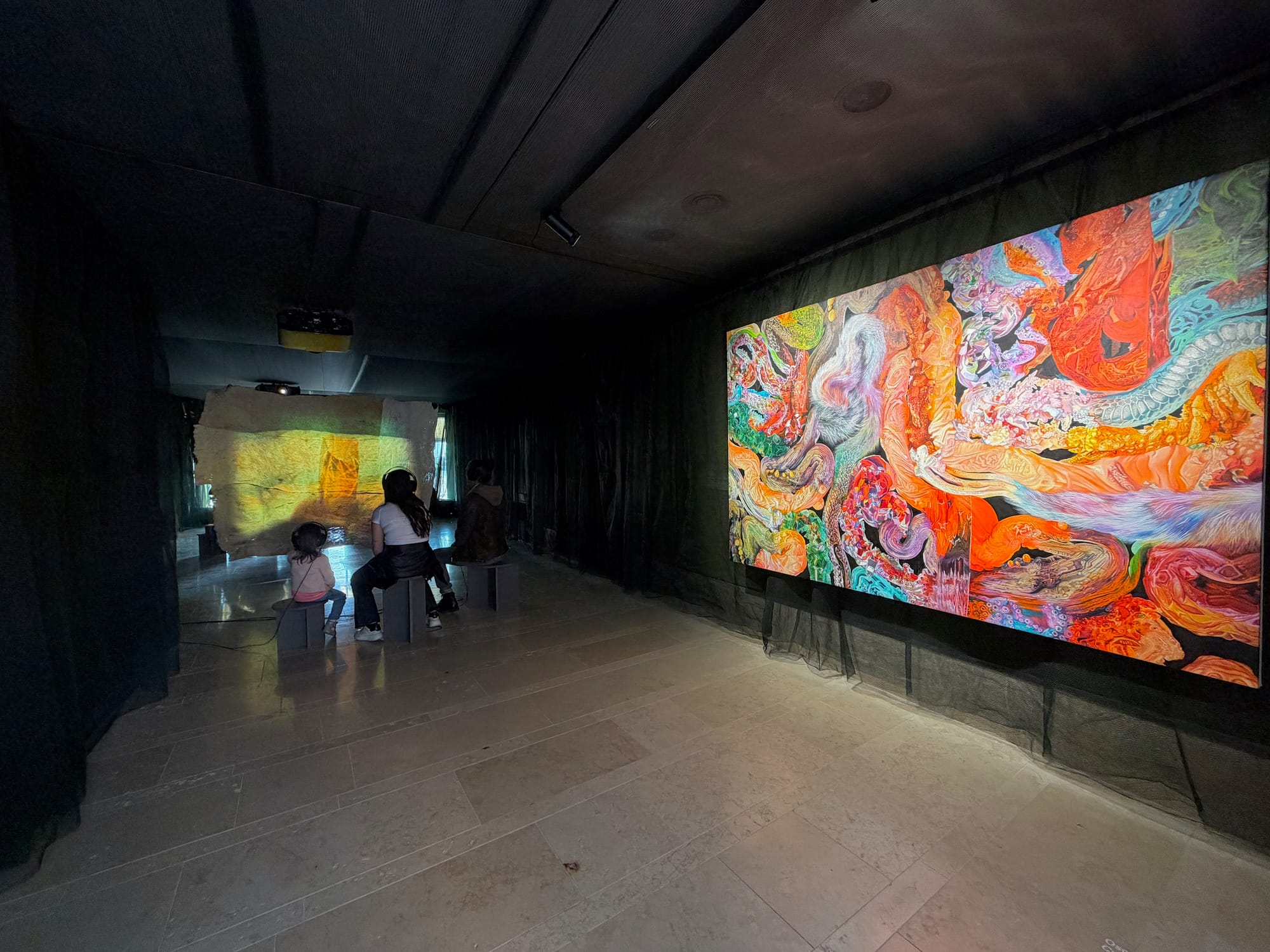
Balancing the Indigenous-led Tawna collective and artist Óscar Santillán, the Ecuadorian pavilion was an oasis of storytelling and reflection. The 26-minute video “Llaki” (2025) by Tawna was a particularly poignant story of how Indigenous people of non-heteronormative sexualities are forced to endure colonial structures, and how those same mores infect and change families and relationships. It doesn’t focus on the sadness of loss, but rather uplifts us by demonstrating how resilient those identities can be. Santillán’s “Medula” (2026) was a curious assemblage that included, according to the label, “Alien DNA,” while a neighboring work used a circuit board. It demonstrated the same resilience and fearless confrontation of the world and its ills. —HV
Democratic Republic of Congo
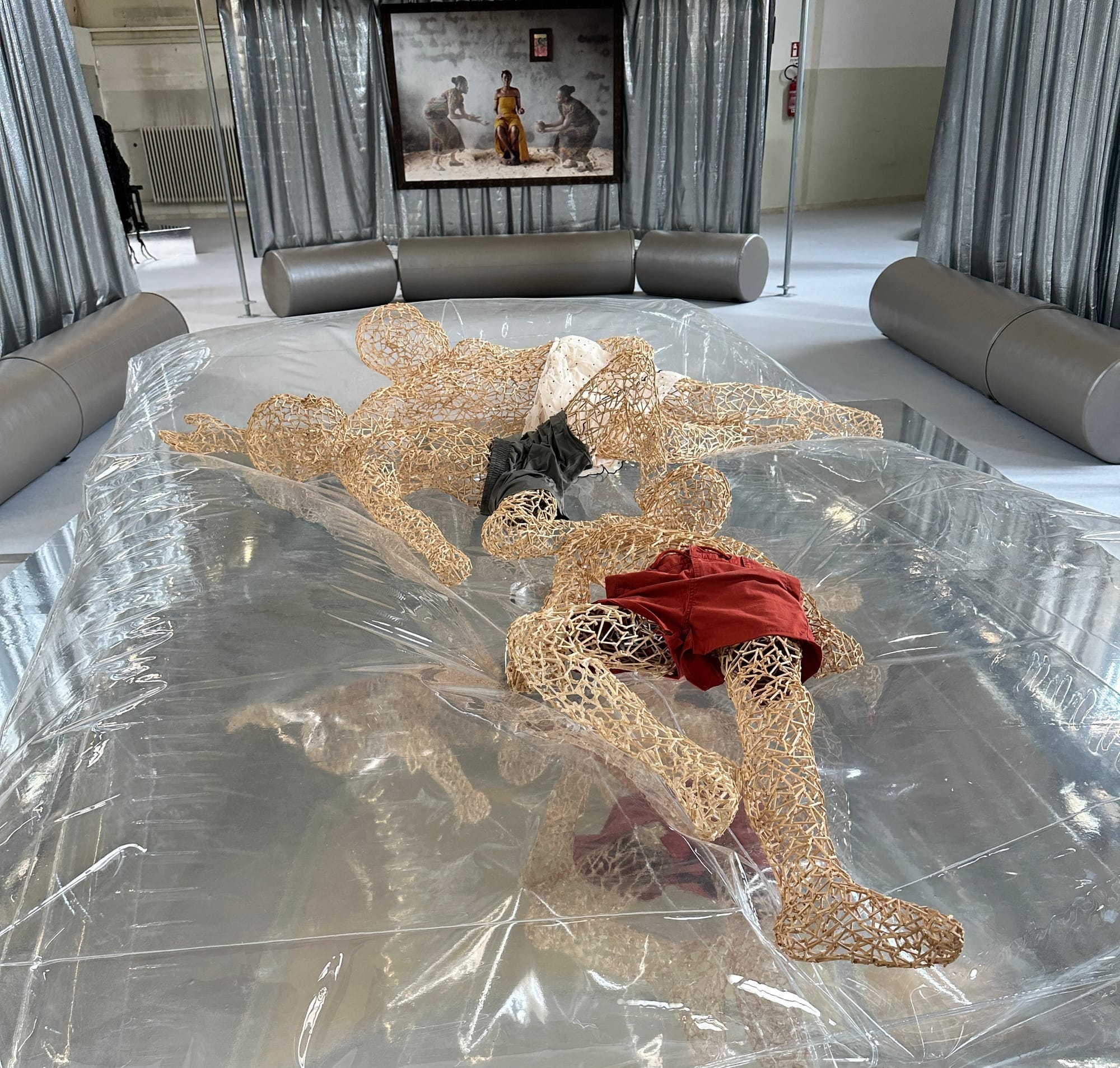
Nine artists from the DRC and its diaspora brought the heat for the country’s inaugural participation in the biennale, under the trilingual title “Simba Moto! Seize the Fire! Saisis le Feu!” At the center of an installation designed by Johnny Leye, principal in the architectural firm Traumnovelle, an oval structure with plenty of places to sit a while and contemplate the art, we find Aimé Mpané’s “Le Souffle” (2026), in which three figures — a mother and two sons, made out of match sticks so they seem like topographically defined shells — sprawl on an air mattress. They could be comfortably napping in their beds, but they could also be drifting on an inflatable raft, searching for newer, safer homes. The photojournalist and documentary photographer Arlette Bashizi captures scenes from the eastern part of the country, including those of environmentally devastating mining practices. Patrick Bongo’s sculptures, made from recycled rubber, deepen the reflection on the human and environmental costs of dirty industries. Sammy Baloji’s tapestry, “Seeing Katharina” (2026), delves into the colonial histories that brought us to this point. In all, the show is ambitious and fierce. —AD
Taiwan
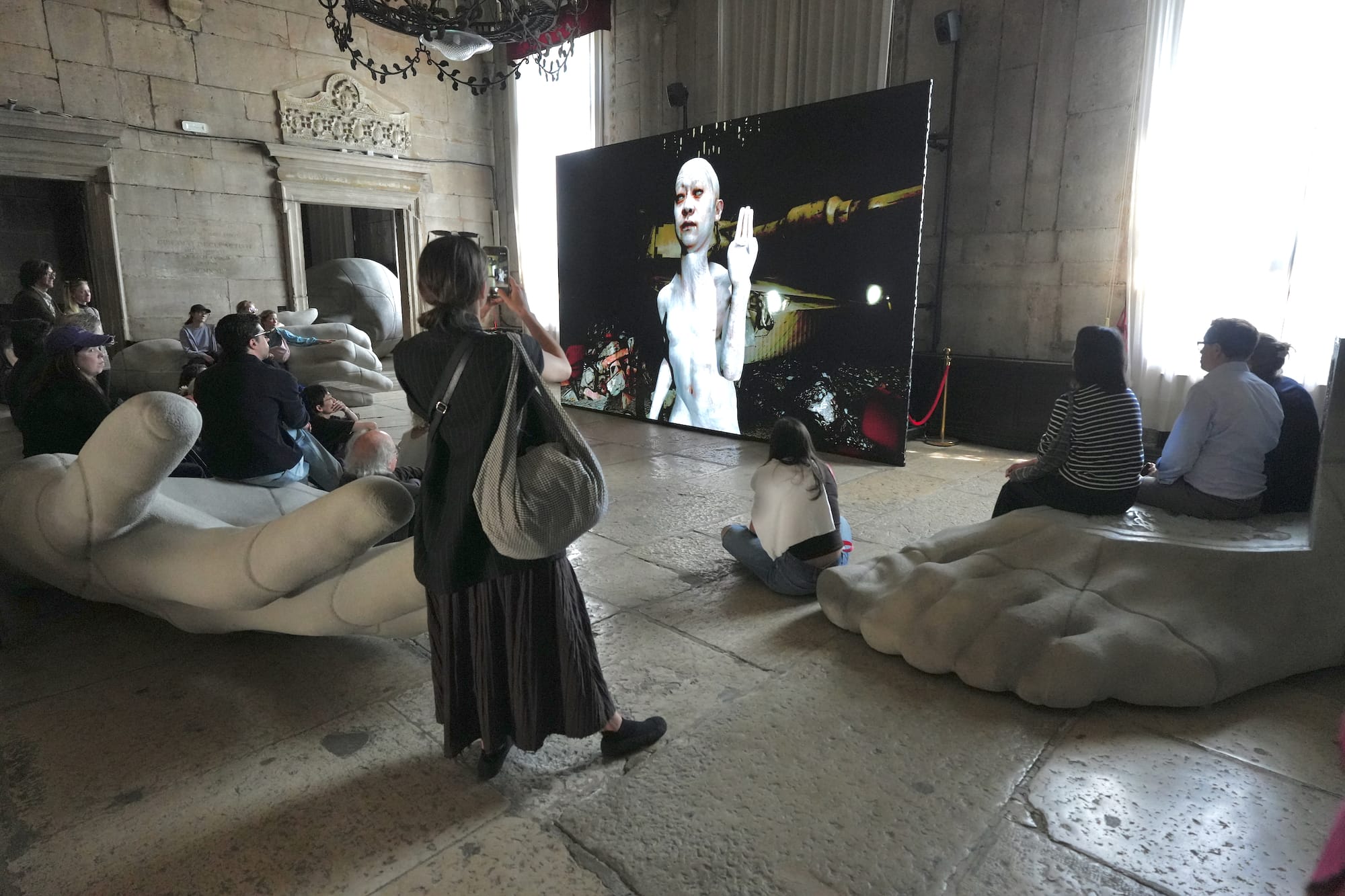
Li Yi-Fan’s electronic masterstroke pokes fun at our increasingly digital lives and their often awkward accommodations. Here, his digital marionette mimics our discomfort with the world and its strangely emotional permeations. In a biennale full of tricks and spectacles, “Screen Melancholy” drew me in and kept me locked in for the journey into a strange, fragmented world as disjointed as our own. —HV
Bahamas
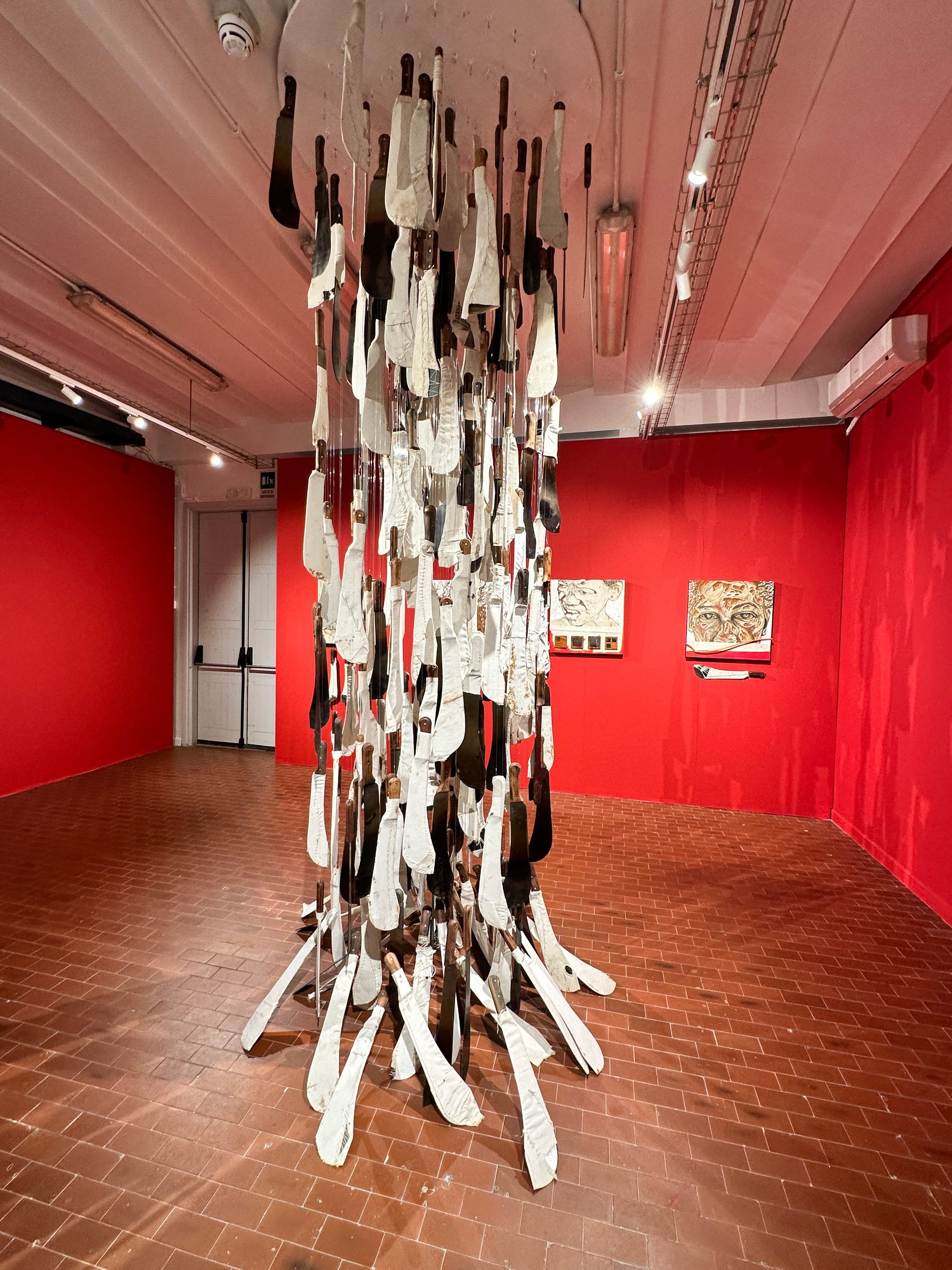
Krista Thompson did a fantastic job curating In Another Man’s Yard, featuring the work of John Beadle and Lavar Monroe. Beadle was slated to represent the Bahamas for the 2015 Biennale, but the show fell through because of a lack of funding; he died in 2024. This exhibition stands as a corrective and commemoration at once, with the younger Monroe stepping into a “posthumous collaboration,” according to the exhibition guide. Both artists are using discarded materials — cardboard, newspaper, and, most interestingly, sails from Haitian boats carrying sea-borne migrants — and come from the tradition of Junkanoo, in which people gather to transform such materials into masquerade costumes. Beadle’s sculpture of a boat’s rudder, fashioned from cardboard and propped up by an iron spike, is a gorgeous, minimalist evocation of water travel, both the horrifying (the transatlantic slave trade) and the hopeful (migration). —AD
Canada
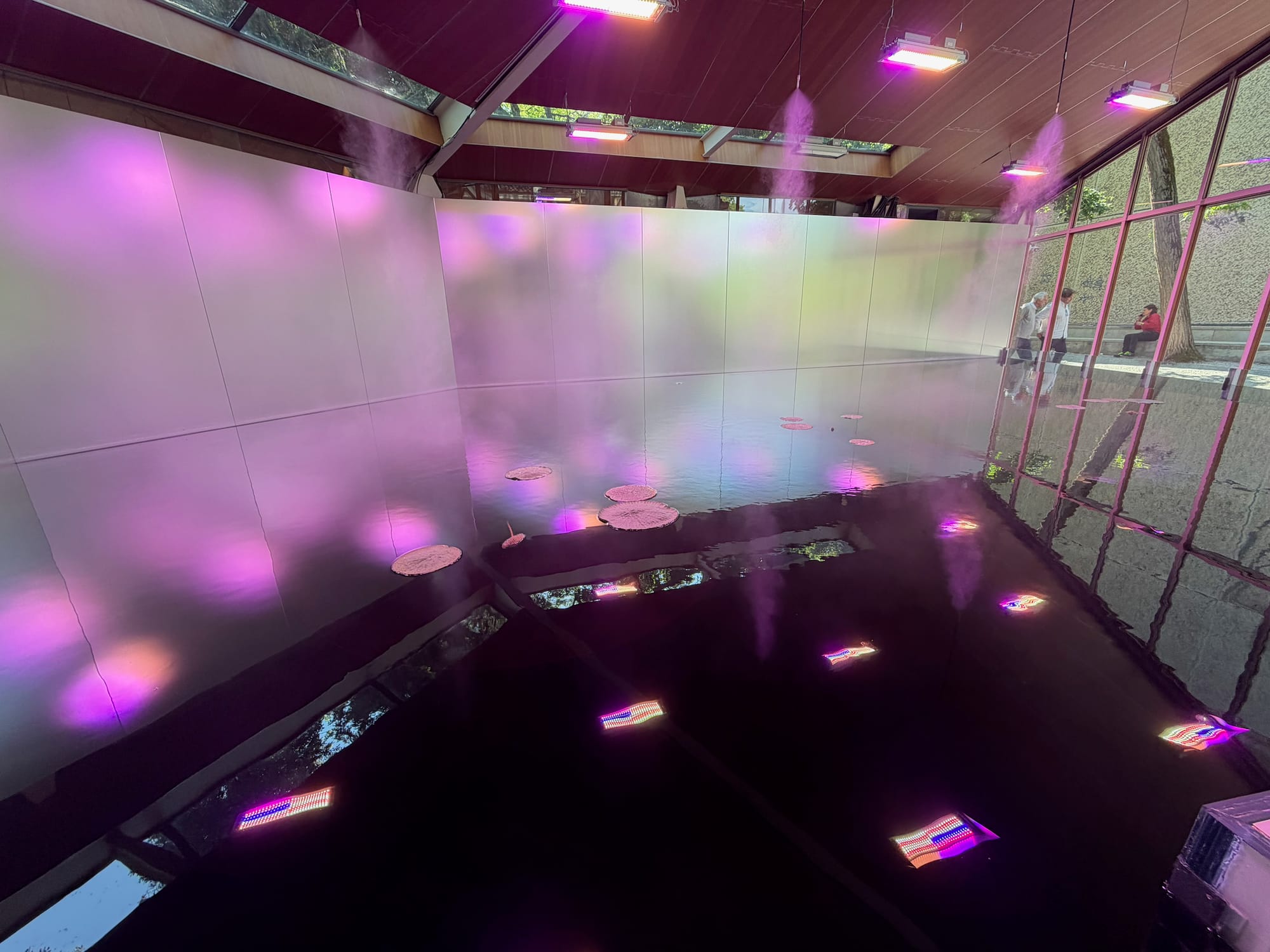
The wealth of West Asian diasporic artists was a gift of this Venice Biennale, and Abbas Akhavan’s Entre Chien et Loup (2026) was one of those treasures. He brought his sensitive understanding of history to the site of the Canadian pavilion, transforming its peculiar spiral interior into a greenhouse full of aquatic plants from Kew Gardens in London, which is currently closed for a massive renovation. Over the course of the biennale, the plants will grow from their diminutive sizes to meter-long lily pads.
Akhavan mines the history of the British Empire in this project. As he mentions in the catalog, the giant water lily planted here was also referred to as the “Queen of Aquatics,” named after Queen Victoria, who was the regent when Canada was established as a Dominion in 1867. I think Akhavan’s work really succeeds because he is invested in the aesthetic worlds that his ideas and language cultivate. He introduces a sense of time that permeates this and much of his other work; the size of the plants will tell us when the photographs that circulate on social media and other channels were taken, a beautiful aspect of the work when so many images of art emphasize their timeless value. I’m sad that I probably won’t be able to return to see them transform, but the idea itself is important, since gardens, another central idea in his oeuvre, have lives that extend beyond our own. And needless to say, Persian Gardens are fast becoming an important theme in contemporary art for various reasons — this captures that zeitgeist perfectly. —HV
Serbia and Spain
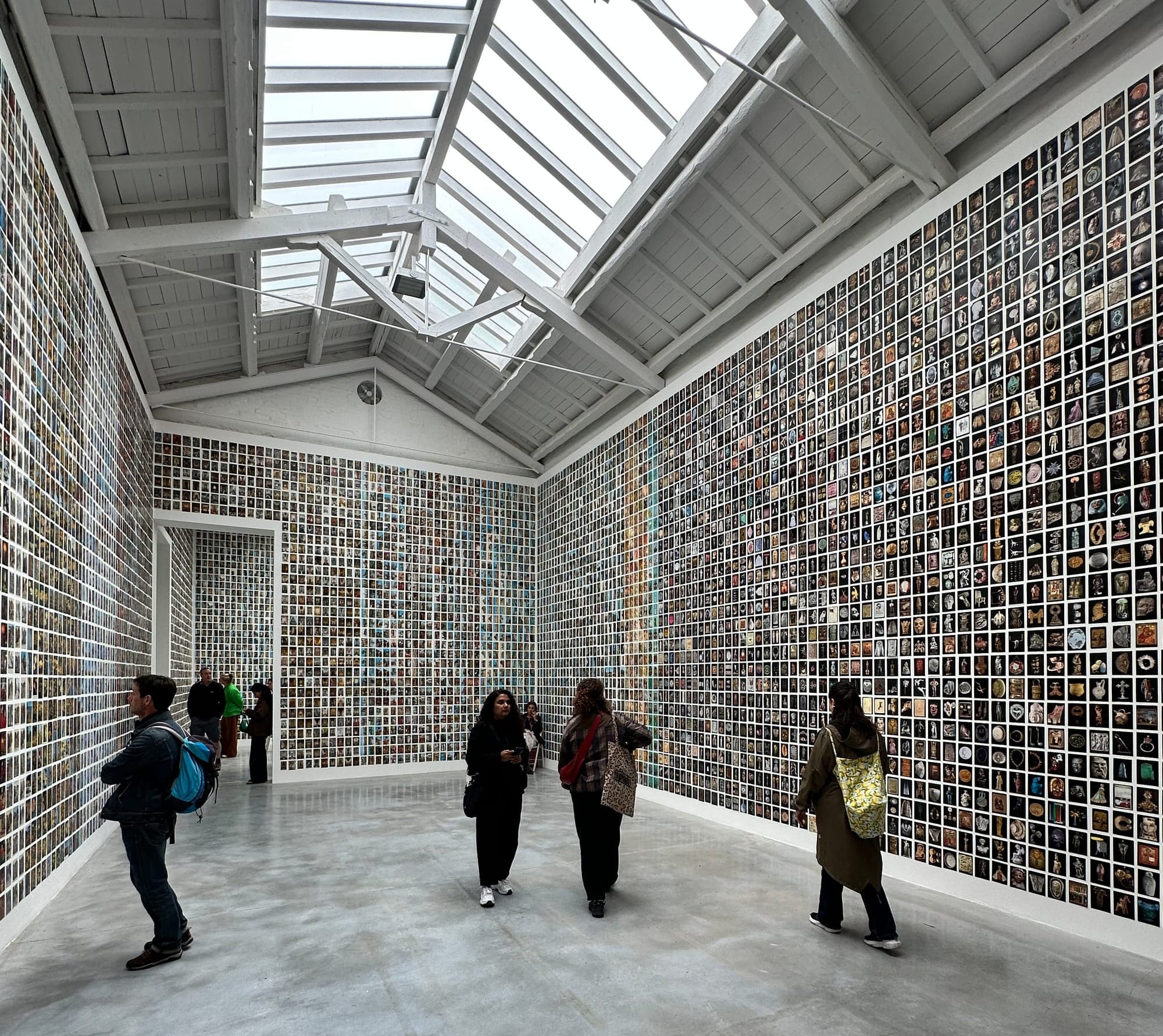
Both Predrag Djaković’s “Through Golgotha to Resurrection” in Serbia’s pavilion and Oriol Vilanova’s “Los Restos” in Spain’s hinge on archives in interesting ways. Djaković focuses on the way history is constructed according to what’s saved — the vagaries of preservation of photographs, newspapers, maps, deeds, stock certificates, and so on form our view of the past. Pasted to the walls of the building in what seems like a logical order — although, come to think of it, what do all those photos, some of them portraits, others ID pictures, and even some mug shots, have to do with one another? — the archival documents immerse us in a specific history of the 20th century, told from a Serbian point of view. It’s hypnotic.
Vilanova leans into the arbitrariness of the archive in his installation, made up of tens of thousands of postcards he has purchased in flea markets over the past two decades. He arranges them from floor to ceiling, this time not in ways that emphasize any putative relationship between them (or not primarily so) but rather that create coloristic graduations — stripes of red, white, black, jade green, and so on — to interrupt the visual chaos of the whole world being arranged in the space of a pavilion. —AD
Timor-Leste
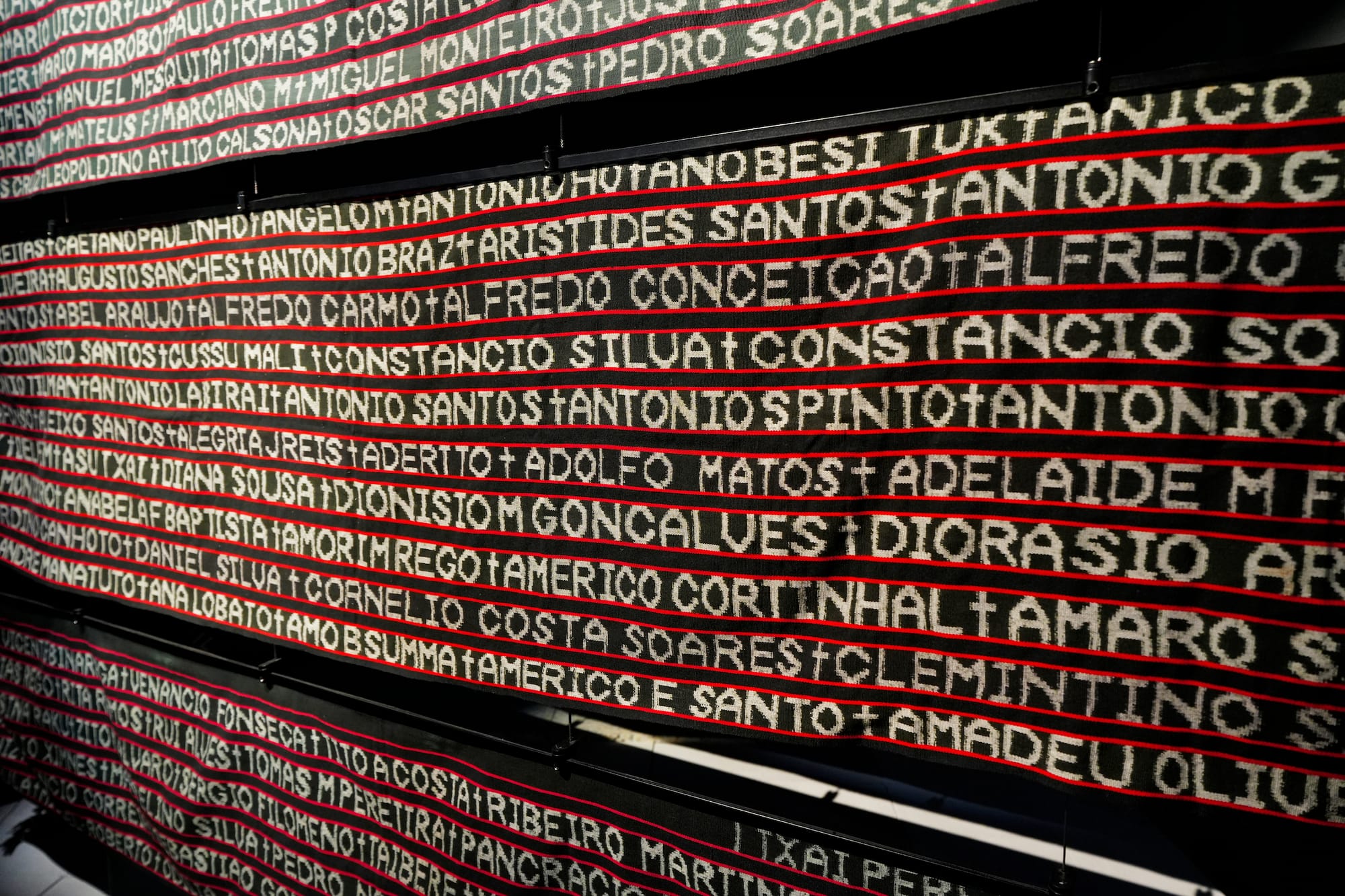
This is the type of small country pavilion that I’m always eager to see at the Venice Biennale. All three artists reflect national identities blended with new ideas, and in the case of Verónica Pereira Maia, her contribution to the traditional Timorese art of tais weaving is particularly stunning. This marks the first time that the work, “Tais Don” (1994–99), is exhibited in Europe.
Maia fled Timor-Leste in 1975 during the Indonesian military occupation, and while she cannot read or write, she was able to turn the names of all 271 victims of Dili’s Santa Cruz cemetery massacre on November 12, 1991, into a textile memorial. She was also part of the street protests that followed the atrocity. She has also “activated” the textile through performance at the cemetery site, using the object as a type of communal shroud.
Sound artist Etson Caminha created an audioscape for the exhibition, and he’s a product of the Arte Moris Free Art School that was established soon after the country gained independence in 2002, demonstrating how art and national identity can work together to forge new paths. Video artist Juventino Madeira, who is self-taught, shows us in “Fraze ne’ebé seidauk hotu (An Unfinished Sentence)” (2025–26) that YouTube and local histories can create exciting youth culture. —HV
Czech Republic and Slovak Republic
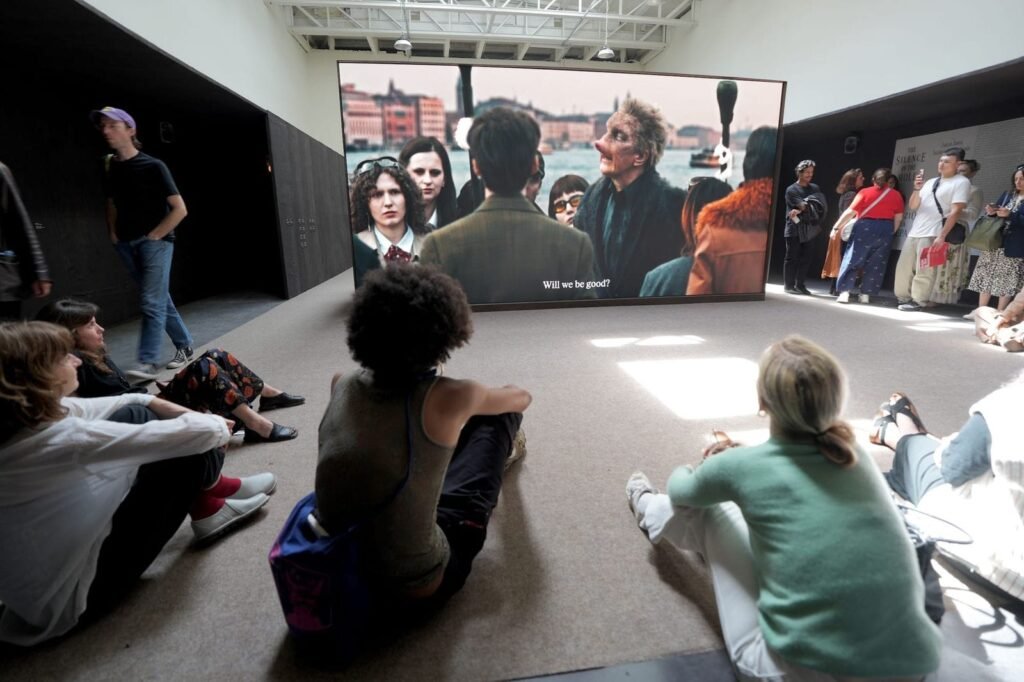
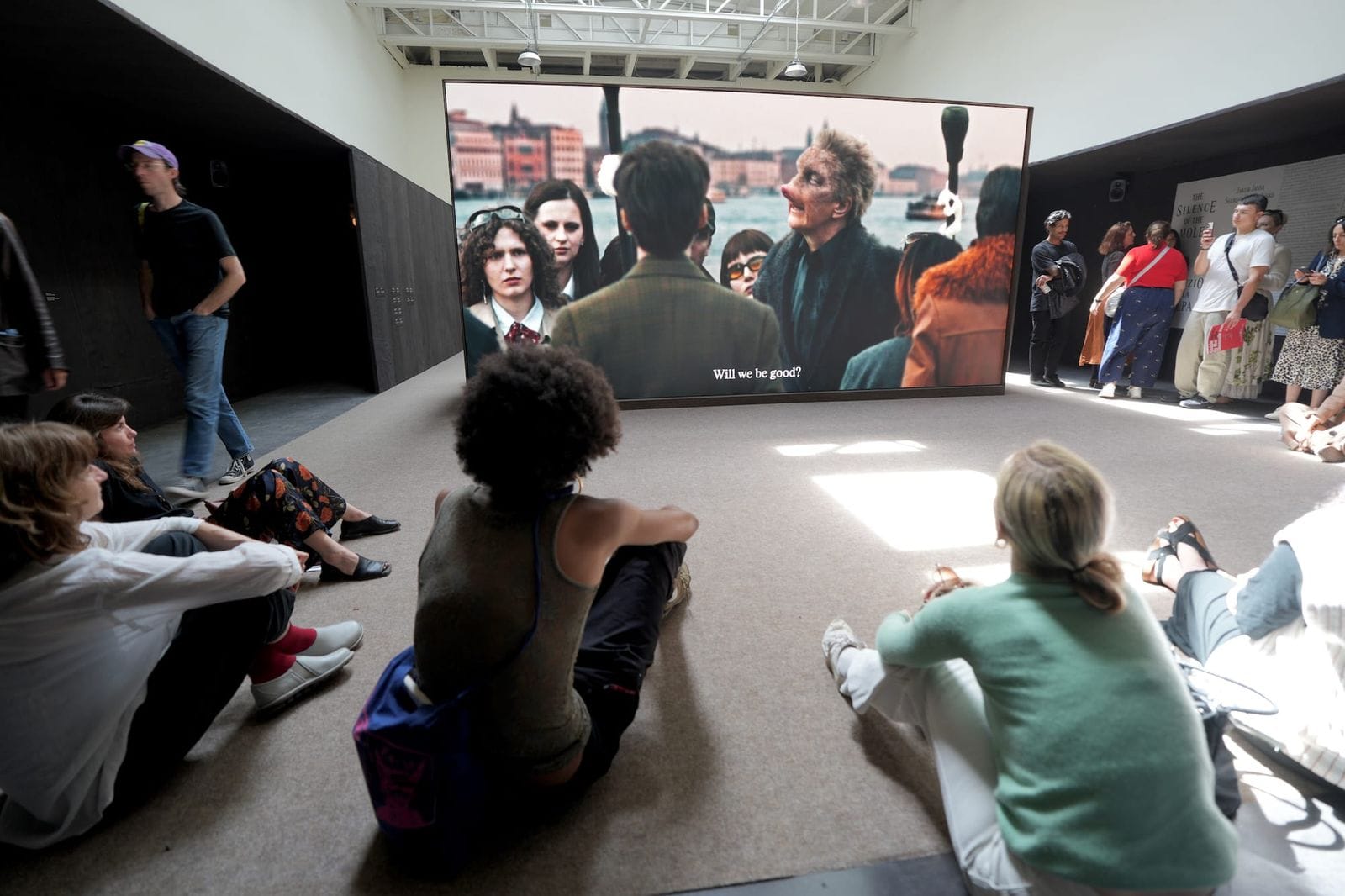
First of all, I love that, despite the division of Czechoslovakia into two separate countries in 1992, the Czech Republic and Slovak Republic continue to share a pavilion emblazoned with the former name, with both countries sponsoring what’s exhibited within. So cute! And then there’s this year’s contribution, The Silence of the Mole by Jakub Jansa and the artistic duo Selmeci Kocka Jusko. The project was the result of a year-long collaboration — Jansa made the film, Selmeci Kocka Jusko made the sculptural installation — and focuses on Mr. M, a performer who has spent his life embodying a fictional mole (think Krteček, the animated character that played for 50 years on Czech TV), so much so that he has become the mole, the prosthetic mask fusing to his face. It’s creepy, charming, and honestly, I couldn’t stop thinking about it. —AD
HV: I love that coexistence too, especially since it recognizes that the two countries, while culturally distinct, share much in common not only in the past but in the present. I found this video project fascinating as well, and the way it dug into my psyche. But the objects behind the screen felt peculiar and did little to complement or create a dialogue with the much stronger video.
Ukraine
There were two shows devoted to Ukraine this year. One is a collateral project in Dorsoduro sponsored by the Pinchuk Art Center titled “Still Joy,” in which an international group of artists, including Roman Khimei & Yarema Malashchuk, Tacita Dean, and Zhanna Kadyrova, reflected on the question of what it means to experience and express joy in the midst of horror. The theme was affecting, and there was some good work, but the decision by the curators, Björn Geldhof and Oleksandra Pogrebnyak, to punctuate the installation with quotes from the fascist-adjacent historian Niall Ferguson was deeply troubling and ruined an otherwise solid show.
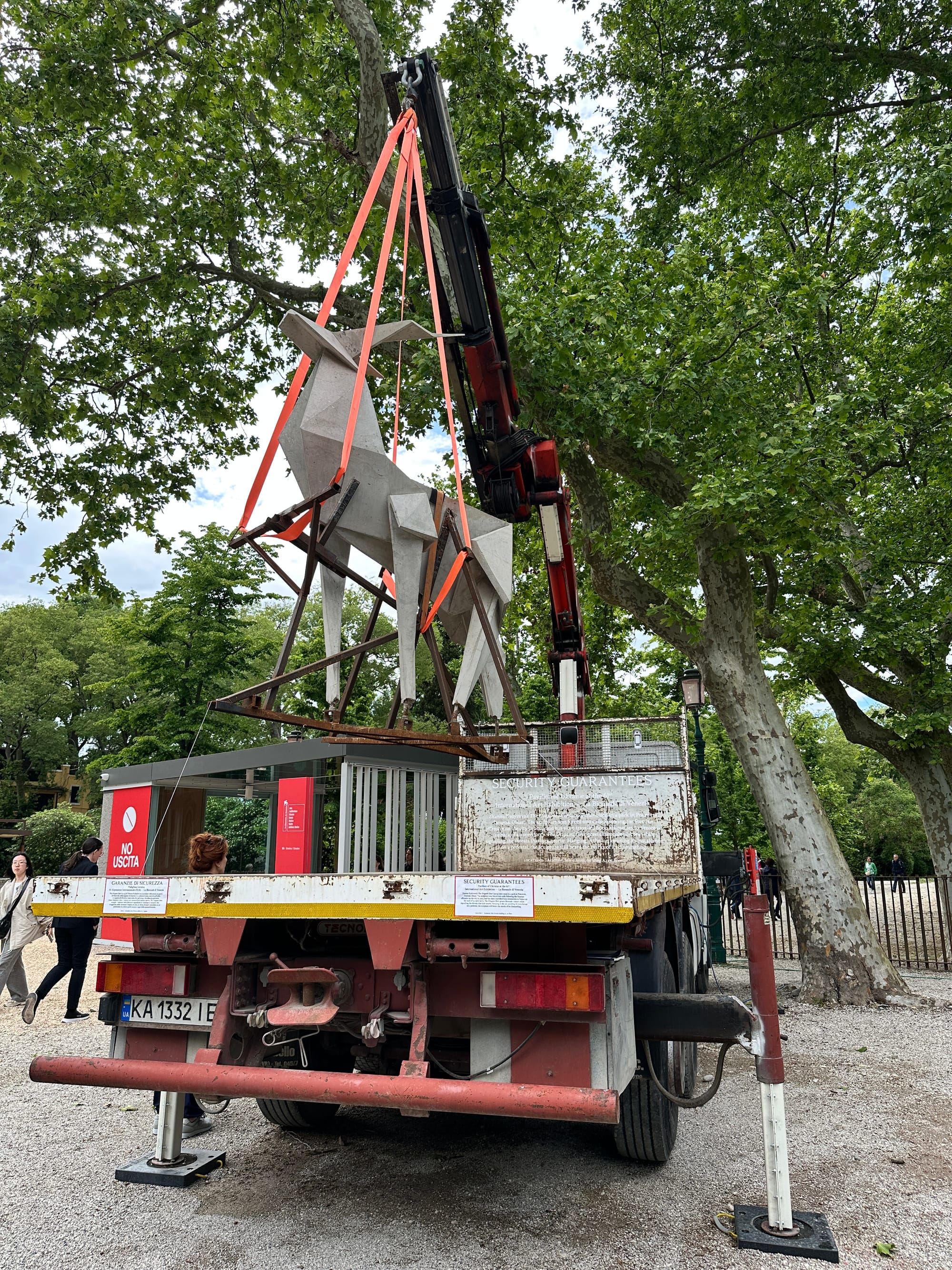
The good news is that Ukraine’s official pavilion was terrific. One part was displayed at the entrance to the Giardini: a concrete sculpture of an origami deer sitting on a flatbed truck. The sculpture, by Zhanna Kadyrova, was created in 2019 for a public park in Pokrovsk. In August 2024, when the war moved closer to the city, Kadyrova and the NGO “Museum Open for Renovations,” led by Leonid Marushchak, moved it to another city, and the following year began driving it to Venice. The videos of that 3,000-kilometer journey are on display in the Arsenale. Kadyrova titled the piece “Security Guarantees,” a double entendre referring to the safety of the object itself and of Ukraine’s entry into the Treaty on the Non-Proliferation of Nuclear Weapons alongside the US, UK, and Russian Federation in 1994, in which the country was promised security against aggression by participating countries. —AD
Australia
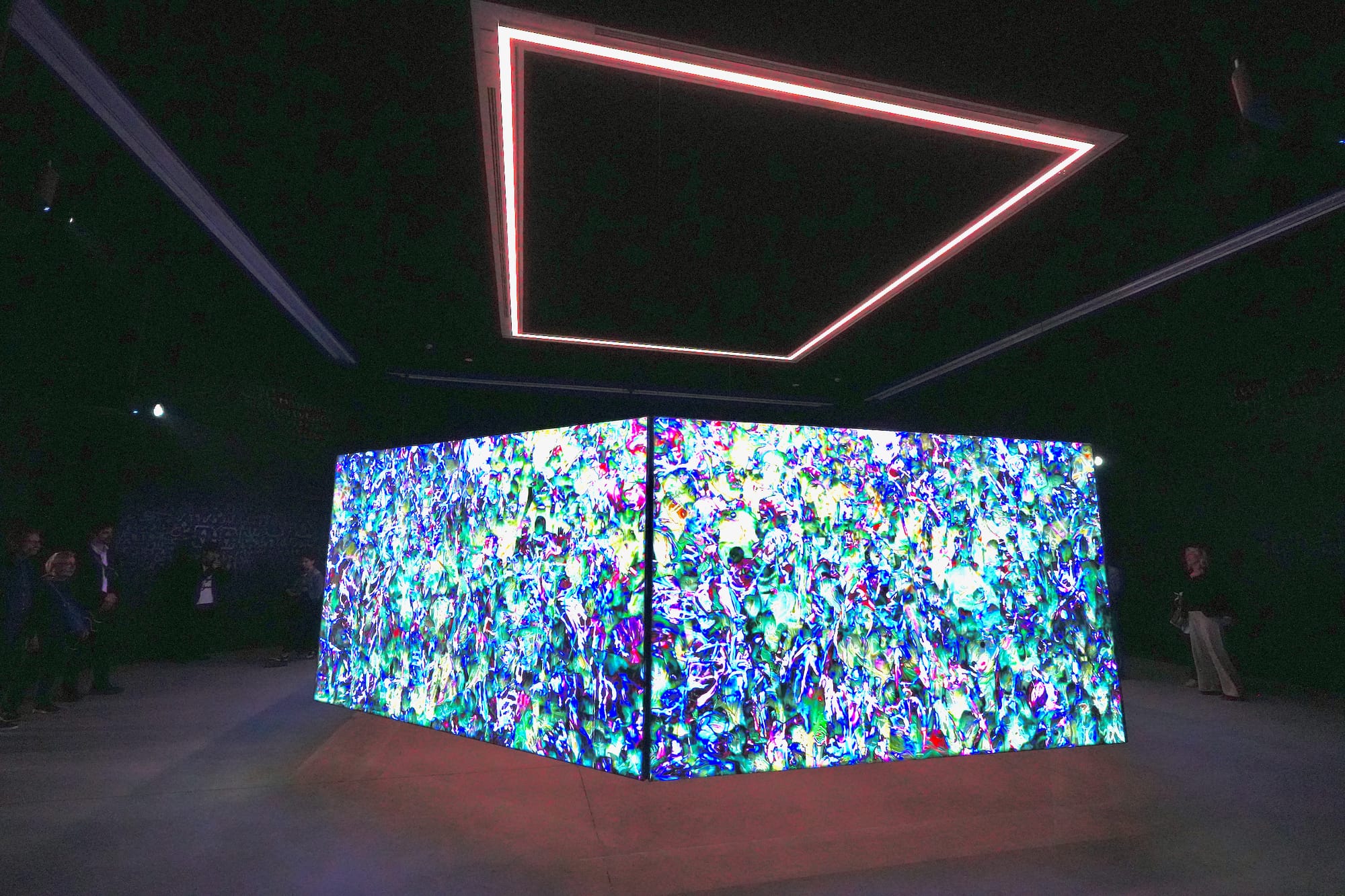
A pitch-perfect project for the black box Australian pavilion and its multicultural, if flawed, coexistence. Khaled Sabsabi’s project “conference of one’s self” (2026) invites you into a world of color and shape that moves in and out of focus, while surrounding you with the sounds of largely indecipherable language. There is a deep sense here of searching for something, the center of which is inaccessible, leaving us with a lingering feeling of beauty and missing what was almost tangible inside. —HV
Montenegro
Siniša Radulović’s multimedia installation, Out of the Blue, I’m Swept Away (2026) was so cool: a glass-covered floor, below which you could see all these identical, sterile white cells with figurines inside. In some, the figures stretch out like odalisques. In others, they sit in suits as if in a meeting, and yet in others — and here, tellingly, the figures are black instead of white — they are packed in, as if in a holding center. It was a great commentary on how the spaces we occupy — schools, office buildings, spas, prisons — are essentially interchangeable in our dystopian, apocalyptic, capitalist moment. On the surrounding walls, large-scale video projections create a space-y ambience, as if we are in some sci-fi future. The whole thing had a very Severance vibe, in the best possible way. —AD
Egypt
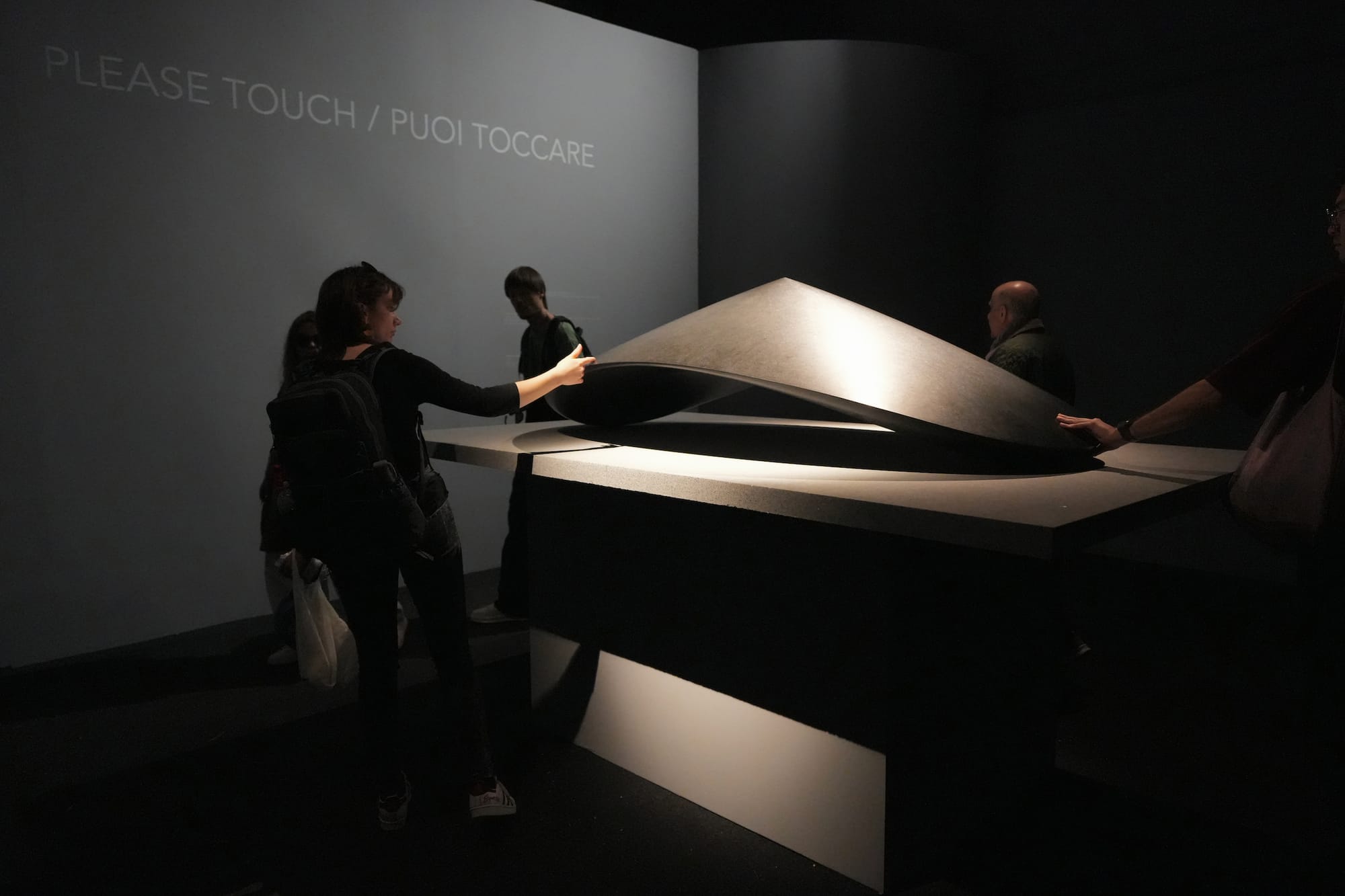
Placing gorgeous sculptures in dialogue with monumental forms throughout history without leaning on nostalgia, Armen Agop took over the Egyptian pavilion with his large granite objects that look as intergalactic as they do archeological. Knowing that his works have a tactile quality, he even invites visitors to touch one of the table pieces that rocks gently, and you feel the cool touch of a material that denotes a type of timelessness that the artist is eager to capture. I wish it responded to the turmoil at Egypt’s doorstep, but the country has not wanted to do that year after year, so that’s a more structural and societal problem than one we can hang on an individual artist. —HV
Nordic Countries: Finland, Norway, Sweden
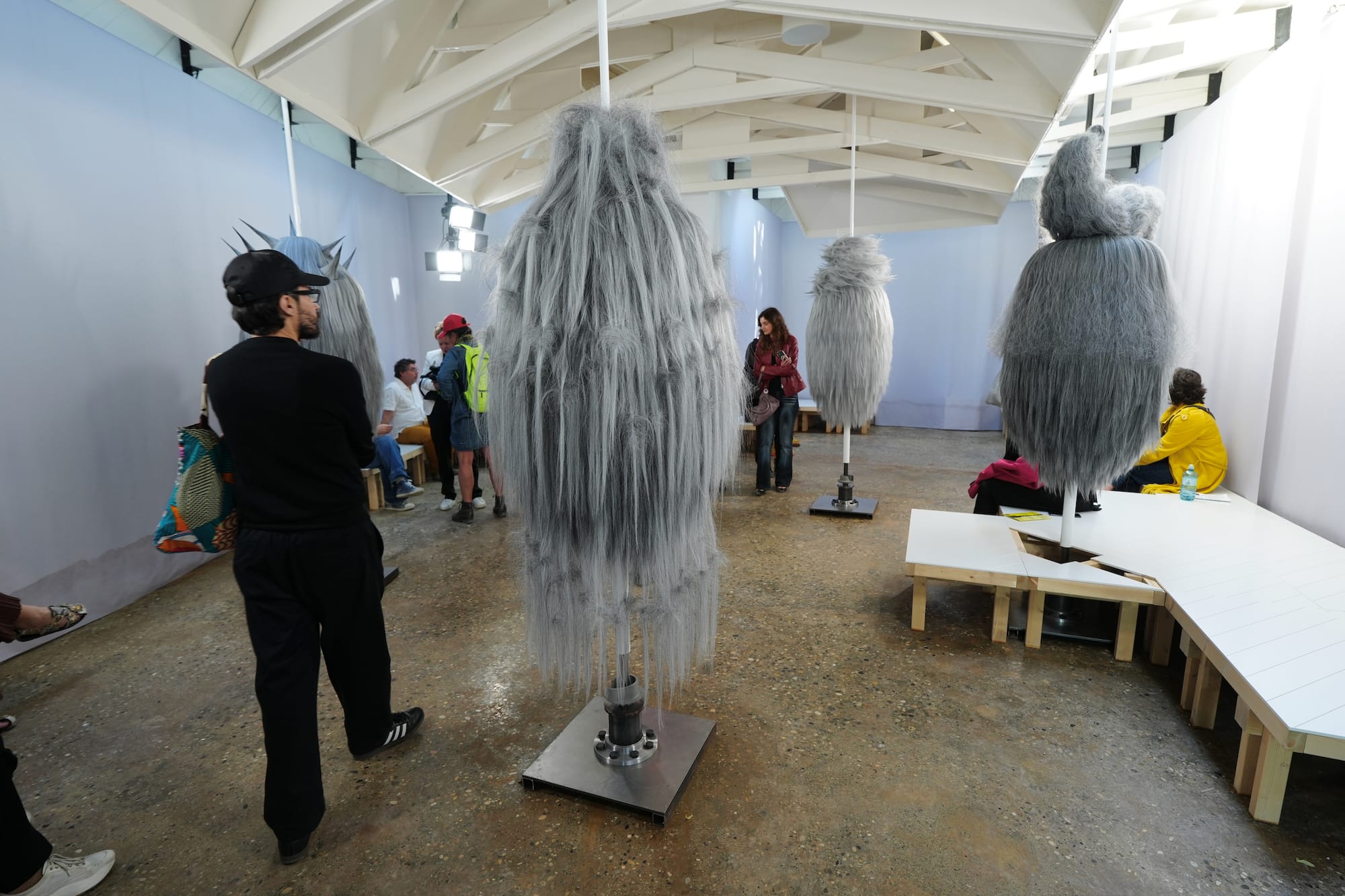
Another great demonstration of national cooperation, this joint pavilion featured Klara Kristalova (Czech, based in Sweden), Tori Wrånes (Norwegian), and Benjamin Orlow (Finnish, based in London). It was a great combination of whimsical (Kristalova’s sculpture of a hewn log with a woman’s head and little caterpillar-like feet, festooned with mythical, sometimes demonic, figures, leaned into the horror of fairy tales) and Hitchcockian (Wrånes’s gigantic headless figures, fashioned out of old sails, seem a painful agglomeration of limbs twisting and morphing into monstrosity). But it was Orlow’s sculpture of a human head with sticks poking out of its bulging eyes, propped up on a tripod of metal rods anchored by sandbags, that stood out for me. It felt like what it is to live in the screen world of 2026. —AD
Chile
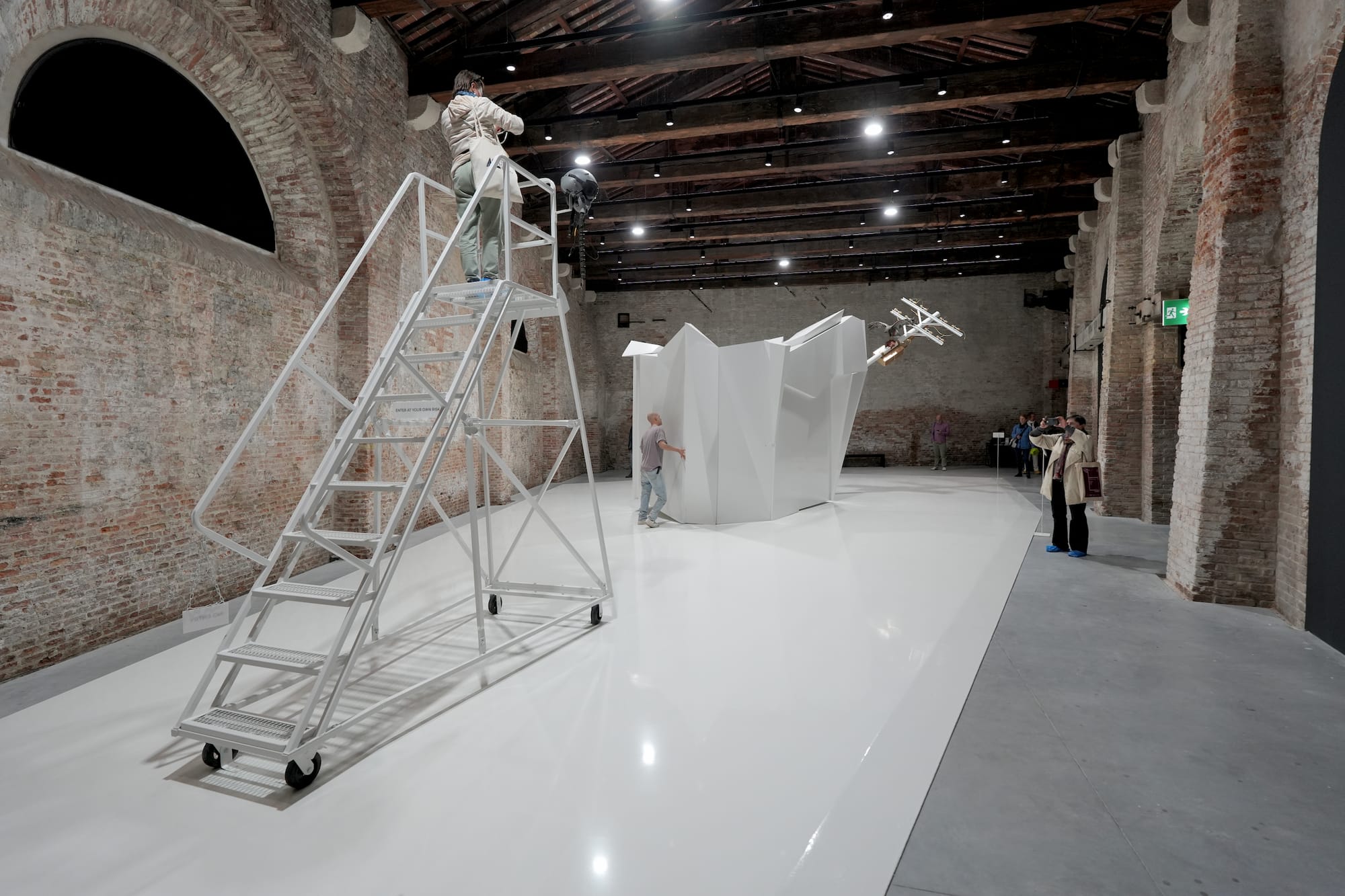
I’m not sure if the associated artspeak did Norton Maza any favors, but I loved the play with scales and surfaces that “Inter-reality” showcased, even with its very slick and almost antiseptic quality, which normally turns me off. Visitors can climb a staircase to find books hidden on the roof like a secret stash or to peer through holes in the angular iceberg form to see little scenes embedded within. The hyper-realistic sculpture of a man pressed up against the large white form sparks your awareness and leaves questions that are never answered, and I didn’t feel the need for them to be. —HV
Honorable mentions
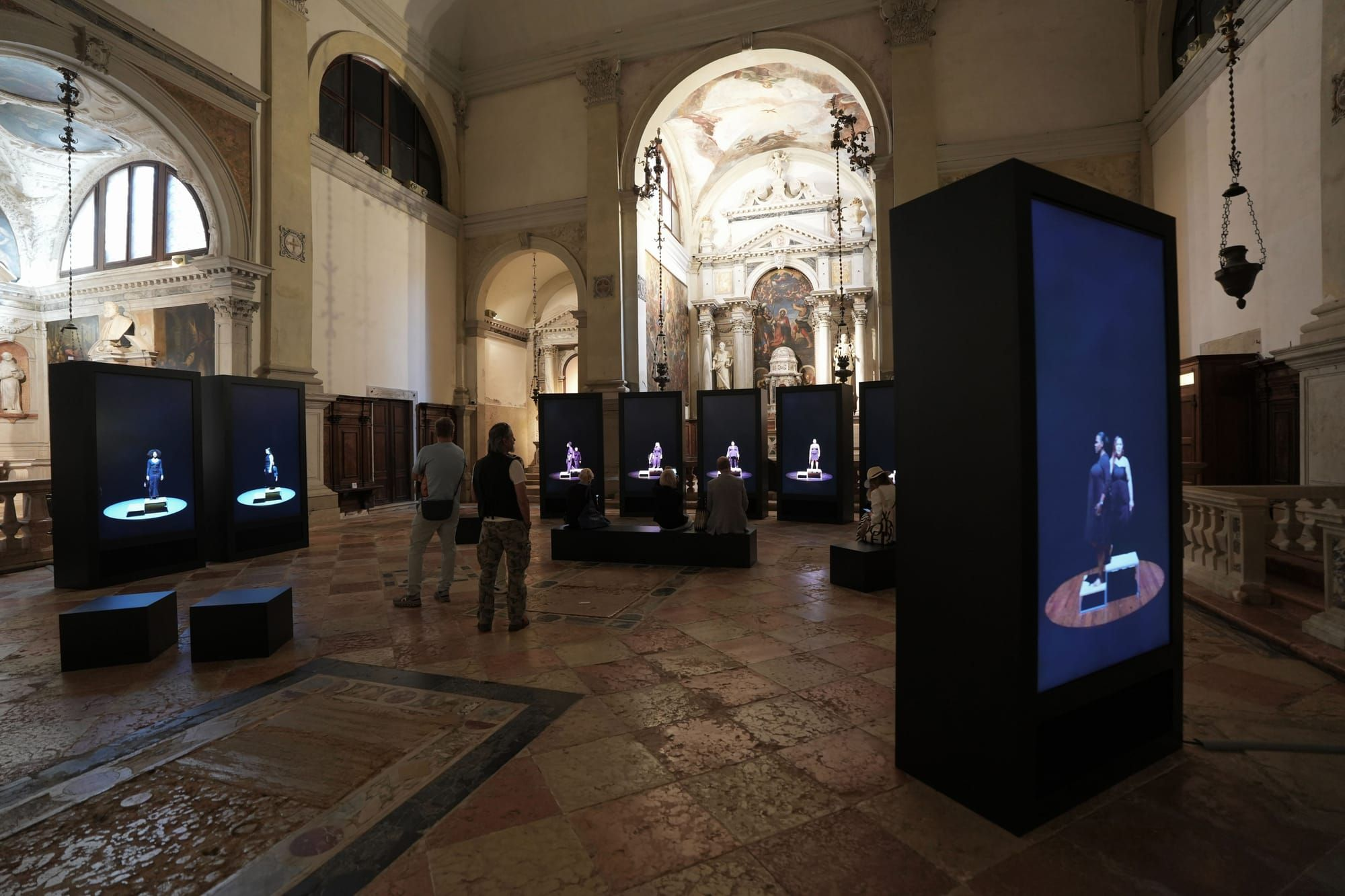
South Africa: I consider Gabrielle Goliath’s Elegy, which was on view at the Chiesa di Sant’Antonin in Castello, to have been South Africa’s pavilion, no matter what the country’s right-wing culture minister said. The piece, in which a succession of women and genderqueer singers hold a single note, taking over from each other when someone loses their breath, is a gorgeous and moving demonstration of collective mourning. The fact that we could feel those sounds reverberating through our bodies in the echoey space of the church turned it into a call to action, too. —AD
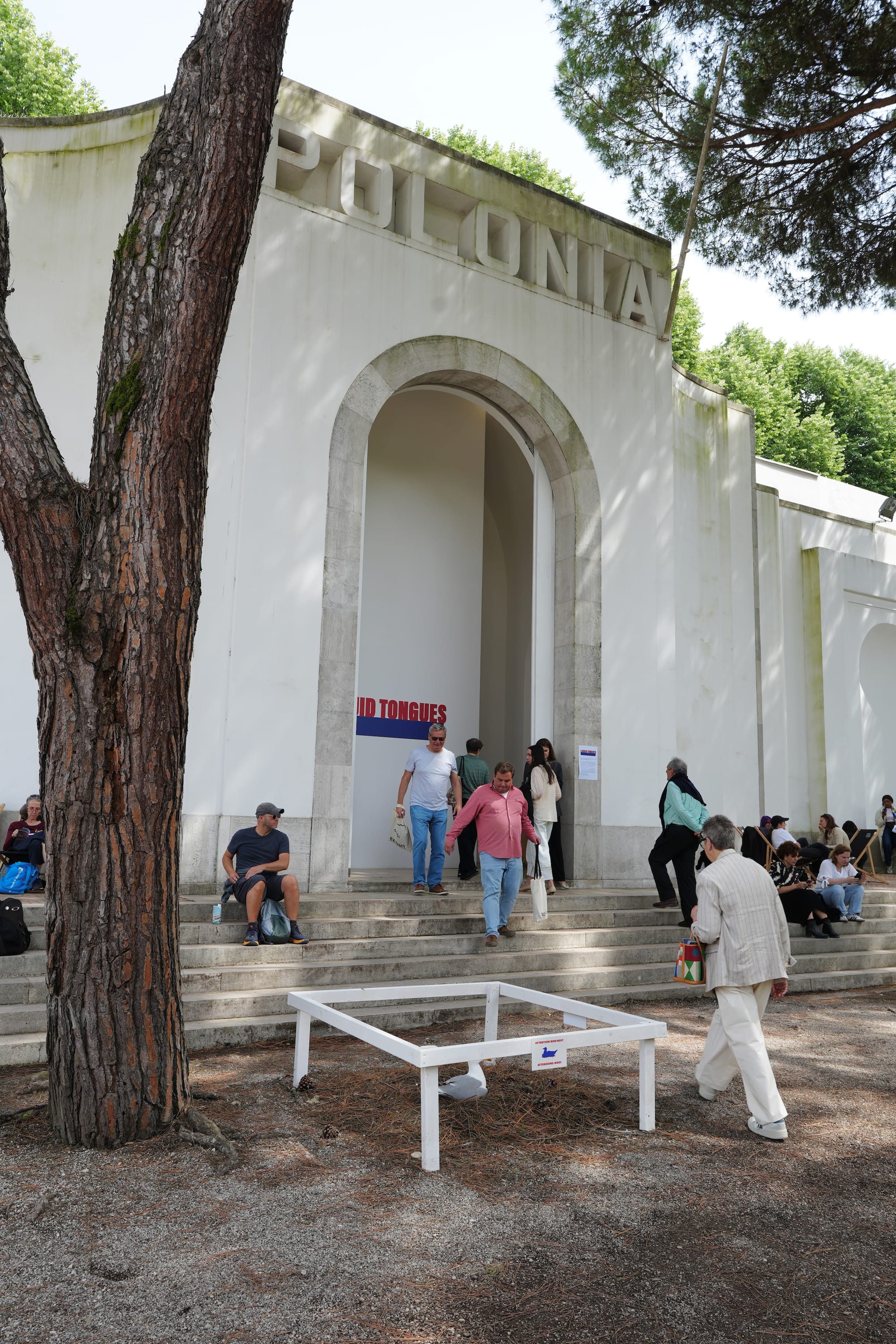
Poland: When our contributor Avedis Hadjian discovered that the Polish pavilion was indeed responsible for building a fence around a seagull’s nest in the Giardini, they won my heart. While Bogna Burska and Daniel Kotowski’s 2026 “Liquid Tongues” installation inside was worth a look and provided seating and resting spots to allow us to linger on the way we communicate in the world, the pavilion’s sensitivity to its site was best demonstrated by the care they showed their avian mother. They deserve the Golden something award for that alone. —HV
Republic of Zimbabwe and Ethiopia: There was an impressive representation of African countries this year. I was taken by the shows mounted by Zimbabwe and Ethiopia. In Zimbabwe’s group show, “Second Nature,” the artists Eva Raath, Felix Shumba, Franklin Dzingal, Gideon Gomo, and Pardon Mapondera think about the impact of machine logic, technical mediation, and systems of control will have on our unconscious, habit-driven sense of being human. Meanwhile, for Ethiopia, Tengene Kunbi’s large-scale paintings, which incorporate textiles (some industrial fast fashion remnants, some handmade by the artist’s mother), were complex and had a great color sense. —AD