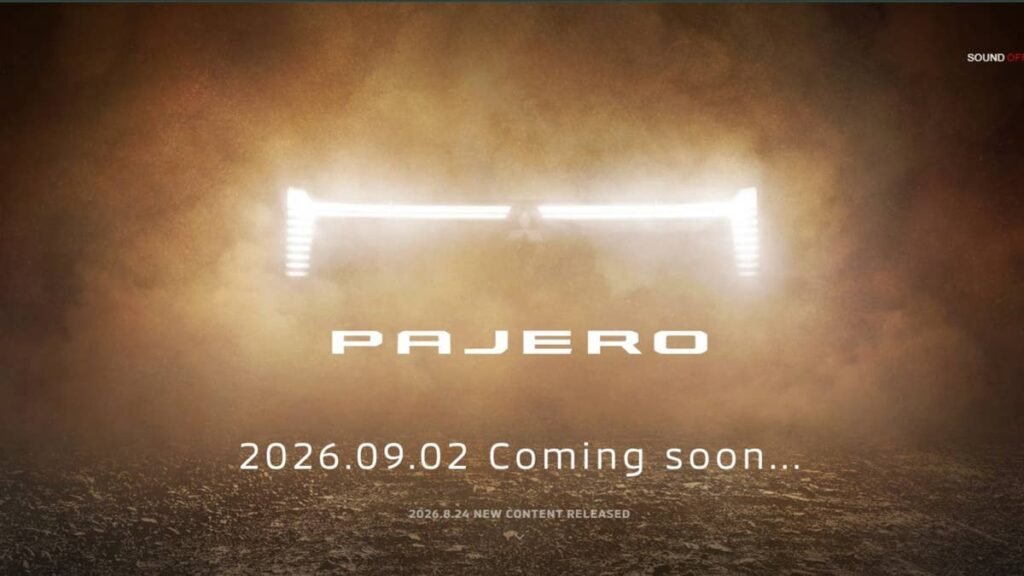
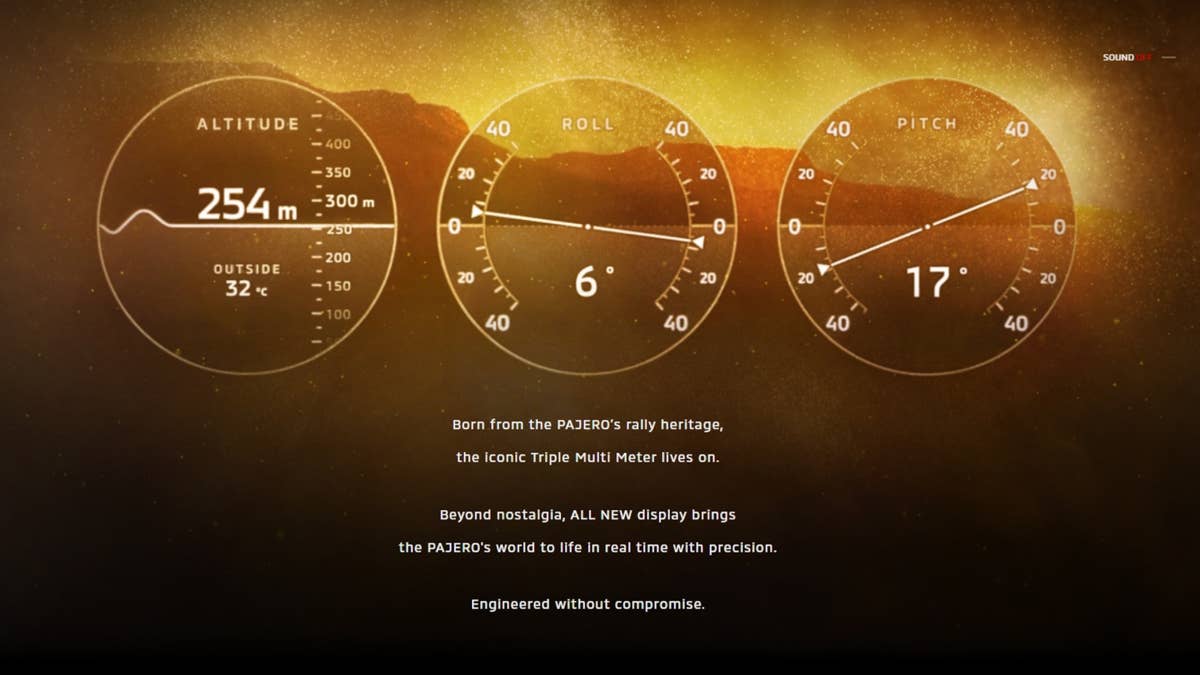
A new teaser website for the upcoming Mitsubishi Pajero SUV has gone live, and it reveals that the SUV will launch next week, on September 2, with a ladder-frame chassis and Super All-Wheel Control, the AWD system first seen on the tenth and final generation of the Mitsubishi Lancer Evolution. The website also confirms that the Pajero, which Mitsubishi has also referred to as the Montero, a U.S.-market version that went away in 2006, will revive the model’s iconic Triple Multi Meter, with readouts for altitude, roll, and pitch. This matters because a North American take on the body-on-frame SUV is expected to reach our shores around 2030. However, there are still some questions yet to be answered.
Mitsubishi Pajero/Montero Powertrain Unknown
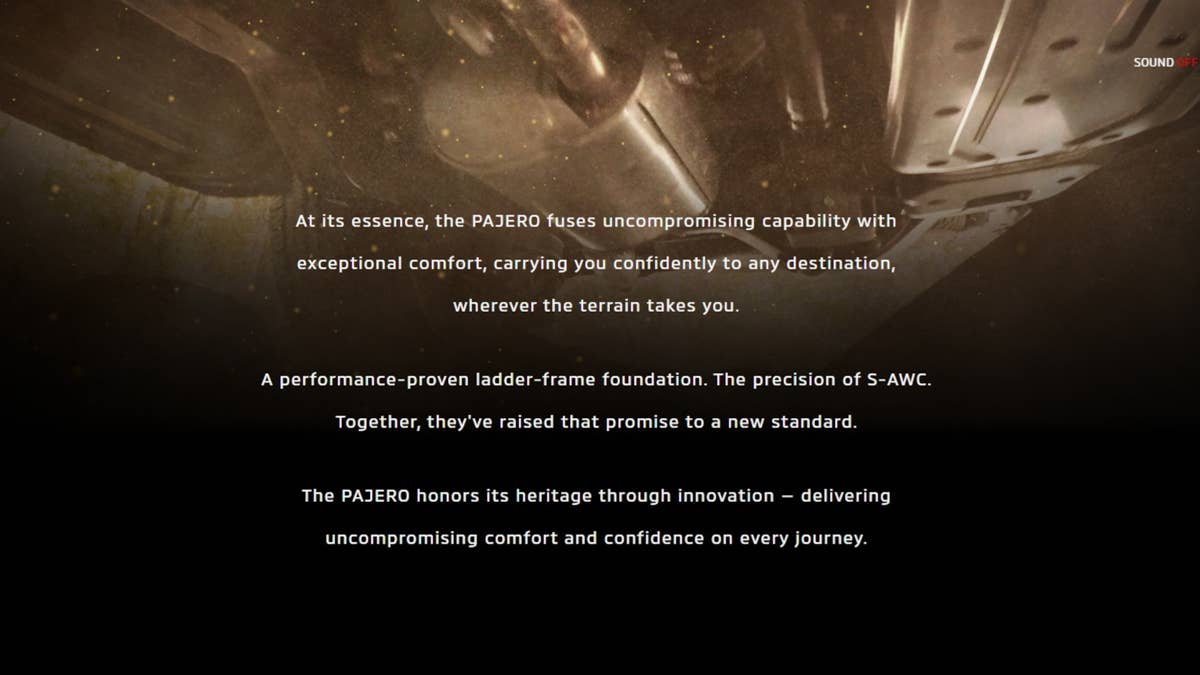
While the new Mitsubishi Pajero is leaning into nostalgia and rally-bred sturdiness in its marketing, the new Pajero will be different from what’s come before, no longer being built in Sakahogi, Japan, and instead moving to Thailand, likely on the bones of the Mitsubishi Triton, a mid-size ladder-frame truck not sold in America. Thus, while a hybrid powertrain has been hinted at, it’s likely to be a diesel-assisted system. Expect the Montero to adopt something gas-powered if/when it reaches America, and the same for the smaller RAV4-rivaling crossover it will spawn as part of a whole new family of Pajero-based projects.
As noted by Automotive News, Mitsubishi cited a glowing review of the Pajero from Japanese rally racing icon Hioshi Masuoka. “If there were a race around the world, the fastest vehicle might well be the Pajero,” he said. “It is a vehicle that doesn’t choose its path. Whether in the desert or on the highway, in snow or in rain, it ensures everyone reaches their destination reliably, and brings every passenger home safely in the end.” The Dakar-winning Pajero name has a strong history, and the new one needs to live up to its predecessor’s reputation as a brilliant all-rounder.
Autoblog’s Take
The upcoming Pajero will be critical to Mitsubishi’s prospects of improving global sales and restoring its identity as a purveyor of charmingly indomitable loose-surface specialists. For a potential U.S.-bound Montero, its body-on-frame construction paired with decent road manners and a rugged yet handsome aesthetic will be important, and if the price is competitive without feeling overly sacrificial of comfort or capability, it could become a huge success. And if Mitsubishi’s plans to take a bite out of Toyota RAV4 sales work too, Mitsubishi could find itself in a comfortable enough financial position to take a chance on more exciting products. This may include hardcore Ralliart versions of the Pajero and other SUVs, and if Mitsubishi can sustain the kind of growth it’s hoping for, a Lancer Evolution comeback could well be penciled in someday too.