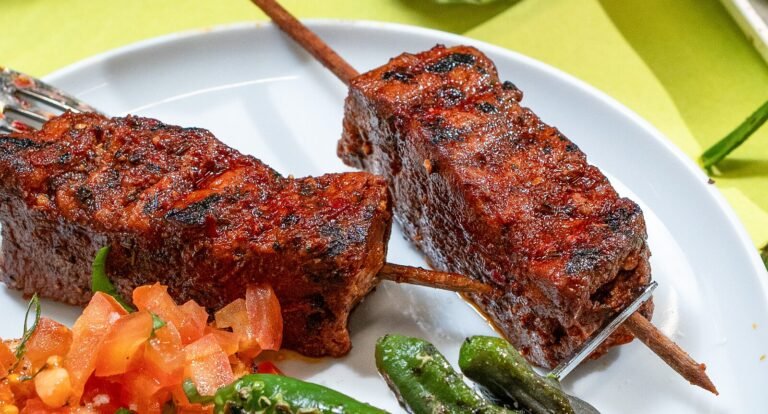
Millow—a Swedish startup producing minimally processed meat substitutes from oats and mycelium—has closed a €2 million ($2.3 million) funding round as it gears up for commercial launch.
The round was led by Magnus Emilson, founder of hospitality tech provider Visit Group and cofounder of hospitality group ESS Group, and supported by Jan Enhager, cofounder of nutrition firm Vitamin Well Group, plus other undisclosed investors.
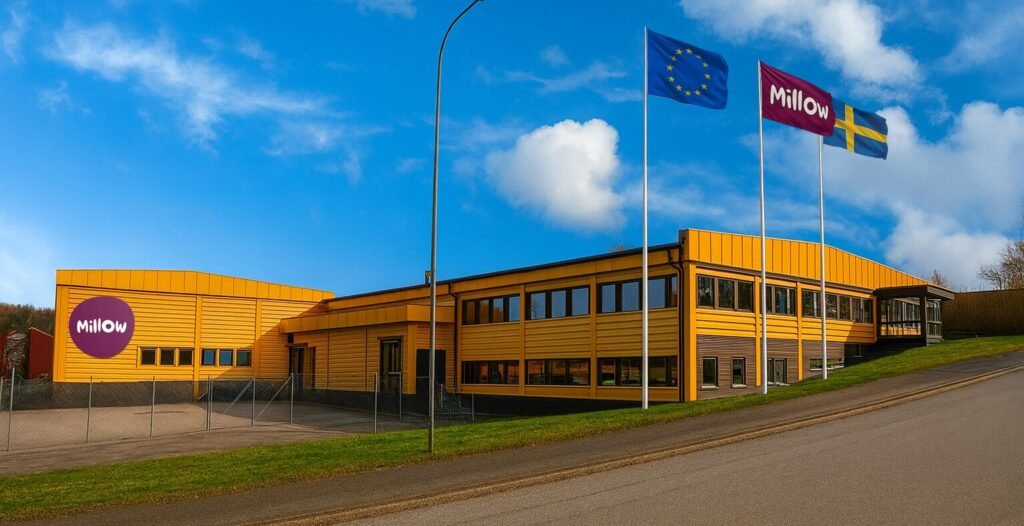
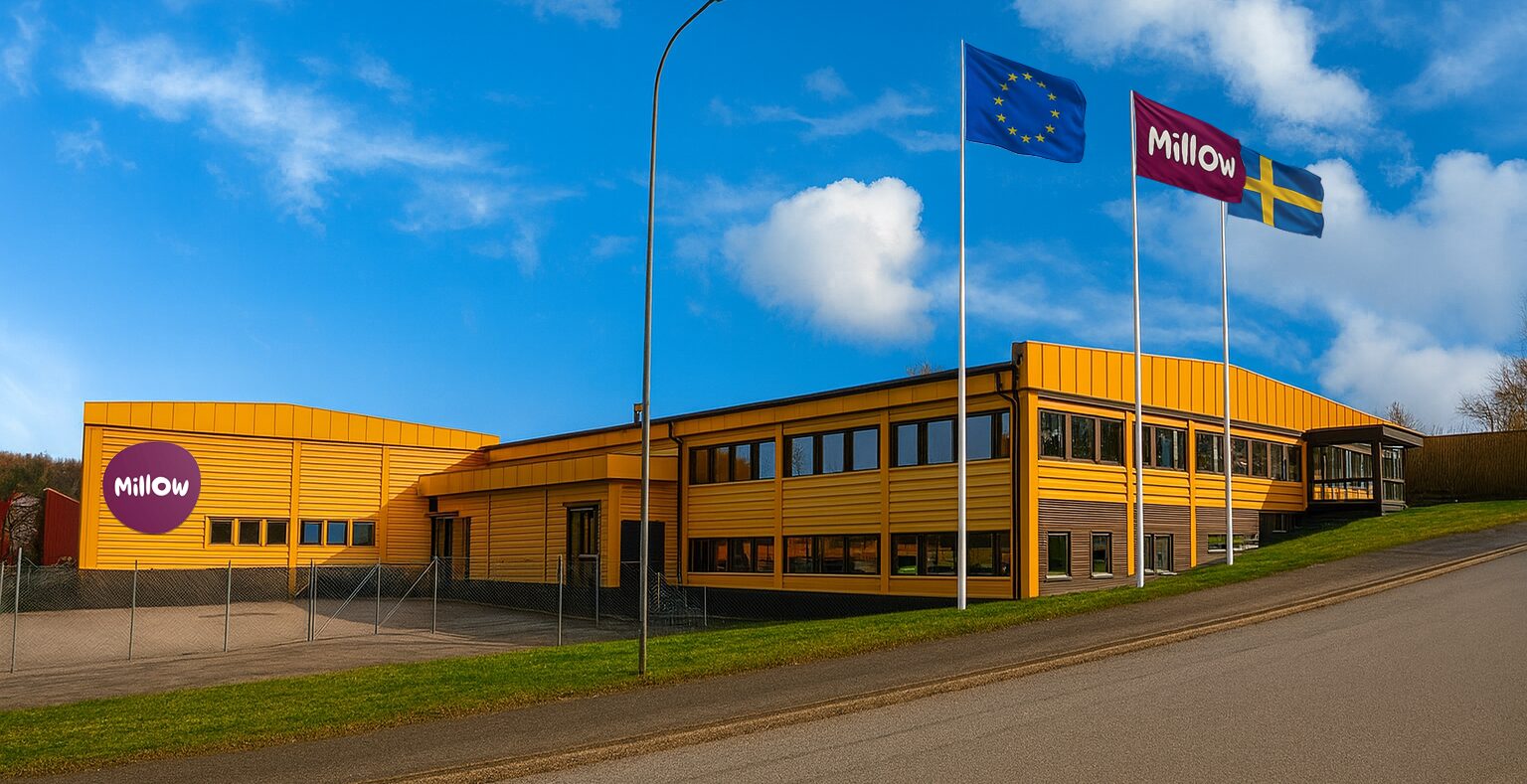
The capital will fund expansion of Millow’s new production facility at a former LEGO production hall in Stenkullen near Gothenburg and the build-out of its commercial team for the Nordic foodservice market.
“Installation is completed and we will run tests now, with first commercial volumes reaching customers during the coming months,” CEO Fredrik Öhrn told AgFunderNews.
“We’ll operate three S-units [Millow’s proprietary fermentation units] with a combined capacity of roughly 430+ tons per year by the end of this year.
“We expect to reach around 90% utilization during late 2027 rather than running flat out from day one,” added Öhrn, a former Sodexo exec who joined Millow in March. “The building already supports three additional units, so doubling capacity doesn’t require a new facility.”
‘Disciplined commercial execution’
Millow is in talks with leading foodservice operators and distributors in the Nordics, with international interest growing in parallel, claimed Öhrn. “Jan and Magnus bring experience and a network we would otherwise spend years building. The job now is disciplined commercial execution.”
According to Öhrn: “The strongest pull right now is from foodservice; mince and some ready-made formats for public sector kitchens and restaurant chains, where our allergen-free profile and clean label solve many operational problems. Additionally, scope 3 requirements and CO2 emissions are becoming very important aspects for foodservice providers.”
The product also “blends extremely well with conventional meat, and we are having many conversations about that as well,” he added.
“With Vitamin Well we saw how fast a better product can move from niche to mainstream once the taste and the format are right. Foodservice protein is at that point now. Millow gives kitchens a clean-label product that does not ask them to change how they cook, and in my experience that is what decides whether a category crosses over.” Jan Enhager
Lower capex, flexible platform
Asked how the market is viewing Millow vs mycoprotein from firms such as Quorn, he said: “I’d say we are in a fundamentally different category. Quorn and ENOUGH Food use liquid fermentation and then run different downstream processing, [adding] binders and additives to become food. We use solid-state dry fermentation: mycelium grown directly on Swedish oats and psyllium so the output is the food: few ingredients, no binders, in a 16–24 hour production cycle with a fraction of the water and energy consumption.
“That translates to lower capex and a sustainable cost position that lets us compete for the long run in foodservice, with the ability to develop products rather quickly based on market demands.”
On protein content, he said: “We’re at 14% initially with the ability to increase up to 20%, plus 7.6% fiber, comparable to prepared meat dishes. In foodservice, honestly, nobody has said protein levels need to increase yet.
“Chefs care about taste, texture that survives boiling, frying and baking, allergen-free status and reliable supply. Nutritionists appreciate that it’s whole-food protein with all essential amino acids and improved iron bioavailability, not an extracted isolate.”
“I have spent decades building companies in technology and hospitality, and from the restaurant and hotel side I can see the demand for a protein like this coming.” Magnus Emilson
Platform can also ferment side streams
While Millow is starting by fermenting oats and psyllium, its technology platform can ferment other plant-based materials, including food industry side streams, said Öhrn.
“It’s part of the long-term platform play. The clearest example is our work with an international industrial player on fermenting its side streams and residues. These types of collaborations can be structured toward a licensing model where partners run the technology locally and we would earn a fee per kilo.
“Some examples of side streams can be brewers’ spent grain, canola cakes from canola oil production, and okara from oatmilk production. The potential volumes are massive if we hit all the proper parameters in the fermentation and downstream process.
“That said, sequencing matters: first we prove the food business in the Nordics really works and the market likes the outcome, then we can take the next platform steps on our commercial journey.”
The production process
Millow’s technology is based on the work of Mohammad Taherzadeh, former professor of bioprocess technology at the University of Borås.
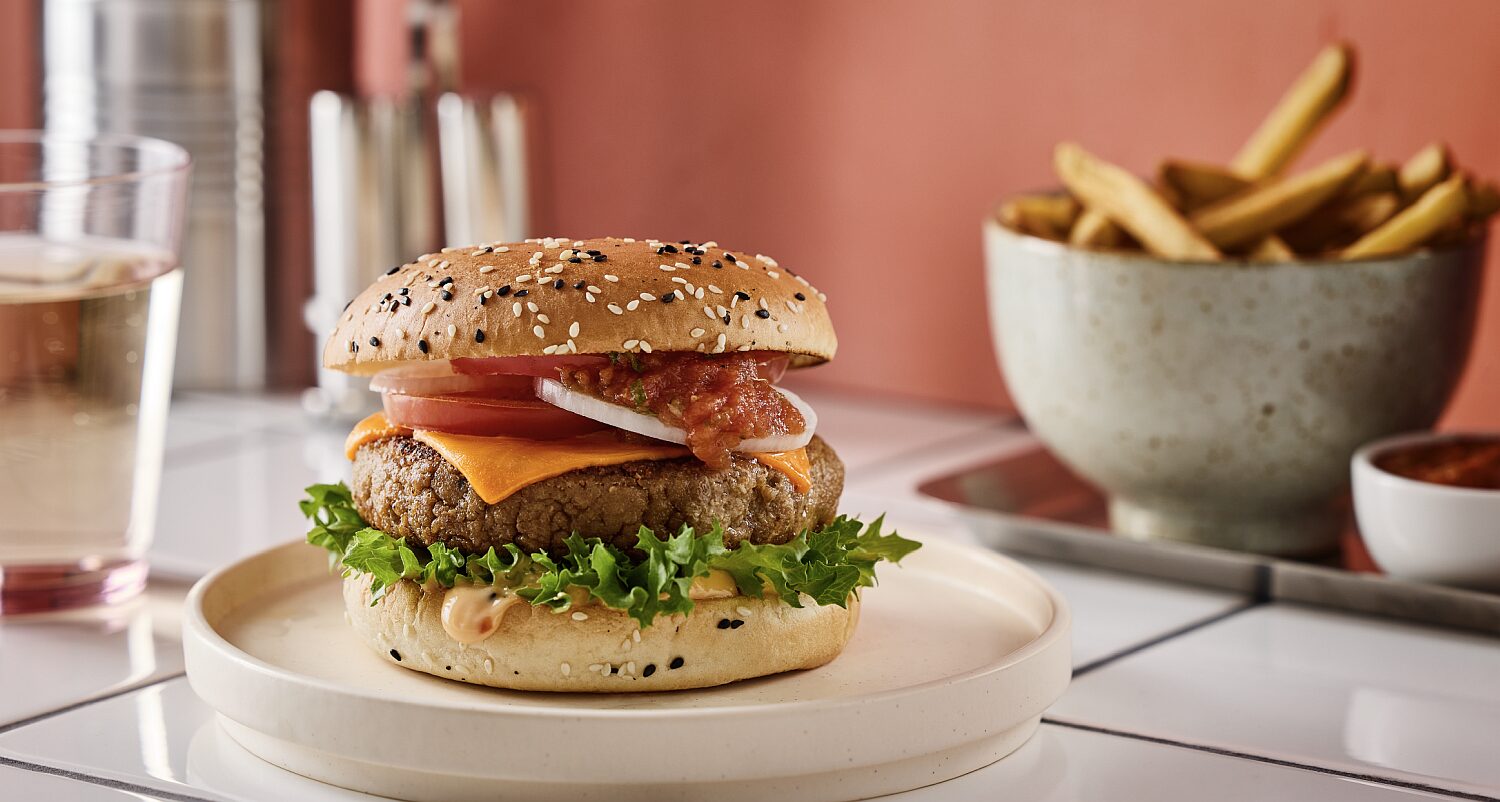
While several firms are growing fungal biomass to make meat analogs, Millow adds mycelium to a plant-based substrate such as oats in a ‘dry fermentation’ process to create products with a ratio of around 50% fungi and 50% plants.
The fungi/oat combination can grow in any shape or form, depending on the shape and dimensions of the containers it grows in, without requiring expensive downstream processing, and has a balanced nutritional profile with protein, fiber, vitamins, and minerals.
While it sounds like tempeh, which is made via solid-state fermentation, Millow products have a meatier taste, bite, appearance and texture and don’t disintegrate when cooked in a sauce, claims the firm.
The product can be shipped fresh or frozen to food manufacturers and sold as a solo packaged product or combined in prepared meals.
Further reading:
Swiss alt meat startup Planted scales fermented whole-cut platform, eyes B2B partnerships
Black Sheep Foods bets on ‘TVP 2.0’ as hybrid meat gains traction
Beyond Meat leans into Europe, Canada, as US sales continue to slide
The post Millow raises $2.3m, gears up for commercial launch of minimally processed alt meat appeared first on AgFunderNews.