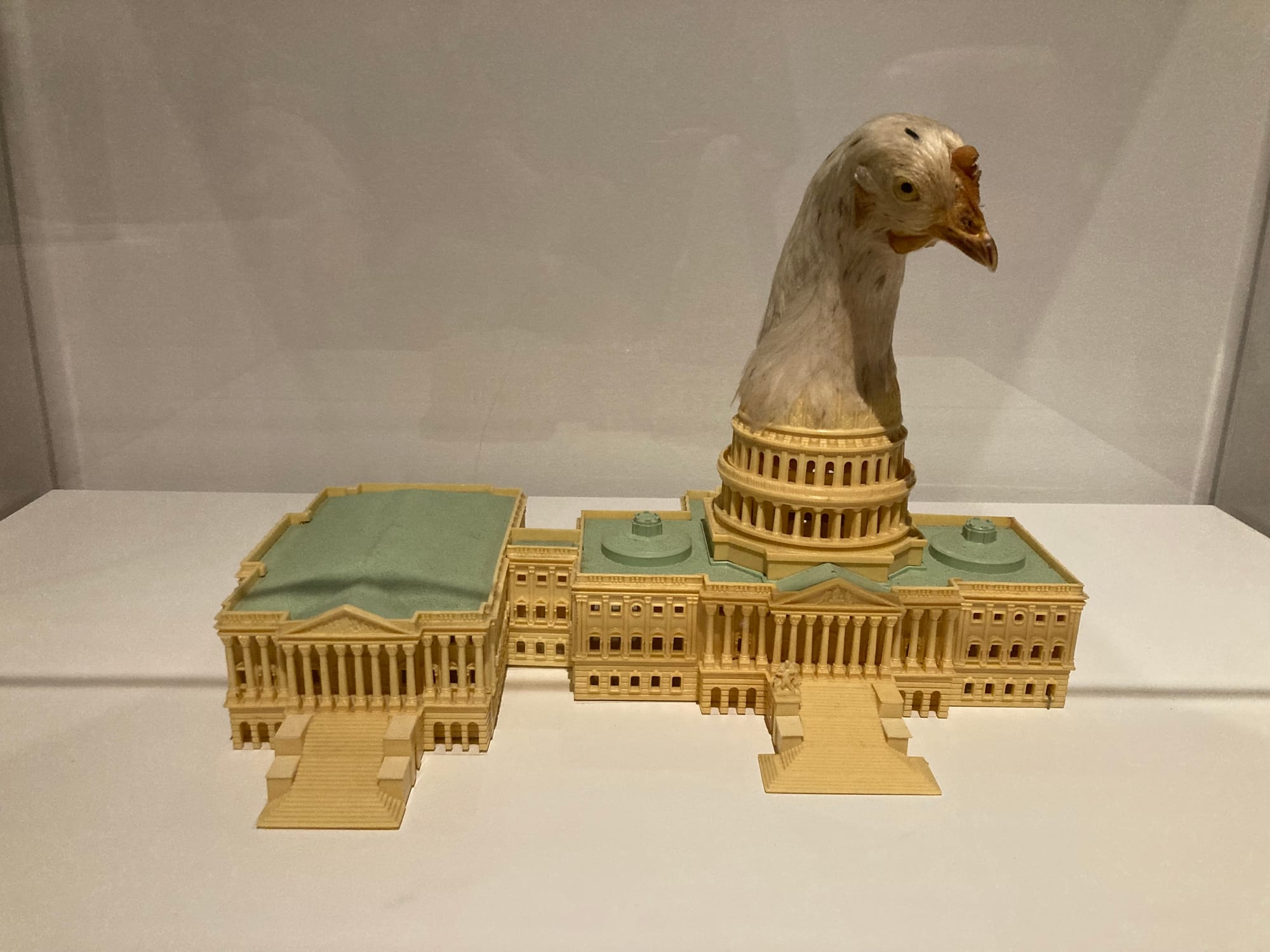
OAKLAND, Calif. — Mildred Howard works in a magical time signature. Poetics of Memory, the legendary Bay Area artist’s first museum survey, open through October 18 at the Oakland Museum of California, traces a path through more than 50 years of her career, from early copy-machine collages to multimedia assemblages and large-scale gallery installations. Howard has long punctuated the Bay Area landscape through public art commissions, including a giant golden frame installed in San Francisco’s shipyard and blue glass etched with poetry on the city’s Fillmore Street Bridge. Her work plays out in the major key of American history, while sounding the blue notes of everyday experience that make up a human life, creating space to engage the dissonance and harmonies between past and present.
Entering the exhibition, visitors are greeted by large-scale bronze keys and a padlock, commemorating the Longshoremen’s union leader Harry Bridges, who Howard has said opened doors to workers’ rights previously closed. A version of the sculpture was publicly installed in San Francisco in 2001. The understated piece sets the stage for the rest of the show, exemplifying Howard’s engagement with history through everyday objects, shifting scale, and lyrical interpretation.
Howard achieves a dreamy quality in her work, creating a niche outside of time where viewers can look at the world from outside its usual cacophony, a gap in the noise, an eye in the storm. “Magnolia Blossoms for John” (1979), one of the earliest works in the show, is a photocopy collage that combines flowers and hands, reminiscent of a still from Maya Deren’s dreamy 1943 short film “Meshes of the Afternoon.” In another, an untitled Xerox collage from 1979, a person’s face is shrouded by lace in surreal fashion, again prefiguring one of Howard’s career-long interests. Often, shrouds and veils appear in her work to communicate the layering of historical narratives by creating multiple temporal surfaces that coexist within a single frame.
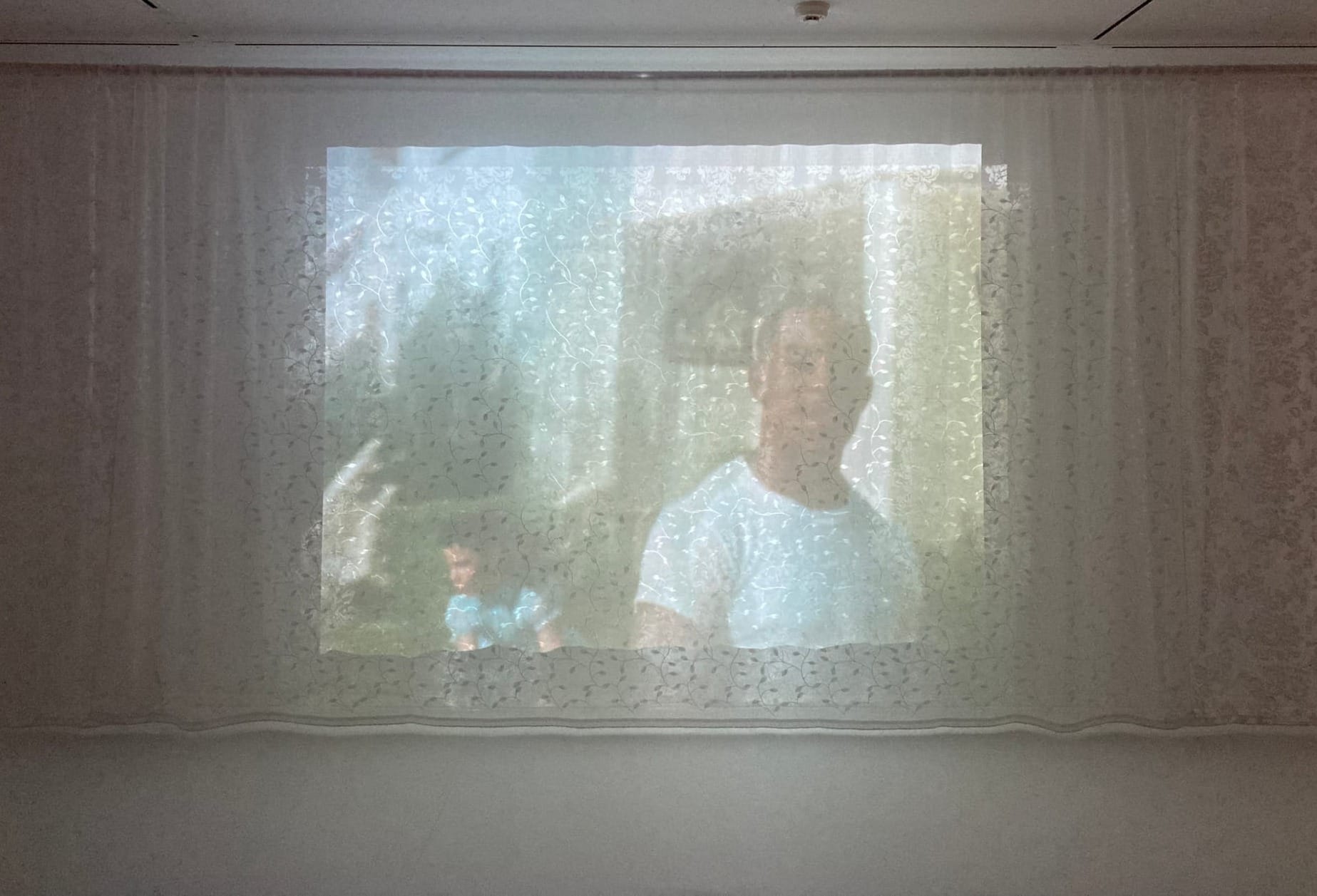
The latest work in the show, “Moving Stills” (2026), is a large-scale installation featuring a triptych of film stills projected for 31 minutes, shot by Howard at 14, documenting her first trip to the South to meet her extended family. The film, recently rediscovered in one of her late mother’s handbags, is projected through layers of lace fabric, diffusing the already grainy and fragmented images into a dreamlike softness that evokes the feeling of a distant memory. The piece acts as a throughline in Howard’s practice, linking an early film experiment to her recent exploration of personal narrative.