
Microsoft’s attempts at challenging Apple and Google in the mobile space with Windows Phone didn’t go so well. Ultimately, the company decided to pull out of the race, but it doesn’t mean that they’ve stopped trying in other ways. More recently at its Build 2026 conference, the company took the wraps off a new platform called Project Solara.
Microsoft unveils Project Solara
Now, we should clear something up. Project Solara is not a new mobile operating system designed to challenge iOS or Android. But at the same time, it is somewhat mobile-related because for all intents and purposes, it uses similar hardware and software, just in a different form factor.
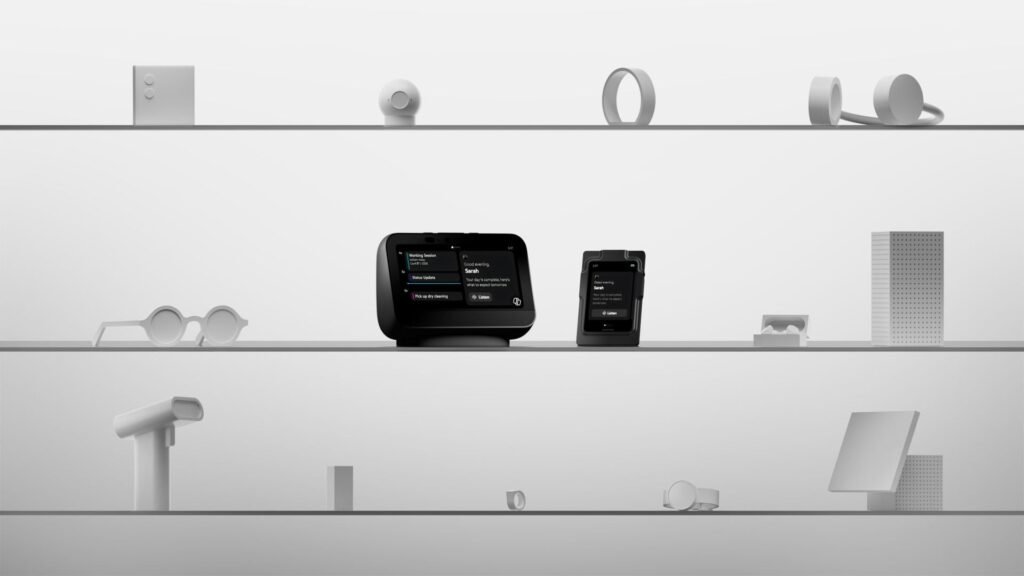
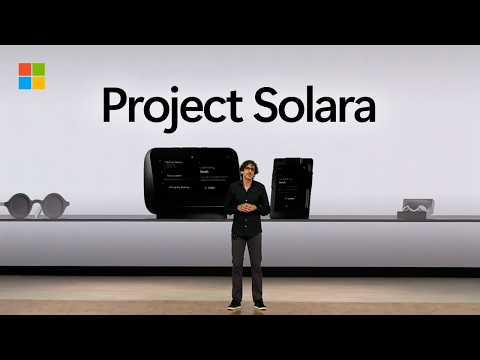
For instance, one of the concepts that Microsoft showed off is a prototype ID badge that runs on Project Solara. Under the hood, you’ll find hardware components like a fingerprint sensor, a camera, a Qualcomm chipset, and WiFi and 5G connectivity. In fact, its software of choice is based on AOSP.
So this begs the question of what Project Solara is. Basically, Microsoft has envisioned it as some kind of agentic AI platform that does a bunch of stuff. With the ID badge, Microsoft demoed it in a healthcare environment where the built-in camera can scan information, AI agents can respond via voice commands, and users can receive tasks and information on the screen. All of this is then protected by a fingerprint sensor.
We suppose if we had to sum it up, Microsoft is hoping to get in early with AI by creating a platform to power all sorts of devices. To a certain extent, maybe Microsoft wants Project Solara to be the Windows for our AI-powered gadgets.
When will it be released?
For now, it feels like Project Solara is more of a prototype/concept. However, Microsoft also seems to be focusing more on business and the enterprise sector rather than consumers. The agentic AI ID badge is a good example of that.
Microsoft also won’t be developing hardware for it either. Instead, the prototypes it showed off were just to give developers and manufacturers ideas of how it can be used. We imagine it could eventually make its way into consumer-facing devices, but that remains to be seen.
Based on this, it seems like Microsoft (and others) are betting that agentic AI takes off in a big way. Will they succeed? Only time will tell.
The post Microsoft’s Project Solara Is an AI Platform Built on Android, Not Windows appeared first on Android Headlines.