Legendary Ingenuity
Race cars aren’t often remembered unless they mean something special; usually, it’s the team or the driver that holds the recognition, the car is but a mere tool to achieve the desired result. However, the very few iconic race cars tell a story that transcends the team and driver, where the car stands on its own.
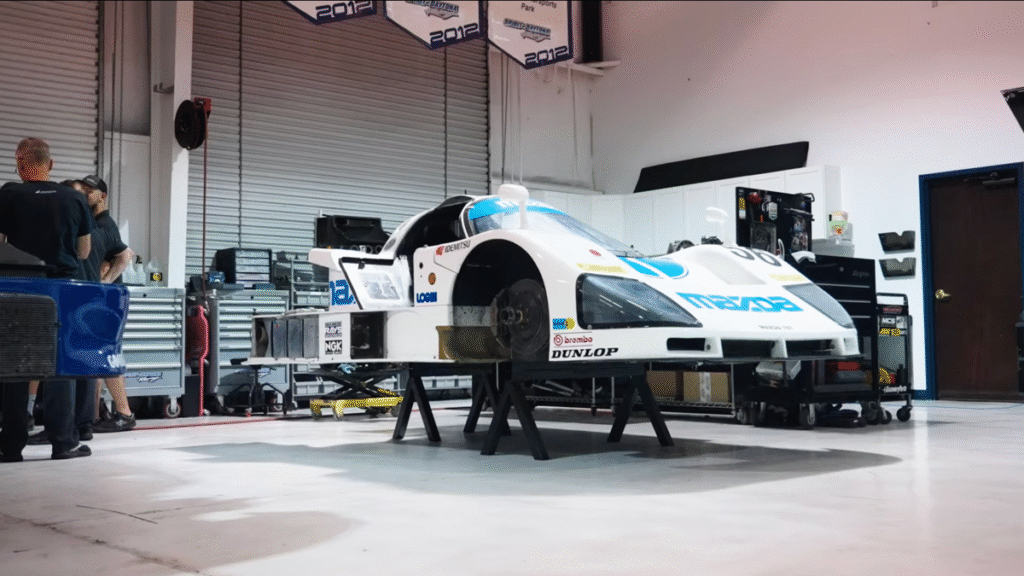
Mazda‘s 787 Le Mans racer is unique for two very good reasons: it was the first Japanese-manufactured car and brand to win the grueling 24-hour race, and, most importantly, the first rotary-powered (non-piston-engine) car to win as well. It bested the competition by showcasing Japanese traits of reliability and performance, finishing the race while its core competitors broke down.
Keeping the Legend Alive
After it won the race in 1991, the rules for Le Mans racing were changed. In other words, the rotary engine was banned from the competition, effectively cementing the 787’s achievement as singular and unrepeatable. Since then, it has been in Mazda’s Heritage collection, only taking to the track during special events like the Mazda Fan Festa, inspiring a whole new generation of racing fans.
8
What’s amazing about the 787 4-rotor rotary is that it was unbreakable; the engine proved to be one of the most reliable race engines ever. After the race win, Mazda decided to prove to the world just how good the engine was by taking it apart in front of the media, and what it showed was that the internal components were still in good condition. The Mazda engineers claimed that the engine could run another 24-hour race. Mazda played the long game during the 1991 Le Mans race, detuning the engine from 900 to 700 hp and lowering the red line to keep tolerances in check throughout the race.
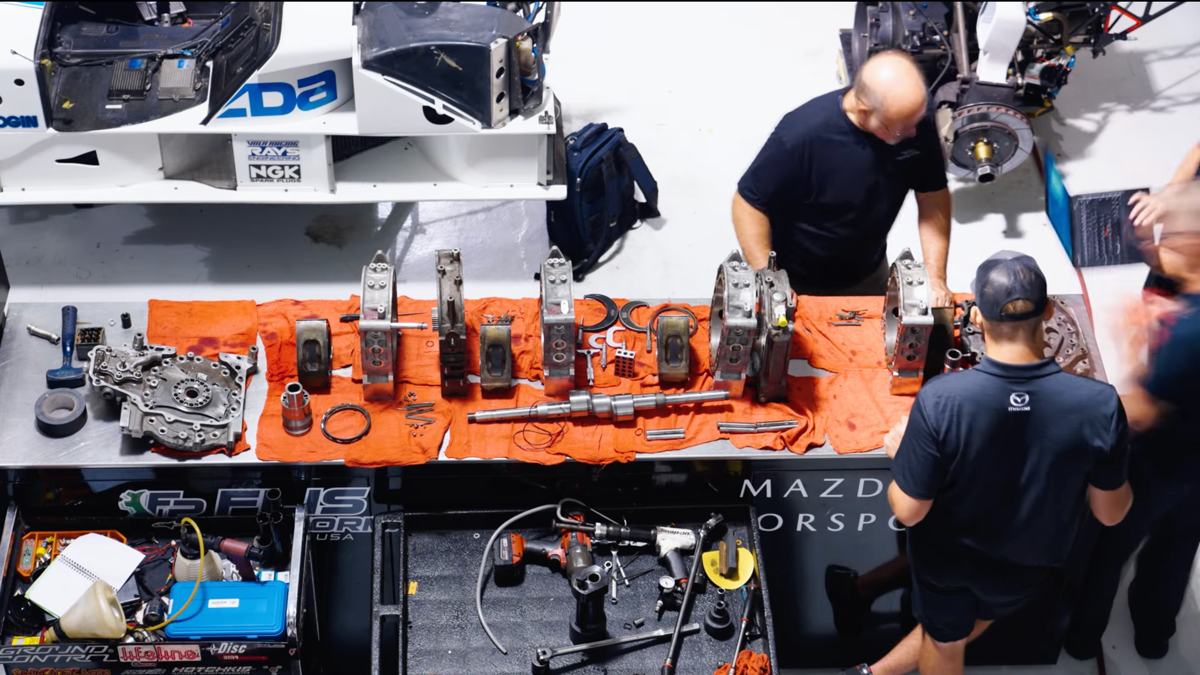
A video has just been posted by Mazda Motorsports showing a dedicated team of engineers from the Heritage Collection continuing to keep the 787 in race-ready condition. Part of their job is to fully rebuild or refurbish the 4-rotor rotary. Doing this isn’t easy, as they need to disassemble the entire motor and check all the “nuts and bolts” that make up the engine.
Mazda Motorsports/YouTube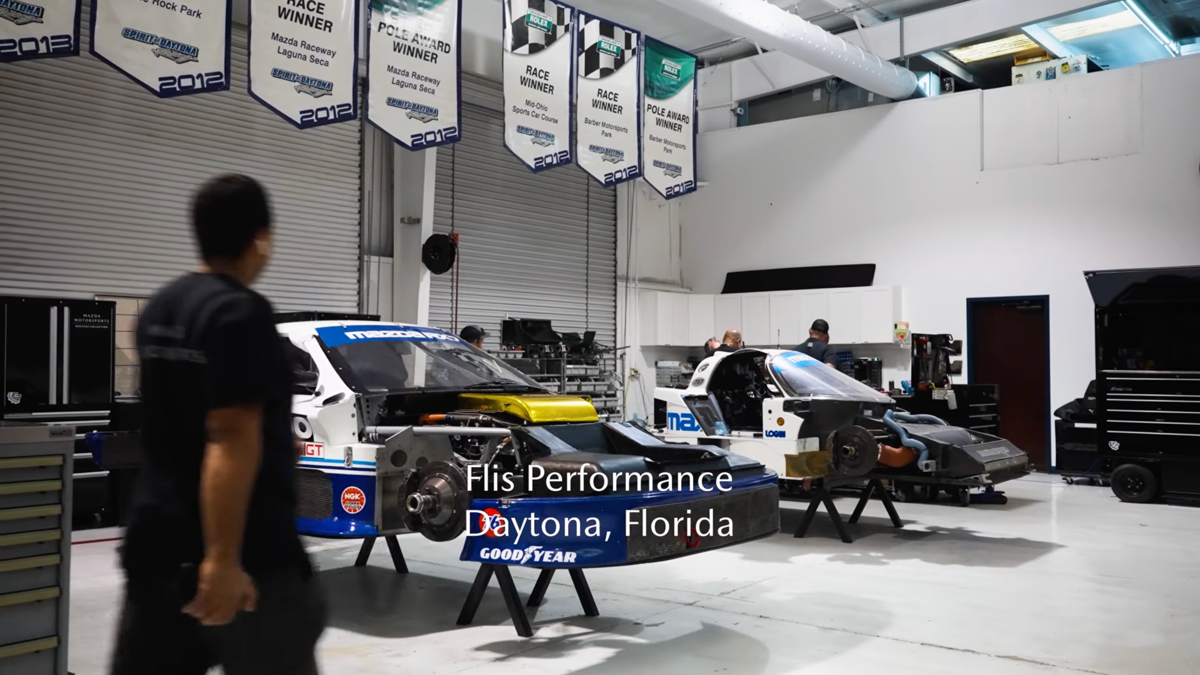
One of a Kind
Because this engine was one of a kind and was technically raced only once, no parts are available. The 4-rotor engine was specific to the 787 Le Mans program, with just a finite number of parts made. Its uniqueness lends itself to a painstaking maintenance process, with more specific components than the standard rotaries. But the team behind the restoration and rebuild process says the main parts are still in good enough condition to use, while the replaceable parts are readily available.
Mazda Motorsports/YouTube