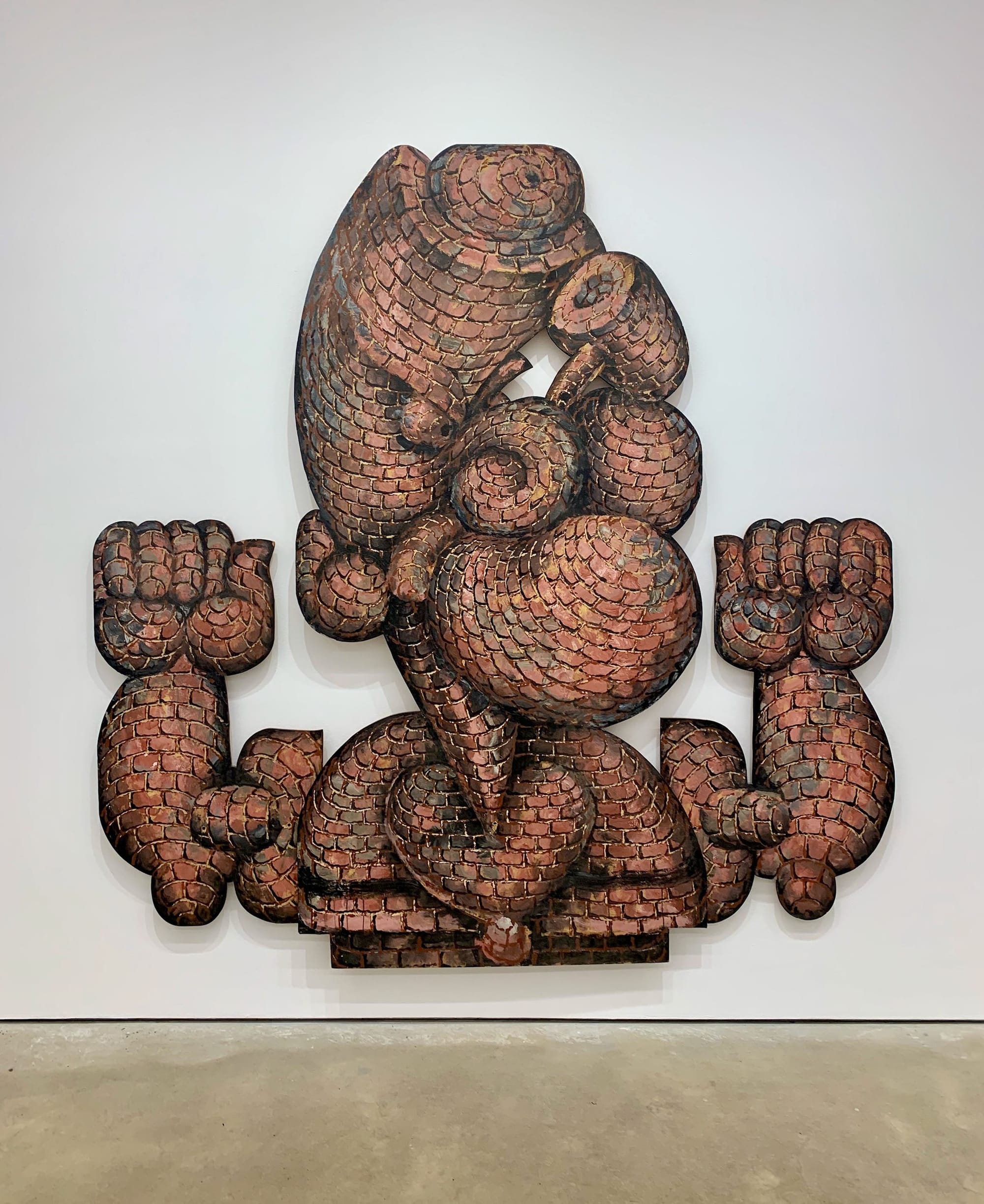
Like a slo-mo Off-Off-Broadway chorus line or targets in a shooting gallery, six painted, heavy, jigsaw-cut plywood panels riffing on the cartoon character Popeye sway an understated dance number, small motors whirring gently behind. In this posthumous exhibition at PPOW, artist Martin Wong’s strange, hybrid take on the classic cultural icon metamorphoses Popeye into architectural forms as much as humanoid figures, painted as curving brickwork, variously weathered.
There’s a kind of sociable quality to Wong’s retakes that softens both the brick and the insistent phallic exaggerations he makes of Popeye’s bulbousness. In Wong’s hands, Popeye’s hammy palms, nose, elbows, and even oversized earlobes protrude assertively priapic. And there’s a logic to this “in-the-navy” queering of the macho sailor man, whose supposed trysting with dame Olive Oyl is always interrupted by the homophiliac eros of Bluto, his perennial male nemesis.
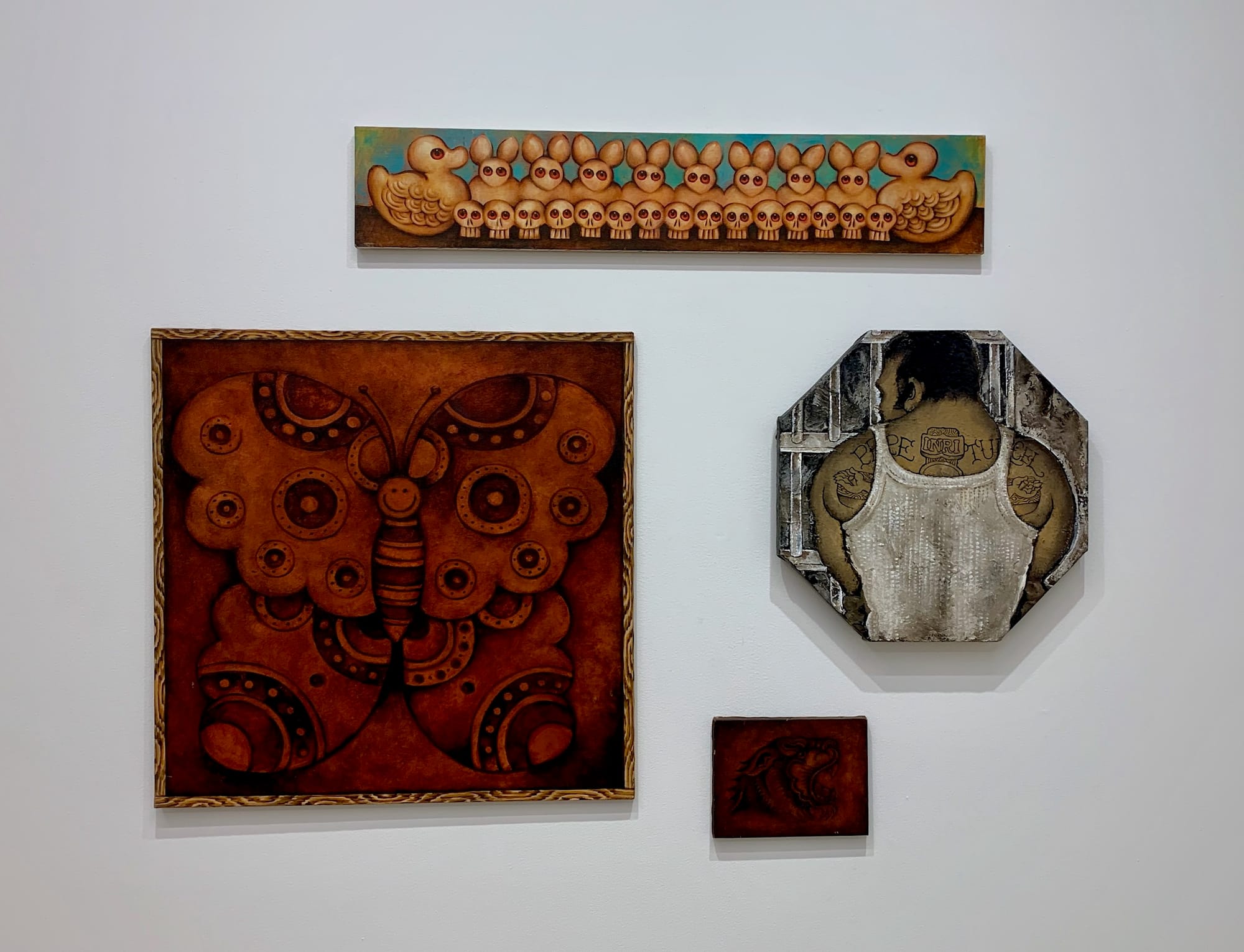
This is, in short, a show about transmutation: goofy soft “flesh” into something firmer, the ephemera of pop culture into a more idiosyncratic celebration of fanfic re-animation. Queer and magpie in sensibility, Wong imaginatively repurposed anachronistic cultural products and images. Over two decades after his death, the artist’s sensibility still “pops.”
Several smaller paintings in the show demonstrate Wong’s fascination with other pop culture vernaculars. Among his tattoo paintings is the hexagon-shaped “Sacred Shroud of Pepe Turcel” (1989–90), a muscle-shirted male torso seen from behind. Closer to his Popeye stylings, two larger works showcase Wong’s ability to cross cultural boundaries, including between the false dichotomy of “high” and “low.”
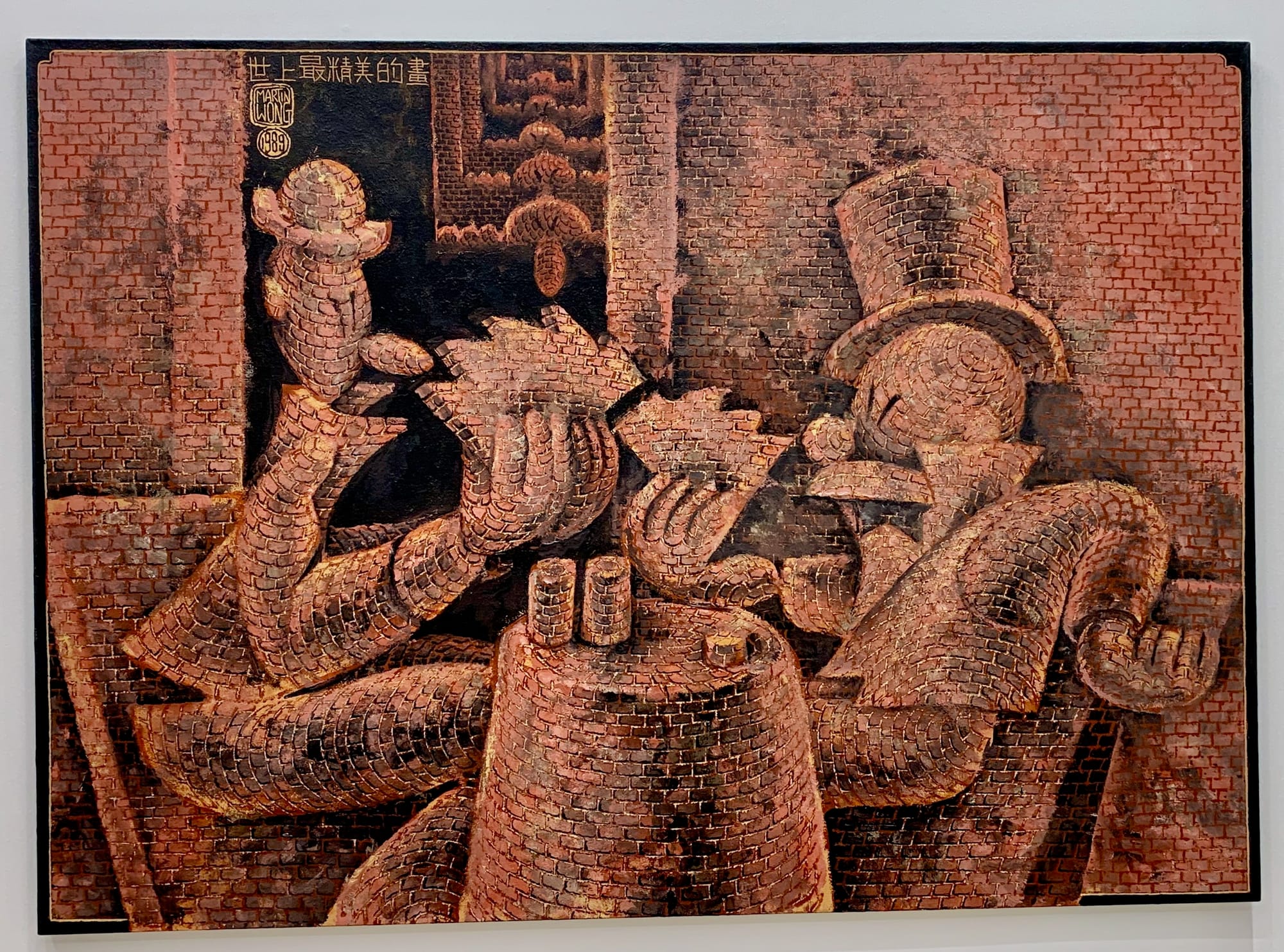
“The Most Beautiful Painting in the World” (1989) features vintage cartoon characters Mutt and Jeff, whom the artist depicts — again, all in brick, seated at a brick table — kicking back, playing cards and drinking beer, the painting’s title rendered in Chinese script above Wong’s name hand-lettered in English. A thin line of gold pseudo-ornately outlines the scene, as if decorating Chinese enamelware. In a striking mashup, Wong inserts an infinity mirror cascade of brick “Kilroy was here” characters peeking in from another dimension.
In one of the most architectural of Wong’s brick cartoon humans, another vintage couple appears as anthropomorphized castle turrets in “Untitled (Little Lulu and Tubby)” (circa 1989), fragments of thought and voice bubbles emanating from each statuary character. Meanwhile, a host of dead-eyed bunnies and skulls stare out from behind the figures’ crenellations.
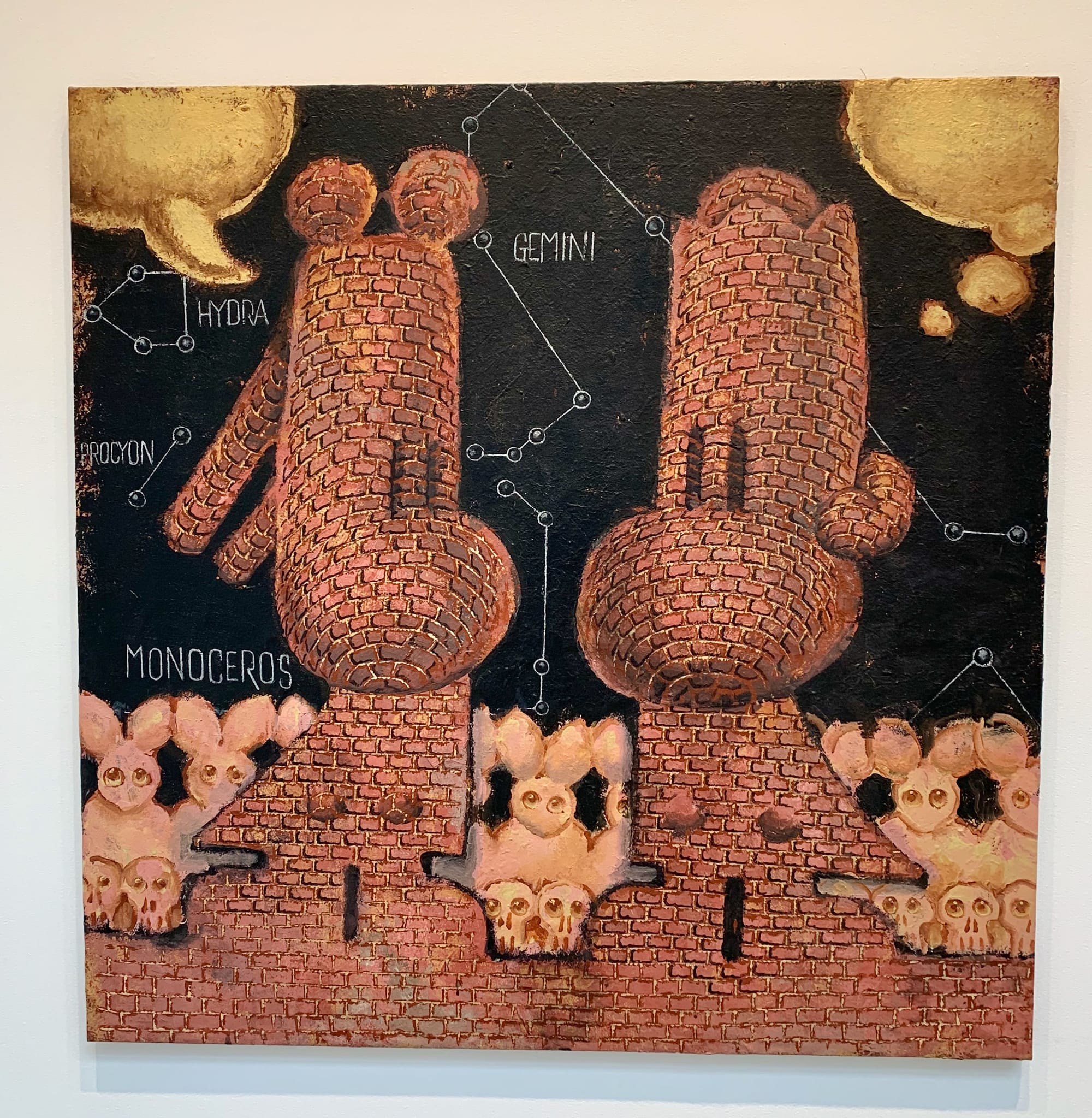
The bunny and skull lineup recurs in Wong’s work, channeling an awareness of mortality central to the Buddhist beliefs from which he often drew inspiration. As ever for the artist, these aren’t party dampeners but further enlivening guests, decorations, or party favors — the death that always hovers near, a reminder that there is further life beyond loss.
But why brick? Wong’s long-term penchant for brickwork illustration in his paintings traces to his interest in the thrilling, rough-hewn urban scene of decaying 1970s downtown Manhattan, where he lived and worked. Brick was the skin of Wong’s world. The extension of this material to his commandeered cartoon characters monumentalizes them, pulling the throw-away funnies out of waste bins to make them more epic and permanent, elevating not only the power of pop culture’s storytelling but what individual creative imagination can make of it.
Martin Wong: Popeye continues at PPOW (392 Broadway, Tribeca, Manhattan) through May 30. The exhibition was organized by the gallery.