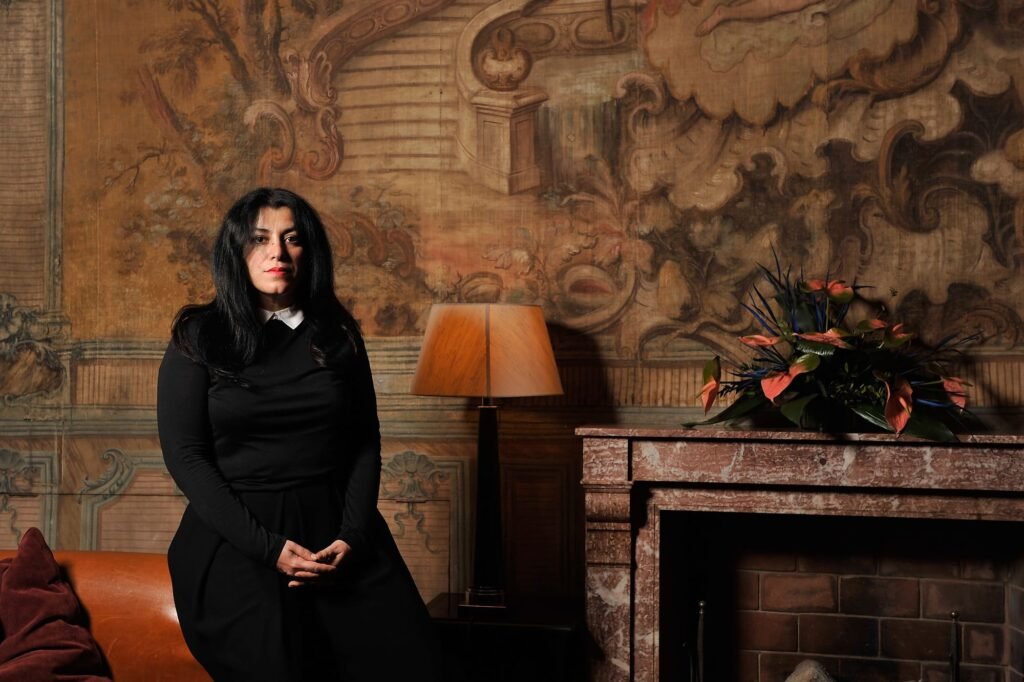
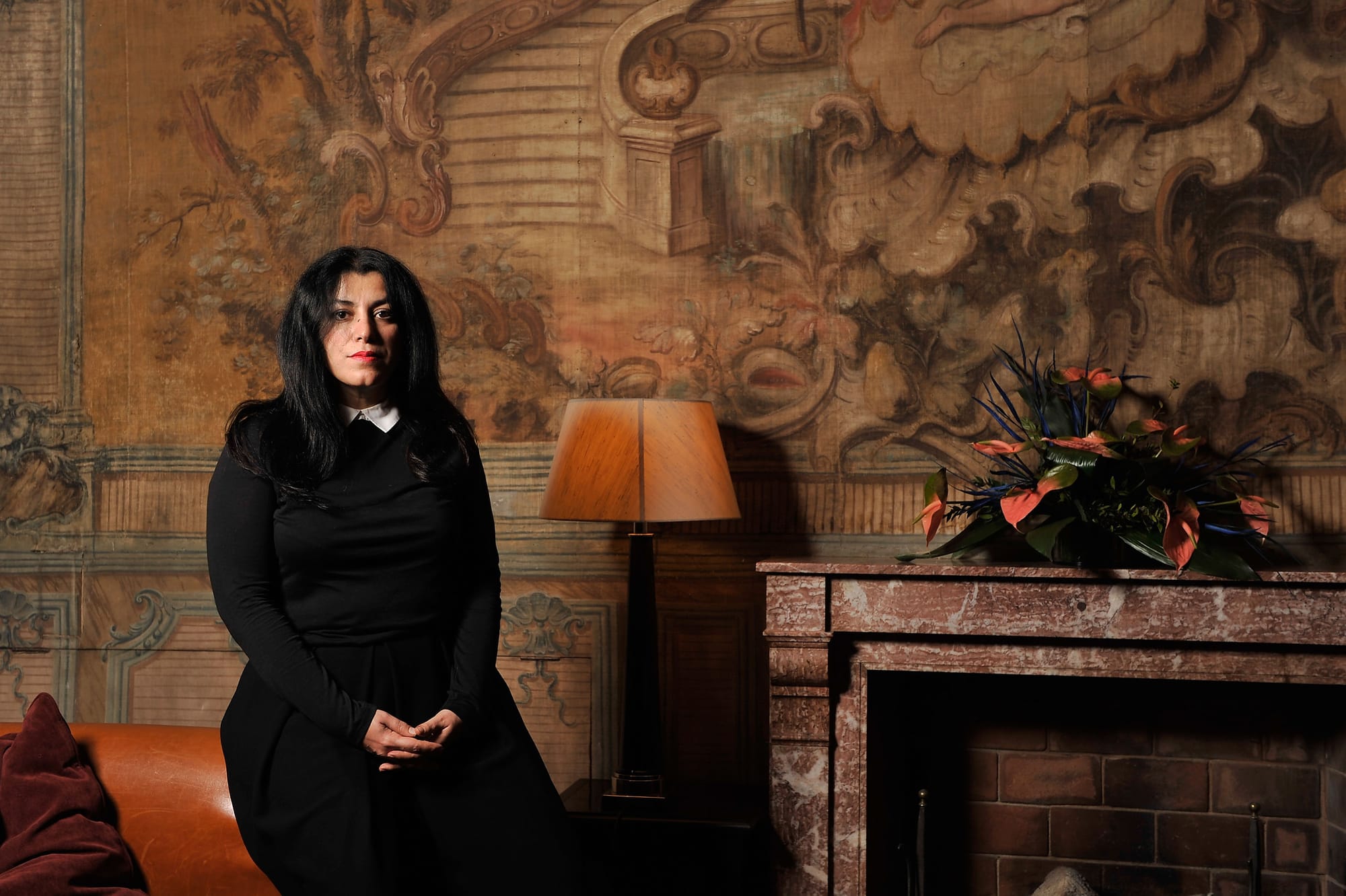
Marjane Satrapi, the Iranian-French artist, director, and author of the graphic novel Persepolis, has died at 56. The office of French President Emmanuel Macron announced Satrapi’s passing on Thursday, June 4. No further information about the cause, place, or exact time of her death was provided.
In a statement to France’s AFP newswire, an unnamed member of Satrapi’s close circle said that the artist “died of sadness” after her husband’s death just over a year ago. Mattias Ripa, a Swedish producer and screenwriter, died last April at 53. Shortly after her husband’s passing, Satrapi posted several images on her Instagram account that spelled out, “For I lost the love of my life.”
Born in Rasht, Iran, in 1969, Satrapi was just 10 years old when the Islamic Revolution brought Ayatollah Khomeini to power. Her parents sent her to Vienna for school during her teenage years. Later, she returned to Tehran to study art as a young adult. In the mid-1990s, following a divorce from her first husband, she moved to France and earned an art degree in the city of Strasbourg. She became a French citizen in 2006, and lived in Paris until her death.
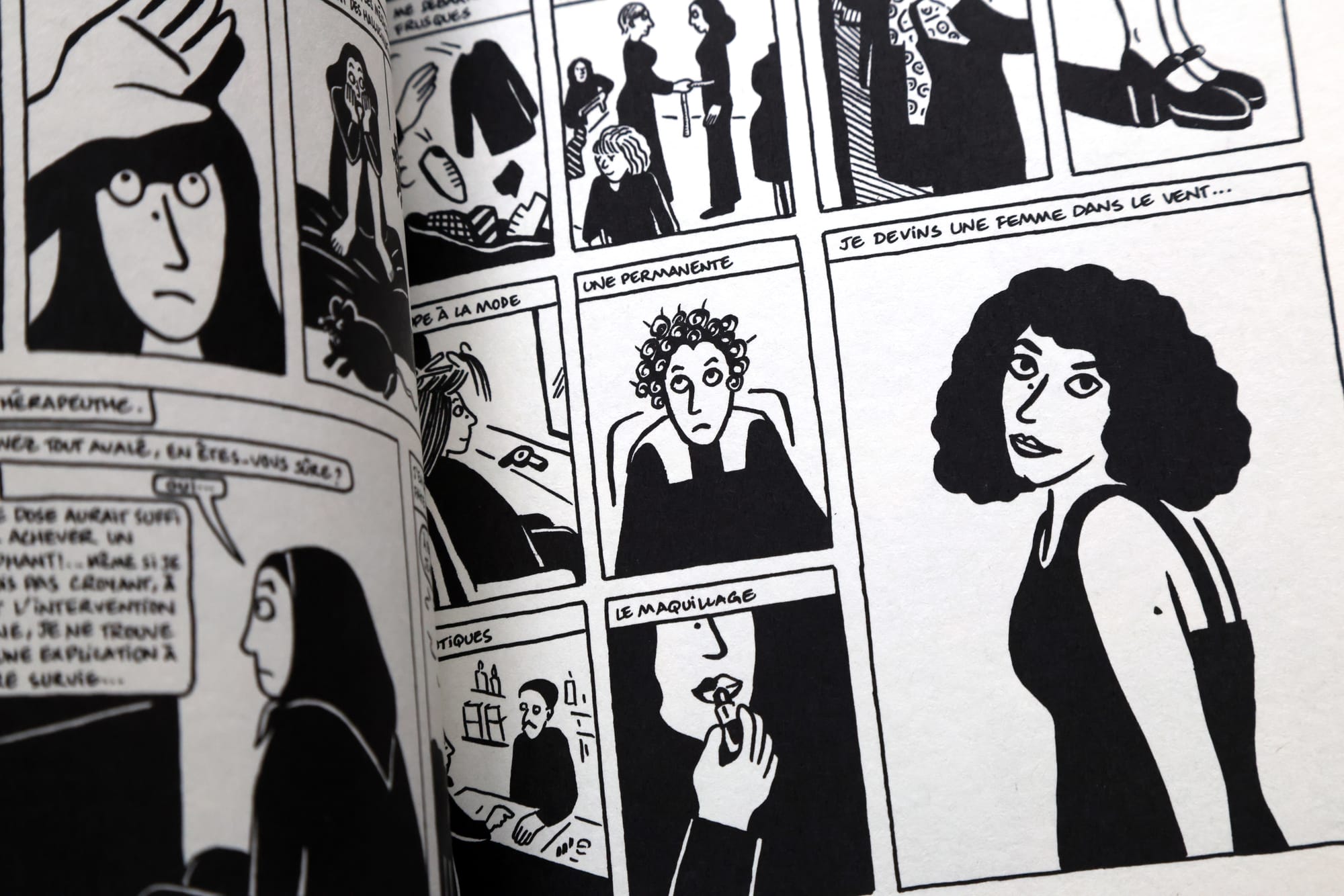
Satrapi drew upon her experiences of exile, displacement, war, and violence to create Persepolis in 2000. The graphic novel series is written through the eyes of young Satrapi, as she struggles to understand the effects of the Islamic Republic on her family, friends, surroundings, and herself. An outspoken critic of the Iranian government, Satrapi helped bring the experiences of modern Iran to a global audience. The books were first published in France, with the English translation emerging in 2003.
Despite its international acclaim, Persepolis has been banned in Iran and censored across some US districts, with Chicago Public Schools pulling the title from its shelves in 2013. Still, the graphic novel has remained a popular text for millions of readers and students and became an Oscar-nominated animated feature film in 2007.
Satrapi continued her work as a director in films such as The Voices (2014), a comedic thriller starring Ryan Reynolds, and Radioactive (2019), a biopic of Marie Curie played by Rosamund Pike. Her last film was Dear Paris in 2024, a dark comedy featuring a menagerie of characters confronting life and death.
After Persepolis, she continued probing the relationship between graphic novels and memoir. In 2024, she collaborated with more than 20 creatives to write Woman, Life, Freedom, a collection of graphic novel essays. The book came two years after the death of Mahsa Jina Amini, a Kurdish-Iranian student who died at the hands of Iran’s “morality police” for allegedly wearing her hijab improperly.
In a statement today, French President Emmanuel Macron paid tribute to Satrapi, describing her as “a great artist who transformed an Iranian childhood into a universal fable.” He did not mention that last year, Satrapi declined the highest state honor in France, the Legion d’Honneur, in protest of the country’s dealings with Iran. In a now-deleted letter to France’s culture minister she posted on Instagram, she wrote, “I can’t ignore what I see as a hypocritical attitude towards Iran, which forged the other part of my identity.”
“I can’t continue seeing the children of Iranian oligarchs come to spend their holidays in France, even become naturalized, while at the same time young dissidents have difficulty in obtaining a tourist visa to come to see what the country of the Enlightenment and human rights looks like,” she added.
Patricia Bolaños, who worked alongside Satrapi as an illustrator for Woman, Life, Freedom, told Hyperallergic in an email that she read Persepolis as a teenager and found that the graphic novel held a “perfect combination of tenderness, sharpness, humor, and political conviction.”
When they worked together, Bolaños said that Satrapi pushed her to do her best work. “For that, I will always be grateful,” she wrote.