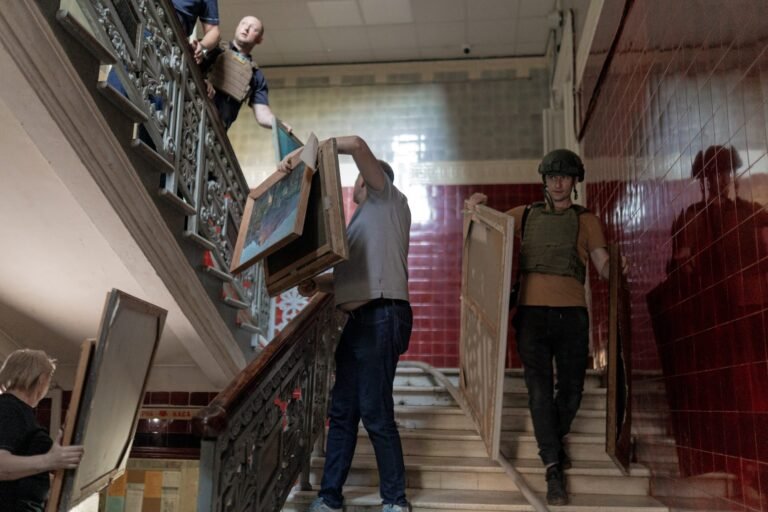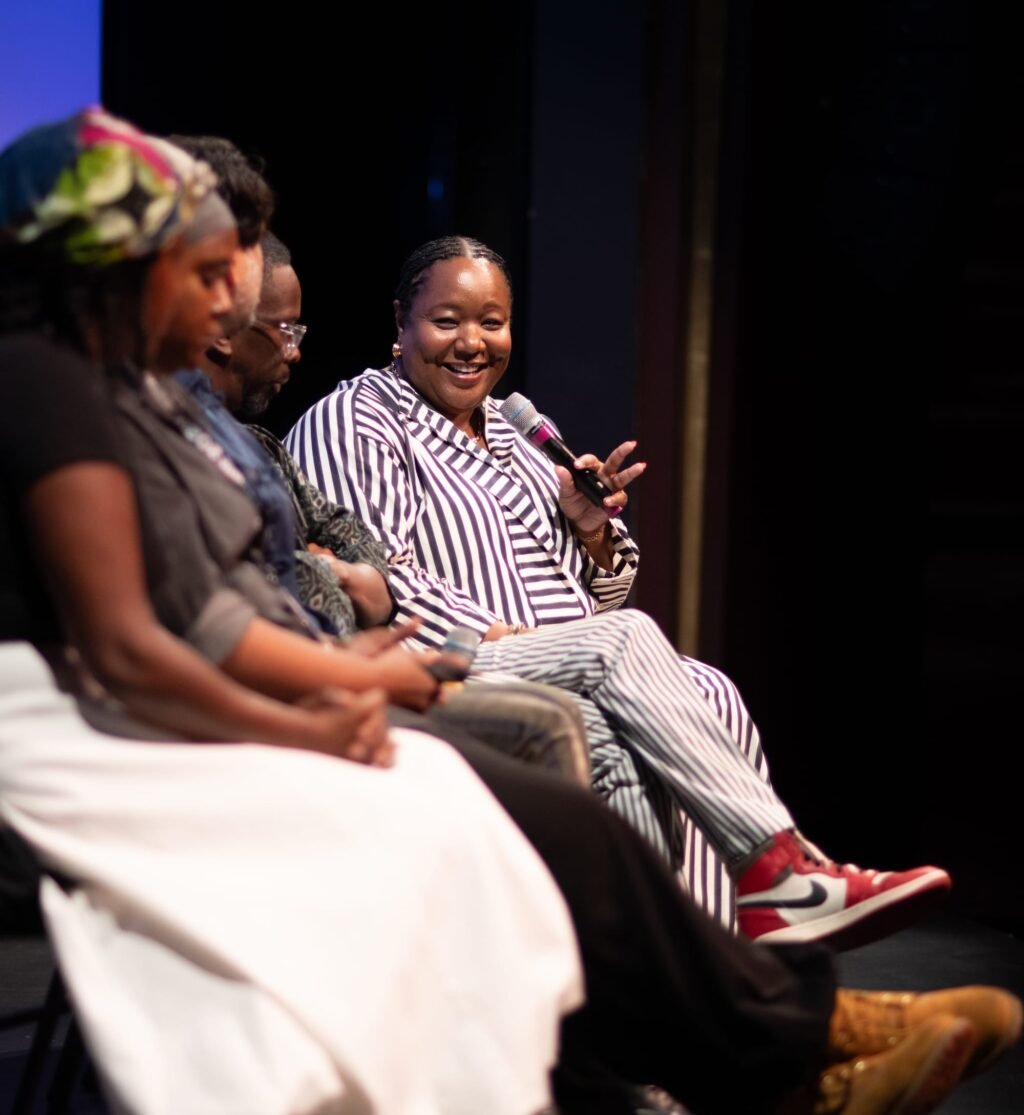
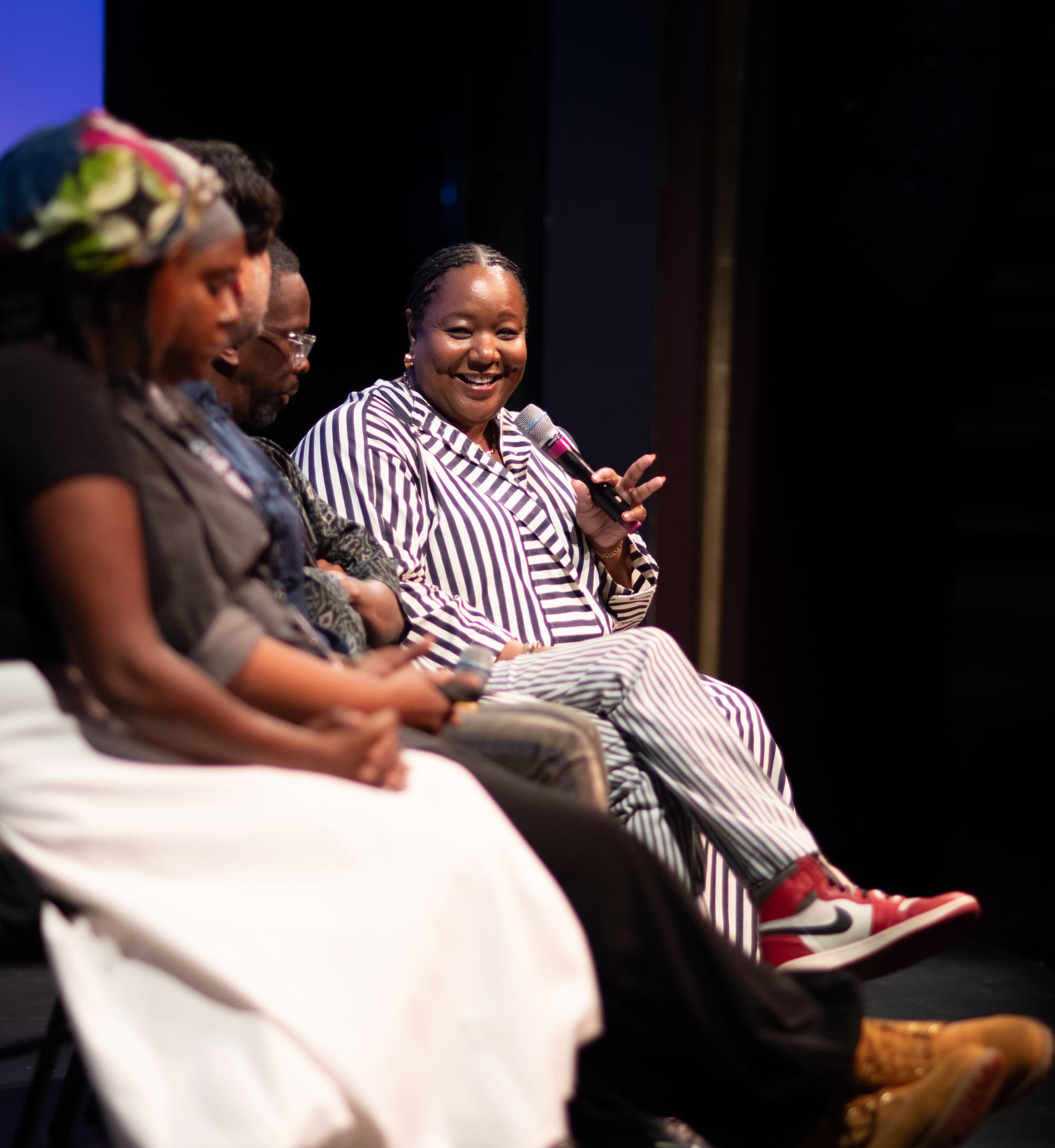
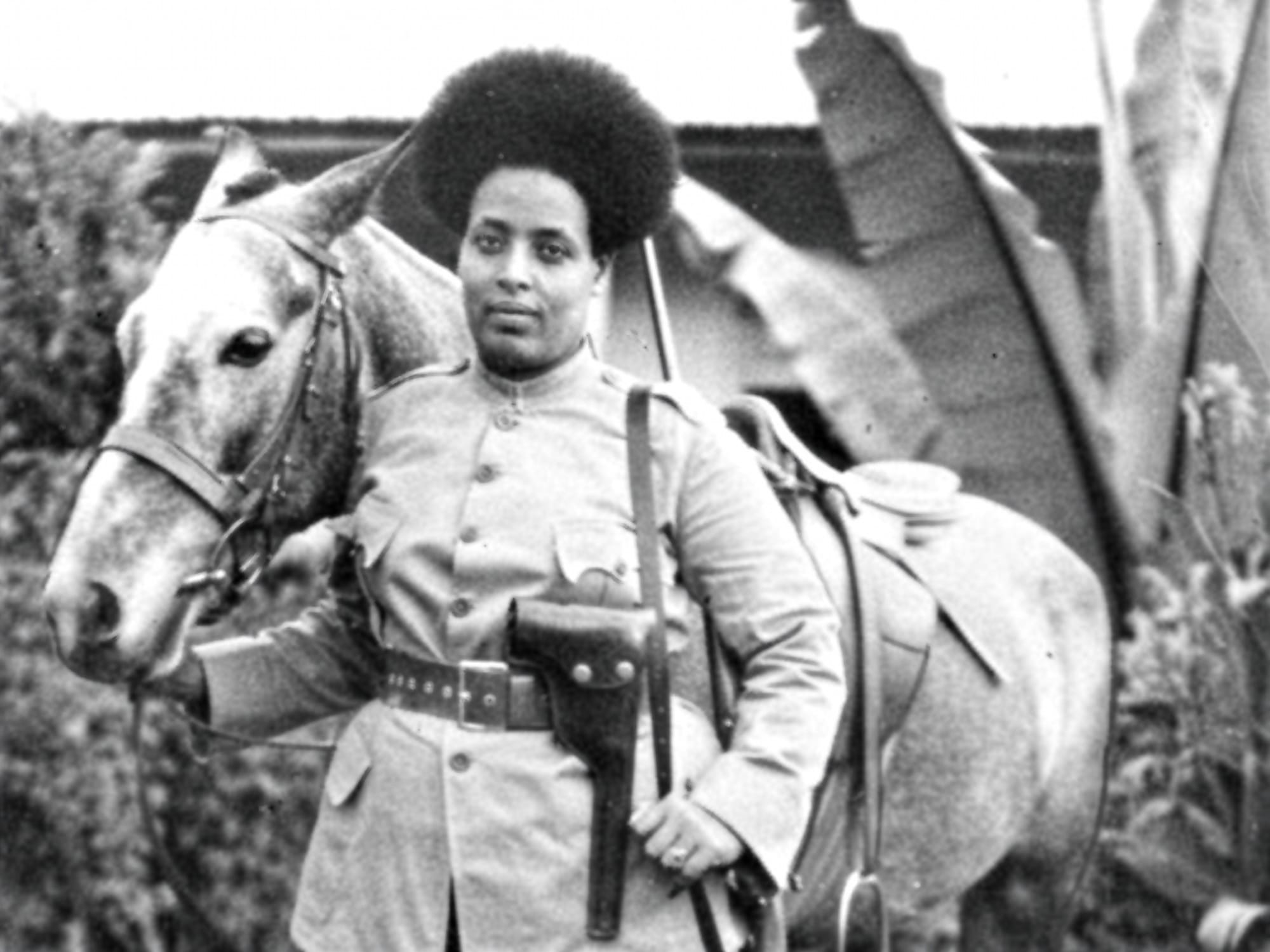
This year, the United States semiquincentennial converges with BlackStar Film Festival’s 15th edition. At a moment when the nation contends with competing ideas of truth, BlackStar marked this milestone by doing what it does best: serving as a leading platform for experimental nonfiction and polyphonic storytelling. Held in Philadelphia from August 6 to 9, this year’s festival included 91 films and foregrounded stories from Haiti, alongside Haile Gerima’s five-part epic on Ethiopian resistance against Italian colonialism, unraveling the constructs of historical, present, and future.
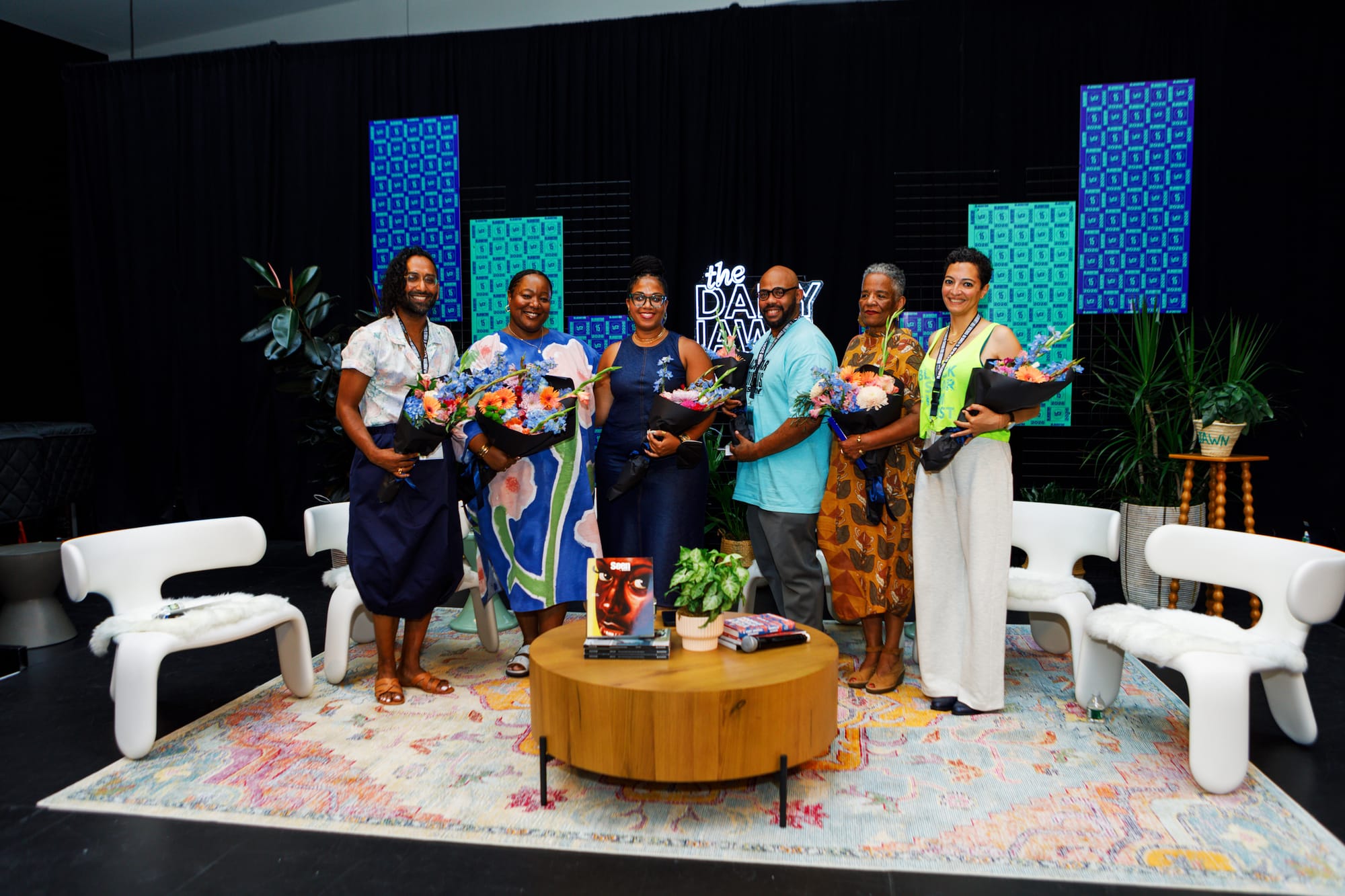
Founded in 2012 by filmmaker and curator Maori Karmael Holmes, BlackStar began as a film festival centered on the work and storytelling traditions of Black people and the African diaspora. What started as an annual gathering has grown into BlackStar Projects, a nonprofit organization supporting Black, Brown, and Indigenous filmmakers. Its programming now extends beyond the festival to exhibitions, a filmmaker seminar, a production lab, and Seen, a journal of film, art, and visual culture.
Holmes served as the festival’s programmer for its first nine years before moving into her current role as chief executive and artistic officer, shifting from programming individual works to building the institutional infrastructure that supports them. Her own path from making Scene Not Heard: Women in Philadelphia Hip Hop (2006) to founding and leading BlackStar reflects the festival’s evolution from a platform for films into a broader ecosystem for artists and audiences.
Hyperallergic spoke with Holmes about the labor of love behind BlackStar and what it means to preserve a festival’s original vision while allowing it to grow and adapt. Our conversation has been lightly edited for brevity and clarity.
Hyperallergic: Scene Not Heard, known for shedding a light on emcee Bahamadia and the establishment Black Lily, shared so many groups with the public and marked a turning point in your career. How do you see the documentary now in the context of your personal and professional journey?
Maori Karmael Holmes: Scene Not Heard is 20 years old. I’m a different person; at the time, the city was in a different place. At that moment, there was not enough acknowledgement of women’s contributions to hip hop, writ large. I was in graduate school looking at a scene that I was a part of. This film examines the local as a means of exploring like a global concern. I was the festival’s programmer for the first nine years, but my role pivoted. I spend my energy keeping the organization afloat. My colleagues conversed around what we might do for the 15th anniversary. It came up because making it and taking it on the road led to me starting the festival before BlackStar, and becoming a film programmer.
H: How do you see BlackStar as a platform for these different layers of storytelling?
MKH: BlackStar is a vessel for all kinds of stories. We show experimental and narrative work, and music videos. I want BlackStar to be a place where people of color who are dedicated to cinema are able to make work that’s meaningful to them. There are films that don’t necessarily start with the personal. They could be purely investigative like learning about a history, and then they go and cover that and explore that interest. There is space for personal histories, and then there’s also space for many other stories.
H: This year’s films, especially those like Louis Massiah’s Tenants of Lenapehocking in the Age of Magnets or short film “Same Water” by Martine Granby, speak to that complexity. What do you think subjective storytelling can reveal about history and how it’s told?
MKH: All storytelling is subjective. There is no such thing as objectivity when a human being repeats information. We’re all coloring and filtering our observations and memories through other, different sets of information. That’s what makes us human.
I’m concerned with trying to get to truth as much as possible, but truth requires many different entries into the canon. It can’t just be my perspective. It’s also understanding your perspective and other people’s so that we get to a shared understanding. That’s what’s troubling about what’s happening around the 250th. We have been fed one particular narrative and not allowed to see the many other ways people experienced those 250 years.
H: Tell me about the process of curating this year’s festival in the context of the 250th anniversary.
MKH: We take submissions, and themes emerge. We were excited about the number of films that we got about and from Haiti. It offered us an opportunity to say, “Okay, 250th, we’re in Philadelphia. We have to be thinking about it as the seat of where democracy gets constructed in the US.” We were like, what about the 222nd? How about the anniversary of liberation of this Black country in this hemisphere? That has been great because that is an anniversary that a lot of us at BlackStar are personally invested in; that’s real independence. “Real” is also contested because if you owe France a bunch of money, is that independent? I’m interested in that act of independence versus 1776. Those are the things that we’ve been thinking about.
H: How has your understanding of truth changed since you founded BlackStar?
MKH: Anything that’s constructed is not “true.” What’s powerful about film is that it’s hitting us on multiple senses: the visual, and there’s text often that we’re taking in. It feels real. It can be powerful because of that. It’s important for all filmmakers, not just nonfiction, to take responsibility for what gets put into the film or episodic project that goes on TikTok. We are what we consume. If you’re contributing to it, people are consuming. You want to be careful with what you’re putting out there.
We live in a time where it is possible that evidence will be artificially manufactured. We’re looking at what we hope is a historical document. How will we know if it’s been modified or not? There’s a real reason to be suspicious of what you’re watching because things have often been constructed to provide or feed into a particular narrative. One person’s liberation is labeled another person’s terrorism. Even the idea that there’s a singular truth is always contested, because it depends on who’s telling the story, whose perspective it is.
H: In 15 years, what changes have you noticed in the field?
MKH: I am a film worker in a space where we’re promoting and platforming works of moving image. I curate works of moving image. Sometimes we take it for granted because we live with these images, now on our phones all day. Advertising is often a moving image. We’re always looking at things in motion: TikTok, Instagram, commercials, and streaming. Many take the form for granted and don’t see the craft that goes into it.
When starting in 2012, it was a different atmosphere. People’s aesthetics have changed because of this influx of moving images. What was acceptable visually when technology was more expensive versus now that the barriers to entry have lowered — people’s access to creating things with high technical skill has increased so much — is different. Then, there wasn’t any streaming. Netflix had moved into it, but it was early. Independent films only existed at festivals by and large 15 years ago. Now, you have Vimeo and Patreon and people can create an audience. In the past, some people never heard of my film because once it finished the festival cycle, it died, even though it’s collected by university libraries and available for educational distribution. For a lot of independent films, once they have their festival life, you never hear from them again. Now that’s not the case because they’re able to keep living.
What I’m interested in film doing isn’t only entertaining us; that’s different than a lot of festivals. We’re interested in moving images as an art form, and our festival program isn’t necessarily market-based. We’re like, let’s look at the work that’s being made and what it has the power to do — always concerned with creating a better world.
H: What do you envision for the next 15 years of BlackStar?
MKH: I’m focused on resources. I want for us to be able to continue in filmmaker-centered ways, where we’re able to pay filmmaker licenses, provide travel stipends, and offer the festival at an accessible price. For the next 15 years, I hope that we continue and not reduce our offerings because we can’t raise enough money. I’m interested in shoring up our capacity to do what we do well.
I am iterative and constantly trying to learn new skills and take on new ideas. The festival to some extent has been an extension of that, but the festival also isn’t me anymore. It’s its own organism, and it will continue to be its own organism. In a lot of ways, I have no idea what the next 15 years will look like because it will grow without me. That’s important. I don’t think I’ll still be doing this in 15 years. I’m interested in shoring up the resources to make sure that we can continue to do this well. I hope that we’re always open, learning, and resonant with community.