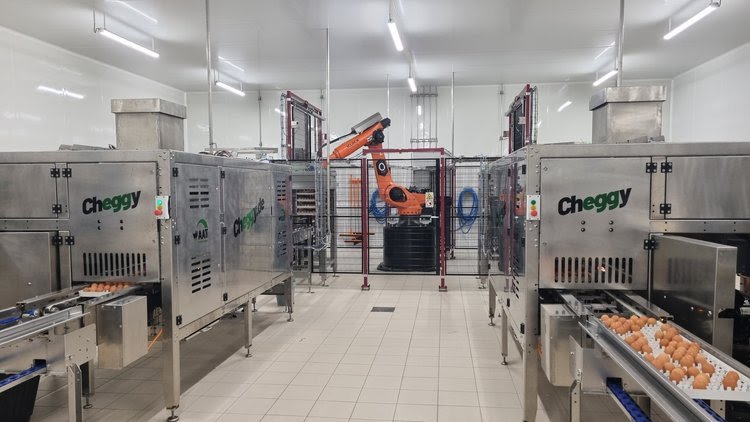
Knip—a Boston-based startup making functional ingredients for food and feed via biomass fermentation—has ratcheted up manufacturing capacity, moving production of its postbiotic ingredient JUV into 165,000-liter bioreactors at a contract manufacturer with 10,000 tons of available capacity.
Knip, which launched commercially 18 months ago and is now manufacturing for two commercial customers, had previously been working with a CMO with 250 tons of capacity at 60,000-liter scale.
While Knip is often compared to other single cell protein companies such as Calysta—which makes protein rich biomass via gas fermentation—it is not playing in the same territory, CEO Caitlin Wege told AgFunderNews.
“These companies are creating a commodity protein and having to fight against the cost of fishmeal and soy, which is very tough. That’s not where we’re playing. We can use industry standard fermentation equipment, so the capex stays off our balance sheet. And we can still be margin positive using a CMO.”
From protein replacement to functional postbiotic
Rather than pitching its patented ingredient as a replacement for soy and fishmeal, Knip its positioning JUV as a high-impact functional ingredient designed to improve stress resilience in fish and shrimp at low inclusion rates of 2-5%.
“It’s not a commodity protein replacement,” said Wege of JUV, which has FDA GRAS status for use in finfish feed at up to 10% of the diet and in crustacean feed at up to 6%.
“We have the capability of producing a 70% protein biomass [variant] in our library [vs the current 50%+], but it’s not what we’re focused on. We have large-scale commercial farm data that shows its efficacy and performance against specific stressors [that fish and shrimp experience on farms].”
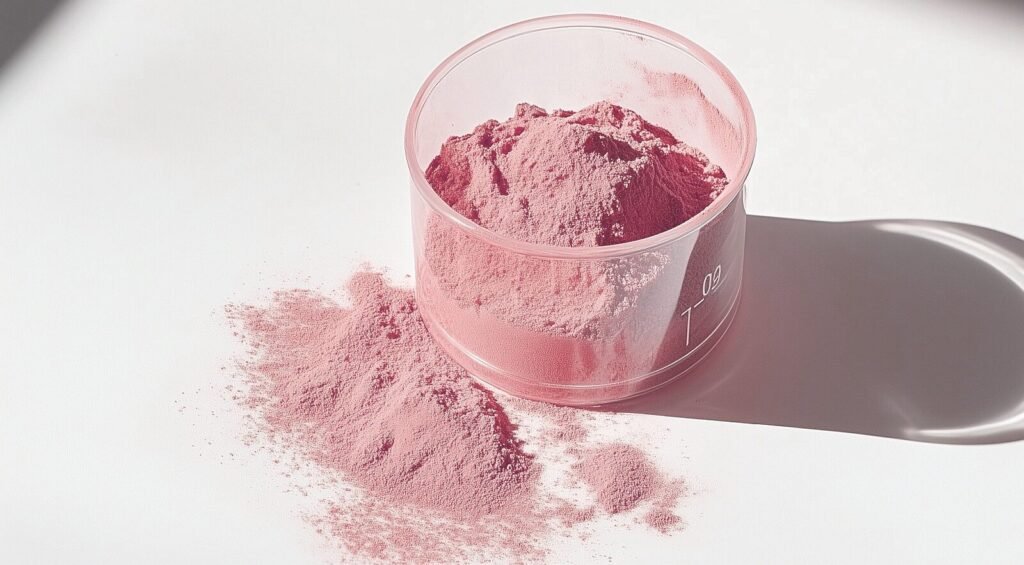
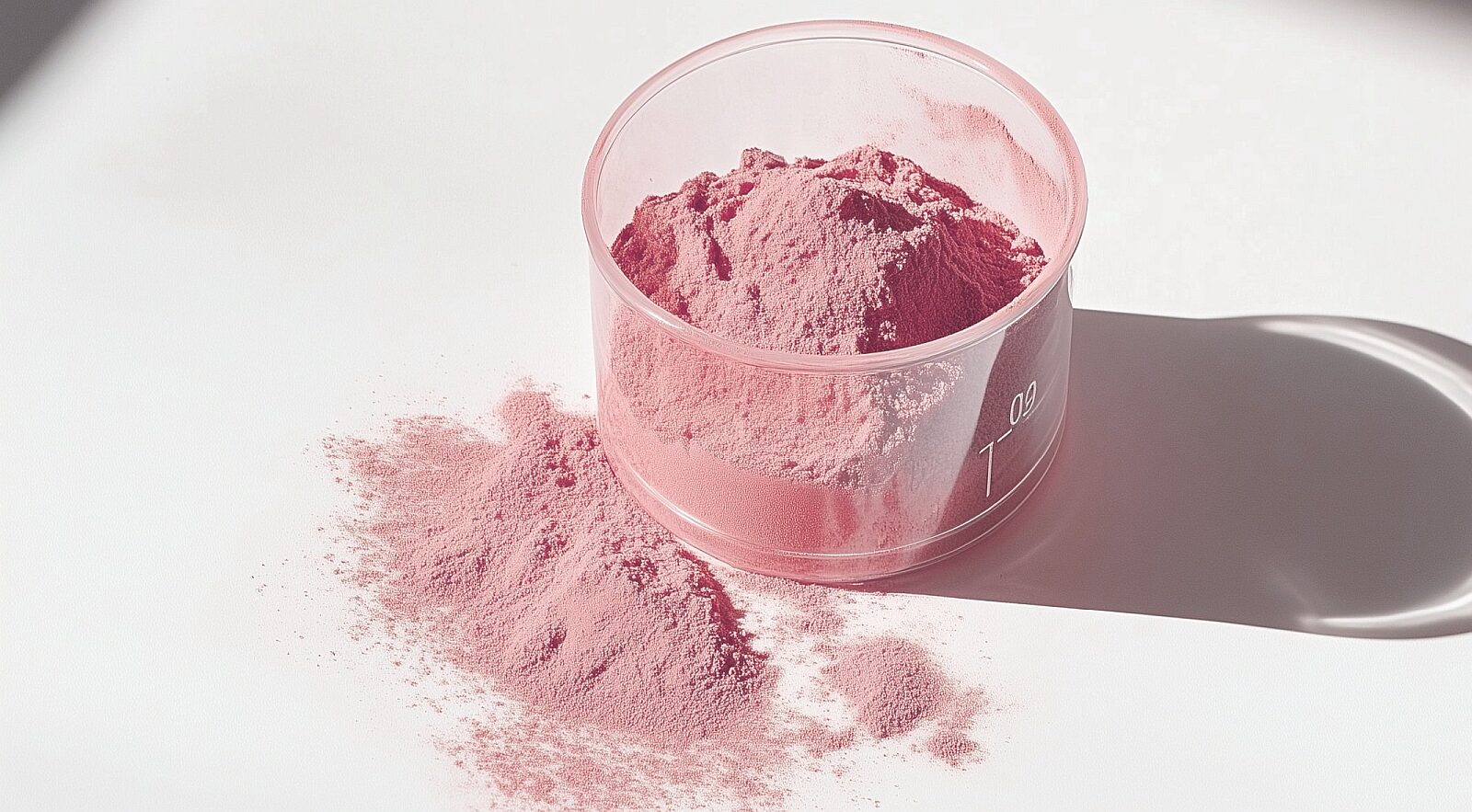
The pink-hued powder is designed to be “pulse fed”—used for short periods around stressful events such as transfer or vaccination, or at the earliest stages of life—rather than included continuously in feed, with a payback coming from reduced mortality.
In one commercial demonstration with a large trout producer, Knip tested the product in four groups of 100,000 fish and increased survival from 70% to 85%, claimed Wege.
“We’ve run over 60 trials spanning 10 aquatic species across warm and cold water, freshwater and marine environments, and we’re seeing similar performance across those species.”
Whole-cell biomass, not an extract
Founded in 2013 by industrial biotechnologist Larry Feinberg and Harvard evolutionary biologist Chris Marx, Knip makes JUV from a genetically engineered strain of a leaf bacterium called Methylobacterium extorquens modified to improve its performance in fermentation and alter its carotenoid profile.
Rather than extracting an individual compound, Knip ferments the microbe and processes the entire biomass, said Wege, who took the helm in 2024 and has a background in pharmaceutical manufacturing.
“That’s why the technology seems to work so well as a postbiotic,* because we’re using the whole biomass. There’s nothing extracted. It’s fermented, pasteurized, de-watered, and then spray dried.”
The dried biomass contains protein, PHB and rare carotenoids, which Wege claims serve as potent antioxidants comparable in activity to astaxanthin but, importantly for aquaculture formulators, do not impart their pink hue to the fish.
“They get benefits of the antioxidant without the color. It’s very shelf-stable and the bioactives can sustain themselves even through the extrusion process, so we can go right into the pellet through the feed mill. It’s not delicate like a probiotic. We’re also getting feedback that it’s very easy to use and doesn’t affect the structural integrity of the pellet, which is a challenge that they have sometimes with additives.”

Switching to greener methanol
Knip currently uses methanol from natural gas as the carbon feedstock for fermentation, but plans to transition to green methanol [e-methanol from captured CO₂ plus green hydrogen, or biomethanol from forestry residues, ag waste, or biogas] within the next year.
Despite the higher costs, Wege claims that the switch would only amount to a small increase in its COGS. She also noted that supply of green methanol is expanding, driven in part by growing demand from the shipping industry.
Pet food and, longer term, human nutrition
Knip is “focusing heavily on Latin America right now, especially in the shrimp industry in Ecuador,” said Wege. “We have a distributor that is doing a really good job of market development and we now have a pipeline of shrimp producers that are demoing our products. We also see a lot of interest from the APAC region and we’re working with a North American salmon producer.”
Beyond aquaculture, Knip is exploring companion animal applications and working under NDA with a large pet ingredient manufacturer following anecdotal reports of improvements in bloating, digestion, skin irritation and vitality.
“I can’t talk too much about it, but we are working with a large manufacturer in the pet space to explore product feasibility studies in dog and cat food,” said Wege. “We have also just signed a contract to co-create a product for ornamental fish.”
Human nutrition is on the roadmap, although Wege stressed that this remains exploratory.
The firm, which has just completed an oversubscribed bridge round, plans to launch another equity round shortly, added Wege, who was one of the original investors in the firm.
“The company has historically only raised about $9 million, and then another million in in non-dilutive funding, so we’ve done a lot with a little. I came in to help build out the commercial strategy.”
*The definition of ‘postbiotic’ from the International Scientific Association for Probiotics and Prebiotics (ISAPP) is: “A preparation of inanimate microorganisms and/or their components that confers a health benefit on the host.”
Further reading:
dsm-firmenich takes Protopia yeast protein to industrial scale, targets fishmeal and wheyXxx
Exclusive: Calysta hires new CEO, seeks new capital as JV partner ends financial support
Superbrewed Food expands beyond bulk protein with postbiotic launch
The post Knip bets on postbiotics, not commodity protein, as it scales biomass fermentation appeared first on AgFunderNews.