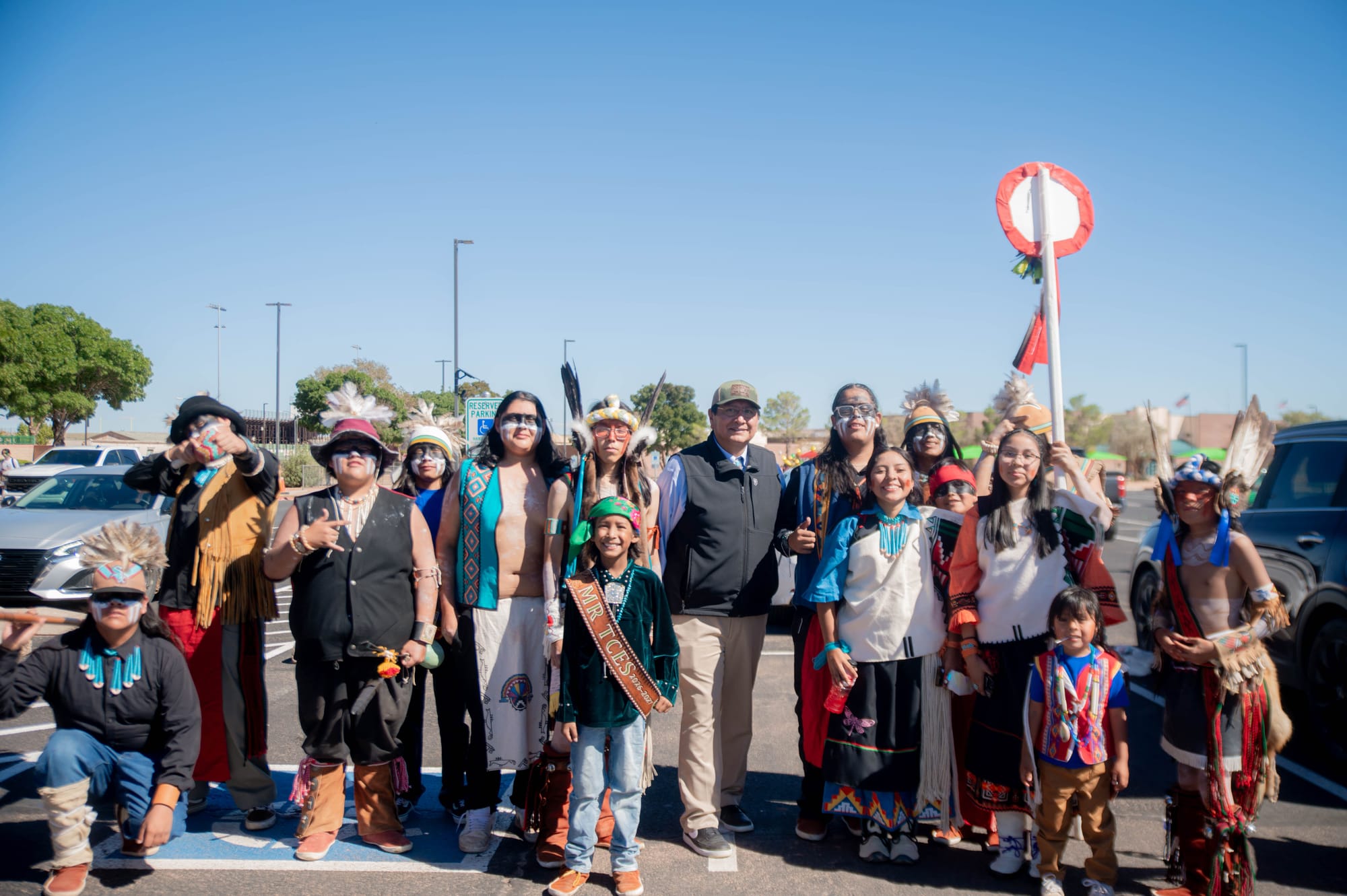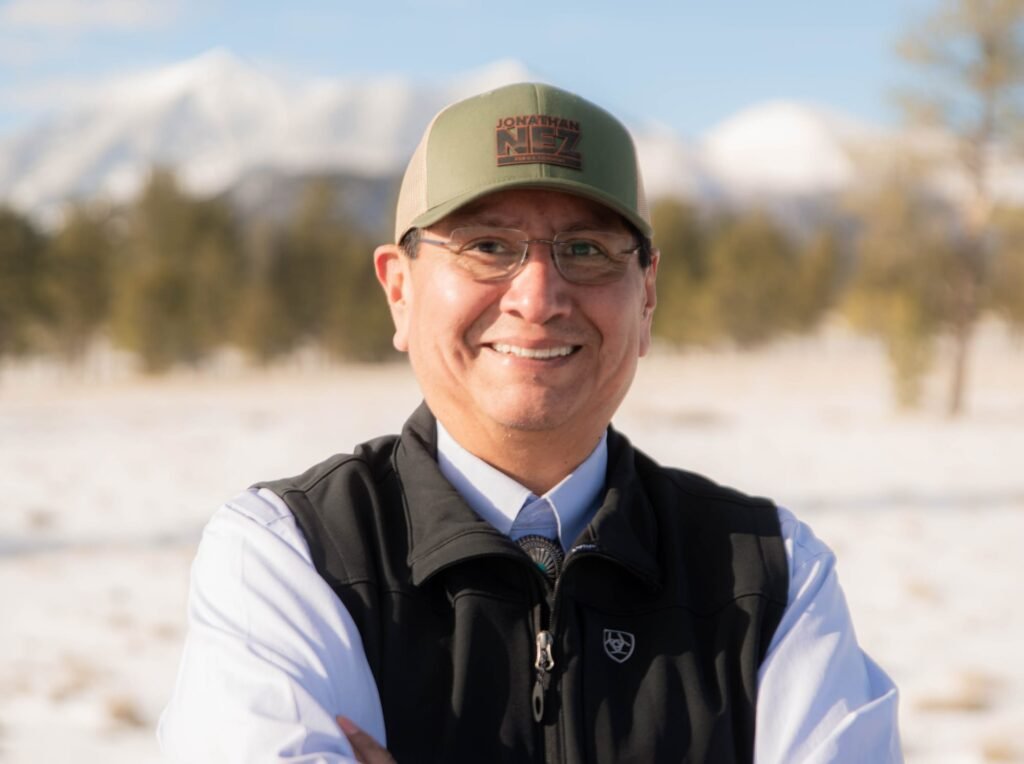
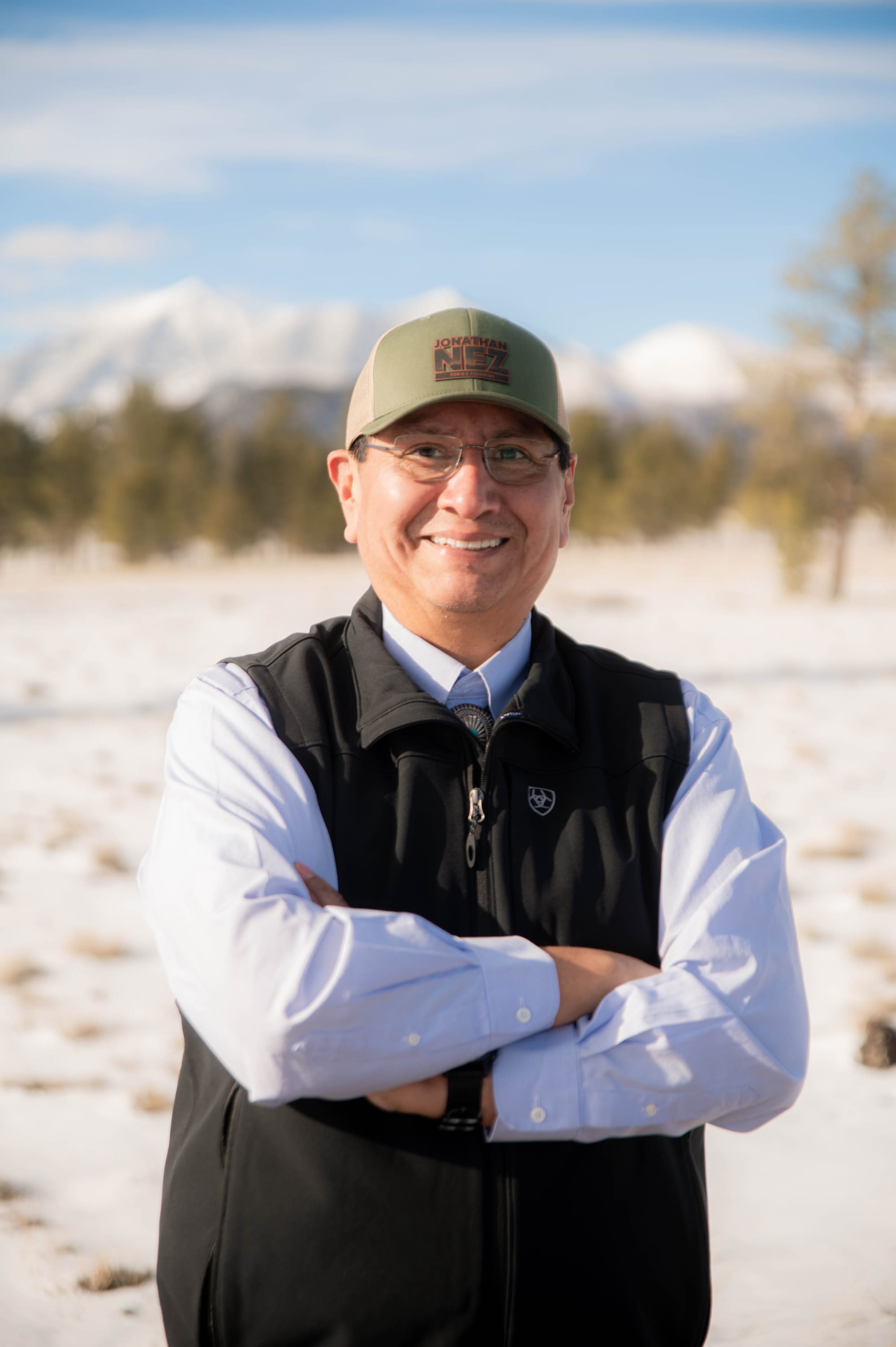
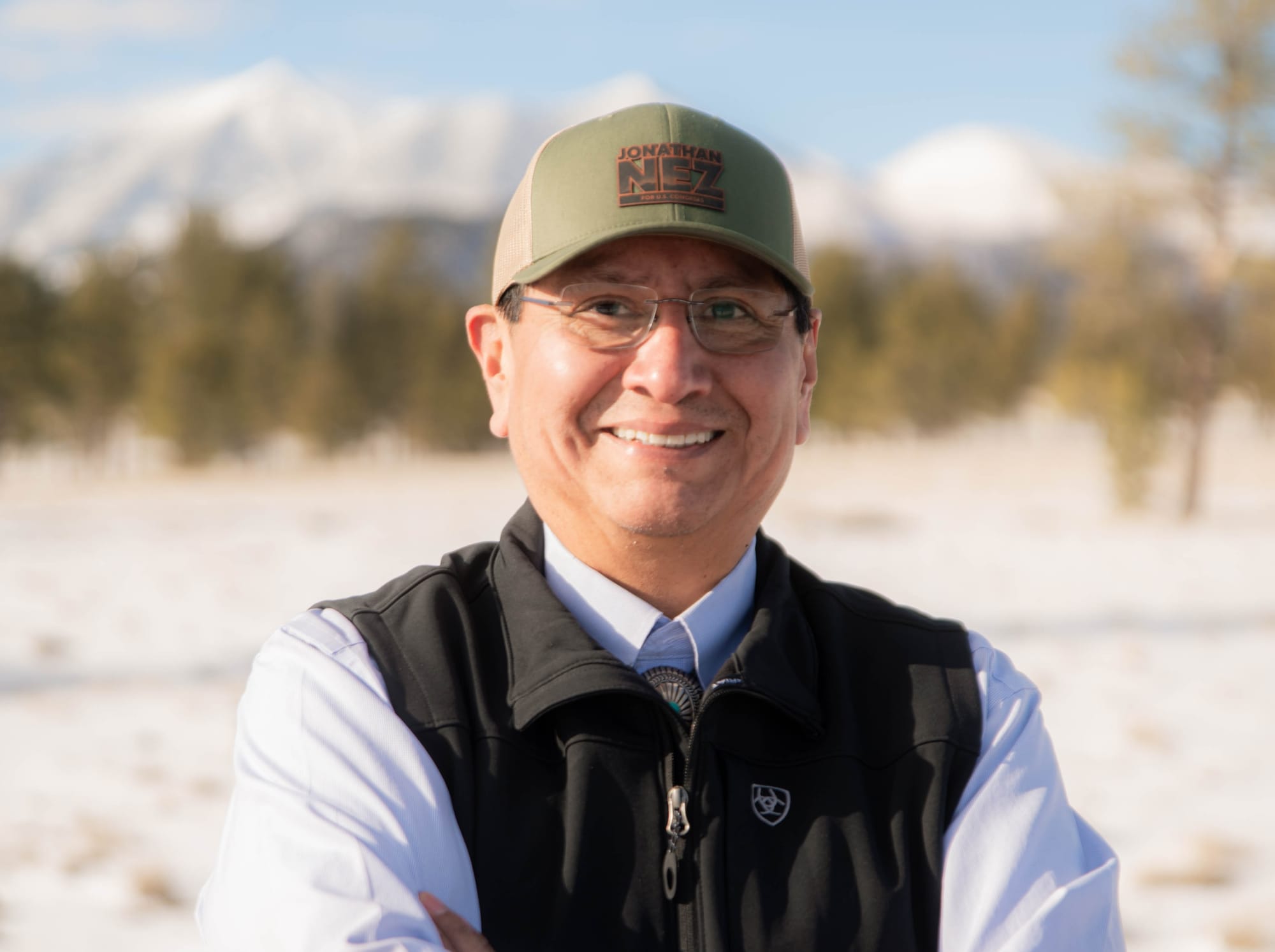
This November, Jonathan Nez could become the first Native American to represent Arizona in Congress. Nez, who served as president of the Navajo Nation from 2019 to 2023, is running to flip the state’s largest congressional district by area, a seat currently held by Republican Eli Crane. His “Warrior Up” platform is structured into four pillars, a tribute to the number’s significance to Diné people, for whom the world is bound by four sacred mountains, one in each cardinal direction.
Nez has campaigned on lowering healthcare and housing costs, building sustainable rural infrastructure, tackling corruption in Washington, and the belief that “water is life and food is medicine.” In Arizona, where long-term drought and water supplies strain the Colorado River, one in three Diné households lack access to clean water.
As the Trump administration continues to roll back protections for Native land and sacred sites, Nez’s perspective feels especially urgent. A few days before Indigenous Peoples’ Day, we spoke about his upbringing, how Diné culture shapes his political thinking, and the importance of historical memory in fostering perseverance and resistance.
On the day of our interview, a Trump-aligned Political Action Committee (PAC) ran ad against Nez that mistakenly used a photograph of a different Navajo leader (ironically, a Republican supporter). The PAC acknowledged the mistake and corrected the ad, but the egregious error illustrates the political climate in which Nez is campaigning, as well as the continued discrimination against Indigenous people in the United States. The interview has been edited and condensed for length and clarity.
Hyperallergic: You were born on the Navajo Reservation and raised in Shonto, a small Navajo community in northeastern Arizona. Can you tell me a little bit about what your upbringing was like?
Jonathan Nez: I grew up in a very small community, Shonto, where we lived without running water or electricity. There’s a lot of folks, including my wife, who grew up that way. But we had livestock, we had our farms, and so it was an upbringing of hard work: tending to our animals, herding sheep, herding cattle, riding horses, going to the farms, getting our food — getting the corn from the farm, starting a fire, and roasting the corn on an open flame while we’re tending to our livestock. Those were fun days. We didn’t know that was a hard upbringing, right? We were just growing up, and that’s what was expected of us. I say that because it has shaped who I am today. And I think over my 20-plus years in public service, I have worked hard and gotten things done because of my upbringing.
I grew up in a very conservative home. Both parents Republican, sitting in a Baptist church early on, but at the same time knowing who I am as a Navajo. I’m a Democrat today, but my parents instilled in us, my brothers and sisters, a bootstrap mentality to do things for yourself. There was always that challenge from our elders, my parents and the elders in the community, to go get an education and get a job outside the Nation, to get that experience. And to come home with that experience to help your community, your people, your Nation.
My wife and I did that. We went home, and I got elected at an early age, in my mid-20s, to the local community government, then became a lawmaker, a council member of the Navajo Nation. I also got elected twice to the county Board of Supervisors, the equivalent of a county commissioner, which gave me a better understanding of county and state relations. I became the vice president and the president of the largest Indian tribe in the country, which gave me a better understanding of working with the federal government one-on-one.