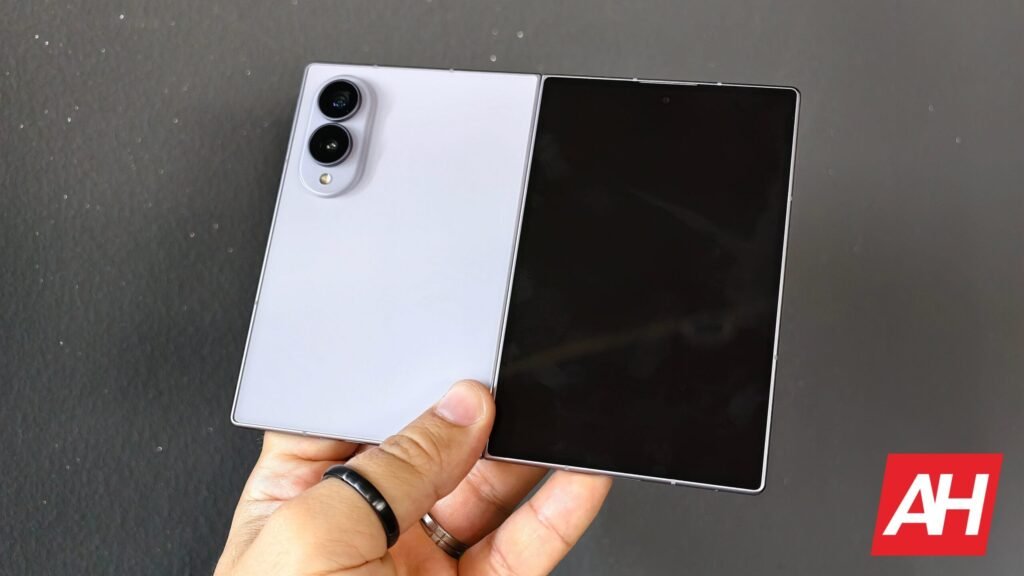

The Samsung Galaxy Z Fold 8 launched not long ago, and I’ve been spending time with it for a short while now. This phone just clicked for me the moment I started using it, and there’s a good reason for that. I’ve kind of been waiting for the Galaxy Z Fold 8 for almost 5 years now. Well, granted, not this phone in particular, but the form factor that the device brought with it. Let me explain.
I’ve been waiting for this phone since 2021
The OPPO Find N was the first small(er) book-style foldable smartphone on the market. It was announced in December 2021 and was only released in China. The thing is, I had the chance to use and review it, courtesy of OPPO. Since I started using that phone, I realized what a book-style foldable should be, and it sure as hell was not what a large folded device that unfolds into a square. Not at all.

Don’t get me wrong, the OPPO Find N was on the right track (as was its successor), but it wasn’t all the way there. While the idea of a smaller device when folded was spot on, this wasn’t the right way to handle it. When unfolded, this phone still offered a near-square display, and considering that silicon-carbon batteries were not exactly thin back then, it was also thicker than I would have liked. Still, it was the best form factor that was released up to that point.
The Samsung Galaxy Z Fold 8 has an ideal form factor for a foldable
While I was using it, it clicked for me: a book-style foldable should be short and wide when folded, wide to the point that it can offer a 4:3 display aspect ratio when unfolded. That should be fairly easy to achieve, and yet nobody up until now has decided to do it. Companies could have done it back then, even though devices would be a bit thicker… and yet nobody did it. Well, now we have a couple of options in the market, and more is coming.

The Huawei Pura X Max arrived first, in April. I haven’t had a chance to use that phone, so I can’t really comment on it. The Samsung Galaxy Z Fold 8, on the other hand, is a completely different story. Its form factor seems just right, for a number of reasons which I’ll get into now. It’s exactly what I wanted from a foldable since 2021, since I first started using the OPPO Find N. This is what other smartphone OEMs should follow; Samsung got it right.
It’s thin, light, and small when folded, and great for content consumption when unfolded
The phone is thin and light when folded, and it’s quite easy to use with one hand. It is only 9.7mm thick when folded, and weighs 201 grams, which is less than many large slab phones out there. It’s lighter than both the Galaxy S26 Ultra and iPhone 17 Pro Max, for example. Notably lighter. It’s also quite short, so reaching the top of the device is not a problem, and while it’s wide when folded, it’s not too wide. If you have smaller hands, yes, you may not be able to reach the opposite side as easily, but I have above-average hand size, and I can easily use this phone with one hand when folded, all parts of the display.

I’ve always thought that a foldable phone should be easily used with one hand when folded, and when unfolded, its display should bring productivity and meaning to the table. This aspect ratio sure does that. Back in 2021, I was mainly thinking about the main display in the sense of horizontal video, but what the 4:3 aspect ratio actually brought is great for both vertical and horizontal content.
Both horizontal and vertical orientations have an important purpose
When it’s in horizontal mode, you can watch YouTube videos, movies, and TV shows with notably fewer black bars than on a square format. So you effectively get a lot more screen real estate. You can even zoom all the way in without losing a lot of the content. If you’re more in the mood for Instagram or TikTok, simply rotate the device, and you’ll get a large portrait canvas to watch those, larger than on any slab phone, basically.
Considering that 4:3 aspect ratio works great for both portrait and horizontal content, the possibilities are endless. This form factor works better for running apps side by side as well. That’s especially useful in horizontal orientation when you’re using split screen. You can see more content in terms of width, and it’s a generally much better experience than on square display foldables.
It’s selling like hotcakes for a reason
There is a reason the Galaxy Z Fold 8 is selling like hotcakes; people realized what I knew for a while now. Perhaps some of them knew that for a while, but for many, the Galaxy Z Fold 8 brought that realization to their minds. When you start using the phone, that’s when it fully clicks. Granted, some of you may disagree, but I’m sure the vast majority will not. This is the ideal form factor for a foldable.

The Galaxy Z Fold 8 actually managed to attract younger users, and what’s also interesting, a lot more women. Pre-order numbers have been great for the company, and I have a good feeling great sales will continue. The iPhone Ultra from Apple is right around the corner, as another wide foldable option, while a number of other companies are working on their variants of it, allegedly. That includes OPPO, Vivo, HONOR, and Xiaomi.
The post I’ve Been Waiting for the Galaxy Z Fold 8 for Almost 5 Years appeared first on Android Headlines.