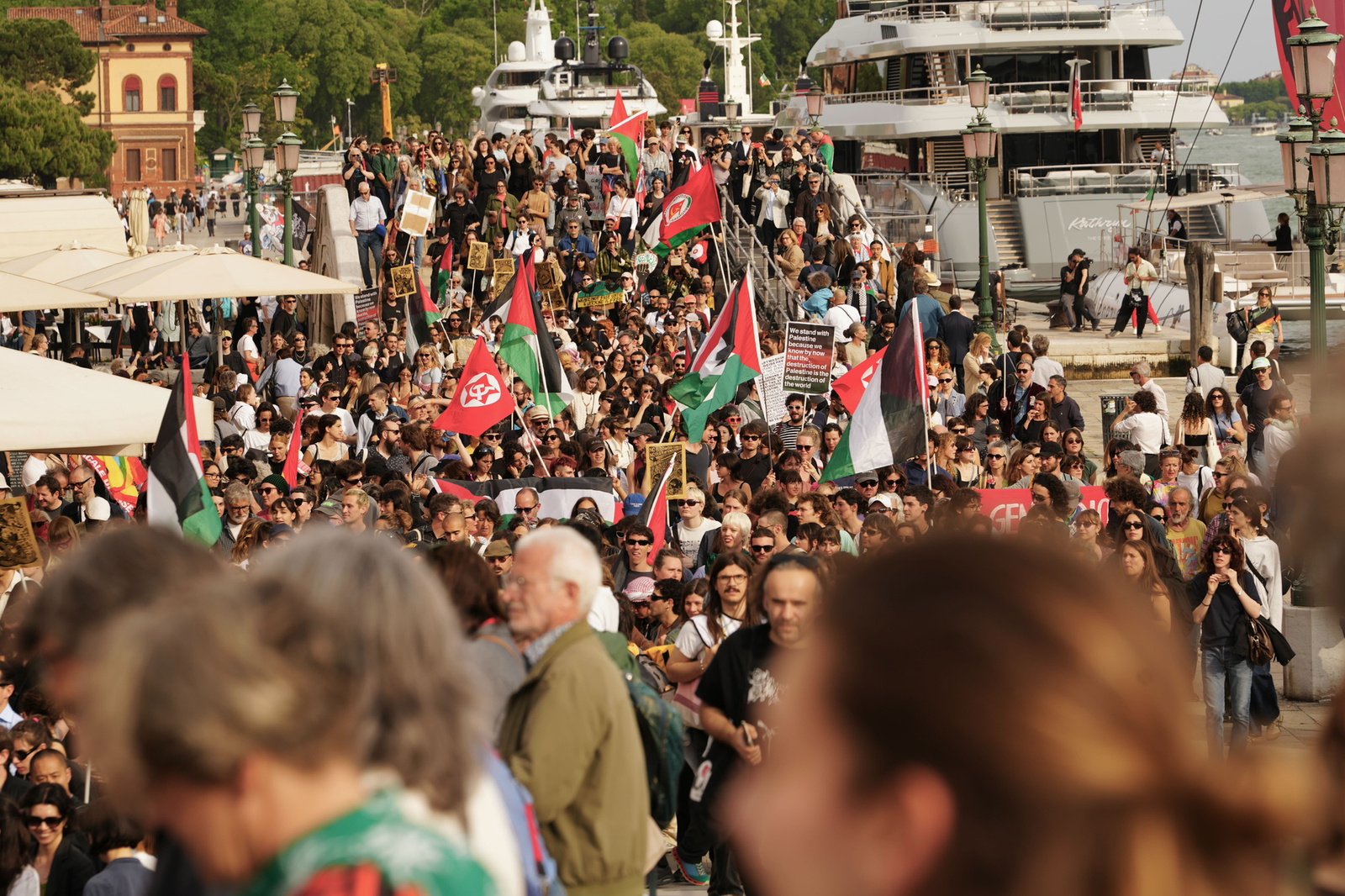
Italian labor unions, cultural workers’ associations, and grassroots collectives have joined the call for a national strike across the country’s arts and culture sector this Friday, June 12. Strike participants cite unstable opportunities and low wages across the field, as well as public investments into the arms industry and the “conditions that allow institutions to look away from genocide.”
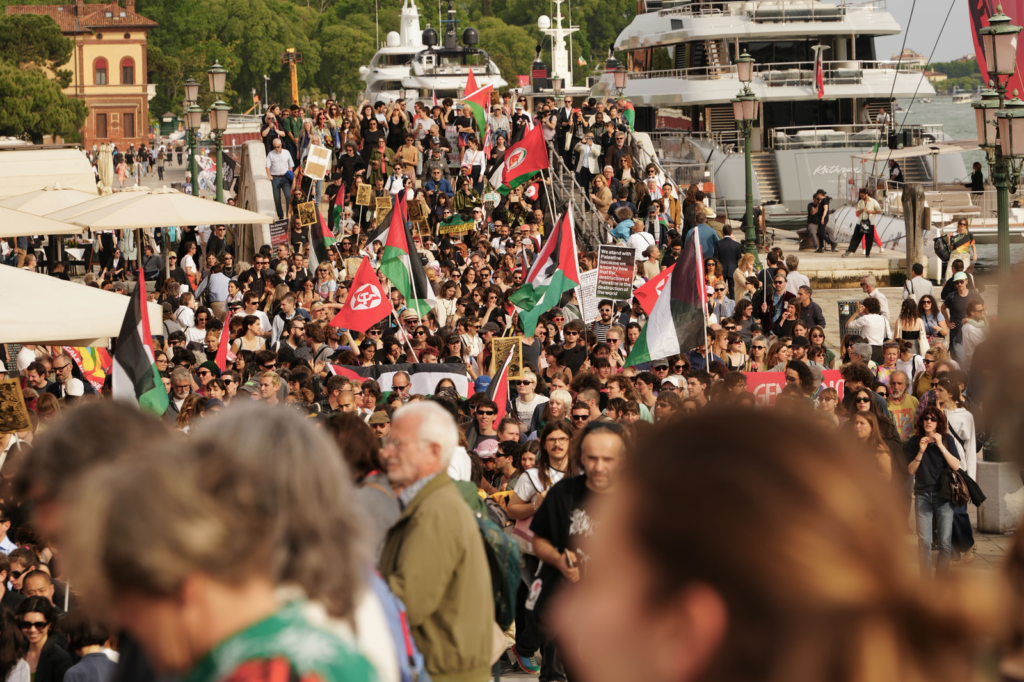
The mobilization comes just a month after a historic strike for Palestine and workers’ rights at the Venice Biennale on May 8, led by the Art Not Genocide Alliance (ANGA). The global collective has also signed onto this Friday’s action, along with cultural labor advocacy groups including Mi Riconosci?, Art Workers Italy, the Italian Association of Museum Educators, Sale Docks, and Biennalocene.
Building on the Biennale protest that shut down nearly 30 national pavilions and led hundreds to march in opposition to Israel’s pavilion in the Arsenale Complex, the upcoming June 12 strike expands to include all arts and culture labor. From editorial workers and entertainment professionals to educators, associates, and museum maintenance staff, the cultural sphere is riddled with unsustainable wages and unstable gig work with limited social welfare protections.
In a statement to Hyperallergic, ANGA emphasized that the fight for labor rights and the struggle for Palestine “are not separate questions,” adding that the sector has real power when “artists, curators, and critics recognize themselves as cultural workers and move as a bloc with the attendants, ushers, installers, performers, and producers who make culture possible.”
ANGA said that the Biennale strike was “the most widespread in the event’s history,” and noted that June 12 is a chance to escalate the movement to a national reach.
The strike’s demands, listed in detail under the tagline “Vogliamo Tutt’altro” (English: “We want something else”), call for dignifying, stabilizing, and properly compensating cultural labor; establishing physical and social safety mandates to protect workers from injury, discrimination, and exploitation; securing universal welfare benefits for health and pensions; and ensuring freedom for cultural workers to “express dissent and mobilize against the war economy.”
ANGA said that the strike didn’t emerge from thin air, and nodded to grassroots organizations, cultural spaces, and collectives across Italy that have resisted “political attacks, economic pressures, and the persistent lack of support from the cultural institutional sector itself.”
Addressing the Venice Biennale’s connection to labor rights, striking groups stated that Israel’s inclusion in the show amid an investigation into war crimes is not an isolated incident; rather, it is “fully part of a model of economic recovery based on war, the militarization of the economy, and the devaluation of labor.” A reference was also made to Italy’s target to allocate 5% of its GDP to defense spending by 2035, as agreed at the 2025 NATO Summit.
Many have been critical of Italy’s increased military spending as the nation barrels towards first place for the most debt accrued out of any Eurozone country.
In calling for additional defense funding to be diverted to the welfare system and the cultural sector, the strike organizers stated that “investing Italy’s limited resources in armaments undermines access” to art and culture, which they say is a right for all citizens alongside healthcare and education.
“June 12 is the next step in a sustained effort to bring political praxis into the foreground of making culture, making art, and making space,” ANGA left off.