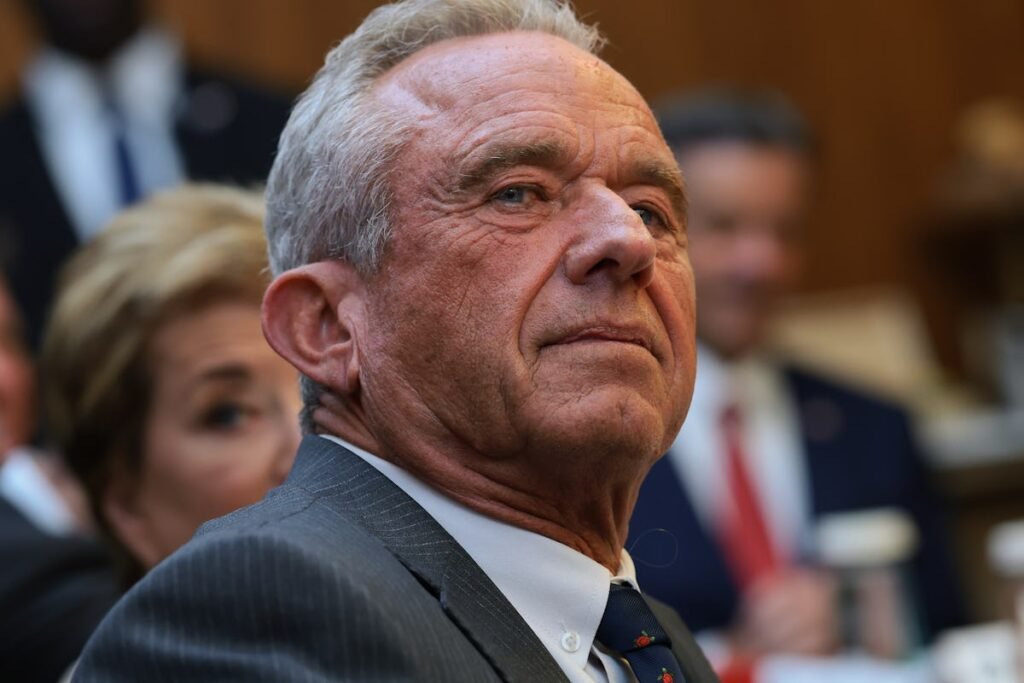
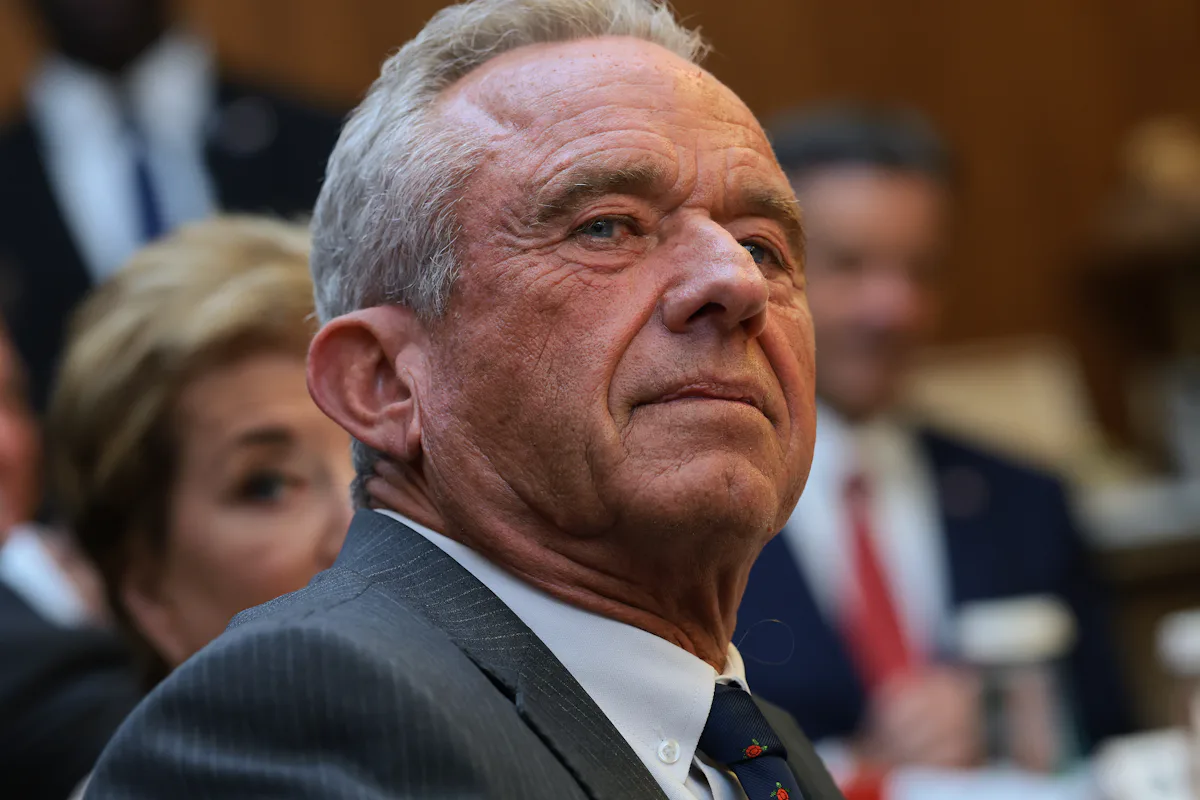
Measles cases have been steadily rising in the U.S. over the past two years since Health and Human Services Secretary Robert F. Kennedy Jr. took office. There were 285 cases confirmed nationwide in 2024, but that number jumped to 2,289 in 2025, and 2,371 so far in 2026 (the highest number of cases in 35 years). Since his appointment, Kennedy has made many changes to the childhood vaccine guidelines, including those for the measles, mumps, and rubella (MMR) vax. So it was a notable shift when, in a recent interview, he urged parents to vaccinate their children against measles — a major reversal of all his previous campaigns against childhood vaccination.
So far in 2026, measles cases have been reported in 45 states, and more than 90% of the people who fell ill were unvaccinated or of unknown vaccination status, according to the CDC. Roughly half were children ages 5 to 19. Health officials fear the U.S. is on pace to lose its measles elimination status, held since 2000, this fall.
During an interview on CNN’s State of the Union, host Dana Bash asked Kennedy if he would tell parents to vaccinate their children for measles before they return to school. Cases tend to spike after seasons of high travel when people return to communal places like work and school: think spring break, holidays, and yes, summer vacation.
“I will say it right now, that people, parents should get their children vaccinated for measles. A measles vaccine is effective. It stops measles in about 97% of the cases. So, people should get vaccinated,” he said. He later added, “I have never questioned the efficacy of the MMR vaccine.” And when asked whether he took any responsibility for the skyrocketing number of measles cases, he said: “Absolutely not.”
Instead, he pointed the blame at religious communities who refuse MMR vaccination as the source of the outbreak. Separately, Kennedy has amplified a related bit of misinformation: While speaking at a town hall in May 2025, he suggested the MMR shot contains aborted fetal cells and DNA. It does not.
Beyond his encouragement for parents to vaccinate their kids against measles, Kennedy’s interview with Bash was more of the same. He repeated the debunked claim that Tylenol use during pregnancy causes autism, and also tried to cast doubt on the efficacy of the COVID-19 vaccine’s ability to protect children from the virus.
When Bash pushed back, Kennedy said, “You probably don’t understand this because you’re not a scientist.” She responded, “Well, you’re not either.”
A vocal vaccine skeptic for years before his appointment (he is the founder of Children’s Health Defense, an anti-vax advocacy group), once he took office, Kennedy pushed out top CDC officials and dismissed 17 long-time members of the Advisory Committee on Immunization Practices (ACIP), the panel that sets the childhood vaccine recommendations. ACIP was once made up of medical experts and vaccine scientists, but they were replaced with officials hand-picked by Kennedy who shared his vaccine skepticism.
In March 2025, Kennedy said during an interview that measles vaccination should be a personal choice and that the vaccine’s effectiveness had waned in recent years, which experts refuted. When measles cases began to rapidly increase that month, Kennedy wrote in an op-ed that vitamin A can reduce the risk of dying from measles, leading to a cluster of unvaccinated kids in Texas who required treatment for vitamin A poisoning.
In July 2025, the American Academy of Pediatrics sued Kennedy and HHS for his purge of ACIP and his changes to COVID-19 vaccination recommendations for children and pregnant people. By September, Kennedy’s ACIP had changed the federal MMRV vaccine guidelines too. Previously, the CDC recommended babies get their first MMRV vaccine between the ages of 12 and 15 months, and a second time between ages 4 and 6. The new guideline was not to give the combined vaccine before age 4 at all, instead giving the MMR and varicella separately. A federal judge ordered the reversal of the CDC’s new guidance in favor of the former AAP-approved recs in March of this year, but the fight for the final word is not over.
Later in CNN’s State of the Union, Dr. Ashish Jha, a former White House COVID-19 response coordinator, laid responsibility for the sharp rise in measles cases back at Kennedy’s feet. “The administration has not done enough to promote vaccines. It has not done enough to highlight the harms that come from measles.”
As Scary Mommy previously reported, the AAP recommends the first dose of the MMR or MMRV vaccine be given between 12 and 15 months of age, and a second between 4 and 6 years of age. Roughly 95 out of every 100 people will be protected from measles infection after getting their first dose, and two doses protect 97 to 99 of every 100 people from infection. The organization emphasizes that vaccination is a far safer way to provide immunity to a child than by letting them get a measles infection.