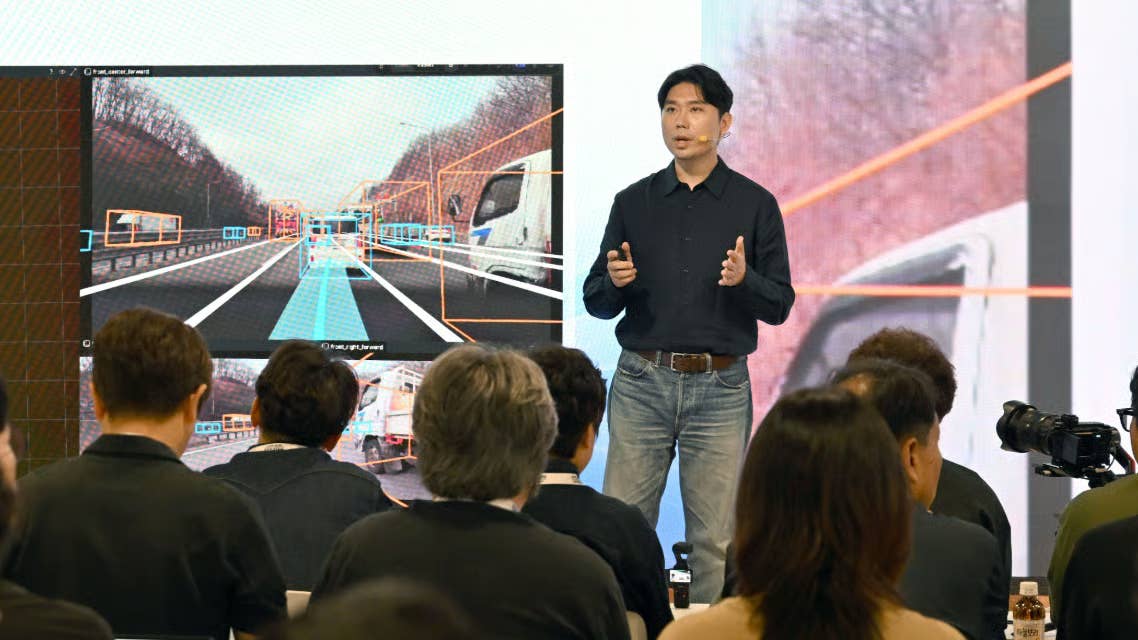
Hyundai and Kia together sell more than seven million vehicles a year, making them the world’s third-largest carmaker. Now, it wants to use that global fleet as a potential data-collection machine for the company’s long-delayed push into advanced driver assistance. The idea is simple: millions of cars driving millions of miles across different countries give the AI systems millions of opportunities to encounter the weird, unpredictable situations that make up real-world driving scenarios. It’s also remarkably similar to the strategy Tesla has used to develop Full Self-Driving.
Hyundai’s Tesla-Challenging Tech Is Already Late
Hyundai
The problem for Hyundai is that its data flywheel isn’t fully operational yet. The Korean’s own driver-assistance software now arrives in late 2029, two years behind the original 2027 proposed rollout, according to a report from Reuters. Tesla already sells an arguably mature consumer product. To bridge the gap, Hyundai is bringing in Nvidia to help it roll out Level 2+ and Level 2++ self-driving in 2028. The first handles highways; the second is for relatively messier city driving, like Tesla’s Full Self-Driving currently does, though both still need a human watching the road. Hyundai insists the deal doesn’t hand Nvidia the wheel, figuratively speaking, since Hyundai will co-design the tech.
Taking A Page Out Of Tesla’s Full Self-Driving Playbook
Hyundai
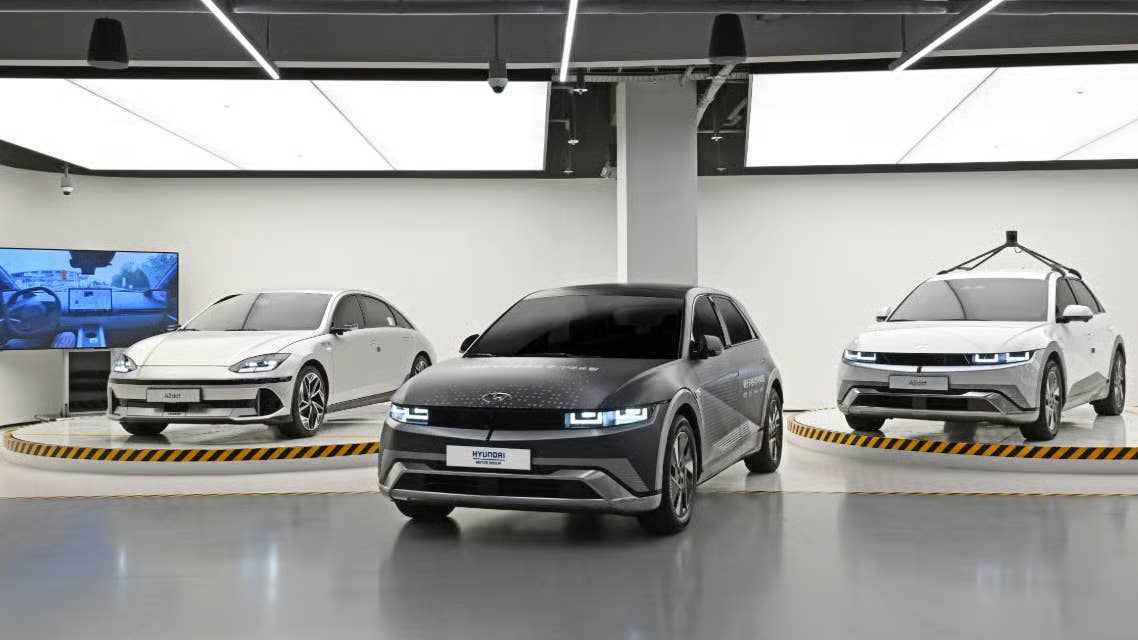
Hyundai says the first Nvidia-powered systems will use cameras, radar and ultrasonic sensors, without LiDAR. That is closer to Tesla’s camera-led FSD, though it stops short of going camera-only. LiDAR is on the table for Hyundai, for Level 3, where the car does more of the heavy lifting, so the extra sensors act as a safety net. Hyundai is basically hedging its bets on less expensive systems that do the job at the moment, ready to call in the more expensive LiDAR tech when the situation calls for it.
The sheer volume of driving data Hyundai is hoping to leverage comes with caveats. It must be collected from connected cars, cleaned, labelled, and fed into the AI driving systems training. Clearly, volume is the raw material, not the finished product. Tesla and even Chinese rivals have been doing this for years, and Hyundai’s 2033 target to “beat” them on driving data admits that it’s trailing today. Ultimately, Hyundai isn’t just trying to build a Tesla rival, it’s trying to build the data engine that it believes can eventually result in one.