The art world Olympics returns for another season of political drama and nationalist angling for domination. This is one of the only times that the grotesque machinations of the global art ecosystem come into full focus, as artists no longer hide behind vague, theoretical ideas like “liminal spaces” and the world of art is splayed out for all to see.
The Venice Biennale is the world’s first art biennial, and it’s the reason your obnoxious art friend and that one culture vulture you know says “BI-en-NAH-le” and not “biennial” like most other humans to refer to cultural events that take place every two years. The Italian term has become the lingua franca of global art snobs — with the exception of a few of these gatherings, including the Whitney Biennial, which Americans still insist on calling by its English name, and the São Paulo Bienal, for which Brazilians do the same.
The Venice Biennale is divided into three categories. The Giardini is the most prestigious venue and includes 29 permanent national pavilions and a main exhibition space. The Arsenale is a temporary exhibition space that countries rent rather than own, and usually houses dozens of other countries, including powerhouses like China, India, Argentina, Mexico, Saudi Arabia, Turkey, and even Italy, which does not have a permanent site in the Giardini. Collateral events, including some national pavilions, take place in other venues throughout the city and the neighboring islands. The main exhibition, In Minor Keys, takes place at both the Giardini and the Arsenale.
The big news at the 2026 Biennale is that various countries that have boycott campaigns organized against them will be represented with no limitations. Though it’s worth noting that South Africa withdrew its participation after a decision to cancel “Elegy,” a video installation by Gabrielle Goliath, as its pavilion selection. That artwork, which mourns victims of Israel’s genocide in Gaza, will be a must-see — it’s on display at the Chiesa di Sant’Antonin in Castello, a historic church dating back to the seventh century.
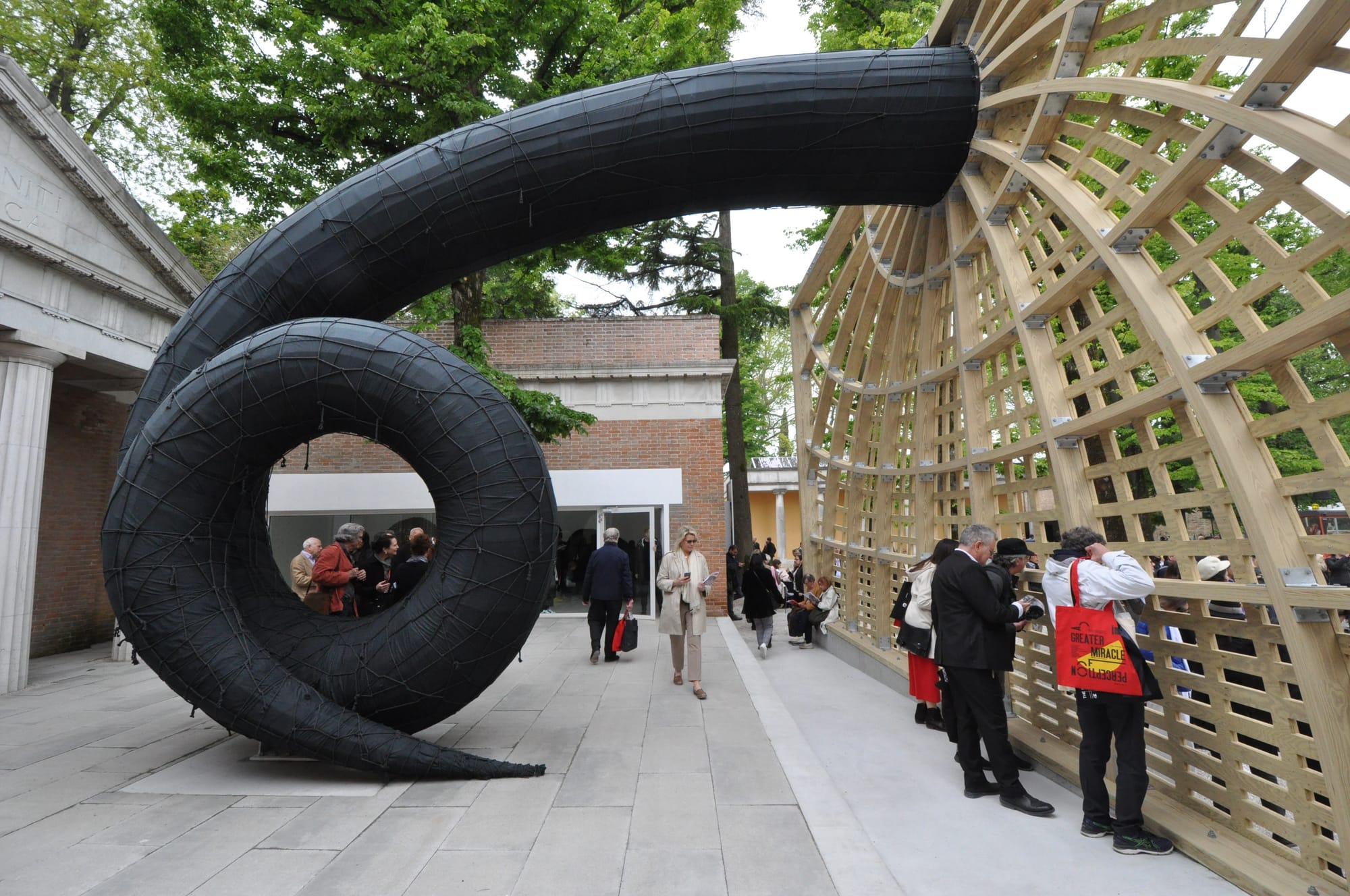
Russia will be returning to the Giardini, where it has a permanent pavilion (first opened in 1914 at the 11th Venice Biennale), while Israel will return with a new contractual stipulation that Belu-Simion Fainaru, its representing artist, can’t close the pavilion, like artist Ruth Patir kinda did back in 2024. But this year, Israel will be staging its display at the Arsenale as their Giardini pavilion, which is kissing cousins to the United States’, will be closed for renovation. History geeks may be interested to know that the US pavilion is the only privately owned national pavilion in the Giardini. Originally constructed in 1930 by the nonprofit artists’ cooperative Grand Central Art Galleries, its ownership was later transferred to the Museum of Modern Art in 1954, and then to the Guggenheim Foundation in 1986, which still owns the site and works with the US government to stage the perennial exhibitions.
This year, the US will be represented by Alma Allen, after Barbara Chase-Riboud bowed out, because, she told the Financial Times, “For me, as a world citizen, this was not the moment.”
Last year, it was announced that Qatar, a small country of just over 3 million people, will be the first country to build a new pavilion in the Giardini, which was a surprise to many, considering China, India, and other much bigger cultural juggernauts have yet to do so. The last two to build in the Giardini were Australia and South Korea, roughly 40 and 30 years ago, respectively. The pavilion is the latest wave of the soft-power push by the Persian Gulf nation for global relevance as they try to transition away from a fossil-fuel-focused economy to a wider range of services and industries.
First-time participants with official national pavilions will be the Republic of Guinea, Republic of Equatorial Guinea, Republic of Nauru, Qatar, Republic of Sierra Leone, Federal Republic of Somalia, and the Socialist Republic of Vietnam — though Qatar is a special case, as it has hosted collateral events before, and as mentioned earlier, already has a permanent pavilion in the works. Meanwhile, El Salvador will be participating for the first time with its own dedicated pavilion.
Here is a summary of what you need to know:
In Minor Keys at the Giardini and the Arsenale
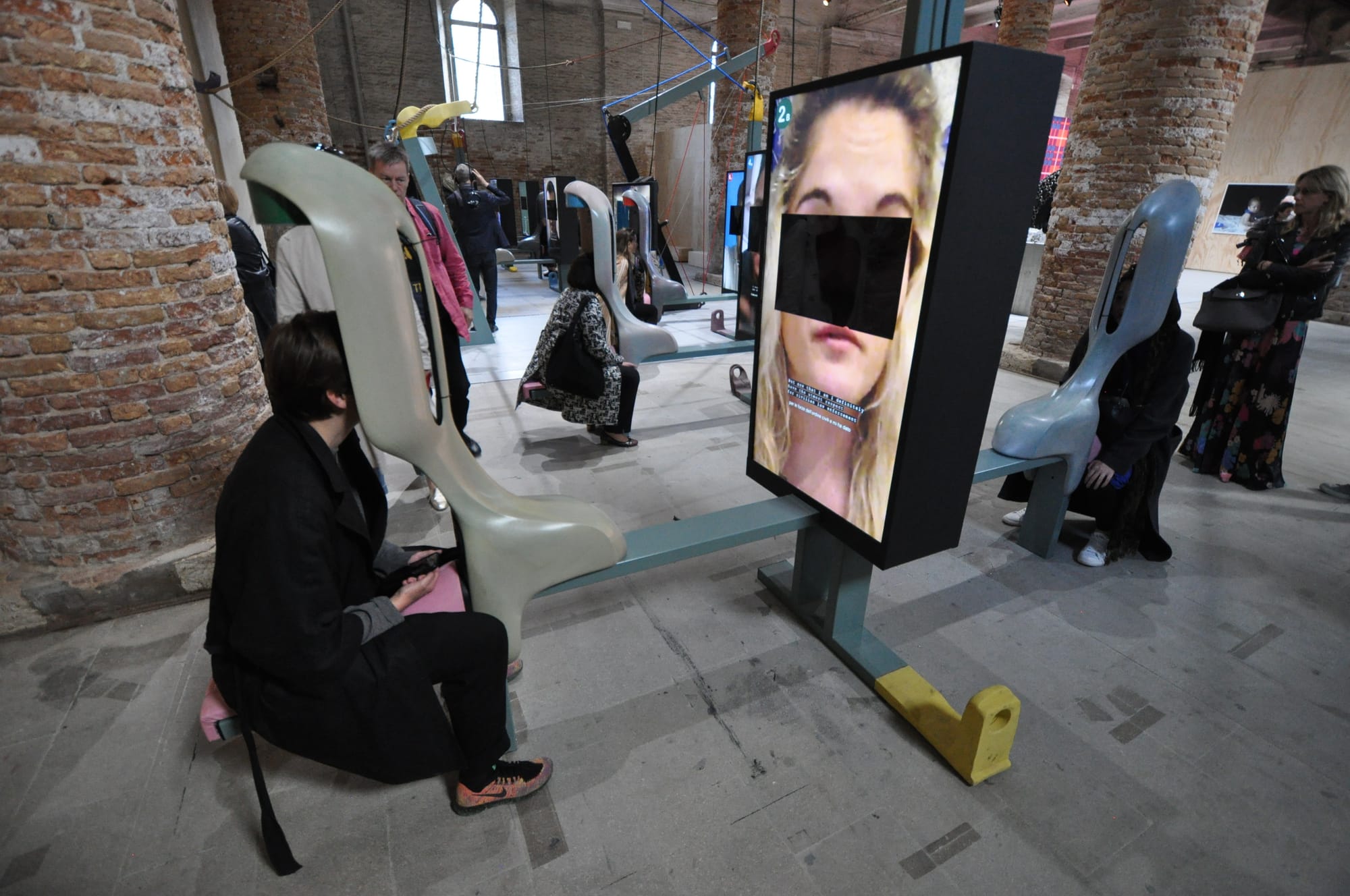
The death of curator Koyo Kouoh last year raised questions about her role in the current biennale, as she was picked to lead the exhibition in 2024. But the show must go on, and her friends and colleagues rallied to save the vision of the first African woman tapped for the plum art world post. The exhibition, In Minor Keys, is a moment, according to artist Rashida Bumbray, for solidarity among Trans-Atlantic Black and African communities. She mentions that Kouoh’s curatorial texts, created before her passing, explicitly cite the work of Patrick Chamoiseau, Toni Morrison, James Baldwin, and Édouard Glissant, all Black diasporic writers, as inspiration. The exhibition was realized with contributions by a team selected by Kouoh that includes Gabe Beckhurst Feijoo, Marie Hélène Pereira, and Rasha Salti (advisors); Siddhartha Mitter (editor-in-chief); and Rory Tsapayi (research assistant). It features 110 artists and collectives, including arms ache avid aeon, Alvaro Barrington, Beverly Buchanan, Maria Magdalena Campos-Pons & Kamaal Malak, Nick Cave, Annalee Davis, Nolan Oswald Dennis, Edouard Duval-Carrié, Linda Goode Bryant, Alfredo Jaar, Wangechi Mutu, Kambui Olujimi, Ebony G. Patterson, Walid Raad, and Issa Samb.
In the latest twist to the “Art World Olympics,” the international judges of the coveted Golden Lion — the Venice Biennale’s highest honor — just declared that they “will refrain from consideration of the National Pavilions of those countries whose leaders are currently charged with crimes against humanity by the International Criminal Court.” They explain that they “have a responsibility towards the historical role of the Biennale as a platform that connects art to the urgencies of its time … [and that they] wish to set out our intention – to express our commitment to the defense of human rights and to the spirit of Koyo Kouoh’s curatorial project.”
Short List of National Pavilions
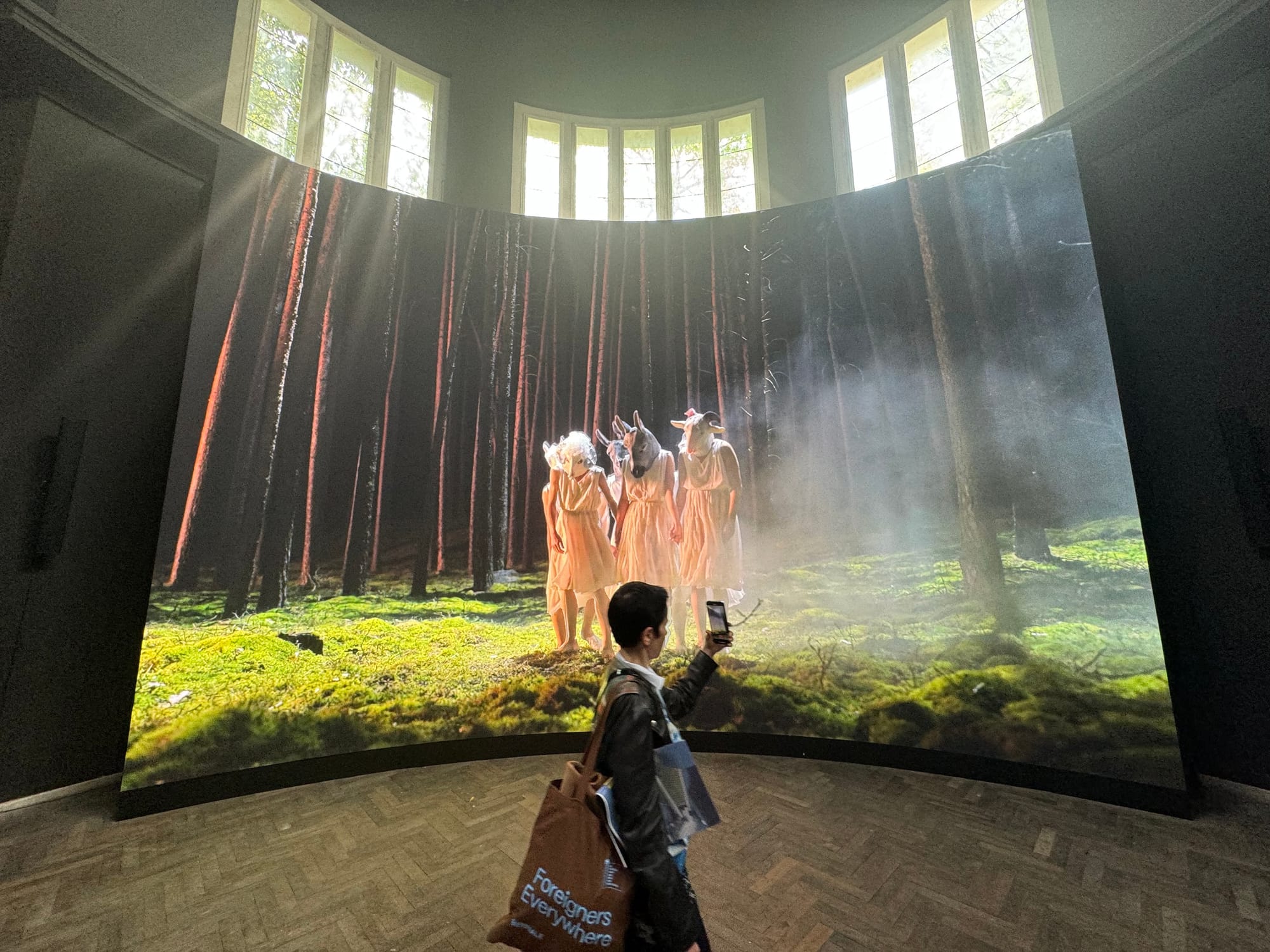
Khaled Sabsabi will represent Australia with a project that the artist calls a “poetic inquiry into spiritual and mundane journeys amidst commonality and difference,” while Canada will be represented by Abbas Akhavan, and Great Britain will present Lubaina Himid, who will explore “the nature of belonging and how to make a home in the new place.” And the newly renovated pavilion of France is showing Yto Barrada, whose Comme Saturne is planned as an “immersive installation where textiles serve as a language for exploring memory, time, and metamorphosis.”
Germany will feature Henrike Naumann and Sung Tieu in Ruin, where “physical and social structures, German ideologies, and lived biographies tangibly overlap, bringing architecture, history, and psychology into productive tension” — which sounds like the most German Germany pavilion ever.
Adriana Varejão and Rosana Paulino are representing Brazil, and promise to challenge conventions by taking as “its starting point and state of mind” the “syncretic and ambiguous characteristics of the plant popularly known as comigo-ninguém-pode.” For Argentina, artist Matías Duville has created a massive drawing from charcoal and salt that “transforms as visitors walk across it, integrating their movement as part of its meaning.” And for Uruguay, artist Margaret Whyte will focus on the “concept of antifragility,” developed by Nassim Taleb.
China is taking a group show approach and will feature dozens of artists in its Dream Stream exhibition at the Arsenale, while India is showing an exhibition curated by Amin Jaffer that explores home not as a fixed place, but as a shifting emotional, sensory, and memory-based space, featuring artists Alwar Balasubramaniam, Sumakshi Singh, Ranjani Shettar, Asim Waqif, and Skarma Sonam Tashi.
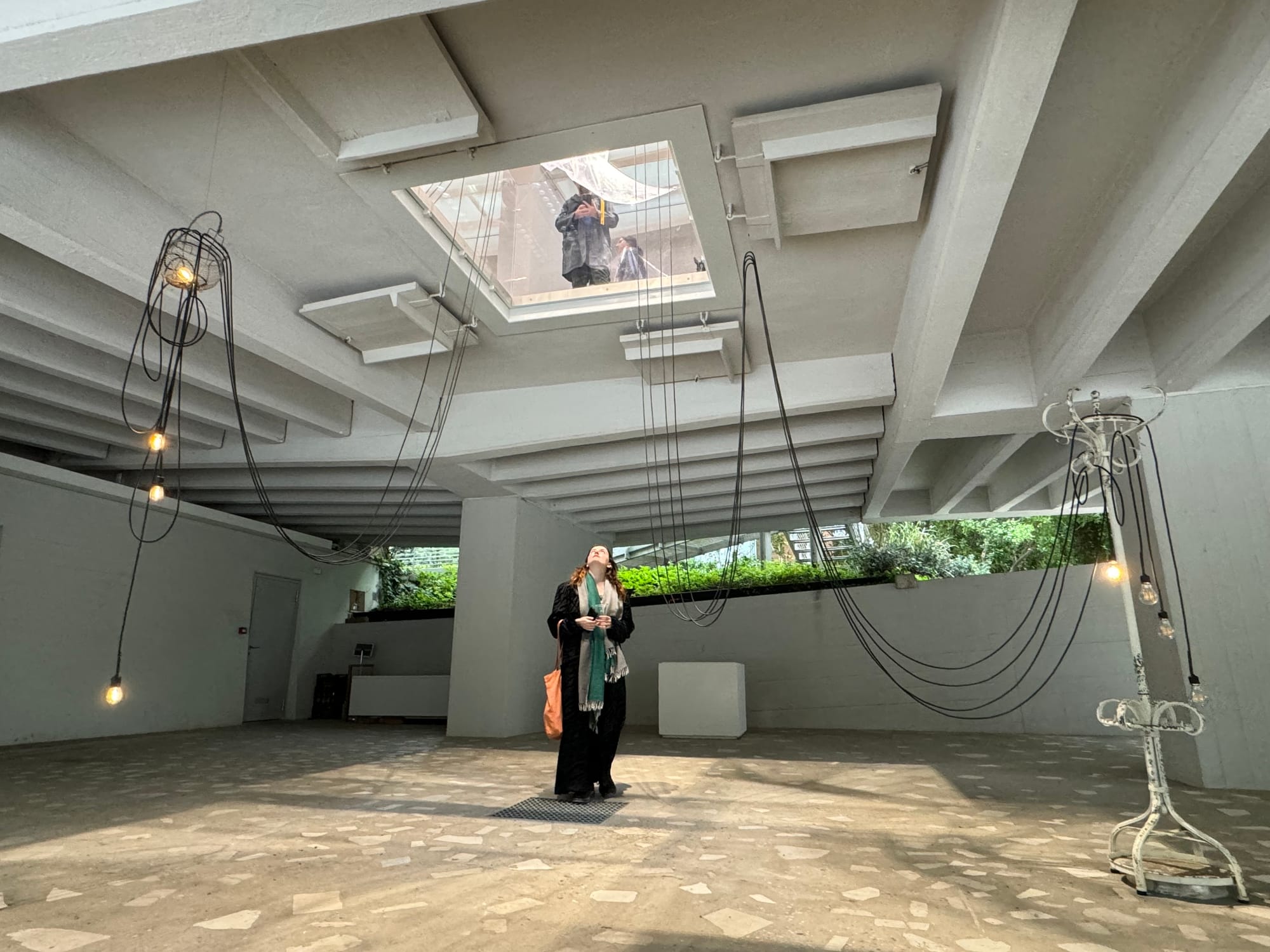
Meanwhile, Egypt is showing sculptor Armen Agop, Japan is exhibiting Ei Arakawa-Nash, and Mexico will feature artistic collective RojoNegro, who will deal with themes that include ancestral memory, epistemic justice, decolonization, and relational ecology.
The Netherlands will show Dries Verhoeven in the first time the country is represented at the Biennale Arte with a performance, also the first time the “Dutch Pavilion itself becomes an integral part of the artwork.” And artist Florentina Holzinger is representing Austria with the best title of any show, Seaworld Venice, which will use “water creatures from mythological and classic tales … [as] starting points for immersing into a possible future of Venice.”
Further east, Russia is doing a group show titled The Tree Is Rooted in the Sky, Saudi Arabia will show Dana Awartani’s May your tears never dry, you who weep over stones, Türkiye’s Nilbar Güreş has put together a show titled A Kiss on the Eyes, and Ukraine is showing Zhanna Kadyrova.
Iran hasn’t officially said who or what they will be exhibiting in their national pavilion, but they do appear to be participating. Venezuela, which has a permanent pavilion in the Giardini, does not appear to be participating this year, though Venezuelan artist Álvaro Barrington will take part in In Minor Keys.
Qatar’s debut showing will take place in a tent in the Giardini — on the site of their future permanent pavilion — and it will be showcasing a lot of artists with no or thin Qatari connections, including Rirkrit Tiravanija, Sophia Al-Maria, Tarek Atoui, and Fadi Kattan.
Other Events
Gabrielle Goliath will independently present three new suites of her performance project Elegy, which mourns victims of Israel’s genocide in Gaza, after her eponymous proposal for the South African Pavilion was notoriously axed. “Palestinian lives will be grieved,” declared a press release from the artist’s team. The event will take place at the Chiesa di Sant’Antonin in Castello.
* Gaza – No Words – See the Exhibit is staged by the Palestine Museum in the United States. It will show the “Gaza Genocide Tapestry,” a collective cross-stitched testimonial that refuses to let the world forget what is being done or to whom.
The Pinault Foundation has two large Venetian spaces. At the Punta della Dogana, they will be exhibiting an exhibition on Lorna Simpson organized in collaboration with the Metropolitan Museum of Art, the American artist’s first major European survey, and another on Paulo Nazareth, which will show 20 years of the Brazilian artist’s output. Meanwhile, at Pinault’s Palazzo Grassi, they will show Kenyan-British artist Michael Armitage’s The Promise of Change, which will include 150 artworks, and Co-travellers, an exhibition by India-born Amar Kanwar, an artist known for using archival documents and testimonies, as well as poetic imagery, to create multi-layered narratives.
At Ca’ Pesaro, the city’s modern art museum, there will be a survey of Jenny Saville, the British painter’s first in Venice, and Natura morta, Natura viva (Still Life, Living Nature) by Giulio Malinverni, a local artist who has revived a tradition that flourished during the 16th and 17th centuries and involves painting on stone.
At the Prada Foundation, curator Nancy Spector has mounted Helter Skelter: Arthur Jafa and Richard Prince, which will explore both artists’ appropriation histories and their love of Marcel Duchamp.
And at the city’s renowned Gallerie Accademia, Marina Abramović’s Transforming Energy will mark the artist’s 80th birthday and hopes to establish “a profound dialogue between her pioneering performance art and the Renaissance masterpieces that have shaped the cultural identity of Venice.”