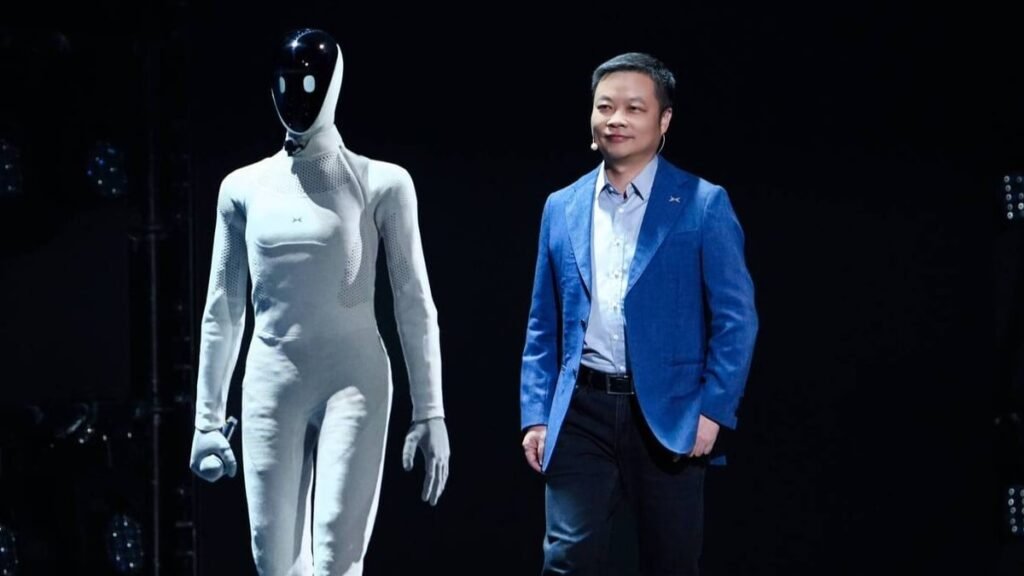

Doing laundry and washing dishes might shift from humans to humanoid robots faster than many people expect. Chinese electric car maker XPENG just unveiled its latest general-purpose humanoid robot, IRON, and believes machines like it could handle household chores within one to two years. First, though, IRON will start working inside XPENG’s car showrooms in early 2027.
XPENG introduced IRON in Guangzhou this week, along with a new control system called Turing Physical AI Architecture. According to CNBC, the automaker plans to start mass production in January 2027, train the robot as a store assistant in the first quarter, and open sales in the second quarter. Customer deliveries follow later in 2027, with home models depending on how well those store trials go.
How IRON coordinates movement
Inside its frame, IRON uses 76 degrees of freedom, more than 1,500 touch sensors covering over 80% of key body areas, and three in-house Turing AI chips. Its VLA 3.0 software connects sight, planning, and movement so the robot reacts quickly to what it touches. Co-President Brian Gu told CNBC that getting a robot to walk, answer questions, and use its hands at the same time without falling or losing focus is the hardest challenge.
Because XPENG already designs its own driver-assist chips, Gu said US limits on advanced Nvidia hardware have not slowed down its robotics plans. That self-reliance helped XPENG’s robotics unit raise $900 million at a $6.3 billion valuation this summer in a round led by IDG Capital. Gu also argued that robotics should become profitable much sooner than selling electric cars.
Investors stay cautious for now
Still, investors remain cautious even as XPENG expands into humanoids and personal flying vehicles. Slow demand in China’s electric car market has dragged XPENG’s shares in New York and Hong Kong down more than 55% this year. Chinese regulators have also tightened oversight on humanoid startups after Unitree’s rocky stock debut and growing questions over whether the technology works reliably outside demos.
Putting IRON to work inside busy car dealerships will quickly test whether it can handle everyday questions and tasks. If it gets through those store shifts without stumbling, home versions could arrive within a couple of years. Until then, shoppers visiting XPENG showrooms next spring might find a humanoid greeting them at the door.
The post Humanoid Robots Could Be Doing Your Laundry and Dishes Within Two Years, XPENG Says appeared first on Android Headlines.
