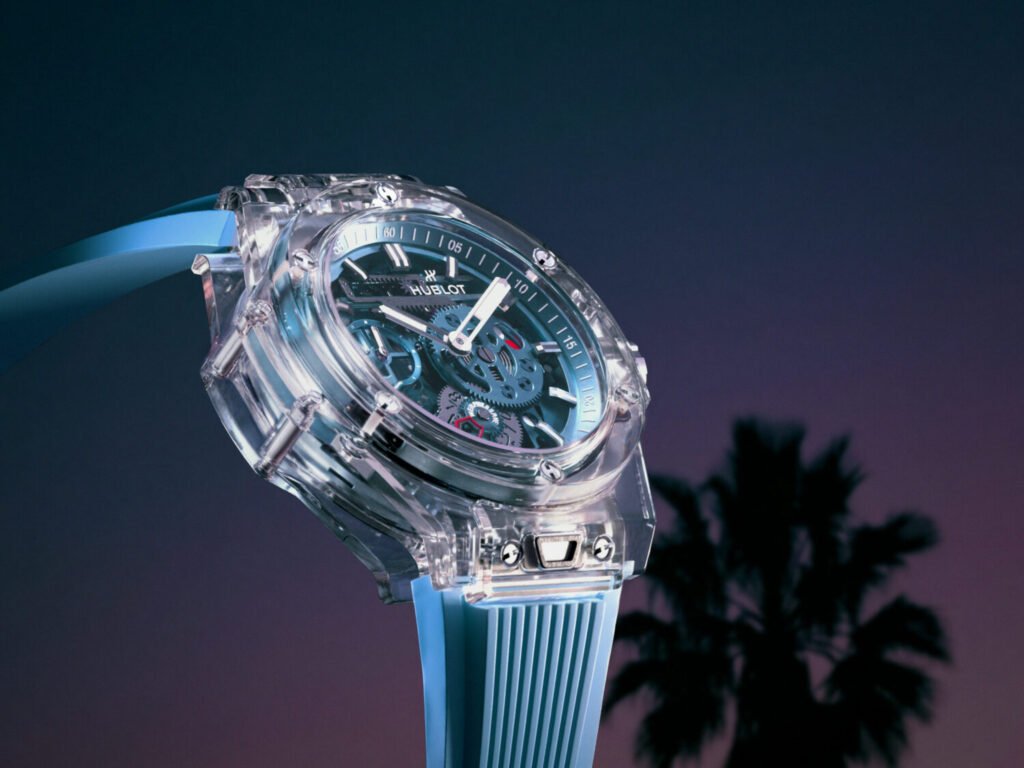
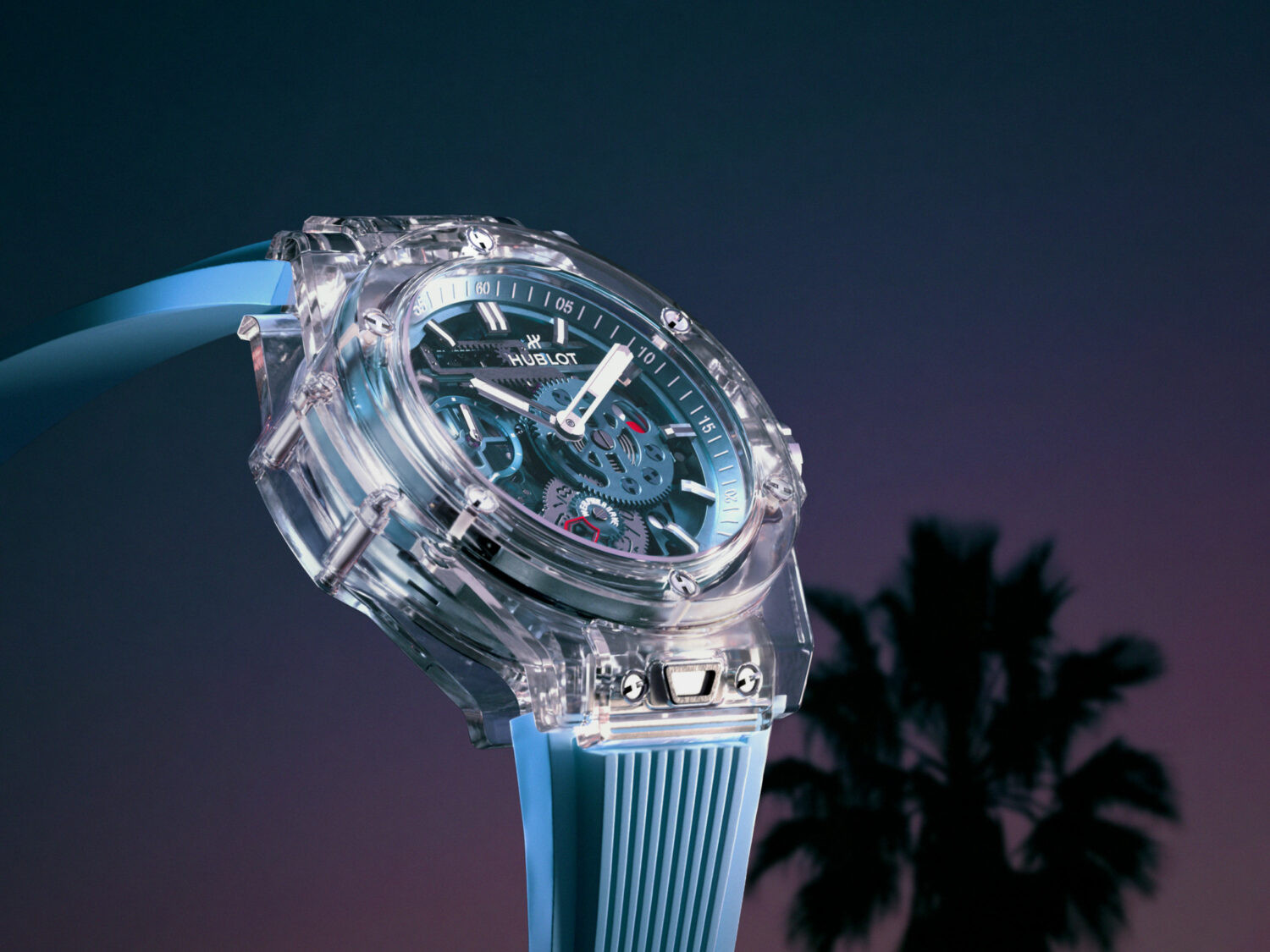
Loud, colorful statement watches tend to arrive with summer, but vivid color has also become increasingly visible across the watch world. Industry heavy hitters have embraced brighter palettes, including Rolex with its multicolored Jubilee-motif Oyster Perpetual 36 and the recent Audemars Piguet x Swatch collab. The Hublot Big Bang Sapphire Sky Blue fits neatly into that landscape, while building on the brand’s decade-long experimentation with color and transparent materials.
Photography courtesy of Hublot
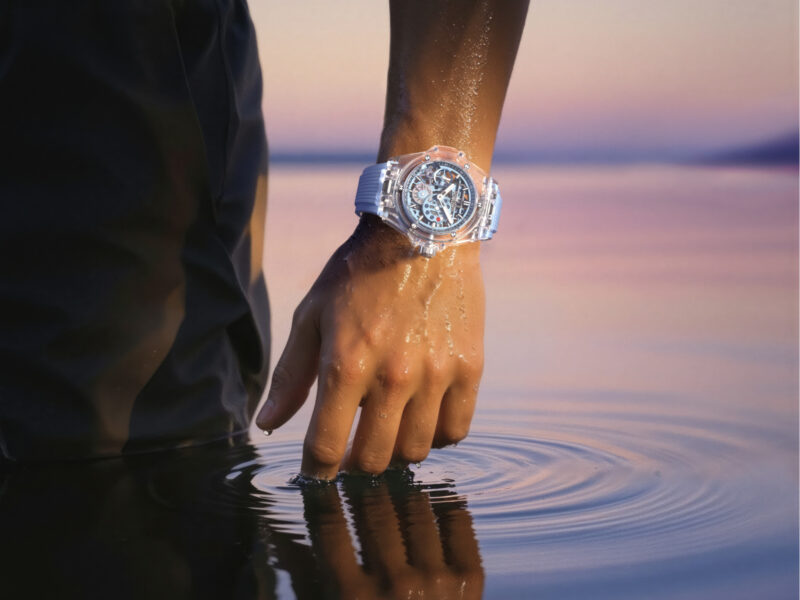
For the past 10 years, Hublot has made sapphire-cased watches a significant part of its material experimentation. Where the material presents significant challenges in machining and finishing, Hublot has made those technical constraints a recurring part of its design language. The brand has released numerous sapphire-cased timepieces, including several pieces using colored sapphire. With its latest addition to the sapphire arsenal, Hublot returned to clear sapphire with the new Big Bang Sapphire Sky Blue, released in July and limited to 100 pieces globally at $84,300.
Photography courtesy of Hublot
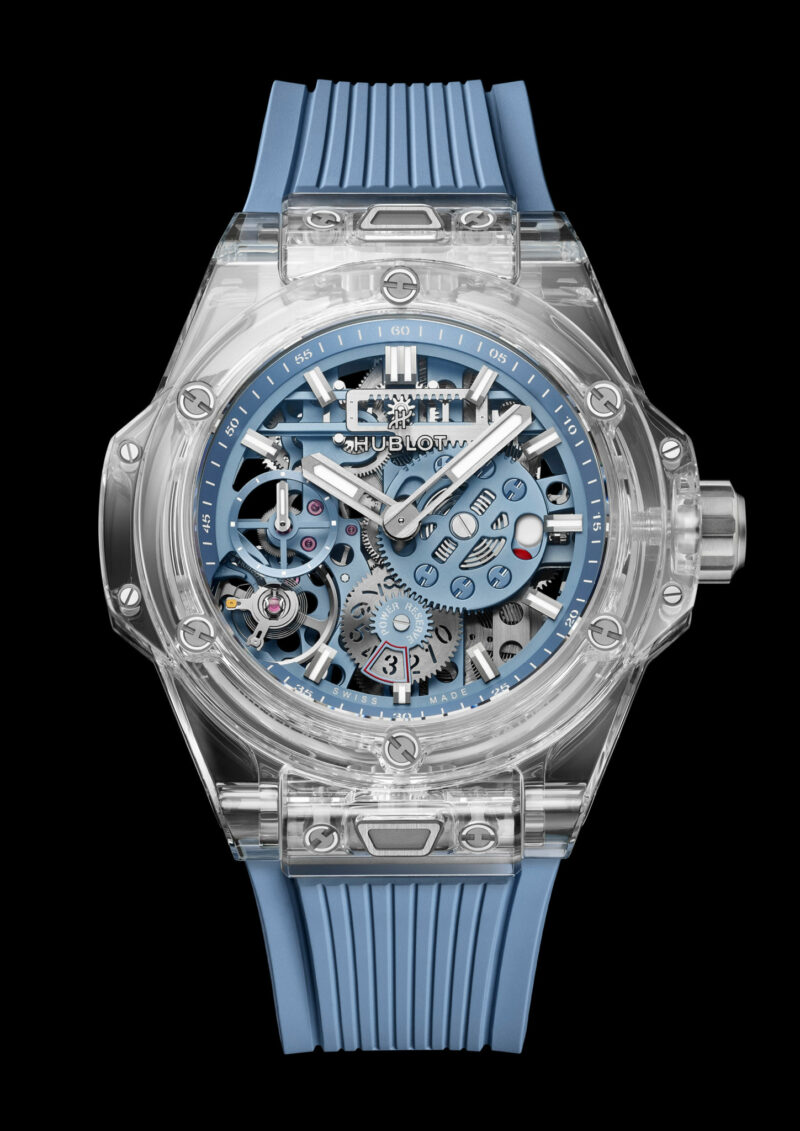
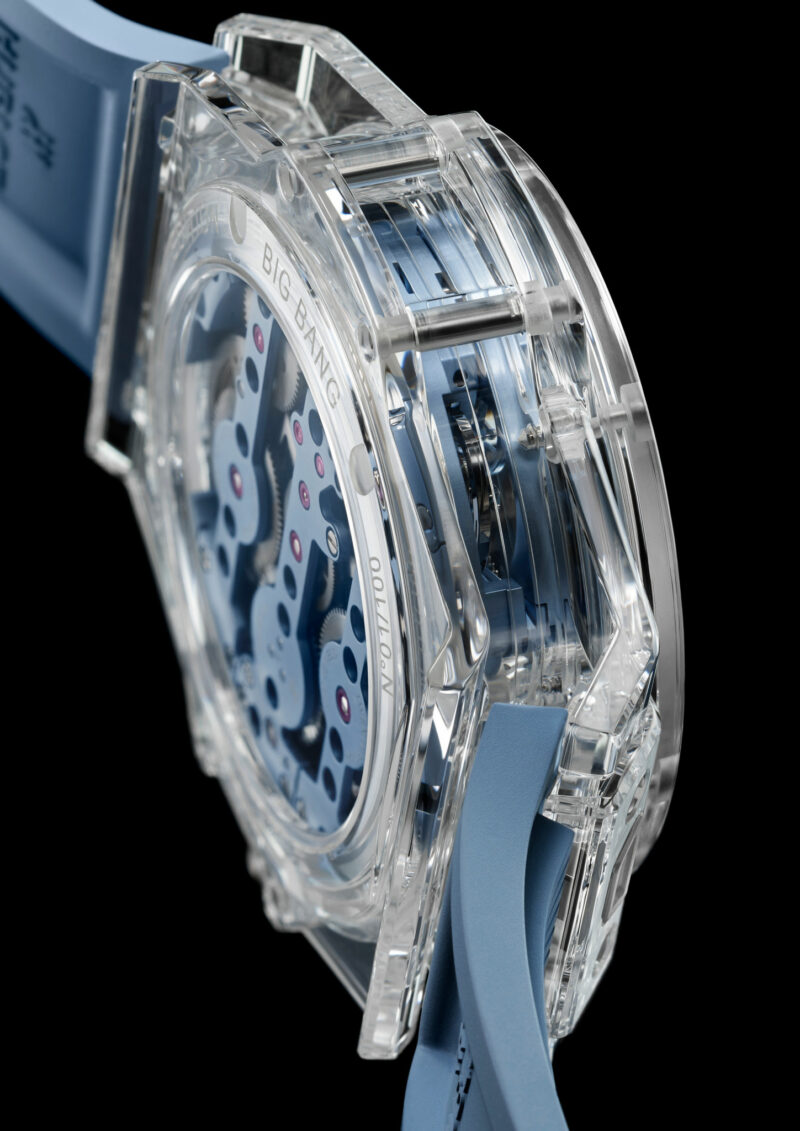
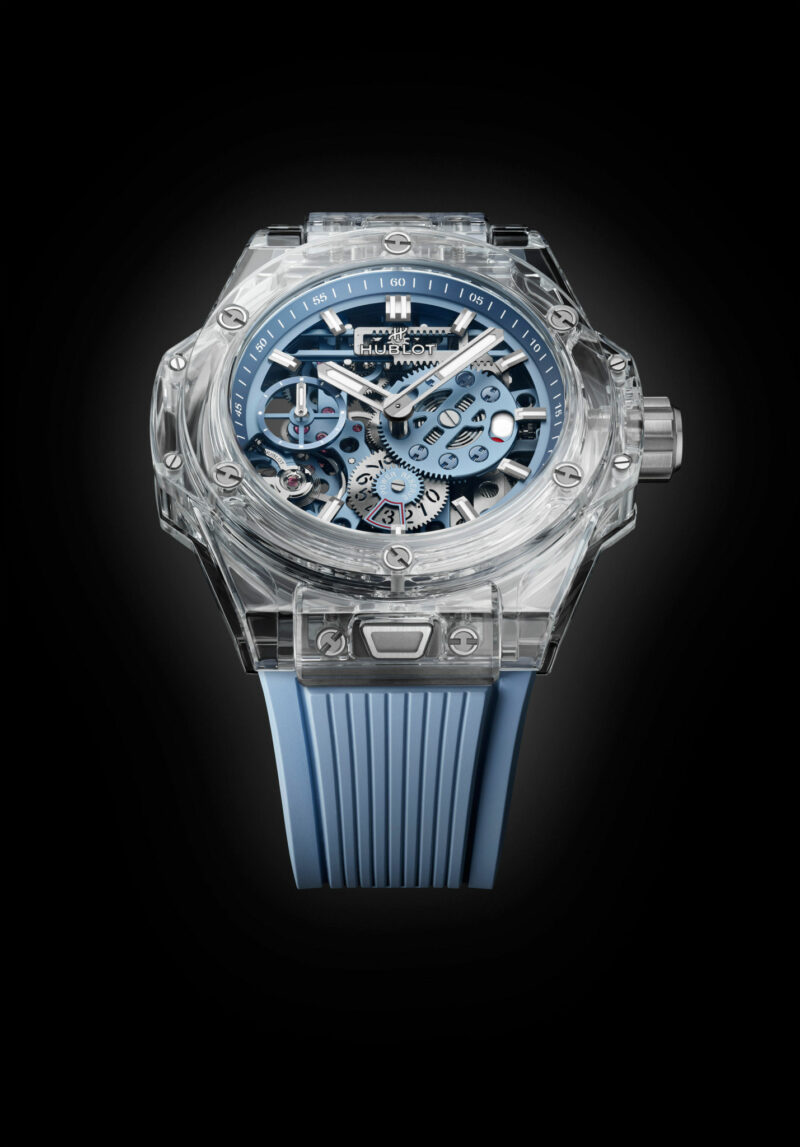
This latest release centers on the brand’s distinctly complex Big Bang multi-piece case, with its construction fully visible through the transparent material. The 44 mm clear case is paired with a structured sky-blue rubber strap, and thanks to the brand’s quick-release system, owners can swap to a variety of alternative straps at the push of a button without tools.
Powering the watch is Hublot’s Manufacture HUB1201 Meca-10, a manually wound movement whose skeletonized architecture draws on mechanical construction systems. Its 223 components include two parallel mainspring barrels that deliver a 10-day power reserve, along with a rack-and-pinion system that creates the movement’s distinctive dual power-reserve display. Rather than relying on a conventional dial to carry the color, Hublot pairs a matte sky-blue skeleton dial with matching movement bridges, making the mechanics part of the color story rather than hiding them behind a conventional dial.
Photography courtesy of Hublot
This new version of the Meca-10 offers a sharp visual contrast to its counterparts: Nearly all other Meca-10 models are finished in shades of black, gray, and gold, giving them a more austere, almost brutalist aesthetic than the Big Bang Sapphire Sky Blue.
Pairing the sky-blue dial and movement bridges with a clear rather than tinted sapphire case also sets the watch apart from other models in Hublot’s current lineup. The Big Bang Unico Water Blue Sapphire, for example, features a light blue-tinted sapphire case and a silver skeletonized movement. Here, reversing that relationship shifts the color from the case to the watch’s inner architecture, with the transparent sapphire providing an unobstructed view.
Photography courtesy of Hublot
That combination brings together two threads Hublot has been developing for a decade: sapphire cases and the exposed mechanical architecture of the Meca-10, both of which the brand introduced in 2016. In the Big Bang Sapphire Sky Blue, the transparent case puts that architecture on display while the sky-blue dial and bridges give its individual components greater visual definition.