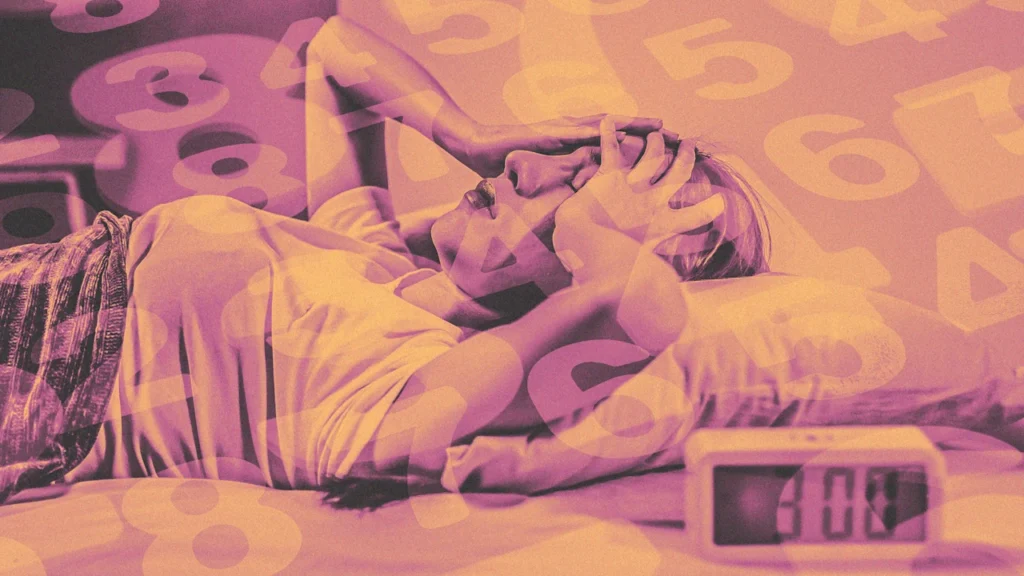
A tough economy, rising grocery bills, high gas prices, credit card bills, fears of layoffs: A 2025 survey of 2,000 adults from the American Academy of Sleep Medicine revealed that 78% of adults lose sleep to financial stress. That double whammy of financial stress and bad sleep can lead to a slew of health problems—as well as declining performance at work, which in turn could lead to actual (or even worse) money problems.
Insufficient or disrupted sleep affects every major physiological system, not just daytime energy levels, says Jennifer L. Martin, professor at Florida International University in Miami who specializes in sleep science.
“Individuals facing money-related concerns often experience heightened cognitive arousal at night, persistent worry, and stress, which interfere with the ability to fall and stay asleep,” Martin says, noting that this can lead to emotional instability and negative effects on both immune function and work performance.
“This creates a cycle where financial strain worsens sleep—and poor sleep further limits financial stability,” she says.
The stress becomes a cycle: As supported by research outlined in the Journal of Clinical Sleep Medicine, sleep loss reduces the capacity for complex decision-making and long-term planning, harming work performance and limiting career growth.
The money-stress spiral
“Clinically, insufficient sleep reduces sustained attention and increases the likelihood of errors, particularly in tasks requiring prolonged focus, which contributes to decreased concentration,” Martin says. (The bloodshot eyes, yawning, and dark circles aren’t the most professional look either.)
That’s why some companies are seeing this dual problem as an opportunity.
Sleep Cycle, an AI sleep technology company, and global fintech firm Revolut are attempting to address the issue of money problems keeping folks awake at night.
Sleep Cycle’s sleep tracking app uses your phone’s microphone to monitor sleep patterns, wakes you at an optimal point in your sleep cycle, and provides data on sleep quality. Revolut’s digital banking app allows users to open accounts, manage money, make payments, exchange currencies, and more. Paid members for Revolut’s app get Sleep Cycle’s premium subscription free. Additionally, users get an AI coach that analyzes their sleep patterns and pinpoints how certain stressors affect sleep over time.
The companies say the partnership is an effort to merge financial planning with sleep guidance to improve the link between financial wellness and sleep health.
“People’s sleep and finances are two things that are more connected than most people realize,” Erik Jivmark, CEO of Sleep Cycle, tells Fast Company. “Giving them premium sleep tools in the same plan means they don’t have to choose between investing in their financial wellness and their sleep wellness. Both matter, and the data shows clearly that they affect each other.”
Rest, an AI-powered sleep coaching app, uses cognitive behavior therapy techniques for insomnia. The company’s “Sleep Tax” Report shows that lack of sleep costs the U.S. economy up to $867 billion in lost productivity annually, impacting all sectors and levels of the workforce.
“Every Fortune 500 company is quietly losing hundreds of millions of dollars a year to their employees’ poor sleep,” Rest founder and CEO Martin Siniawski says. “Almost none of them are measuring it. The Sleep Tax puts a number on an invisible problem, because you can’t fix what you can’t see.”
Research shows that chronic poor sleep is linked to depression, anxiety, burnout, and workplace injury. Some 12% of U.S. adults meet the clinical threshold for insomnia. But with some guidance and intervention, sleep quality—and therefore work performance—can be improved.
Many people with mild sleep issues improve by sticking to regular schedules, reducing evening light, managing stress, and using digital resources. Clinically, better sleep boosts cognitive skills, emotional stability, and daytime performance, which can lead to increased workplace productivity and sharper thinking, Martin says.
“These improvements can translate into enhanced workplace productivity, clearer decision-making, and potentially better financial management,” she adds. “Early intervention, even without formal medical testing, can help break the cycle of poor sleep and its broader impact on quality of life.”