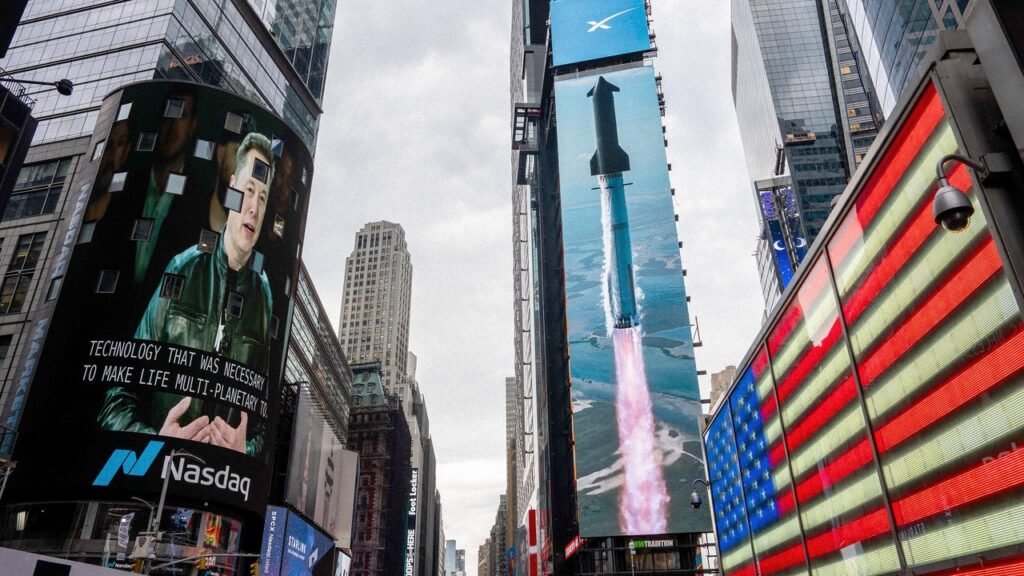
An initial public offering has its official functions—raising money, providing liquidity for equity-holding employees and early investors—but it has unofficial ones, too. The record-setting $1.77 trillion SpaceX IPO, whose valuation was partly pumped up by its artificial intelligence ambitions, just reminded us all of a big one: a blockbuster IPO can be a blockbuster branding event. No wonder the scramble to reap the publicity benefits of being seen as the next trillion-dollar-plus IPO started before SpaceX even launched its offering, and has only accelerated since.
We know the two main candidates for that milestone, because AI rivals Anthropic and OpenAI have already announced their intention to go public. Each did so this month, filing the relevant preliminary paperwork with the Securities and Exchange Commission right as the hype over SpaceX was cresting. Neither company offered much detail on actual potential timing (or pricing). There is speculation that Anthropic, which announced first, might go public in the fall, but specifics are vague. An OpenAI statement was even less forthcoming about timing: “It may be a while because there are things we want to do that are likely easier as a private company.”
That doesn’t sound particularly urgent. But in theory, the filings give each company an option if the market conditions look advantageous. And in practice, it keeps them in a conversation each wants to be a part of, jockeying with each other and various rivals (SpaceX included) for alpha status in what’s widely seen as the greatest technology revolution of a generation.
OpenAI’s who-is-Coke-and-who-is-Pepsi rivalry with Anthropic, founded by ex OpenAI employees, has become particularly keen as the two battle for top-dog reputation (and actual paying customers). And now their dueling demonstrates that merely announcing a potential IPO has reputational publicity value.
Of course, the IPO as a publicity tactic isn’t unprecedented. In the early decades of public markets, an initial offering was largely a quiet financial transaction covered in the financial pages. But that began to change in the 1980s, with a growing business media and the lionization of the CEO entrepreneur as a cultural idea. When Apple went public in 1980, for instance, it generated unusual public attention for its connection to technology, innovation, and creative ambition that captured the public imagination.
Then came the delirious dot-com era. Netscape, whose 1995 IPO is often cited as the starting gun for the internet boom, used its offering almost as a press release—a declaration about the future that commanded mainstream attention when its share price doubled on its opening day. Many dot-coms had negligible revenue and no clear path to profit, which meant the IPO wasn’t really a conventional financial marker. It was closer to a launch party. First-day trading pops became their own media events. This both fed, and was fed by, a growing market of retail investors who wanted to “get in” on the latest IPO.
Many of those companies went away, of course, but the publicity function of the IPO never entirely did. The 2000s and 2010s saw a more restrained version of the same dynamic, particularly around high-profile consumer technology companies. When Facebook went public in 2012, or when Uber filed in 2019, there was plenty of scrutiny (good and bad). Whether or not a given company intended it, the IPO had become one of the few corporate moments guaranteed to command public attention—a ritual that served the media ecosystem as much as the actual markets.
Lately, the AI sector has been building toward a wave of high-profile IPOs that arguably carry the sort of cultural weight the dot-com listings did. These days, companies stay private longer now than they did in the late 1990s, which means by the time they go public, they’re often already established names. But they still might not be profitable businesses.
SpaceX’s AI division lost over $6 billion last year, pushing the entire enterprise into the red. And even as it advanced its posture as a mega-IPO candidate, OpenAI is reportedly considering price cuts to its product to compete with Anthropic. Thus the situation for aspiring IPO candidates in the AI realm is complicated by disagreements about whether the valuations really make sense—even as retail demand seems to be soaring. Plenty of observers think AI in general is in bubble territory.
For now, however, the hype is working, and emblematic of the way the IPO-as-branding-event works these days. The IPO is no longer the moment a company can command mass attention to introduce itself. But at some point, signaling IPO readiness functions as a signal for AI brands that the sector is real, and they are players. And for some aspiring players, a trillion-dollar IPO announcement is, basically, table stakes.