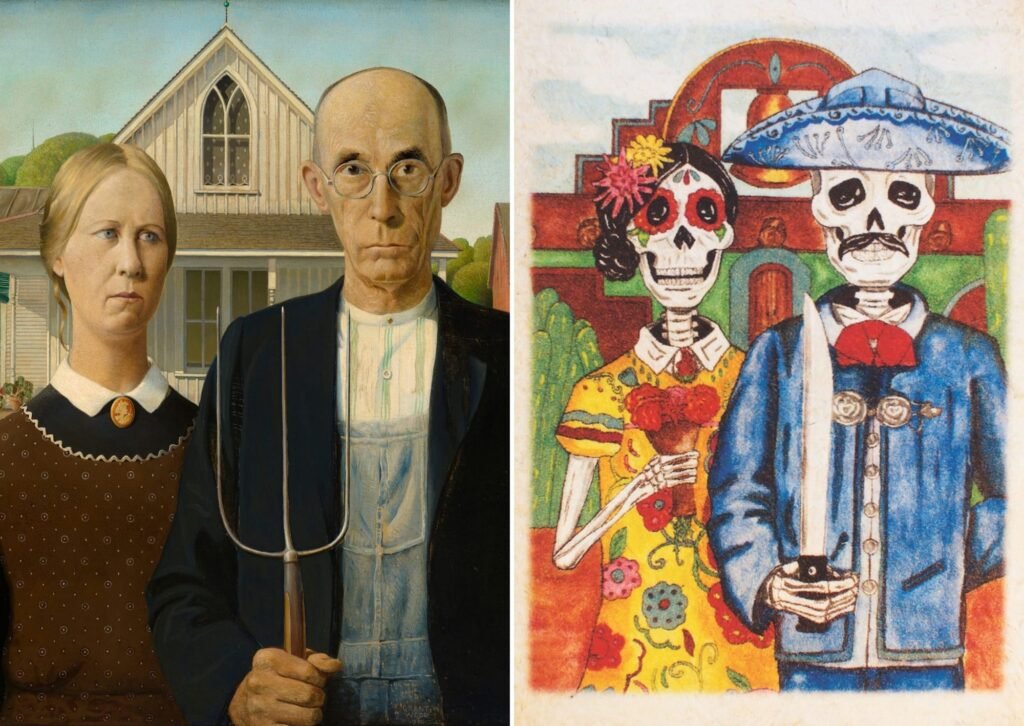
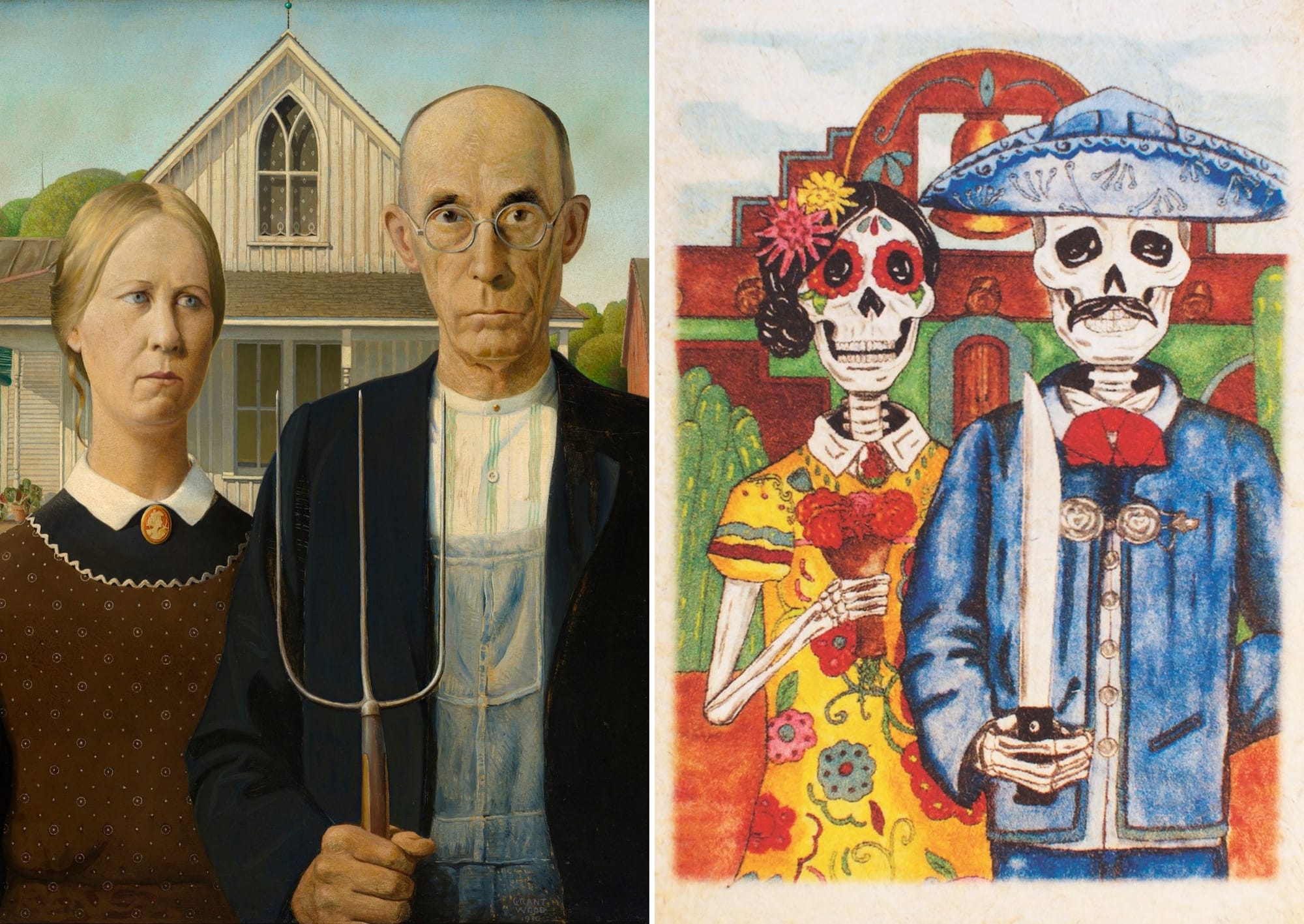
You already know the image by heart: Two stern figures stand before an old wooden house. To the left, a blonde, blue-eyed woman wears an apron and a somber expression. Beside her, an unsmiling man in glasses and overalls grips a pitchfork. Since it was first exhibited at the Art Institute of Chicago in 1930, Grant Wood’s painting has joined the ranks of art historical touchstones and shown up in countless ads, books, and memes. But what made this unassuming image so popular, and why does it continue to captivate us today?
In The Couple with the Pitchfork: American Gothic from Easel to Icon (2026), art historian and curator Wanda M. Corn provides some compelling answers. The author began writing about Wood’s painting in 1981, and she has spent decades amassing an archive of “American Gothic”-related imagery that tracks the farm couple across General Mills cereal ads, Gordon Parks’s 1942 portrait of African-American janitor Ella Watson during his fellowship with the Farm Security Administration, magazine covers, COVID-era cartoons, and other surprising riffs. Her book traces the painting’s history from the controversy behind its creation and the bitter fallout it brought to its hapless maker through to its transformation into a pop culture cornerstone and a symbol of Wood’s home state.