House Republicans have advanced a bill that would prohibit members of Congress and their family members from trading on certain Washington-focused prediction markets.
The House Administration Committee’s GOP members on Wednesday voted along party lines in favor of the legislation, which proposes to bar lawmakers, their spouses and their dependent children from participating on prediction markets that are based on the outcome of elections or government actions.
It marks the latest in Capitol Hill’s efforts to curb the threat of insider trading on the prediction markets — a risk that has burst into the spotlight in recent months after a series of well-timed trades around the capture of then-Venezuelan leader Nicolás Maduro, Google’s search results and the Iran war. Earlier this year, the Senate banned its members and their staffs from trading on the prediction markets altogether, effective immediately.
And yet, the House Administration Committee vote also revealed a fracture within the House over how far to go in clamping down on lawmakers’ use of the prediction markets. Democrats opposed the bill, saying it didn’t go far enough, while Republicans supported it.
Rep. Joe Morelle of New York, who is the committee’s top Democrat, argued that the legislation is “so filled with loopholes that it looks more like a sieve than a bill.” Instead of passing such a bill, he said the House should follow the Senate’s lead and approve a new and broader resolution aimed at prediction market use among members and their staffs.
“The Senate did it in a matter of minutes — no six-month grace period, no procedurally laborious process,” Morelle said. “They just went to the floor with a two-page resolution and banned it all unanimously. We should do the same.”
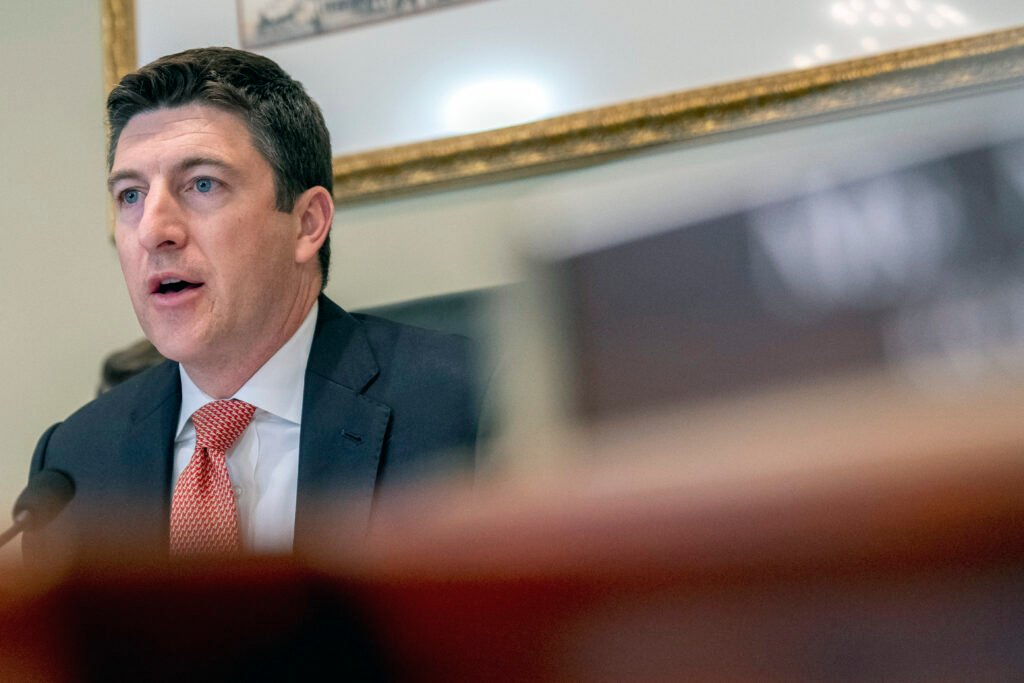
House Administration Chair Bryan Steil, who introduced the bill, hit back at his Democratic counterpart’s concerns by questioning why members’ families shouldn’t be allowed to bet on sports through the prediction markets — but can through sportsbooks or casinos.
The Wisconsin Republican pointed to a hypothetical scenario where a member’s child is at college and bets on a sporting event through a prediction market platform. That situation, he said, could be covered by a broader prohibition.
Steil, rather, said his bill is aimed at addressing public policy- and election-focused markets.
“Lawmakers elect to serve the American people, not to enrich themselves by wagering on outcomes from the decisions they make,” he said. “We have a real opportunity to restore trust in Congress by taking necessary steps to eliminate even the appearance of impropriety.”