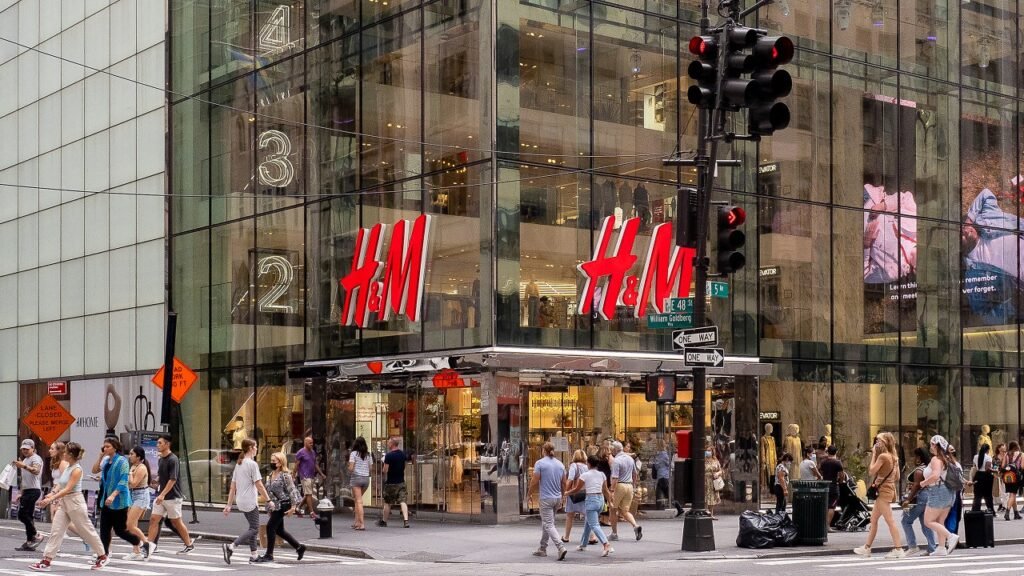
The fast-fashion retailer H&M is a staple in many malls and shopping districts across America and much of the rest of the world.
The retailer operates more than 4,000 stores in 81 markets globally. But recently, H&M has been closing locations around the world, and its latest earnings report, released this week, reveals that more closures are yet to come. Here’s what you need to know.
H&M has closed lots of locations over the last year
This week, the Swedish fashion giant H & M Hennes & Mauritz AB, better known as H&M, released its six-month report for 2026. The report updated investors on the company’s financials, sales performance, and other operational news.
For its most recent quarter (Q2), which ended on May 31, H&M reported net sales of about 54.8 billion SEK, or around $5.6 billion.
As noted by H&M, these results (in local currencies) “were fairly in line with last year” despite the company having around 3% fewer stores than it did a year earlier.
H&M’s store closures are part of a broader organizational strategy aimed at better competing in a rapidly changing fast-fashion industry. That strategy involves optimizing its retail footprint.
While store closures are one facet of the optimization plan, H&M is also opening new locations. But as the company’s most recent report shows, closures are outpacing new store openings, resulting in a notable net reduction of its retail footprint.
Specifically, H&M revealed that it reduced its retail footprint across all its brands by 128 net locations over its most recent 12-month period.
As of the end of May last year, H&M’s brands had a total of 4,166 retail stores globally. But by May 31, 2026, that number had fallen to 4,036.
H&M says the regions that had the highest net loss of stores during that period were:
- Asia, Oceania and Africa: -97
- Western Europe: -20
- The Nordics: -17
- Eastern Europe: -4
During that same one-year period, Southern Europe gained two stores, and North and South America gained eight.
H&M’s retail stores cover various brands, including H&M, COS, Monki, Weekday, & Other Stories, ARKET, H&M HOME, and Sellpy. H&M noted in its report that it closed all of its Monki stores last year.
H&M did not provide a list of individual location closures, but local media outlets have sometimes reported on such closures. For example, in January, H&M shuttered two locations in Manhattan.
Why is H&M closing stores?
H&M’s store closures are part of the company’s strategy to optimize its business in a rapidly changing fast-fashion world.
Over the years, H&M only had to worry about other traditional fast-fashion retailers competing against it, like Zara. But in recent years, consumer shopping habits have begun to swing, with many consumers choosing to shop for clothes online.
As online shopping increases, brands often find they have less need for as many retail locations, which are costly due to their long-term rental agreements. Zara’s parent company, Inditex SA, has also been reducing its physical store footprint.
H&M has had to compete not only with other legacy brick-and-mortar fast-fashion brands but also with digital-first platforms like Shein and Temu.
As noted by TheStreet, these new competitors, along with the evolving digital shopping habits of consumers, have prompted the company to embark on a restructuring initiative that involves investing in its online platform and closing underperforming physical retail stores.
Fans of the in-store shopping experience may not be happy to learn that H&M is not done shuttering locations.
In its most recent report, H&M confirmed that while it does plan to open around 90 new stores in 2026, it also plans to close 170 locations, resulting in a net loss of 80 retail stores.
How has H&M stock performed?
H&M shares trade on Nasdaq Stockholm under the ticker HM-B.
Currently, H&M shares are trading at around 165 SEK, or about $17.
Year to date, H&M shares have declined around 11.2%. However, over the past year, the company’s share price has risen by more than 22%.