
Google has now made the Pixel 11 Pro official, as the successor to the Pixel 10 Pro. Let’s be honest here: after living with the Pixel 10 Pro for the past year, it had some faults. But the real question is, has Google fixed these faults? Have they made the new Pixel 11 Pro a much better phone? Well, that’s what we’re here to find out in this comparison.
I’ve spent most of the past year using the Pixel 10 Pro, and was in New York City this week to check out the new Pixel 11 Pro. After just a few days with the new phone, I can confidently say that this is a bigger upgrade than you probably expected. So let’s get started.

Google Pixel 11 Pro vs Pixel 10 Pro: The Software and AI Smarts
As always with Google phones, the software is the most important aspect of the new Pixel 11 Pro. This year, Google is still sticking with 7 years of security and OS updates (also adding in 7 years of spare parts), so you’ll be able to use this phone until 2033 and still get updates; that’s not too shabby and not something you should overlook.
Google’s Pixel 11 Pro runs on Android 17 out of the box, big surprise there. But it is a newer build than what the Pixel 10 Pro is currently running on. We do expect that to change in a month or so, when the Android 17 QPR1 rolls out to existing Pixel devices. Pixel 11 Pro does bring in a bunch of cool new software tricks, like Rambler. This is voice-to-text, but you can literally ramble while talking, and Gemini won’t add that nonsense into your message. It’s quite impressive, to say the least. You can also create custom widgets, and many more goodies powered by Gemini.
One of the new software tricks is the HiLight light on the back of the phone. This is a return to the LED notification light from over a decade ago, but it is much more limited. This is mostly to indicate when you are talking with Gemini. But you can also use it to assign colors to five of your favorite contacts, for when they call. Google says that more functionality is coming, but it will still be limited – in fact, third-party apps won’t get access to HiLight.
Google has also optimized (and is continuing to optimize) Android to run smoother on phones with less RAM. A big reason for this is the current RAM crisis, which is forcing companies to raise prices on everything. The Pixel 11 Pro starts with 12GB of RA, but you can get 16GB by going with the 512GB or 1TB option.

Google Pixel 11 Pro vs Pixel 10 Pro: The hardware upgrades

Google Pixel 11 Pro

Google Pixel 10 Pro
| Google Pixel 11 Pro | Google Pixel 10 Pro | |
|---|---|---|
| Dimensions (unfolded/folded) | 152.7 x 71.9 x 8.4 mm (6.01 x 2.83 x 0.33 in) | 152.8 x 72 x 8.5 mm (6.02 x 2.83 x 0.33 in) |
| Weight | 204 grams | 207g |
| Display | 6.3-inch LTPO OLED (120Hz Adaptive) | 6.3-inch LTPO OLED (120Hz Adaptive) |
| Resolution | 2856×1280 | 2856×1280 |
| Chipset | Google Tensor G6 | Google Tensor G6 |
| RAM | 12GB/16GB | 16GB |
| Storage | 256GB/512GB/1TB | 256GB/512GB/1TB |
| Main camera | 50MP (f/1.7 aperture, 1/1.3-inch sensor size, OIS, multi-directional PDAF) | 50MP (f/1.7 aperture, 1/1.3-inch sensor size, OIS, multi-directional PDAF) |
| Ultra-wide camera | 48MP (f/1.7 aperture, 1/2.51-inch sensor size, 123-degree FoV) | 48MP (f/1.7 aperture, 1/2.51-inch sensor size, 123-degree FoV) |
| (Periscope) telephoto camera | 48MP (f/2.8 aperture, 1/1.95-inch sensor size, 5x optical zoom, OIS, dual-pixel PDAF) | 48MP (f/2.8 aperture, 1/2.55-inch sensor size, 5x optical zoom, OIS, dual-pixel PDAF) |
| Selfie camera | 42MP | 42MP |
| Battery size | 4,850mAh | 4,870mAh |
| Charging | 30W wired, 25W wireless (Qi2.2 Magnetic), 5W reverse wireless | 30W wired, 15W wireless (Qi2 Magnetic), 5W reverse wireless |
| Colors | Olive, Canyon, Fog, Obsidian | Moonstone, Jade, Porcelain, Obsidian |
On the hardware front, Google has made some changes here, mostly with the camera and the battery. So the battery has dropped from 4,870mAh to 4,850mAh on the Pixel 11 Pro. Not a huge drop; that’s 0.4% smaller. So it’s really not something you’re going to notice, and Google says that with the new Tensor G6 processor, you’re going to see the same, if not better, battery life. So that’s great to hear. Charging speeds have improved, but only on the wireless side, as Google has finally added Qi2.2 to the entire lineup, instead of keeping the faster 25W wireless charging on the Pro XL model only.
For the cameras, on paper it looks like only the telephoto has been improved, but the main camera has also been improved here. The telephoto is now larger with a 1/1.95″ sensor,r which is pretty impressive actually for the Pixel 11 Pro. The main camera is using newer glass, which should provide better images, at least according to Google.
The other big upgrade you’ll notice is in brightness. It’s now sporting a peak brightness of 3,600 nits, up from 3,300 nits last year. This isn’t something I noticed right away, but brighter displays are always great, since you need them to use your phone outdoors.
The main upgrade, though, is the Tensor G6. This is the first 2nm processor to hit the market (we expect Apple, Qualcomm, and MediaTek to follow in about a month, though), and it has big expectations. Google believes that the Tensor G6 is going to be much improved over the Tensor G5, and in our early tests, that does seem to be true. It will run cooler, run faster, and with the new MediaTek modem inside, it should perform better on WiFi and on cellular data.
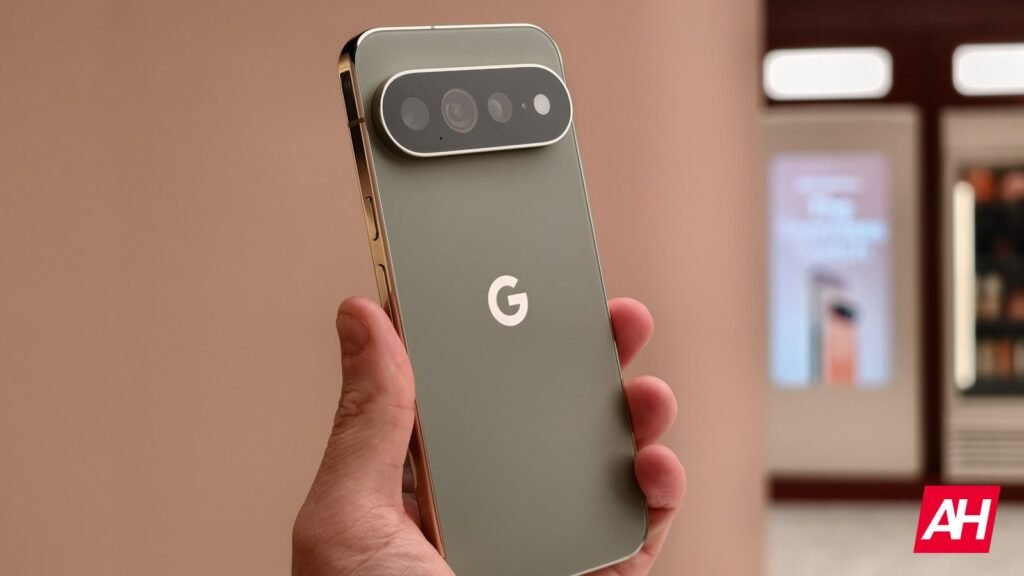
Of course, the design is mostly the same this time around. The big change is really that camera bar. It is now fully glass, and has HiLight in place of a flash. But Google did make it 3g lighter, which isn’t a lot, but a lighter phone is always great to have.
There aren’t a lot of hardware upgrades here, but all in all, it’s going to make for a better experience.
Google Pixel 11 Pro vs Pixel 10 Pro: The Camera upgrades
This is a Pixel, so there are always camera upgrades here. This year, the main camera did get upgraded, even though on paper that doesn’t seem true. The new 50MP sensor has improved light sensitivity and dynamic range over the Pixel 10 Pro’s main camera. This will result in better shots in basically every lighting scenario.
The telephoto is also larger now, moving from 1/2.51″ to a 1/1.95″ sensor; that’s not a small move either. This will help with taking photos in low light and will allow a lot more light to hit the sensor.
But that’s not all. Google has also upgraded Night Sight; thanks to the Tensor G6 and its new ISP, it can now process Night Sight images much, much faster. In my testing, it’s been almost instant so far. The new ISP also lets the new telephoto reach 120X zoom, thanks to AI.
Finally, there are a couple of new features. Camera Looks lets you adjust how photos look before you take them. The iPhone has a feature like this, and I’m so happy to see Google has finally brought that over to Pixel. But an even more impressive feature is actually the new Magic Capture feature. This lets you record things, like maybe a basketball game, and lets you be in the moment. Afterward,, it will give you a few still photos that arein-focusry ane intelligently cropped to be shareable, whiItsoIt gives you a great-looking video. This is going to be great as football season starts up this Fall.

Should you upgrade?
The big question: should you upgrade from the Pixel 10 Pro to the Pixel 11 Pro, and does it live up to the hype? Well, there is a lot to like with the new Pixel 11 Pro, and I have high hopes for the Tensor G6 (I know, I know, I’ll probably be let down again). But there is a lot to look forward to with this upgrade. A refined design, new colors, the new HiLight feature, better battery life, faster charging, and more.
But that also comes with a reduction in RAM and a higher price, which is a bit of a tough pill to swallow right now. My recommendation is that if you can get a good discount on the Pixel 11 Pro, you should jump on it. Amazon is currently giving you a $200 gift card if you pre-order, and Google Fi has some incredible discounts too, including $600 off for just being a customer, no trade-in needed.
The post Google Pixel 11 Pro vs Pixel 10 Pro: Big Upgrade or Hidden Disappointment? appeared first on Android Headlines.