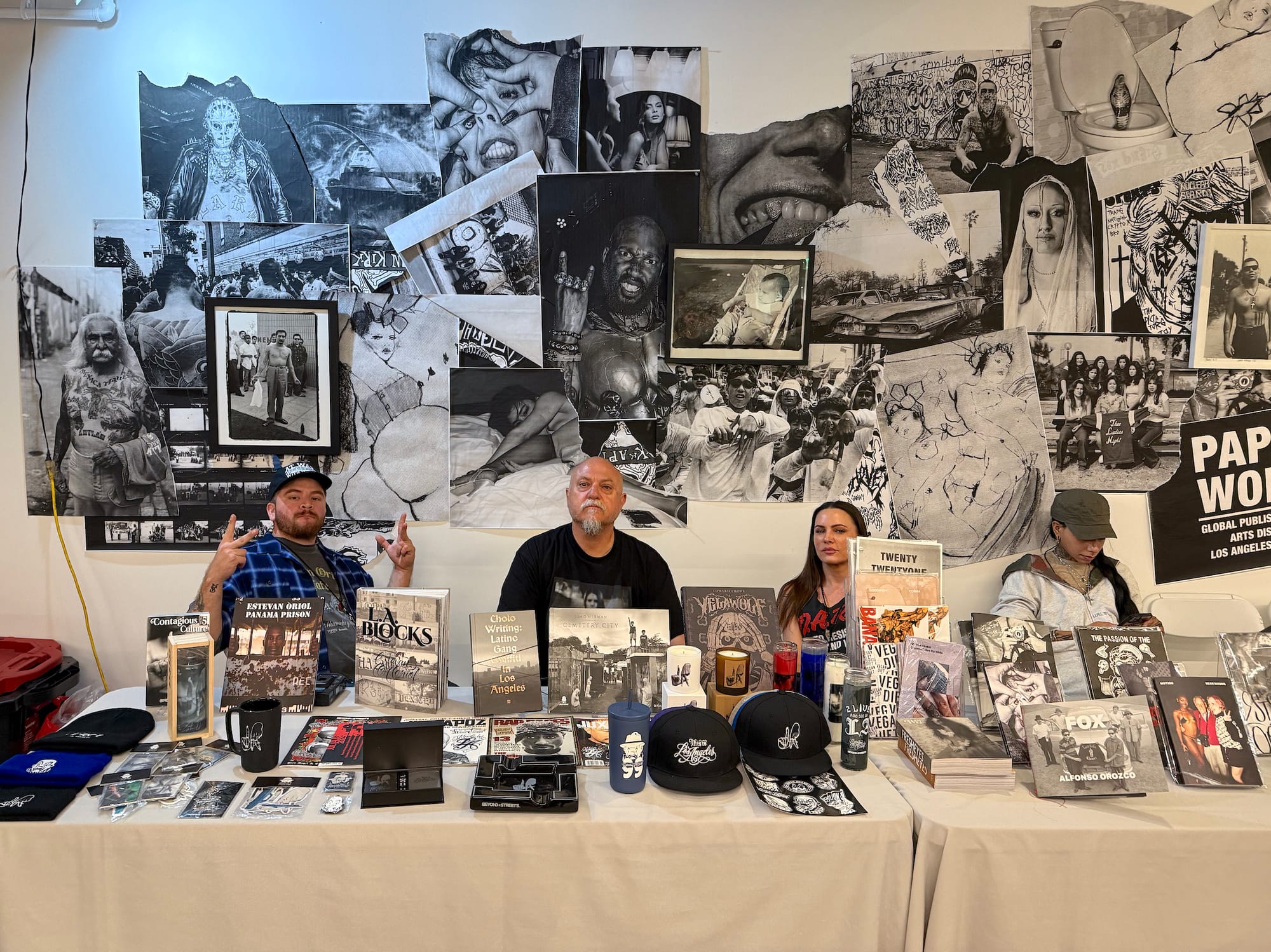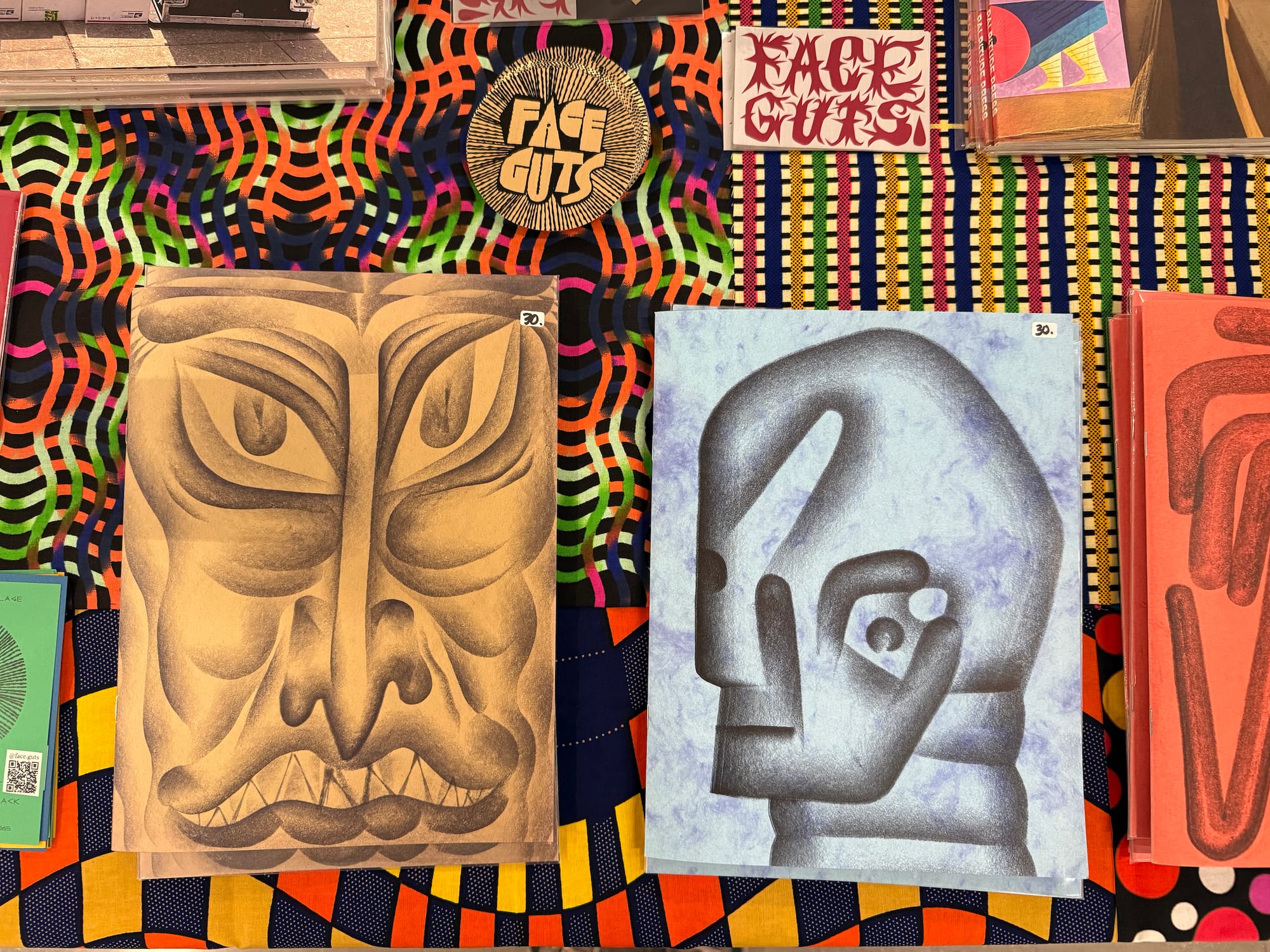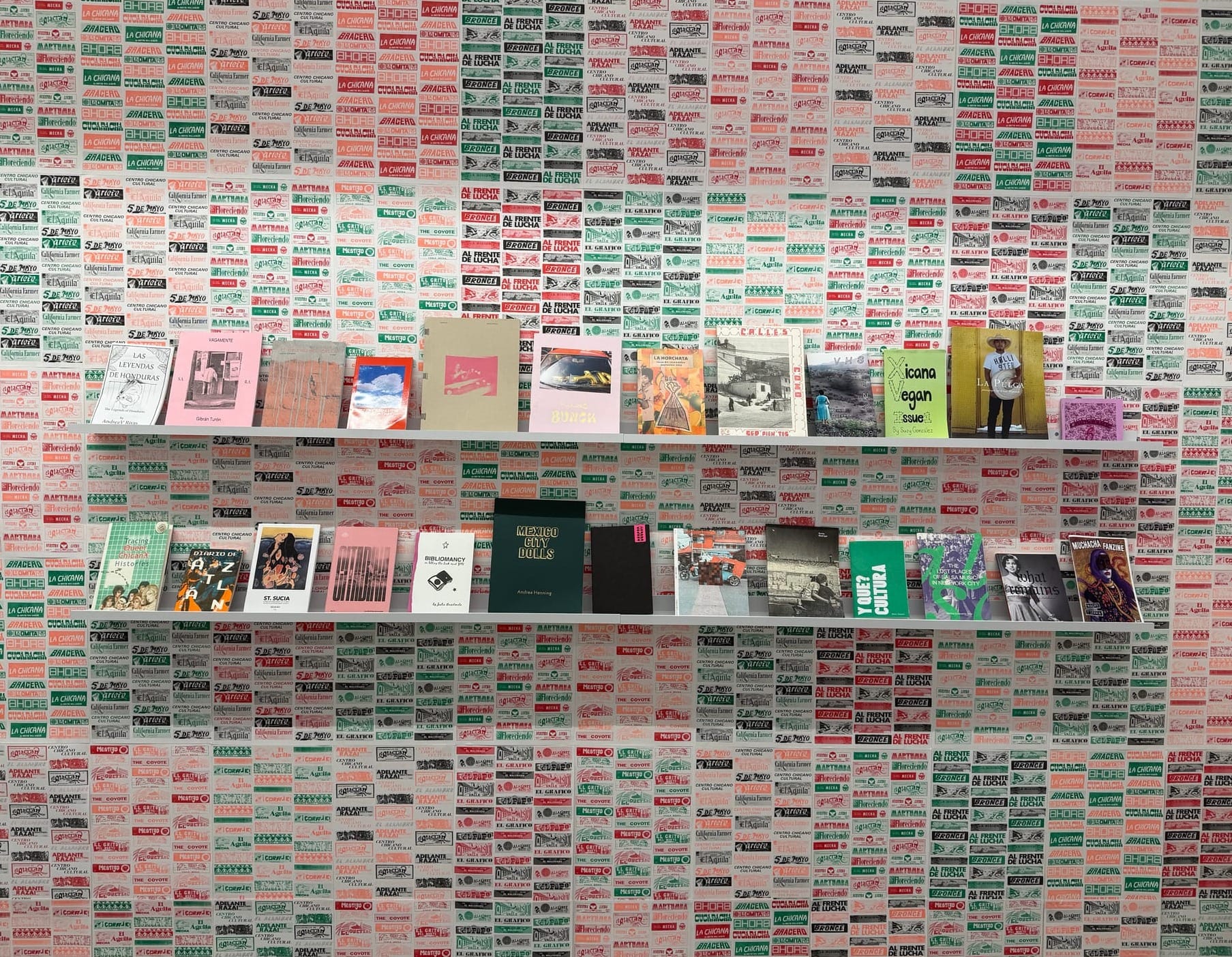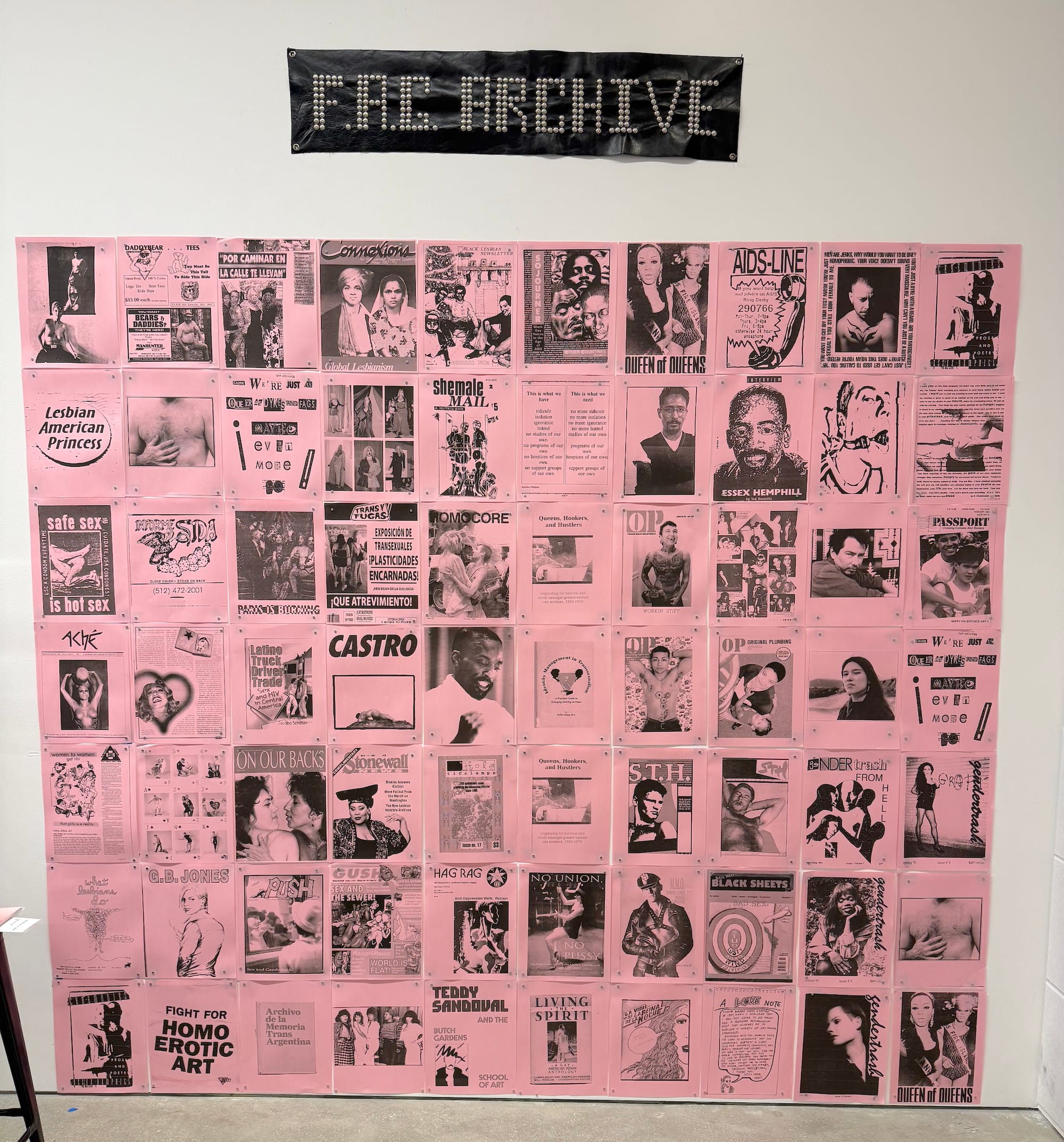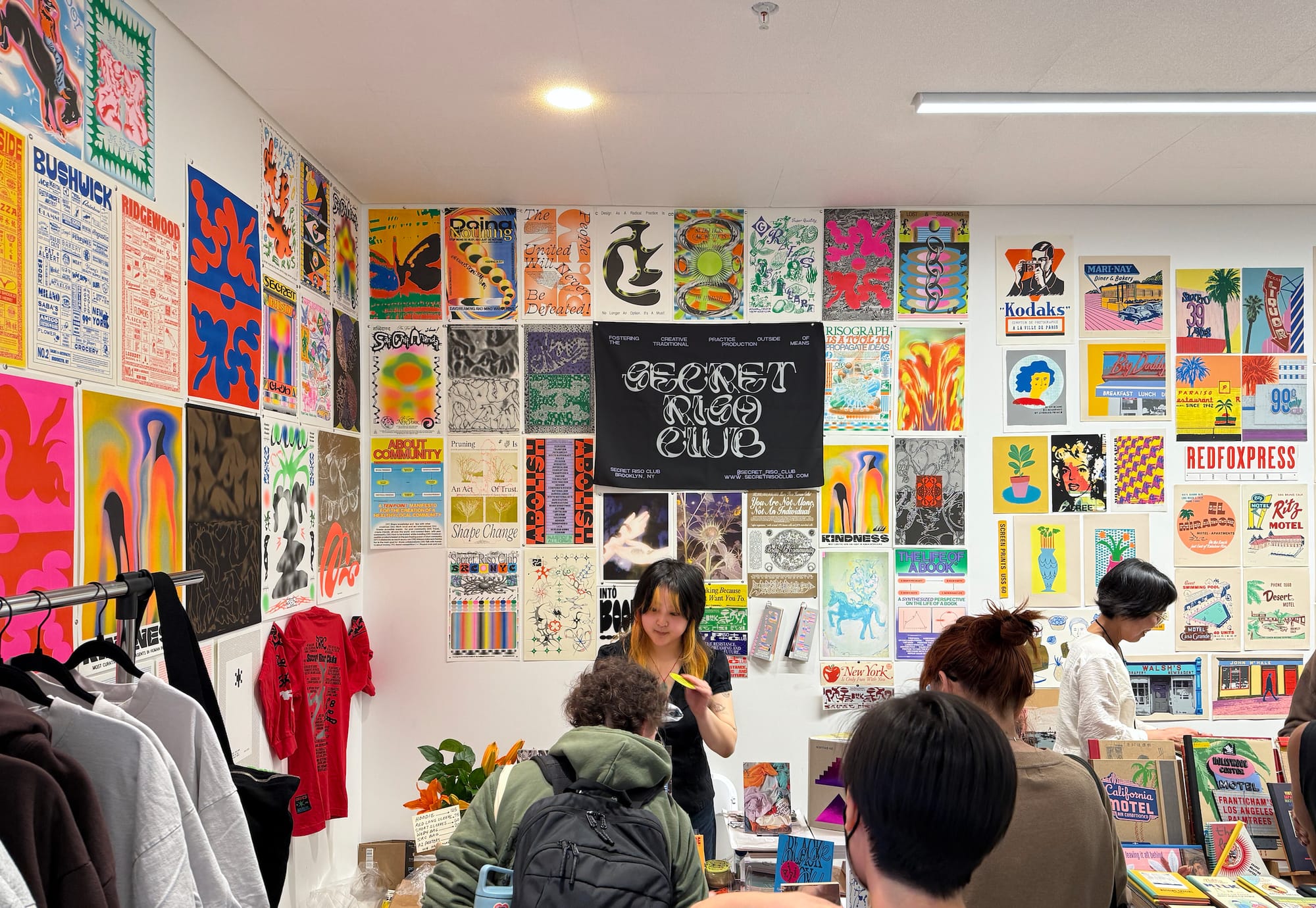
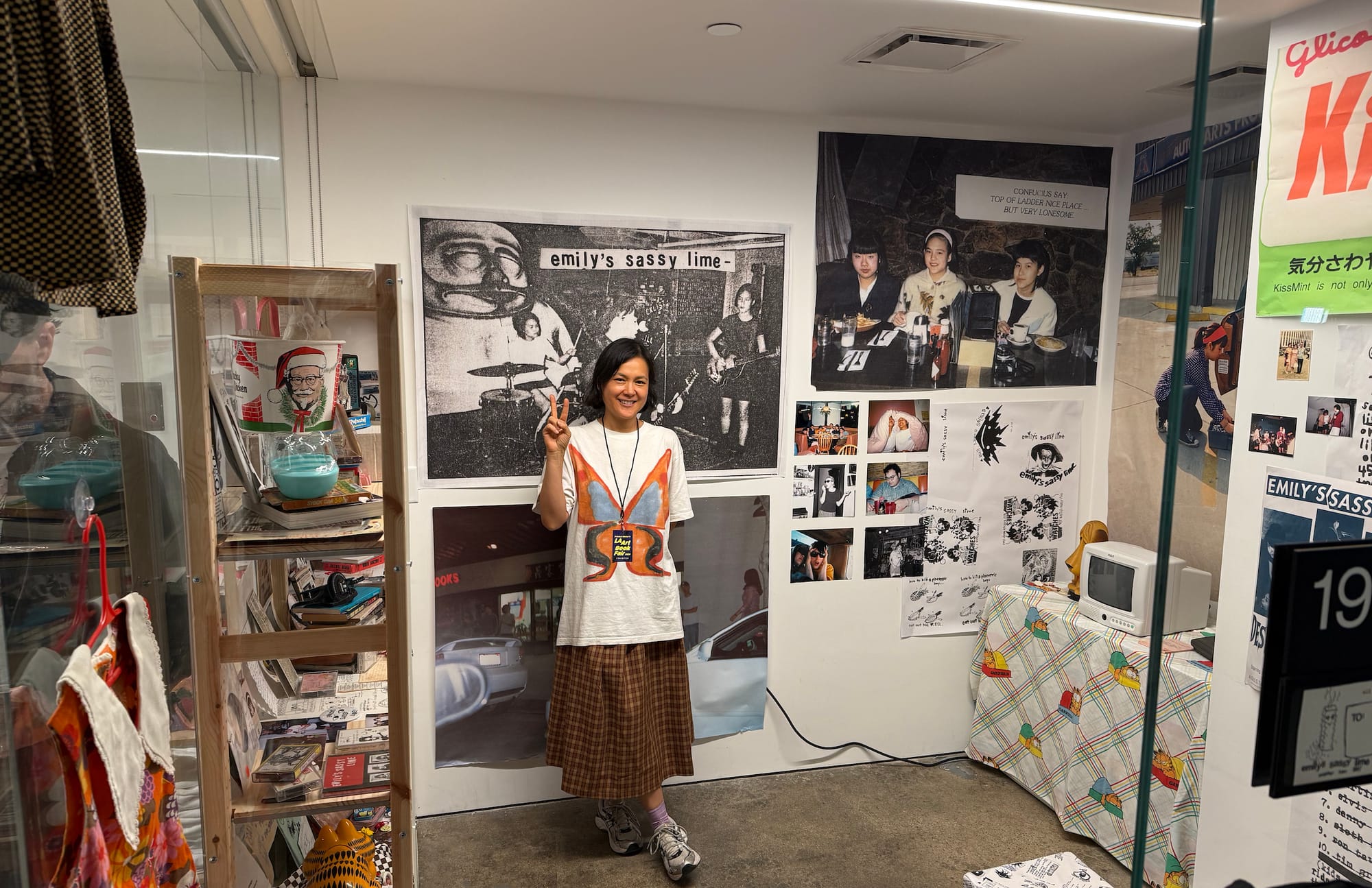
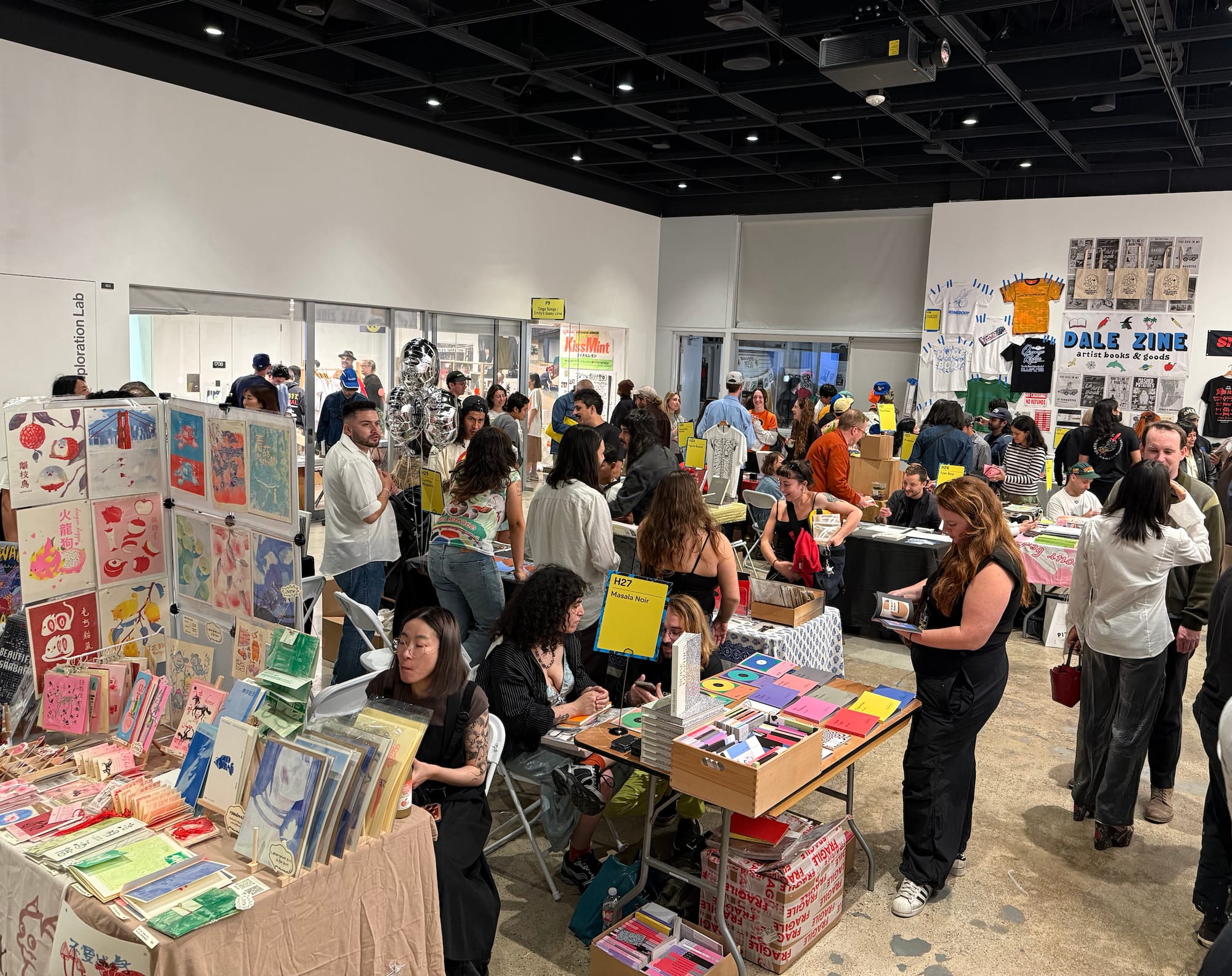
PASADENA — Printed Matter’s Los Angeles Art Book Fair returned to the Art Center College of Design last night with over 250 exhibitors — slightly scaled back from over 300 last year — roughly a fifth of whom were at the fair for the first time. Among the lavish monographs and eye-popping, risograph-printed zines, the archive was a common thread. Publications excavated and remixed appropriated media, collapsing time and giving historical ephemera contemporary relevance across the fair’s 13th edition, which runs through the weekend.
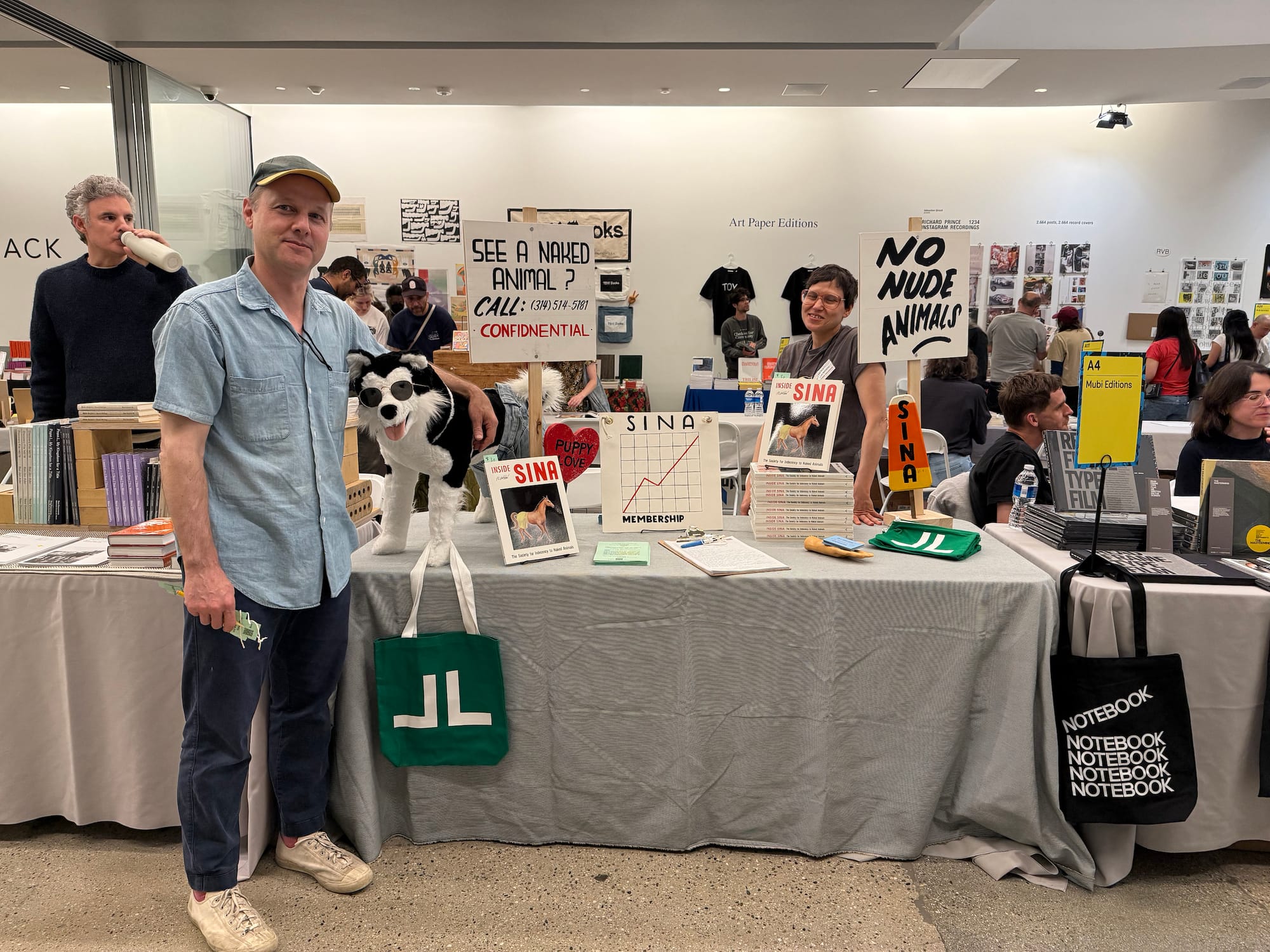
“Clothe All Animals for the Sake of Decency!” declared a sign worn by David Senior, a librarian at the San Francisco Museum of Modern Art, who stood at the entrance to the fair on opening day, Thursday, May 7. He was a walking advertisement for Inside SINA: The Society for Indecency to Naked Animals, edited by Andrew Lampert and published by J&L Books in New York this year. The well-researched book chronicles an early-1960s hoax perpetrated by Alan Abel, who invented the satirical organization that expressed moral outrage over animal nudity. Abel drummed up many pranks in his lifetime, but “this was his most famous, it just wouldn’t die,” J&L’s Jason Fulford told Hyperallergic, likening its popularity to a form of pre-internet virality.
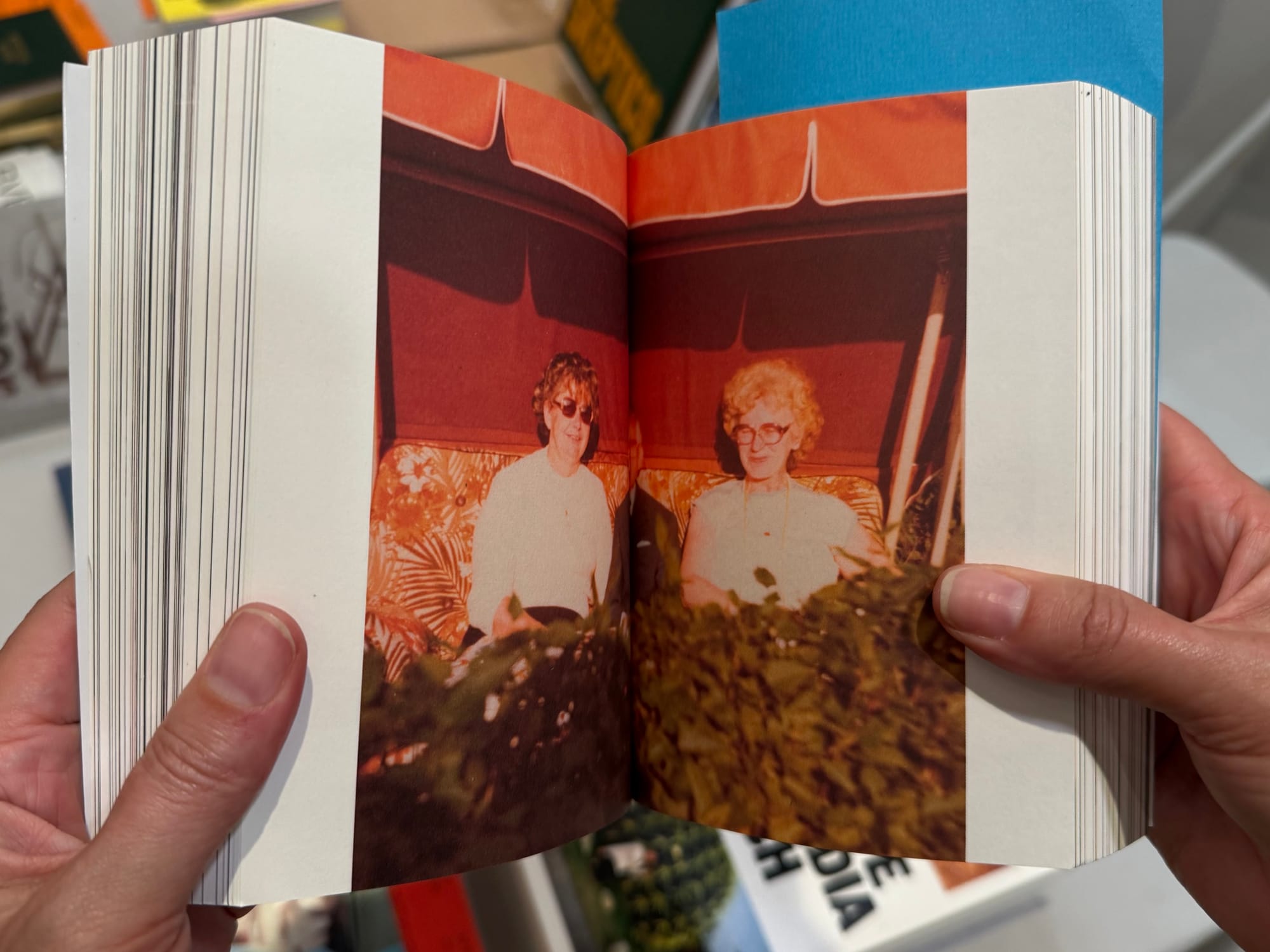
RVB Books from France featured MAN (2025) by Erik Kessels and Karel de Mulder, a thick compendium of vintage photographs that feature a central male figure flanked by women on either side. In a cheeky subversion of male subjectivity, the man always appears in the book gutter, where the two pages meet, squeezed nearly out of existence.
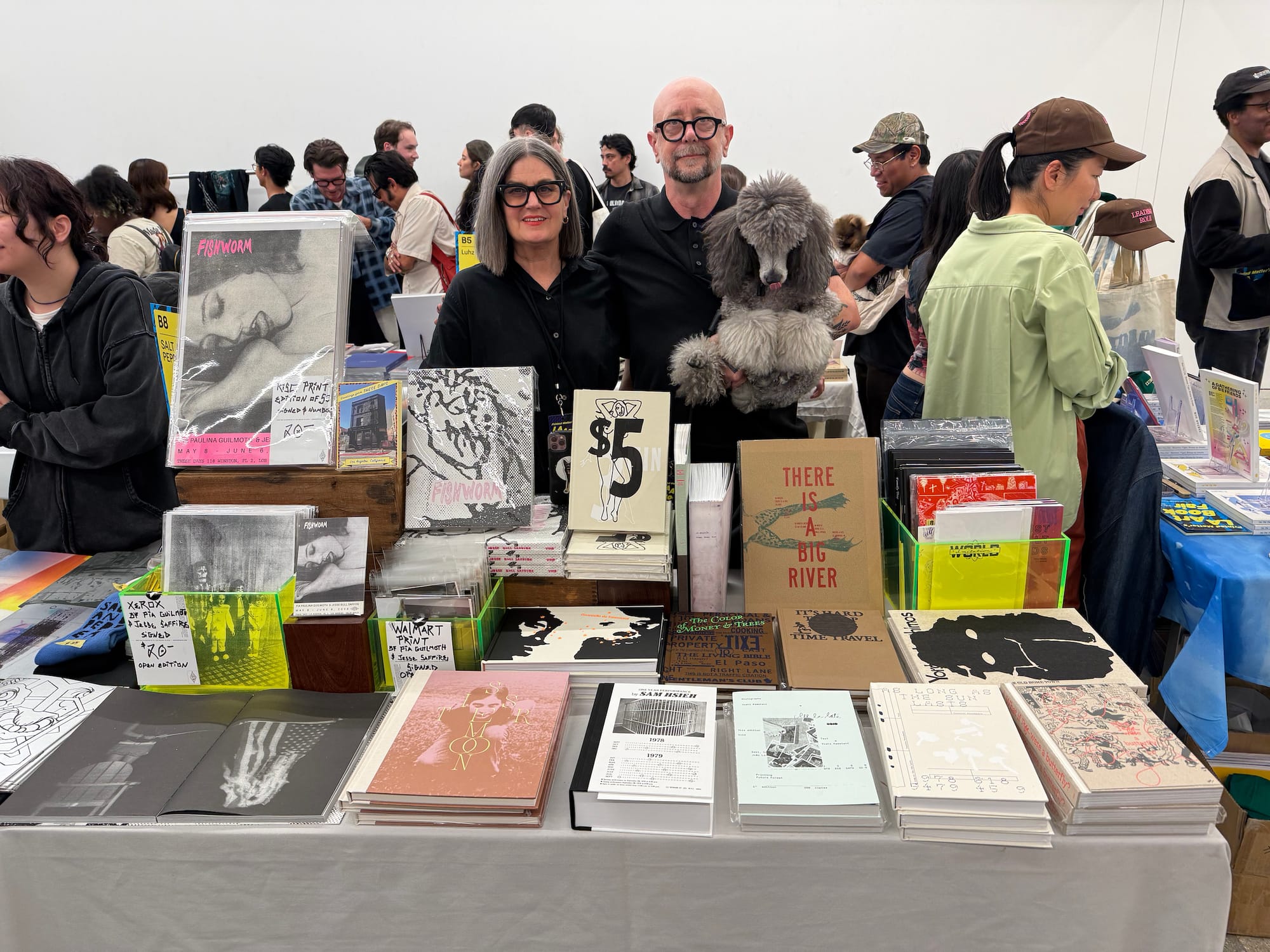
Instead of the cache of vintage art books they’ve brought to the fair in years past, Downtown Los Angeles bookstore and gallery These Days showcased publications by VOID, a publisher based in Athens, Greece. The highlight was Fishworm (2025) by Pia Paulina Guilmoth and Jesse Bull Saffire, a haunting collection of found photos the pair scavenged from abandoned houses around their home in rural Maine. Juxtaposing family snapshots, amateur pornography, eerie interiors, and stark landscapes, the book renders a grim but affecting portrait of lonely, wild, weird America. (An exhibition of their work opens tonight at These Days.)
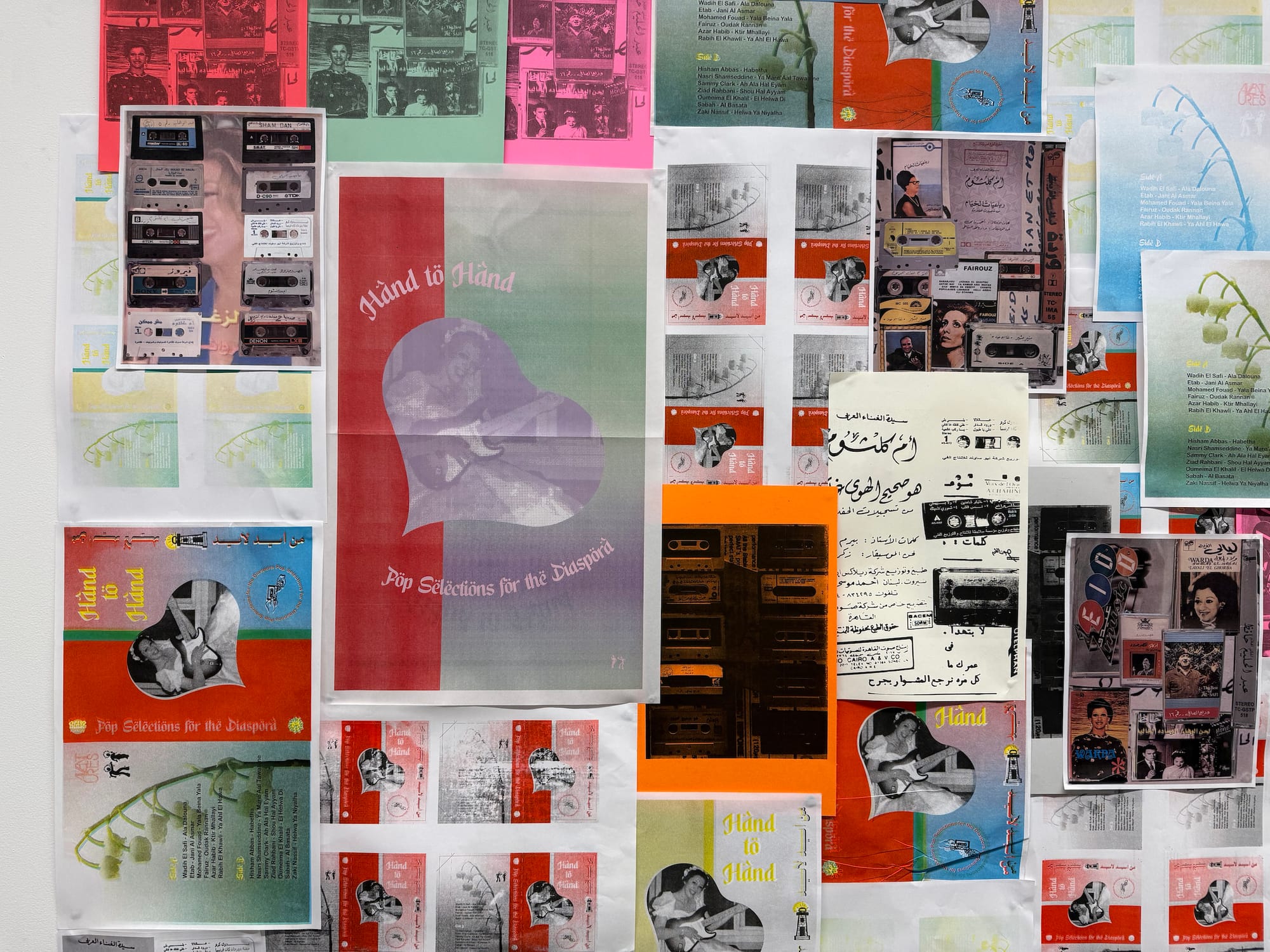
The archive takes on a personal resonance for Palestinian-American artist Sabri Sundos, whose cassette mixtape “Hand to Hand” assembles music from Lebanon, Egypt, and Saudi Arabia. Growing up, Sundos would listen to the tapes his parents would receive from friends and family in the Middle East, sonic links to their homeland. He extends this chain with his own compendium, published by Aventures LTD, which traces back to his childhood in San Diego and further back through the Palestinian Diaspora. “These songs deal with leftist politics and class war,” Sundos told Hyperallergic, “but they’re all bangers.”
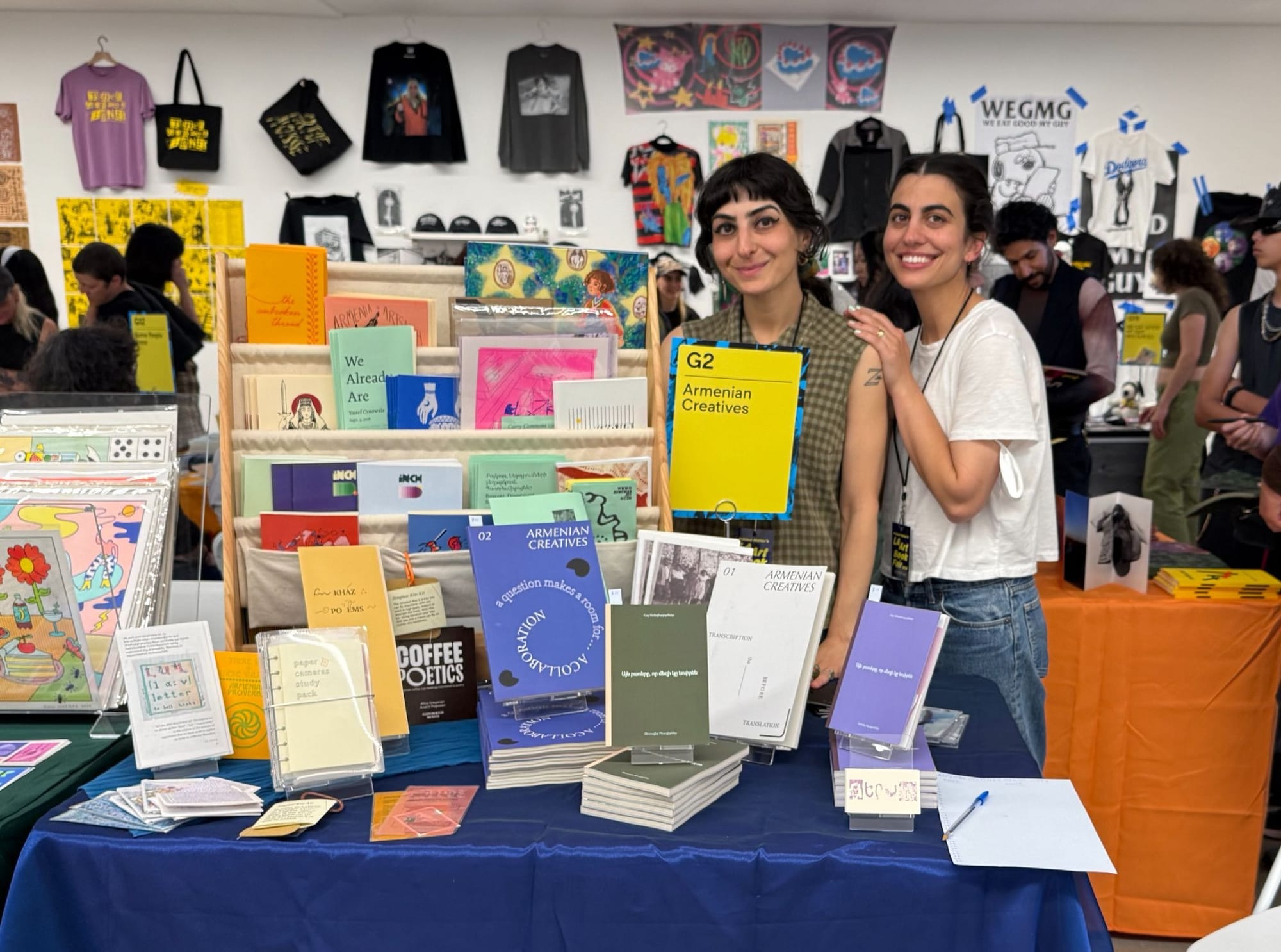
Artist-run press Armenian Creatives also engaged with diasporic threads, focusing on translation as a form of cultural resistance. Notably, co-founder Caroline Partamian’s slim volume Khaz Poems (2024, published under her imprint Weird Babes Press) transforms an ancient Armenian musical notation system into captivating typographical compositions.
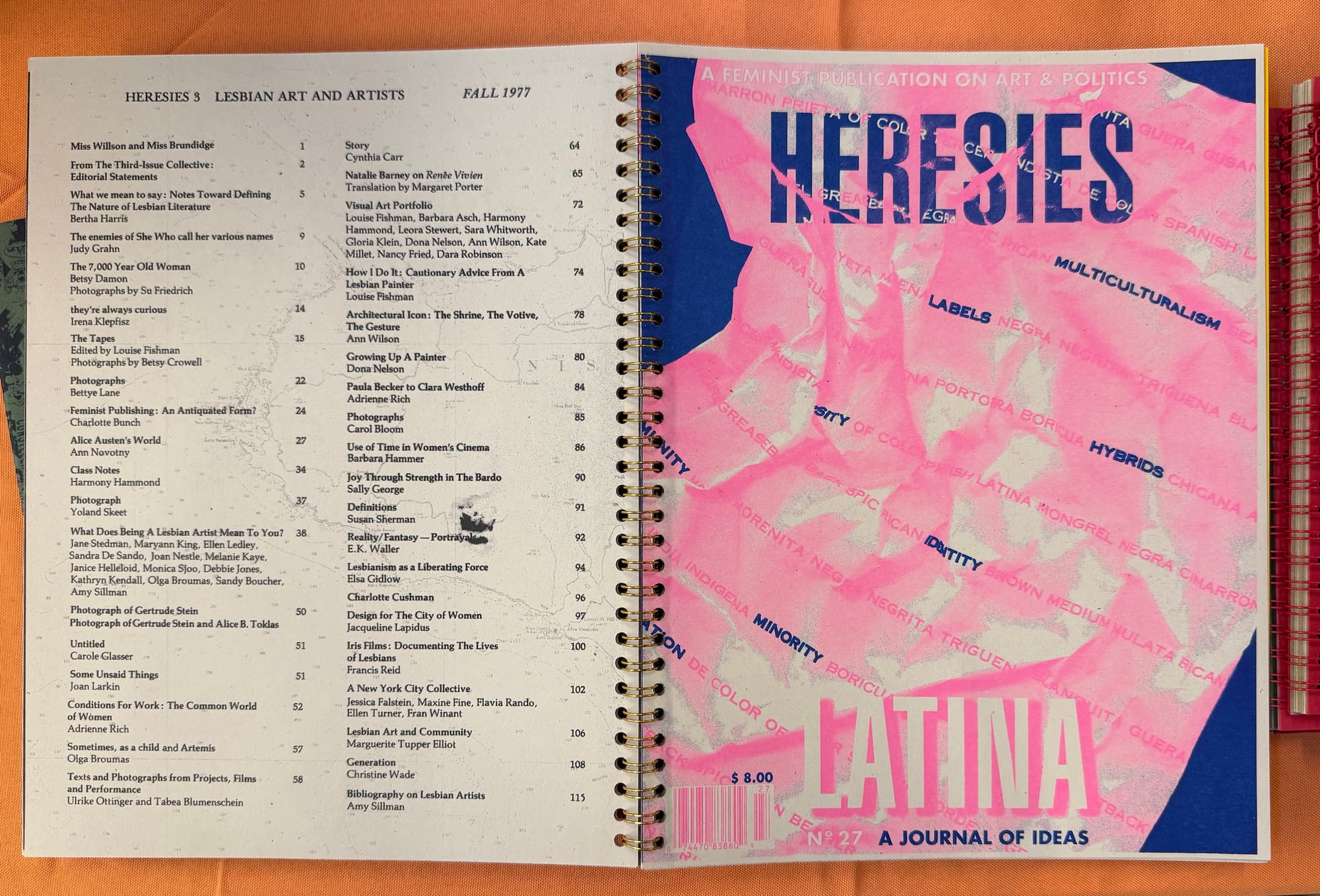
Histories of resistance and solidarity are unearthed from the past and reframed for our current moment. At the stand of Taller California, Covers 1 & 2: Annotating the Archives of Heresies by Melinda Guillén digs into the influential feminist art publication printed from 1977 to 1993, responding to its essays through text and image. The Tijuana and San Diego-based imprint also published Evan Apodaca’s Insurgent Archives from the Secret City (2025), a graphic recounting of the little-known anti-Vietnam War movement within the military.
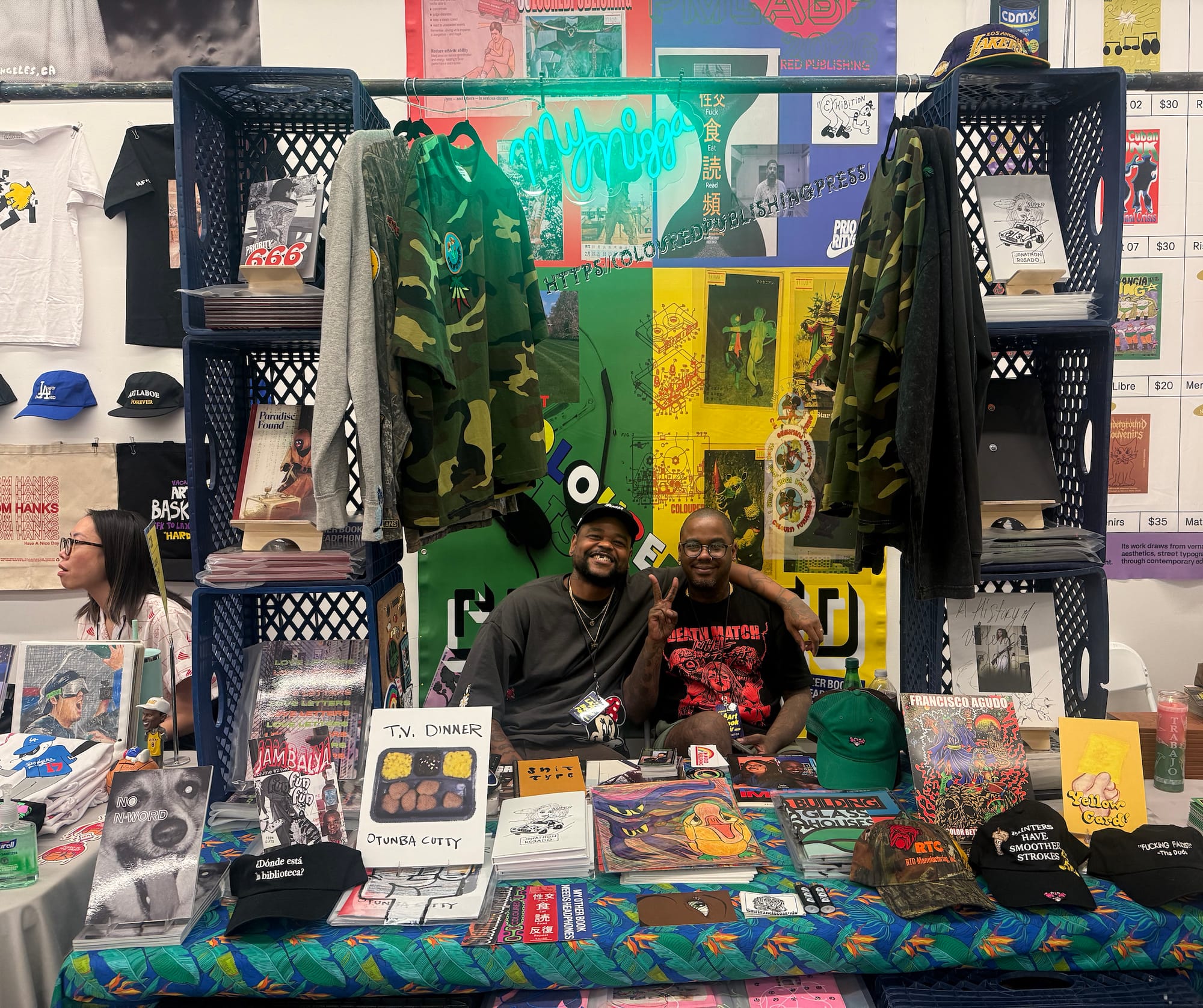
For other exhibitors, the act of printing and distributing books is itself a form of defiance and a way to form communal bonds. Coloured Publishing, the high-spirited publishing house run by artist Devin Troy Strother and designer Kahim Smith, told Hyperallergic they were planning to expand their operation with a brick-and-mortar bookstore. With all the uncertainty and strife in the world, what was their motivation? Considering that the world is essentially on fire, why now?
“When everything is so digital, blown out by late-stage capitalism, it’s time to build a third space,” Smith told Hyperallegic.
Troy Strother simply replied: “To add fuel to the fire.”