George Herms, one of the founders of the West Coast Assemblage movement, passed away on Friday, April 24, at age 90. Herms worked across disciplines, but was best known for his sculptures and collages that transformed found materials, rusted metal parts, and cast-off debris into poetic representations of impermanence, suffused with pathos and oftentimes humor.
“Herms’s work always has a sense of the sacred, a respect for the dignity of what remains,” gallerist Craig Krull told Hyperallergic. “His contributions to fine art, as well as to the deeper and more profound art of life, include an uninhibited sense of freedom, an ability to throw off the constraints and shackles of society, a soulful awareness of the aesthetics of age, the evolutionary life of objects, a raw playfulness, curiosity, experimentation, and unpreciousness, all with an eye and heart of pure poetry.”
Herms was born on July 5, 1935, in Woodland, California. He studied engineering at the University of California at Berkeley, but left school in 1954 and moved to Los Angeles, falling in with the Beat scene in Topanga Canyon that included artist Wallace Berman, poet Robert Alexander, and actor Dean Stockwell. Herms helped Berman and his wife Shirley print and distribute their literary and art journal Semina and began printing his own poems on a hand press, dubbing the enterprise Love Press (he often stamped his artworks with the word). It was Berman, he later recalled, who taught him that “any object, even a mundane cast-off could be of great interest if contextualized properly.”
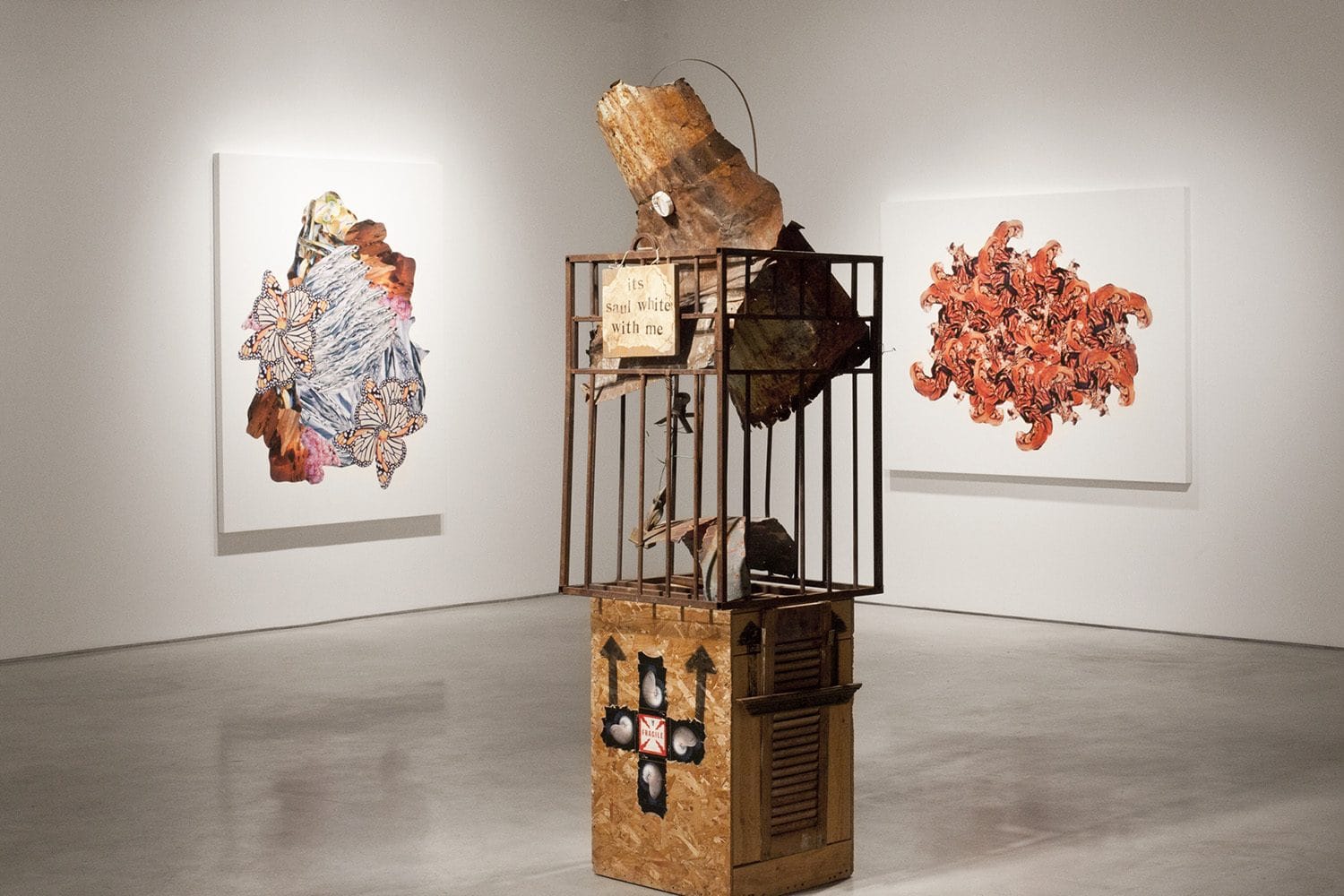
Around this time, Herms began making his first assemblages composed mainly of detritus and trash, self-curating a show of them in a Hermosa Beach vacant lot, titled Secret Exhibition, in 1957. It was reportedly only seen by Berman and the artist and poet John Reed, and the works were left to decay after the show closed.
Exhibitions followed at San Francisco’s Batman Gallery and Semina Gallery, located on Berman’s houseboat in Larkspur, and in 1961, Herms was included in the groundbreaking exhibition The Art of Assemblage at the Museum of Modern Art in New York, cementing his status as a foundational figure in California assemblage alongside Ed and Nancy Kienholz, Bettye Saar, Noah Purifoy, and Ed Bereal.
Over his seven-decade career, he participated in numerous gallery and museum shows, including George Herms: Xenophilia (Love of the Unknown) at the Museum of Contemporary Art; Los Angeles in 2011, which paired his work with art made by younger assemblage artists; Emergio at Morán Morán (formerly OHWOW Gallery) in 2013 in Los Angeles; George Herms: On and Off the Wall at Louis Stern Gallery in Los Angeles in 2013; and Grand Embrace: Myranda Gillies and Grandpa George Herms at Susan Inglett Gallery in 2019 in New York.
“He was the first Los Angeles-based artist we brought into the program after relocating, and over the course of a 13-year relationship, his approach to art and life closely paralleled our own,” Al Morán of Morán Morán told Hyperallergic. “His work was defined by experimentation and improvisation, a continual process of reinvention.”
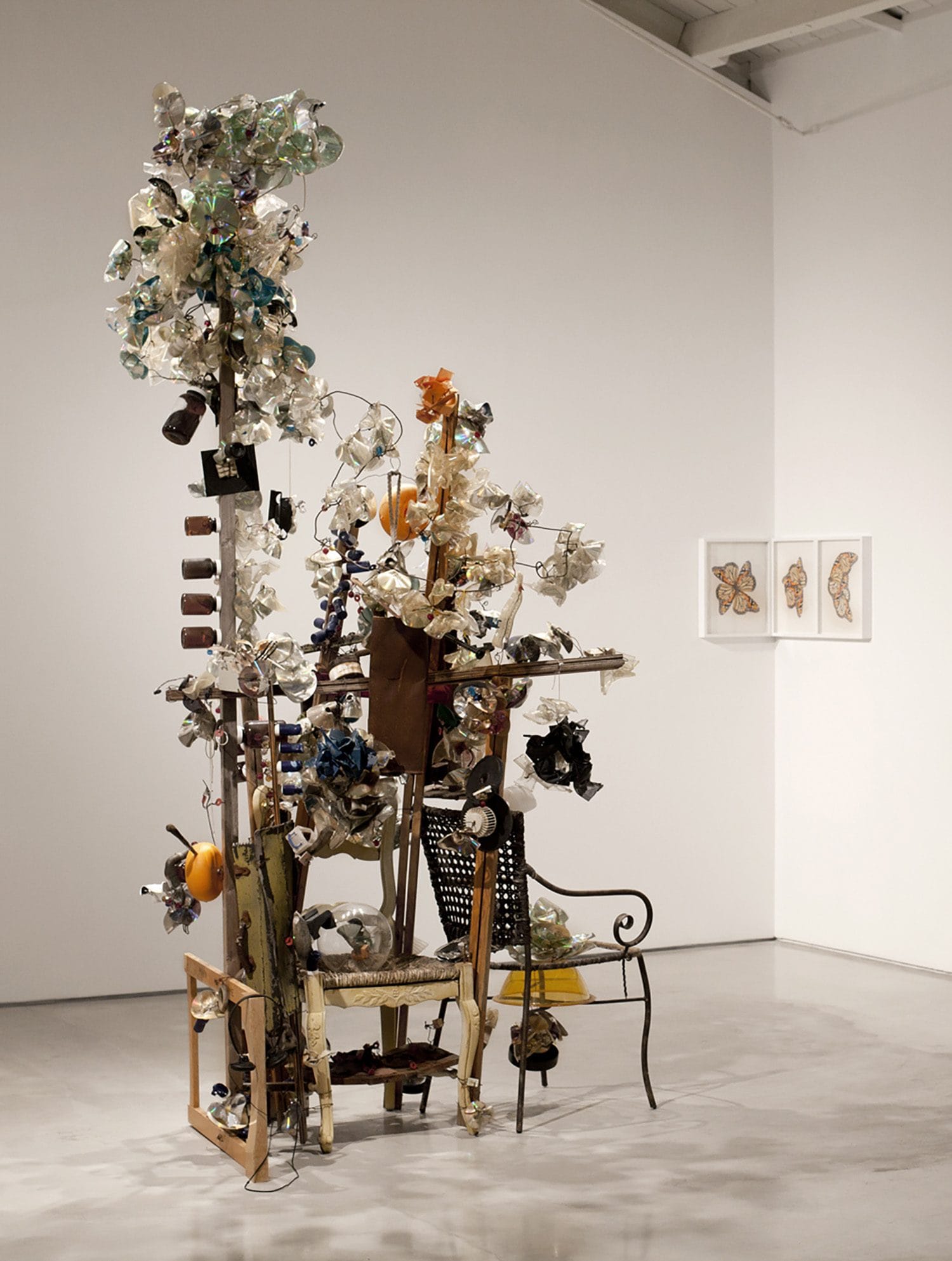
Although ephemerality was a cornerstone of his oeuvre, Herms created a few notable public artworks in LA, including “Portals to Poetry” (1989) in downtown’s Citicorp Plaza, made from salvaged steel door frames and bronze plaques engraved with poems by Charles Simic; and “Clocktower: Monument to the Unknown” (1987) in MacArthur Park, a constellation of large rusted buoys surrounding an 18-foot tall weathered obelisk. Another sculpture, “Moon Dial” (1988), an “assemblage of rust-encrusted grates, buoys and a winch,” was removed from Beverly Hills Park after 18 months, at the behest of city councilmembers who felt it was “spoil[ing] the beauty of our park.”
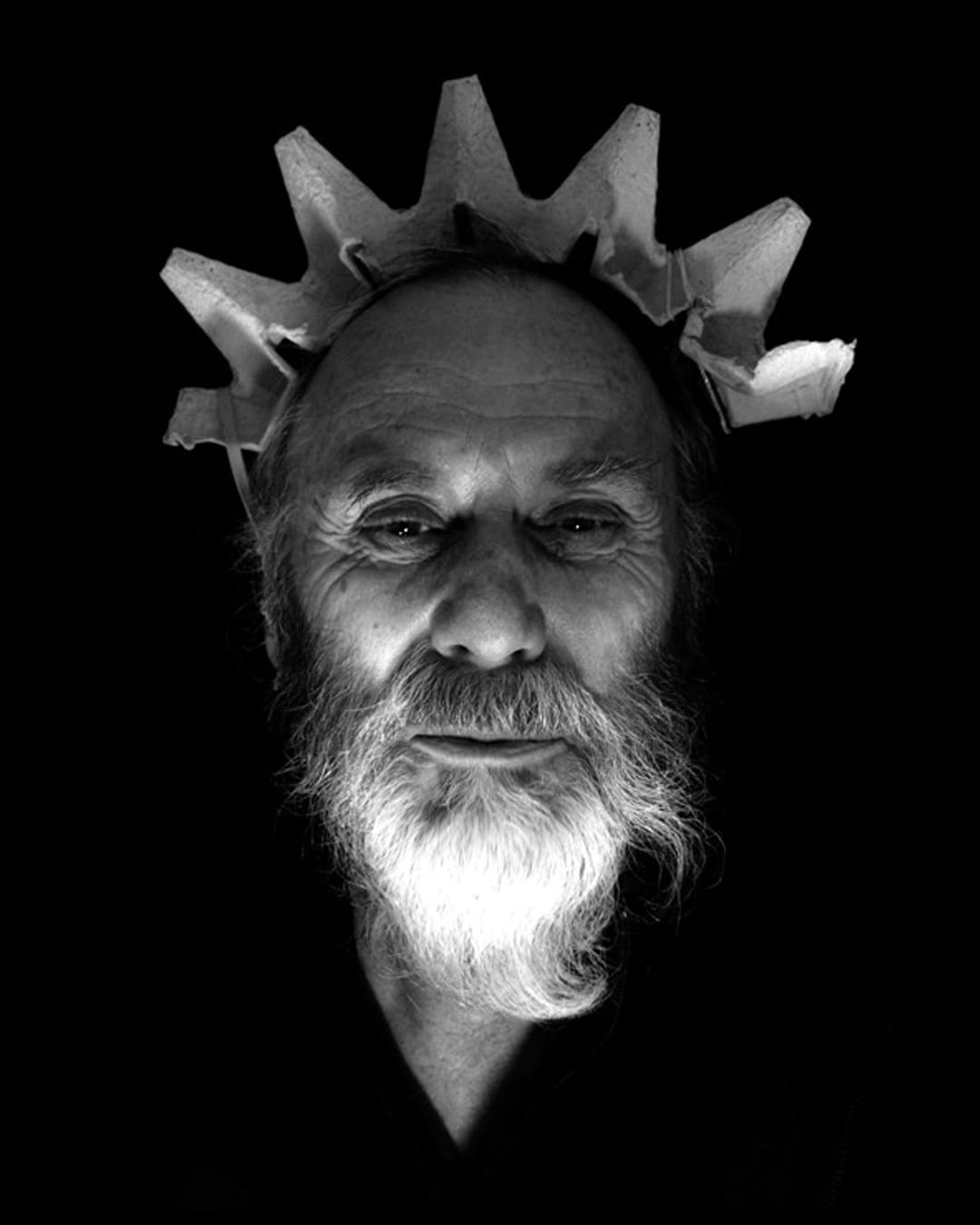
Despite his early accolades and the longevity of his career, widespread recognition was elusive for Herms, with writer and gallerist Mat Gleason calling him one of LA’s most underrated art stars. “You would think that being the missing link between the beats and the hippies might make Herms a cultural icon, but add to that his being the west coast bridge between assemblage and pop art, and there is no excuse for his anonymity,” Gleason wrote in a 2010 Huffington Post column. “George Herms gets every party invite in the LA Art World, but it is unforgivable that the party is never for him.”
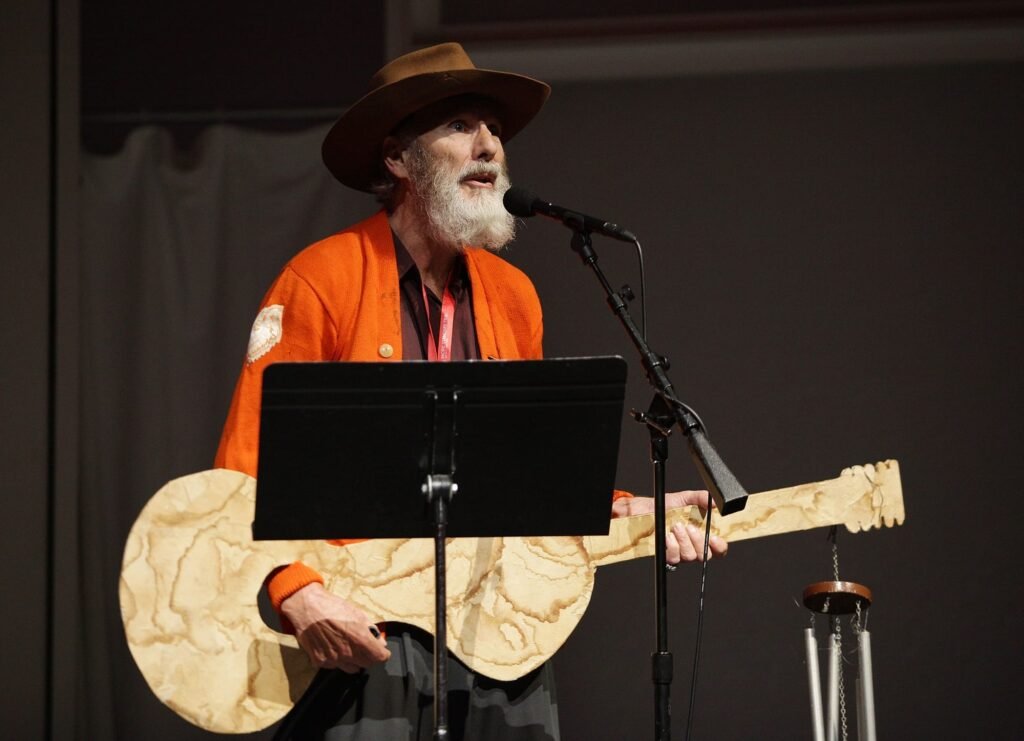
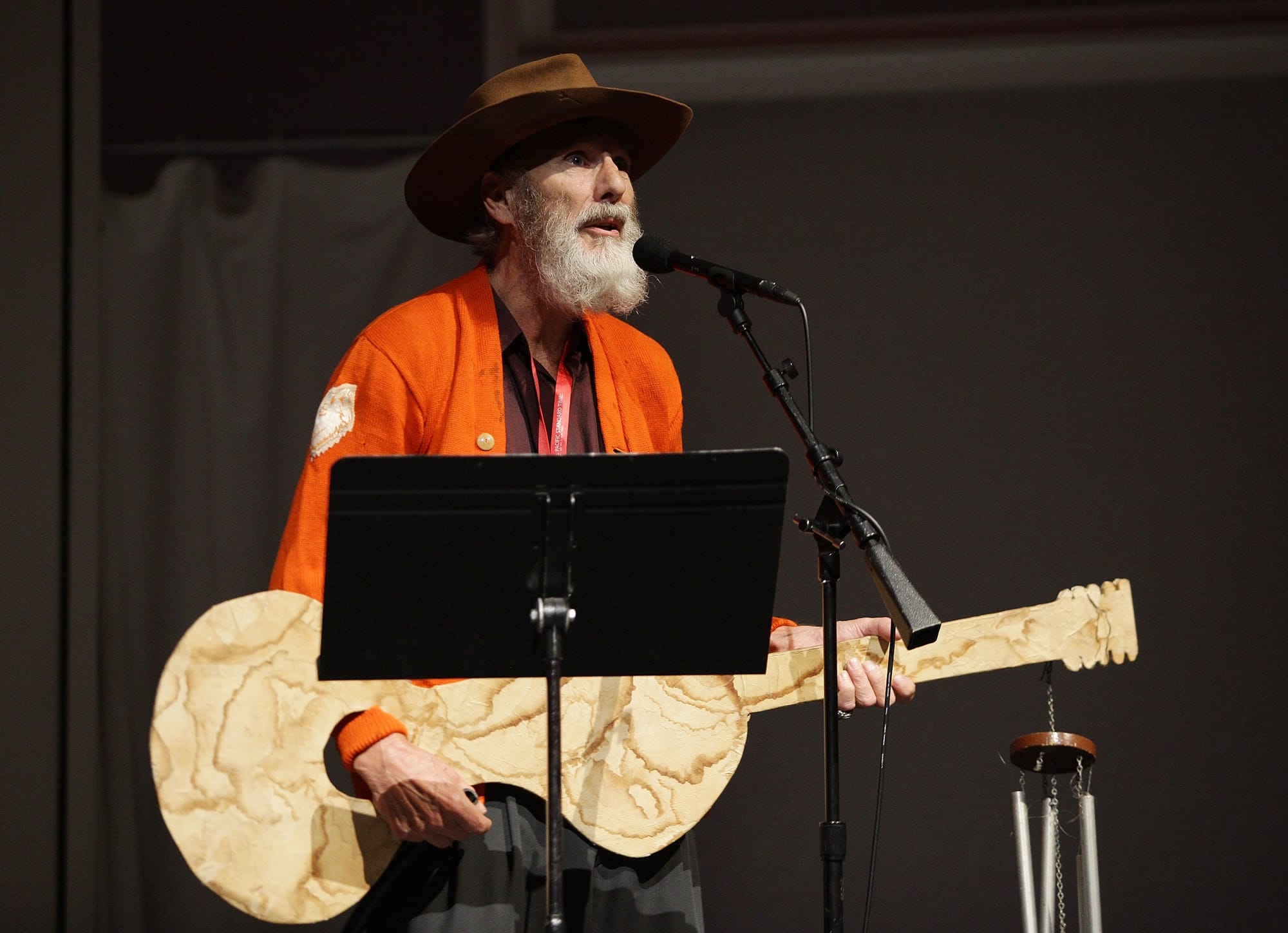
This began to change over the past 15 years or so as younger generations were introduced to Herms’s works, including through exhibitions pairing him with emerging artists like Marco Barrera, Agathe Snow, and Terence Koh at Morán Morán. He was also featured in the Getty’s first Pacific Standard Time initiative in 2011, which displayed his work in several exhibitions, including the “free-jazz opera” George Herms: The Artist’s Life at REDCAT.
“He had the unique ability to transform the most humble, overlooked objects and make something surprising and intriguing of them,” gallerist Louis Stern told Hyperallergic. “Just like the man himself, George’s work was offbeat, funky, funny, and unpretentious. He was deeply committed to the rebellious, independent path he forged and was rightly recognized and celebrated for it … The world is a poorer, less colorful place without him in it.”