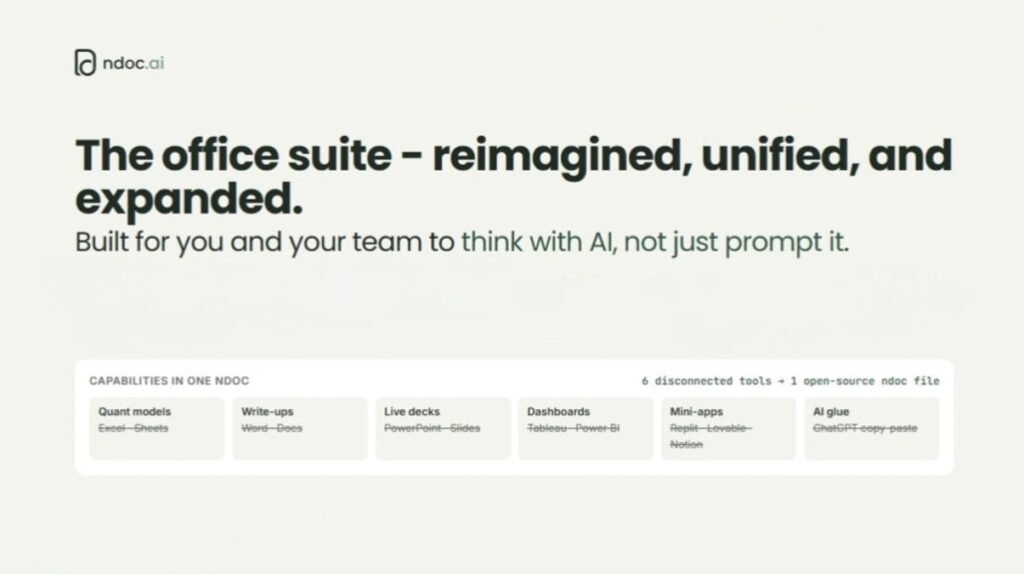

Former Meta AI director Rohit Patel is launching a fresh startup called Ndoc to take on workplace giants like Microsoft and Google. Instead of slapping a simple chatbot onto old spreadsheets, the new platform builds an all-in-1 workspace from the ground up. Walking away from Big Tech gives the founder a chance to completely rethink how teams collaborate on documents, data, and slides.
According to exclusive reporting from TechCrunch, Ndoc splits daily work into three distinct tabs named Stage, Narrative, and Model. Users can upload raw datasets into the Model tab to generate clear analytical stories, complete with Python scripts that anyone can review on the spot. Patel spent 8 years at Meta working on reinforcement learning and AI evaluation before leaving alongside several other high-profile executives.
Transparent AI tools and open file formats
Rather than hiding formulas behind proprietary code, Ndoc lets teammates ask the built-in AI chat to explain specific scripts and point out exact calculations. That focus on transparency ensures that business leaders can actually verify AI-generated financial charts before making major decisions. Patel also designed Ndoc to export documents as single open-source “.ndoc.html” files that open easily inside any web browser.
Leaving Meta was a necessary step for Patel because getting hundreds of corporate stakeholders to agree on a new open file format takes way too long. Building a new platform with a lean team allows the founder to ship software features at the rapid pace of modern AI tools. Early trial users are already testing an alpha build, with a full commercial release planned for 2027.
Fighting tech giants with slim teams
Competing with giants like Microsoft Office and Google Workspace is a massive gamble for a 3-person team with no venture funding. Major AI labs like OpenAI and Anthropic are also racing to capture enterprise teams, with OpenAI recently rolling out its own Space tool inside ChatGPT. However, Patel believes that stuffing AI features into old spreadsheet cells is a flawed approach that limits what intelligent software can do.
To help companies make the switch without losing old work, Ndoc includes built-in connectors to import data from familiar workplace apps. Operating on a blend of open-source models keeps running costs far lower than relying on expensive frontier AI platforms. Convincing traditional businesses to abandon long-standing software habits will take time, but offering transparent math and unified workspaces gives modern teams a compelling reason to switch.
The post Ex Meta AI Director Leaves Big Tech to Build a Microsoft Office Killer appeared first on Android Headlines.