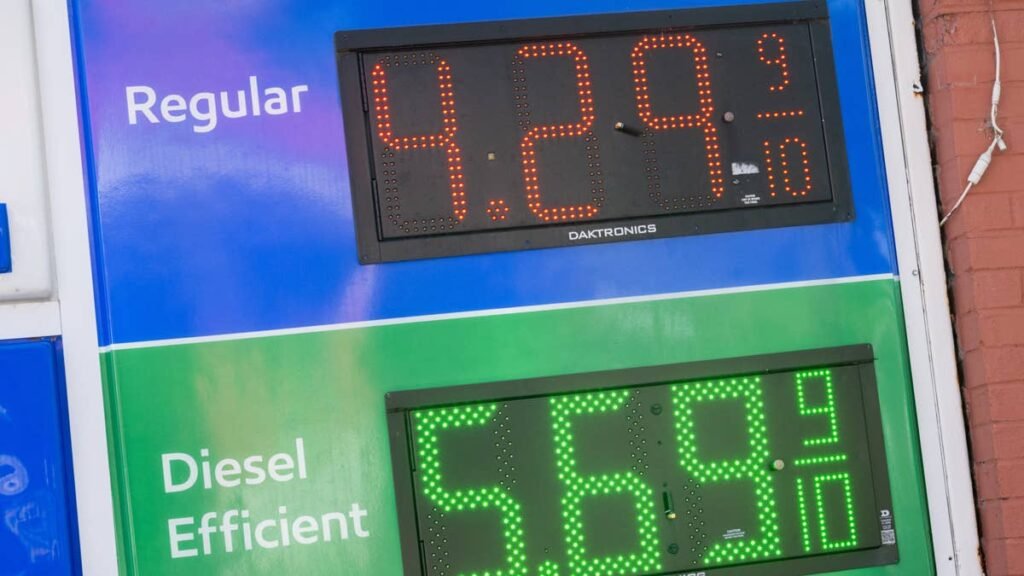
Petroleum futures soared this week as the Iran War appeared to be escalating again. The benchmark Brent Crude surged past $100 a barrel which, in turn, pushed up prices at U.S. pumps – with still more increases set to follow.
The typical American motorist is now paying $4.2245 for a gallon of self-serve regular, according to GasBuddy.com, compared with $4.1203 a week ago. And Pres. Donald Trump, getting ready to head to Texas for the Republican midterm convention, warned that “it’s going to take longer than the midterm” before prices start to drop.
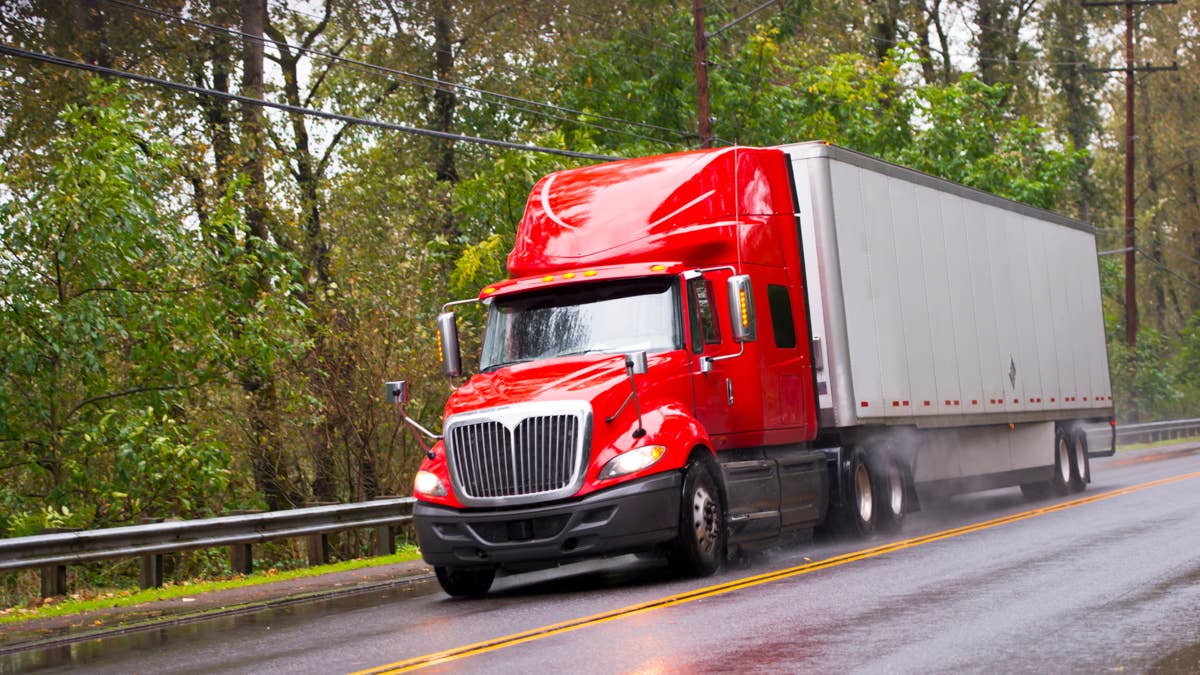
Drivers can expect to spend hundreds of dollars more this year on gasoline, but the real concern is what’s happening with another fuel. Diesel prices set a new record last week, at $5.8500, reported AAA, jumping to $5.9424 by Wednesday evening. While relatively few U.S. motorists today require diesel, the fuel is used to move 76% of American freight, powering everything from semi-trucks to diesel locomotives, ocean freighters to river barges. And, according to the experts, we can expect “an inflationary pulse” to course through the entire economy in the weeks and months ahead.

By the Numbers
Crude oil prices have soared since the bombs started falling on Tehran on February 28, climbing from $70.73 to a Wednesday close of $101.21 per barrel. But “Global prices of all main refined products have increased more than crude prices,” according to a research note from Goldman Sachs. Gas cost $2.98 a gallon on February 27, diesel coming in at $3.72 a gallon, according to AAA data. That’s a far cry from the promise made by the president during a “Meet the Press” interview on May 24, 2025. Trump, during the 2024 campaign, and again during the early months of his second term, said he’d bringgas down below $2,
Diesel prices have surged even faster than gasoline, reflecting a variety of factors including high demand, low inventories and the added costs of producing low-sulfur versions of the fuel. Whatever the reason, diesel is, at $5.9424 a gallon, now at its highest figure ever. That’s up from $3.72 on February 27, according to the monthly statistics report from the U.S. Bureau of Transportation. And it tops the prior record high of $5.81 per gallon set on June 17, 2022, following Russia’s invasion of Ukraine.
Those who track the energy industry have been warning that ever-higher prices could be the norm for the near to midterm. Now, Trump appears to be ready to accept that reality. “Right after the election, oil prices are going to be tumbling downward,” he said, before sounding a more pessimistic note a momentum later, cautioning that, “I think it’s going to take a little bit longer than the midterm.”
From Farm to Table
Why should motorists be more worried about the price of diesel than what they’re paying for gas? Because it impacts virtually everything in the economy. That delivery from Amazon Prime? Chances are whatever you bought spent at least part of its journey in a diesel-powered vehicle. Nowhere is the impact more significant than when it comes to the food you put on your table. According to the Independent Grocers Alliance, fuel costs account for anywhere from 15 to 30% of the price of your groceries.
Take the burger likely grilled over the Labor Day holiday. The food chain began in a farm field plowed by a diesel tractor, the feed grain harvested by a diesel combine and then shipped to a ranch in a rail car hauled by a diesel locomotive. Diesel trucks likely then took fattened cattle to the slaughterhouse and, eventually, ground beef and steaks to your local grocery.
Sure, an 18-wheeler can haul a lot of cargo but, at an average of just 6.5 to 7.5 miles per gallon of diesel, according to an analysis by the U.S. Bureau of Transportation, a trucker’s fuel bill adds up quickly. The average semi clocks 1,800 to 2,400 miles per trip, based on the Federal Highway Administration’s highway statistics survey. That means burning through somewhere between 257 to 343 gallons per trip. At the current price for diesel, that translates into as much as $2,650 a run.

atlasstudio
Things Could Get Worse
The run-up in fuel costs isn’t something trucking companies – or anyone else along the supply chain – will readily absorb. This could quickly trigger an inflationary pulse” coursing through the entire economy. John Kilduff, Founding Partner at Again Capital and an observer of global energy markets, said in a recent interview on CNBC,
With even the president starting to sound pessimistic, there are other reasons to worry. Even before the Iran War, roughly 70% of American farmers said they were struggling to purchase all the – largely petroleum-based – fertilizer they needed this year, according to a report by the American Farm Bureau Federation’s nationwide survey released on April 14, 2026. Cattle ranchers, meanwhile, were thinning herds. They’re now facing even more financial pressure. Then there are the trucking fleets. Some carriers already have become more selective about which loads they take, meaning businesses relying on spot capacity find it harder to cover loads when they need it most, according to the American Trucking Association. This could have an impact on availability of some goods.
If that’s not enough, the U.S Strategic Petroleum Reserve, which serves as a buffer when prices climb too high or too fast, has plunged to its lowest levels since December 1982, when it was initially being filled. The ongoing closure of the Strait of Hormuz has put tremendous strain on global petroleum supplies. That’s compounded by the war in Ukraine, the Kyiv government’s escalating drone and missile attacks targeting Russia’s petro infrastructure. Now, add the trade war between Canada and the U.S. The Northern neighbor could create havoc if it chose since 24% of its petroleum distillate exports go to the U.S., according to the Canada Energy Regulator.
Worldwide, “Shrinking inventories could prolong the crisis for months, driving higher diesel prices and intensifying inflation risks worldwide, particularly as winter approaches,” warned a report by tracking site Oilprice.com. If anything, the situation could “get ugly” before it gets better, Eugene Lindell, head of refined products at consultancy FGE NexantECA, warned in an interview with Bloomberg.