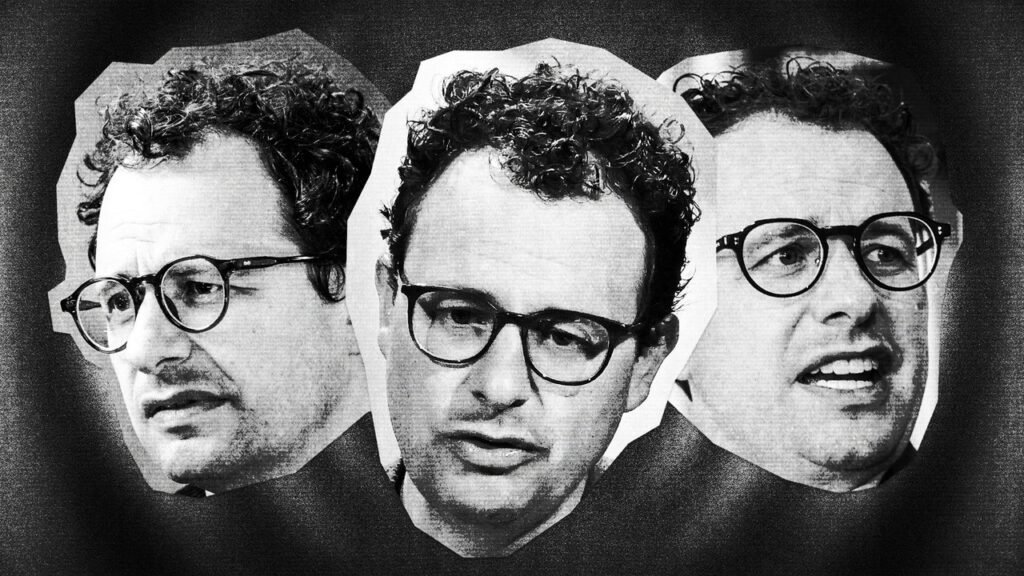
Dario Amodei is having a moment.
The 43-year-old CEO of Anthropic has been making headlines for weeks after repeatedly advocating for greater regulation and a slower pace of AI development—despite the fact that his company is one of the largest AI developers in the world.
This weekend, that discourse exploded even further in the cultural zeitgeist. On Thursday, Axios circulated a White House memo designed to push back on Amodei’s AI safety warnings ahead of the midterm elections; on Saturday, SNL parodied Amodei in a searing “Weekend Update” impression; and, by Sunday night, Amodei was sitting down to dinner with the president.
The Saturday Night Live impression is a good reference point for what Amodei has become in pop culture: an AI CEO warning the public about AI while also actively pushing the technology forward. In the bit, Amodei (played by cast member Jane Wickline) battles his own internal dialogue in a Gollum-vs.-Sméagol-style repartee, fighting to find something reassuring to say about artificial intelligence while simultaneously saying all of the most alarming statements possible.
“AI is the devil, and I its maker,” Wickline’s Amodei lets slip a minute into the sketch.
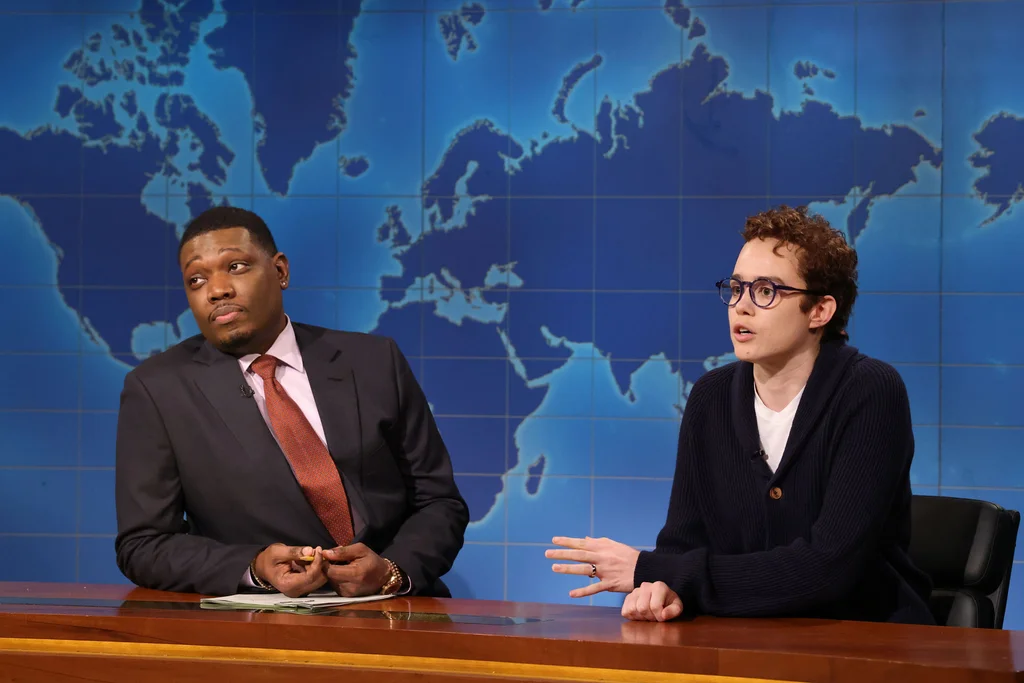
Amodei’s parodic presence at the “Update” desk shows that right now, AI doomerism—or the fear that AI poses an existential threat to humanity—is at an all-time high. And, for both AI optimists and naysayers, Amodei is emerging as the symbolic face of that movement.
What’s with all the AI doom?
The AI doom spiral began on September 8, when former AI researcher Jacob Coxon resigned from Anthropic and issued a lengthy statement on X (notching 174.2 million views and counting), which included the striking assertion that “the people building AI earnestly believe that it could kill us all by the end of the decade.”
Other high-profile Anthropic employees came out to echo Coxon’s warning. Evan Hubinger, an alignment science lead, wrote his own post responding to Coxon in which he affirmed: “We really do earnestly believe AI could kill all humans! I personally think it is >10% within the next decade. I believe Anthropic is trying its best, but we do not yet have a plan to solve alignment for superintelligence and are not clearly on track to.” Samuel Marks, another Anthropic employee, replied to Coxon with a summary of his own fears about “extinction-level bad outcomes.”
Since that initial back-and-forth, AI doomerism discourse has skyrocketed in Big Tech and in the political sphere, with everyone from Sen. Bernie Sanders to OpenAI CEO Sam Altman and Amodei expressing a desire for greater regulation.
Amodei advocates for setting a new AI pace
On September 12, Amodei weighed in on the discussion with a blog post titled “We Must Pace the Frontier.” In it, he opens by asserting that he believes AI could “dramatically raise the quality of human life,” calling it akin to a “miracle” if wielded correctly.
On the other hand, he continues, the technology carries risks, including “losing control of AI systems, misuse of AI for cyberattacks and bioterrorism, and serious economic disruption.”
To avoid those outcomes, Amodei proposes a broad plan to impose greater oversight on the growth of AI tech, including giving third-party experts access to frontier AI companies’ development processes, setting up collaborations between AI companies in democratic countries to set safety standards, and working to impose those safety standards on other authoritarian governments.
“I continue to believe that AI can enormously improve the quality of human life,” the post’s final paragraph reads. “My desire to achieve these benefits is undimmed. But the benefits will only be achieved if we build the technology in the right way, and—so long as we use the time we gain well—it is worth taking unusually deliberate care to get it right.”
In multiple interviews since the post, Amodei has continued to publicly call for the government and public to have a stake in AI development.
A political punching bag, a hypocritical archetype
Whether he intended it or not, Amodei’s commentary has effectively turned him into the leading figurehead of our current AI doomerism moment.
For AI boosters, Amodei has morphed into something of a political punching bag. Earlier this year, Anthropic clashed with Pentagon officials over the company’s efforts to limit how the military could use Claude, leading President Donald Trump to blacklist the firm and label its leaders “Leftwing nut jobs.” Trump and his supporters have also criticized the recent calls for an AI slowdown.
In the recent White House memo obtained by Axios, Amodei is directly named as one of the people responsible for the rise of “effective altruism,” which it frames as the culprit for the current “AI doom pipeline.” (Amodei has previously stated that he does not subscribe to the effective altruism philosophy.)
Amodei is also having a hard time getting buy-in from AI naysayers, who largely view him as the archetypal AI CEO—hypocritically calling for a slower pace of innovation despite actively setting said pace.
In the September 26 SNL sketch, that odd internal conflict is dialed up to 10. At one point, Wickline’s bespectacled Amodei tells audiences, “if we can pressure lawmakers to create guardrails, we will be able to stop me,” before struggling to answer host Michael Che’s question about whether Anthropic plans to “kill us all.”
The skit’s final line sums it up: “AI is not a weapon. It’s a tool—a tool for building weapons. And I urge you to urge me to stop.”